Understanding base ten Normal Math Worksheets for Ages 8-9
3 filtered results
-
From - To
Explore our engaging base ten normal math worksheets designed specifically for children aged 8-9! These worksheets help young learners master the foundational concept of base ten, crucial for understanding addition, subtraction, and other mathematical operations. Through interactive exercises and fun activities, students will develop their skills in regrouping, place value, and numerical comprehension. Perfect for classroom use or at-home practice, our user-friendly worksheets provide step-by-step guidance, fostering confidence and competence in math. Help your child build a strong mathematical foundation today with our expertly crafted resources! Visit us now to access a wide variety of printable worksheets suited for their learning needs.
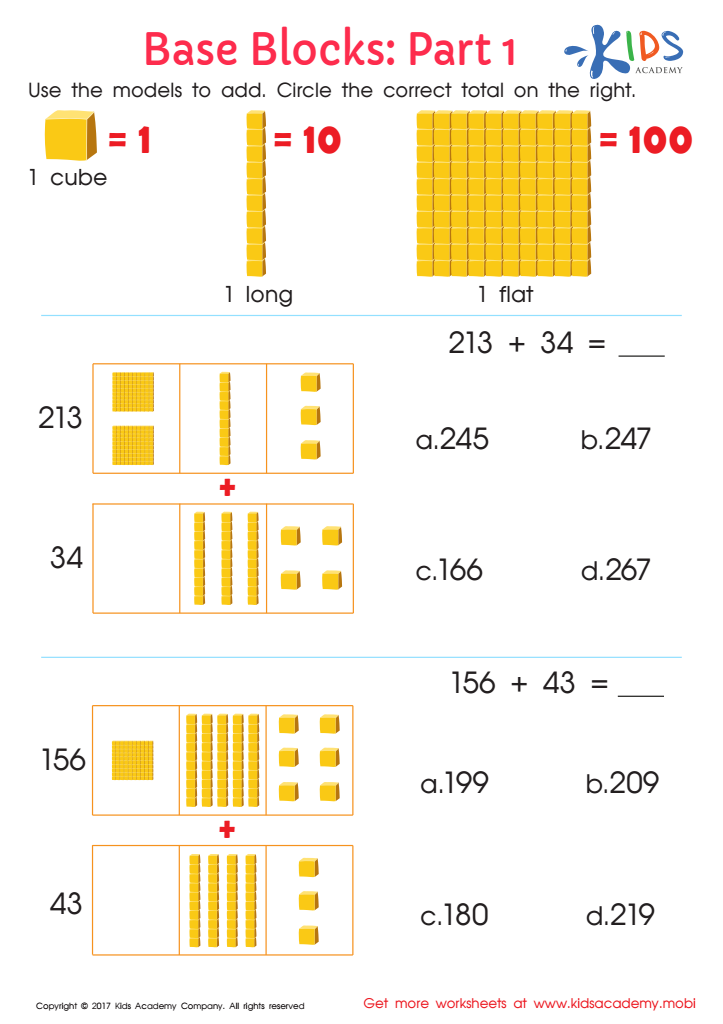
Base Ten Blocks Worksheet: Part 1
 Assign to My Students
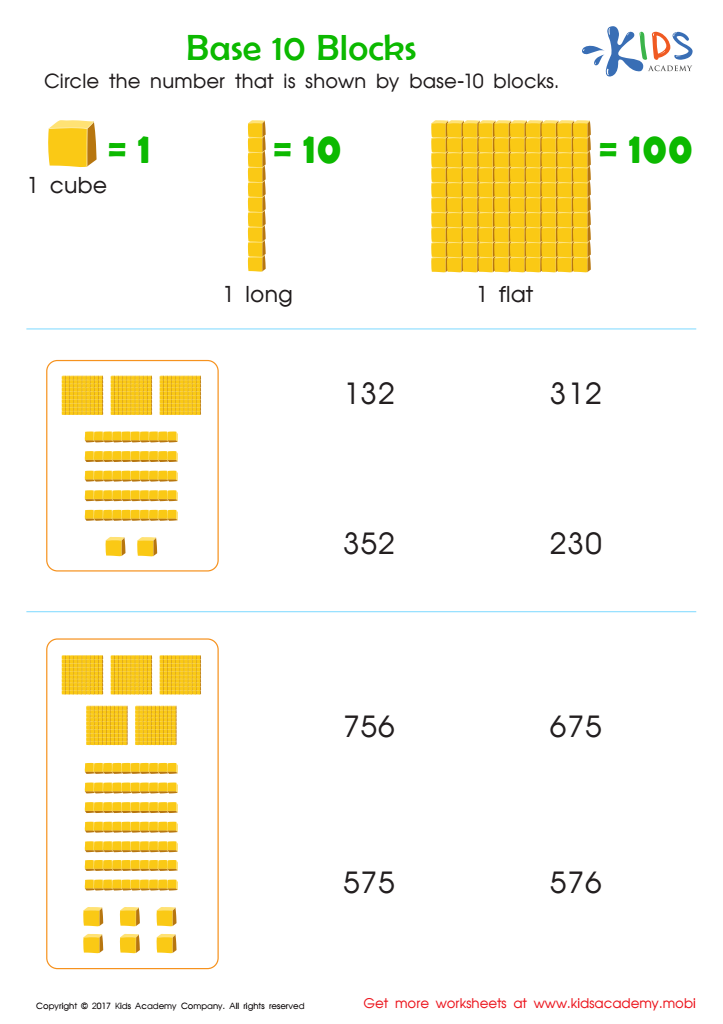
Base Ten Blocks Worksheet
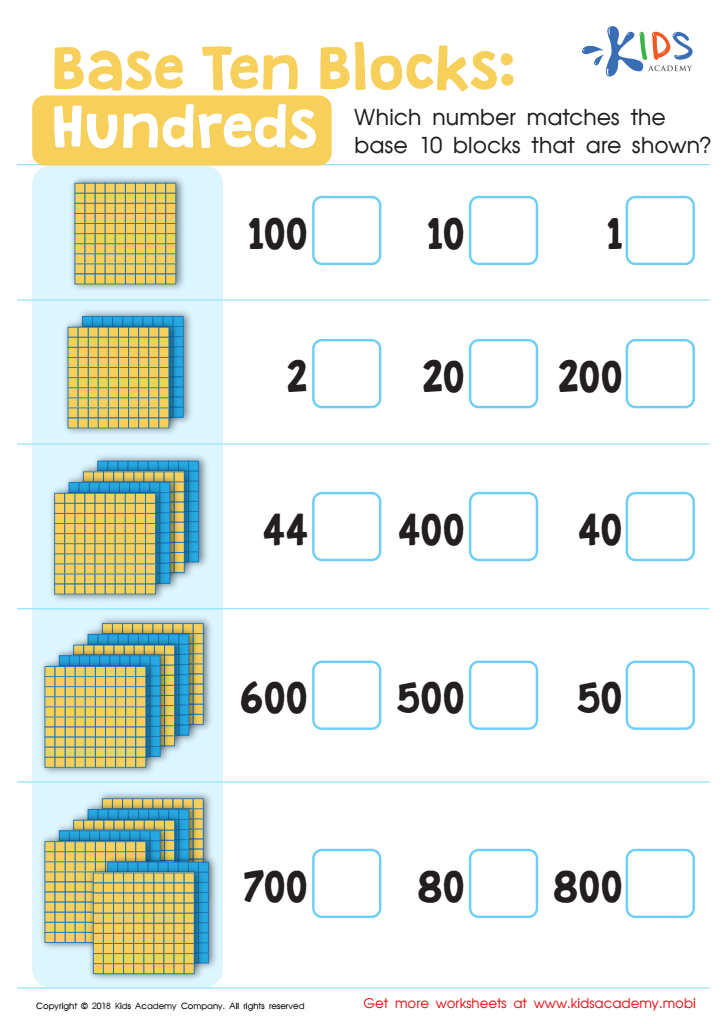
Base Ten Blocks: Hundreds Worksheet






.jpg)

Understanding base ten is foundational for children aged 8-9 as it forms the backbone of advanced mathematical concepts. At this age, students are transitioning from basic arithmetic to more complex operations such as multi-digit addition, subtraction, multiplication, and division. Mastering base ten not only helps them perform calculations accurately but also fosters a deeper understanding of number relationships and place value.
When parents and teachers emphasize base ten, they enable students to grasp concepts like regrouping and the significance of each digit's position in a number. This understanding is essential for enhancing their problem-solving strategies and mathematical reasoning. Moreover, a solid grasp of base ten lays the groundwork for important concepts in geometry, fractions, and decimals that they will encounter in later grades.
Additionally, understanding base ten encourages a growth mindset towards mathematics. When children feel confident in their foundational skills, they are more likely to engage positively with math, reducing anxiety and promoting a love for learning. In a broader sense, supporting their mathematical development equips them with critical thinking skills, problem-solving abilities, and a sense of accomplishment that influences their overall academic success. Therefore, parents and teachers play a vital role in nurturing this essential aspect of early math education.








