Understanding patterns Normal Math Worksheets for Ages 8-9
5 filtered results
-
From - To
Explore our "Understanding Patterns" math worksheets designed specifically for children ages 8-9. These worksheets provide engaging and interactive activities that help young learners recognize, create, and extend patterns. By practicing with colorful illustrations and relatable examples, students develop critical thinking skills and enhance their mathematical understanding. Our user-friendly format encourages independent learning, allowing kids to advance at their own pace. Perfect for classroom use or at-home practice, these normal math worksheets make understanding patterns enjoyable and accessible. Help your child build a strong foundation in math with our comprehensive resources, fostering confidence and a love for learning!
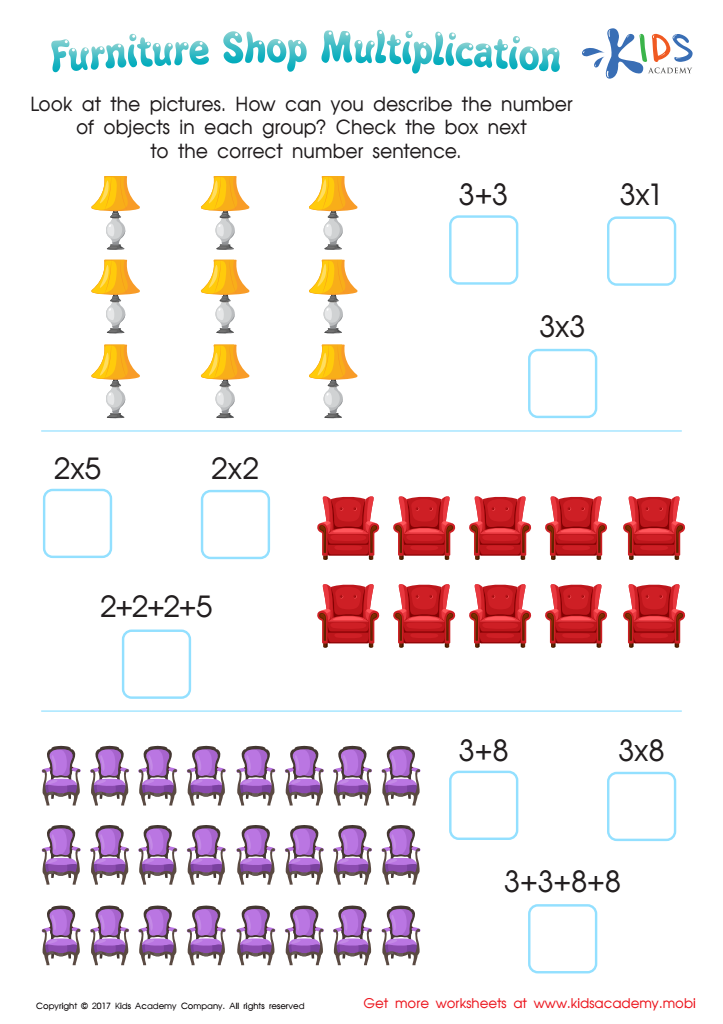
Furniture Shop Worksheet
 Assign to My Students
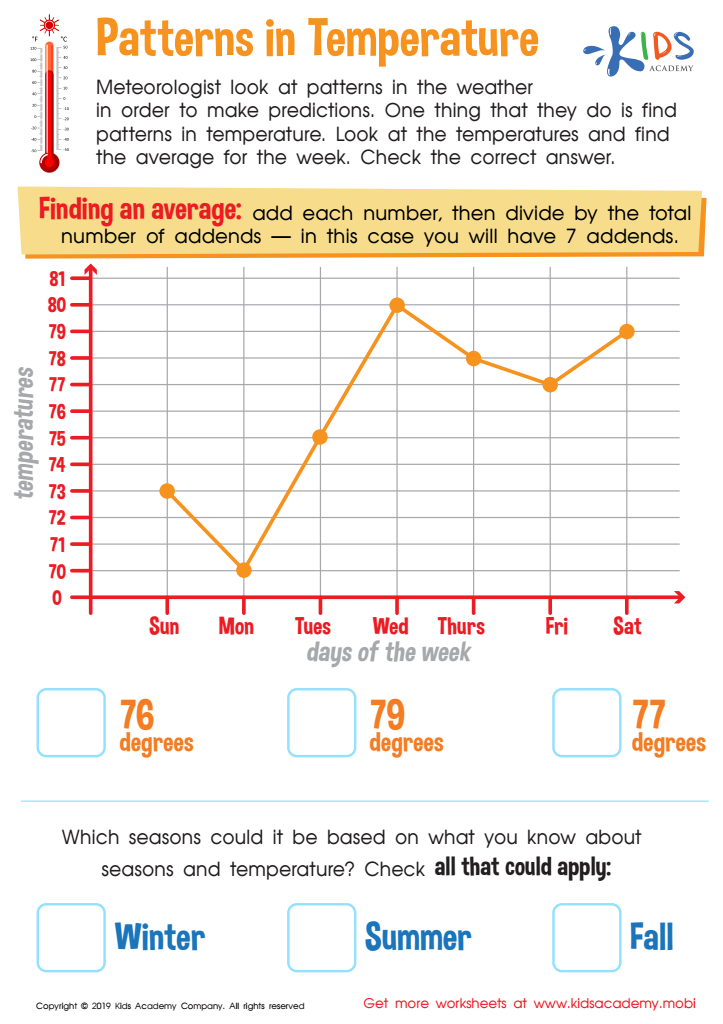
Patterns in Temperature Worksheet
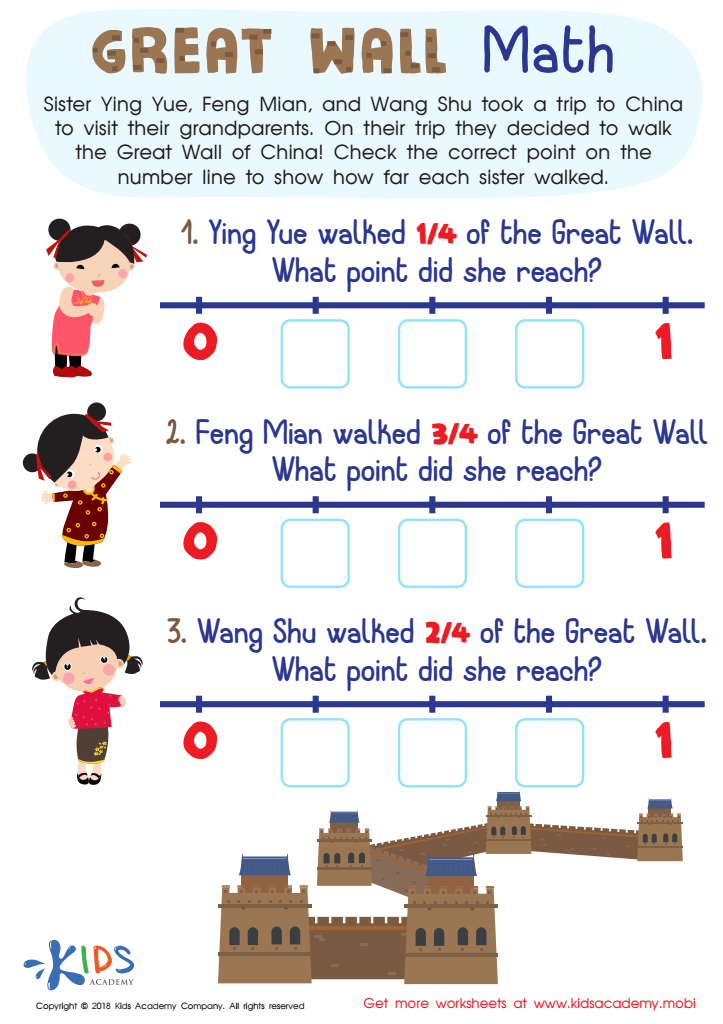
Great Wall Math Worksheet
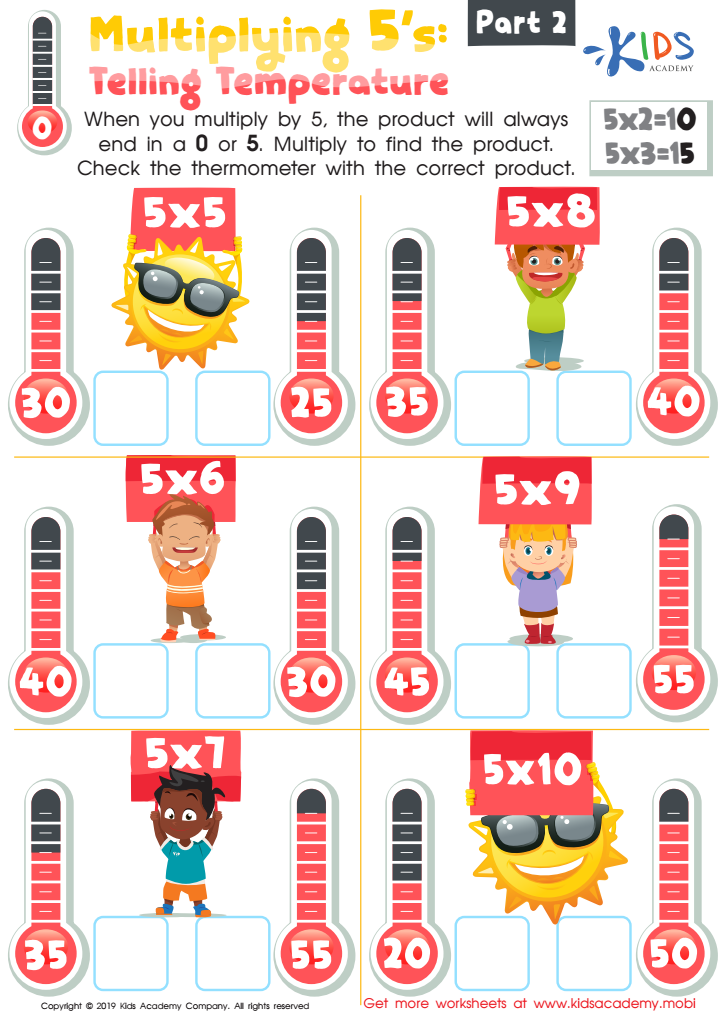
Multiplying 5’s: Telling Temperature Part 2 Worksheet
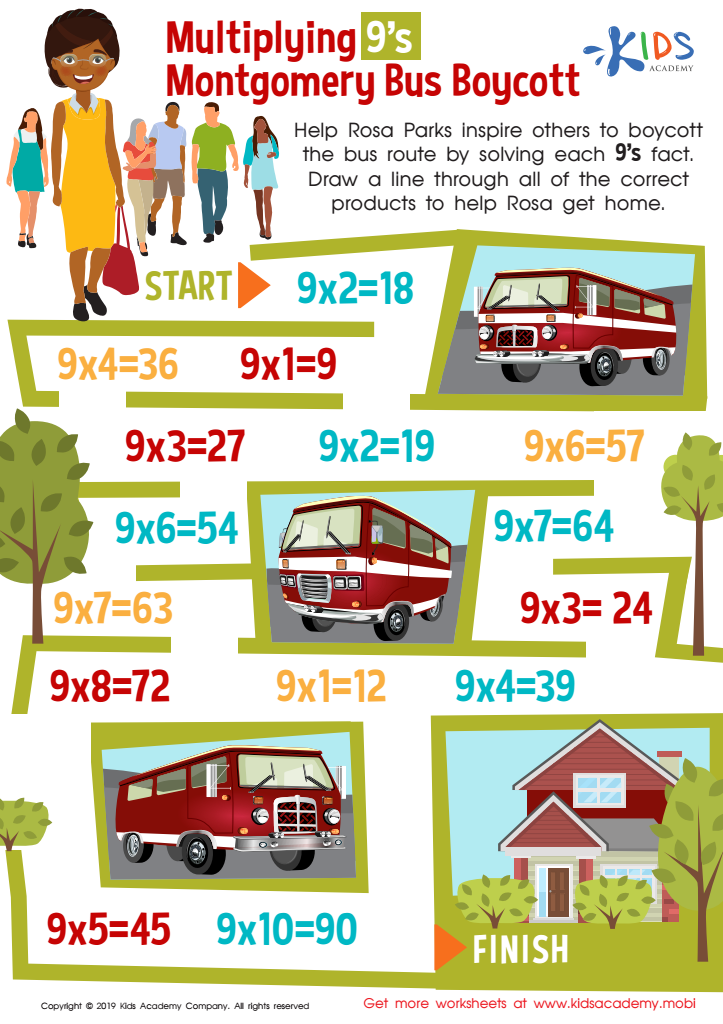
Multiplying 9’s Montgomery Bus Boycott Worksheet



.jpg)




Understanding patterns is crucial for children aged 8-9, as it forms a fundamental part of mathematical reasoning and problem-solving. At this developmental stage, kids are honing their ability to recognize, predict, and use patterns, which aids in their overall cognitive and analytical skills. Teachers and parents should be invested in fostering this understanding because mastering patterns can lead to improved academic performance—not just in math, but across various subjects.
Learning about patterns enables students to handle more complex concepts such as multiplication, division, and algebraic thinking in the future. It teaches them to identify relationships and make connections between numbers and shapes, ultimately helping them build logical reasoning skills. By engaging in activities that promote pattern recognition, children develop confidence and a positive attitude towards math.
Additionally, these skills extend beyond academics; they encourage critical thinking and perseverance as students learn to dissect problems and find solutions. In a world increasingly driven by data and technology, the ability to recognize patterns is indispensable for real-life applications. Thus, investing in understanding patterns at this young age sets the groundwork for lifelong skills, promoting curiosity and a love for learning in children.








