
Phonics Skills Normal Reading Worksheets for Ages 8-9
6 filtered results
Difficulty Level
Grade
Age
-
From - To
Subject
Activity
Standards
Enhance your child's reading abilities with our Phonics Skills Normal Reading Worksheets designed specifically for ages 8-9. These engaging worksheets focus on essential phonics concepts, helping children improve their decoding and reading fluency. Each activity fosters the understanding of letter-sound relationships, word recognition, and pronunciation, making reading an enjoyable process. Utilizing a variety of exercises, such as matching sounds to letters and decoding words, our worksheets cater to diverse learning styles. Ideal for classroom use or home practice, these resources ensure your child builds confidence and proficiency in reading. Unlock your child's potential with our tailored phonics worksheets today!
Favorites
With answer key
Interactive
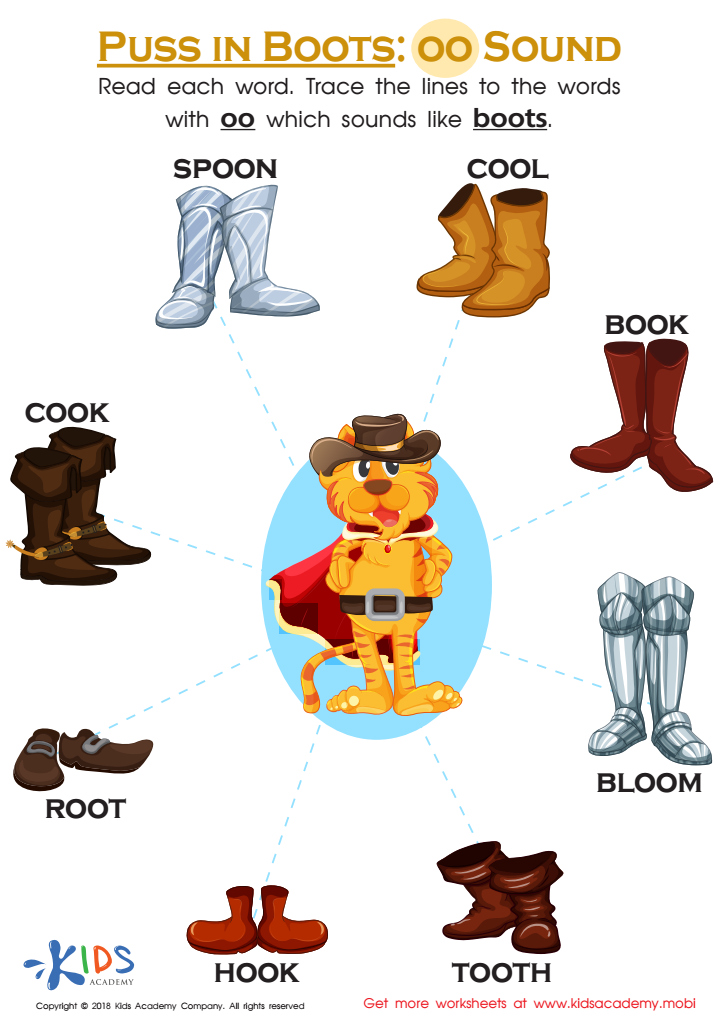
Puss in Boots: OO Sound Worksheet
Read out the words in this printout with the correct pronunciation. Have your child repeat each word after you. Then have them read the words and identify the ones with the "oo" sound. Guide their hands as they trace the lines to the right words.
Puss in Boots: OO Sound Worksheet
Worksheet
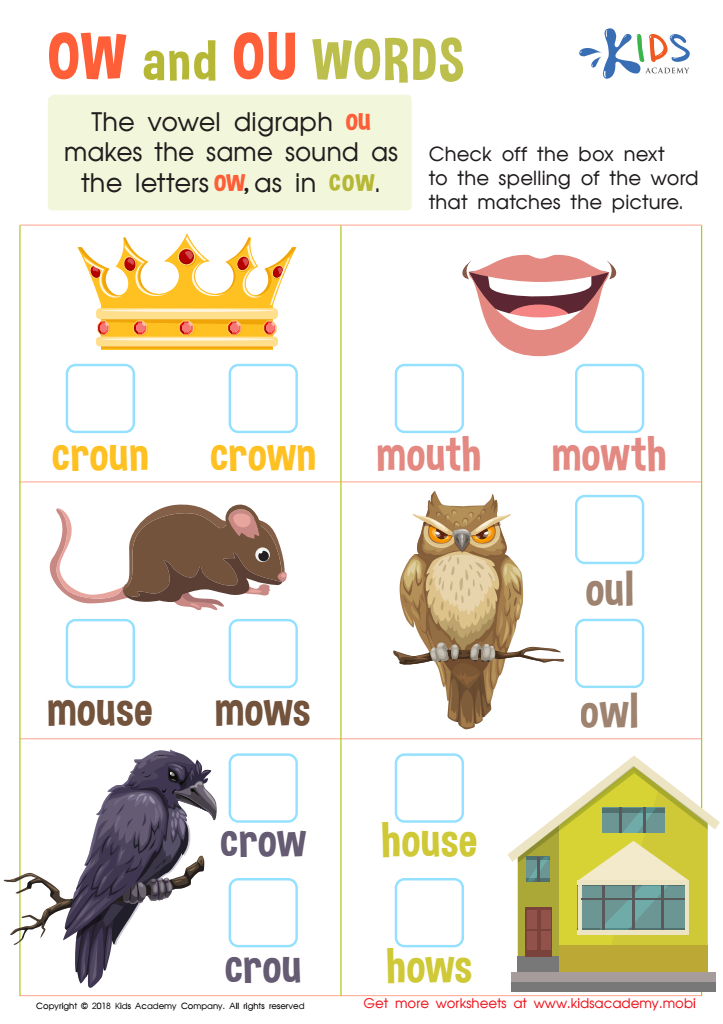
Reading: OW and OU Words Worksheet
Help your kids learn phonetics! Explain the different sounds and long/short variations. Emphasize that some vowel sounds are the same, e.g. ou = ow in cow. For practice, have them read aloud the words in the worksheet and check the box next to the spelling that matches the picture.
Reading: OW and OU Words Worksheet
Worksheet
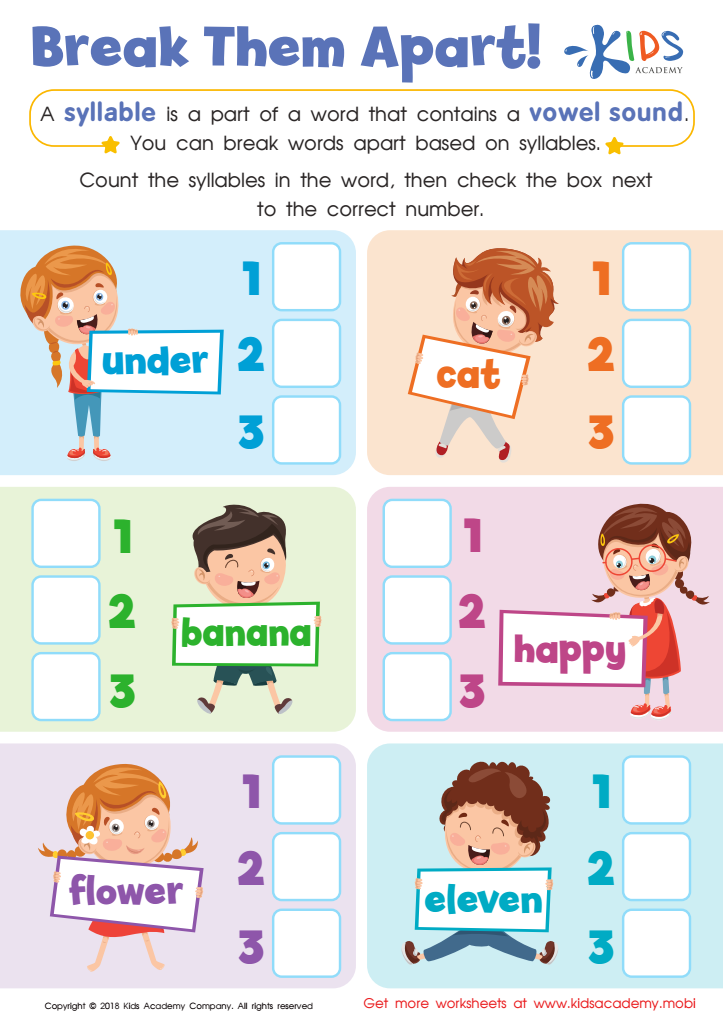
Reading: Break Them Apart Worksheet
See if students understand syllables with this fun worksheet. It teaches them that a syllable is a word part with a vowel sound. Kids read each word and choose how many parts it has. Doing this often helps them decode new words and gain confidence.
Reading: Break Them Apart Worksheet
Worksheet
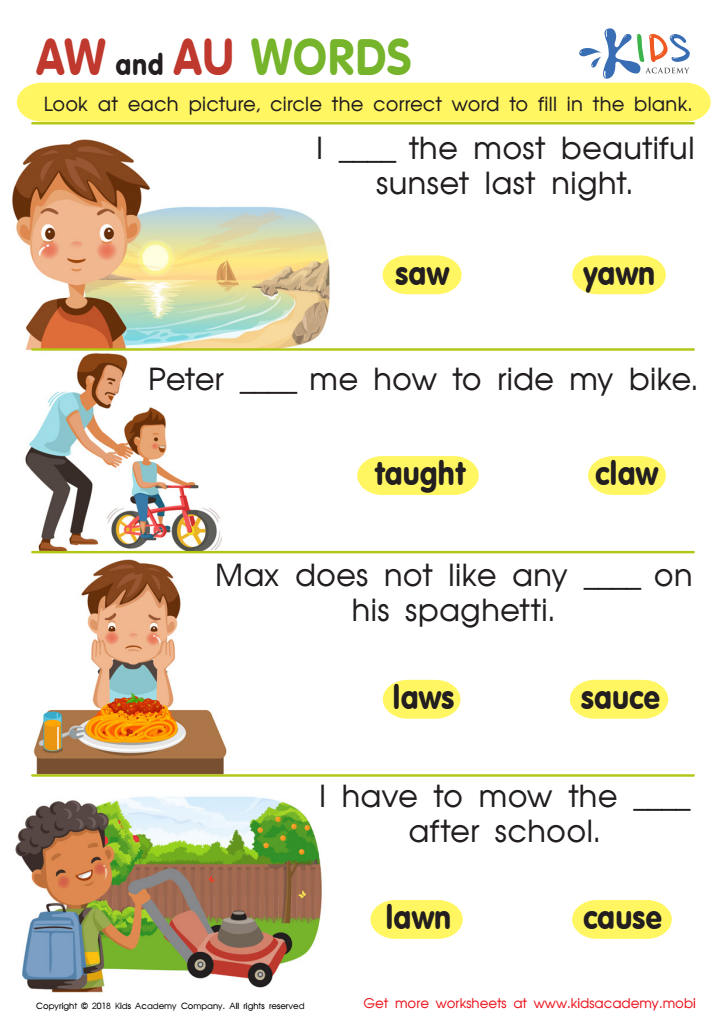
Reading: AW and AU Words Worksheet
This worksheet helps kids recognize that /au/ and /aw/ can make the same sound. Students read sentences and pick the correct word with one of the digraphs. Understanding digraphs improves decoding and reading fluency. Perfect for reading and phonics classes.
Reading: AW and AU Words Worksheet
Worksheet
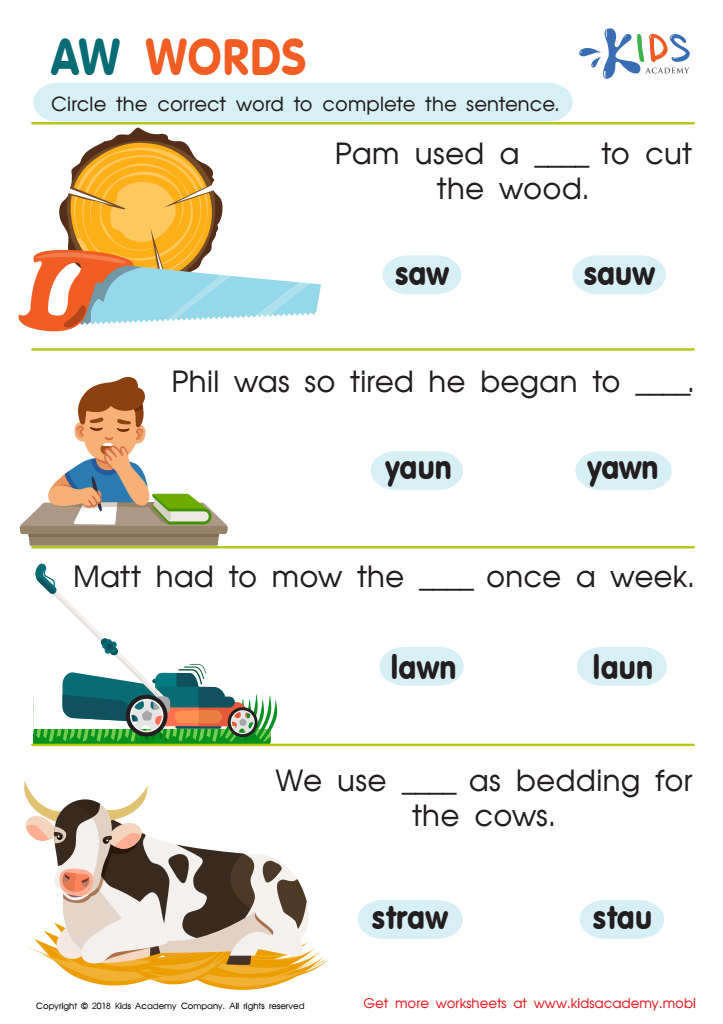
Reading: AW Words Worksheet
Practice decoding the /aw/ digraph with this printable. Students read sentences and select the word with the correct spelling to complete each one. Note, /aw/ is sometimes spelled /au/, so this worksheet helps prevent confusion. Have fun, and practice hard!
Reading: AW Words Worksheet
Worksheet
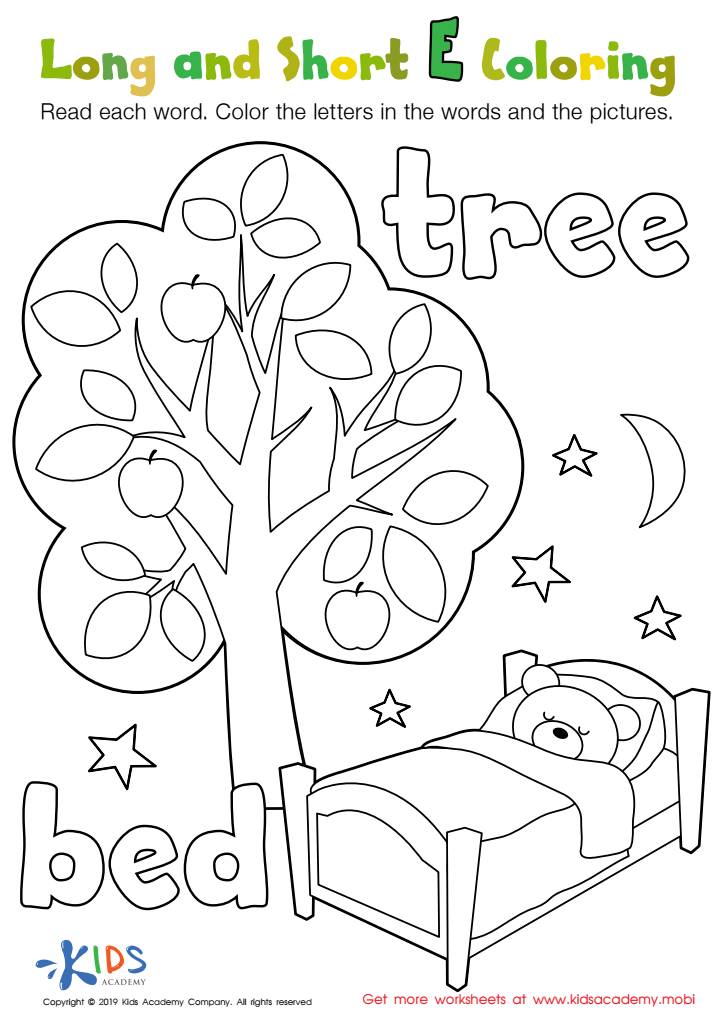
Long and Short E Worksheet
This fun printout makes learning phonics enjoyable for Grade 3 students. Get them to read the words “tree” and “bed” to recognize the different sounds of the letter “E”. After hearing the words they can color the words and the pictures to understand differences between long and short vowels.
Download (PDF)
 Assign to My Students
Assign to My Students
Long and Short E Worksheet
Worksheet
Join Kids Academy for Free
Who is primarily going to use this learning content?







Phonics skills are essential for children aged 8-9 as they form the foundation for fluent reading and comprehension. At this stage, children transition from "learning to read" to "reading to learn," making phonics a vital tool in their literacy development. Proficient phonics skills enable children to decode unfamiliar words, enhancing their vocabulary and confidence as they encounter more complex texts in various subjects.
Furthermore, understanding phonics aids in spelling and writing, allowing children to express their ideas clearly. Strong phonics skills contribute to improved academic performance across subjects by promoting better reading comprehension. When children can break words down into their components, they are more likely to understand the content, connect ideas, and engage with what they read.
For parents and teachers, fostering these skills is crucial in creating a supportive literacy environment. It helps identify struggling readers early, providing essential interventions to boost their reading abilities. Additionally, strong phonics skills promote a lifelong love of reading, encouraging children to explore books, enhance their imagination, and broaden their horizons. In an increasingly literate world, equipping children with proficient phonics abilities ensures successful communication skills and overall educational success.








