Filters

6 filtered results

Clear all filters
Favorites
With answer key
Interactive

6 filtered results

Difficulty Level

Grade


Enhance your child's reading comprehension with our engaging Problem-Solving Skills Worksheets designed specifically for ages 8-9. These worksheets combine fun stories and thought-provoking questions that encourage young readers to develop critical thinking and analytical skills. Each activity challenges students to identify problems, analyze situations, and find solutions, fostering creativity and independence. Our resources cater to different learning styles and can be easily integrated into any educational setting or at home. Empower your child with the tools they need to excel in reading while building essential problem-solving abilities. Explore our comprehensive collection and watch their confidence soar!

Check out this FREE Trial Lesson on Reading Comprehension for age 8-9!

Lessons in Fables and Folktales

Favorites
With answer key
Interactive
  • 8-9
  • Problem-Solving Skills
  • Reading Comprehension
  • Normal
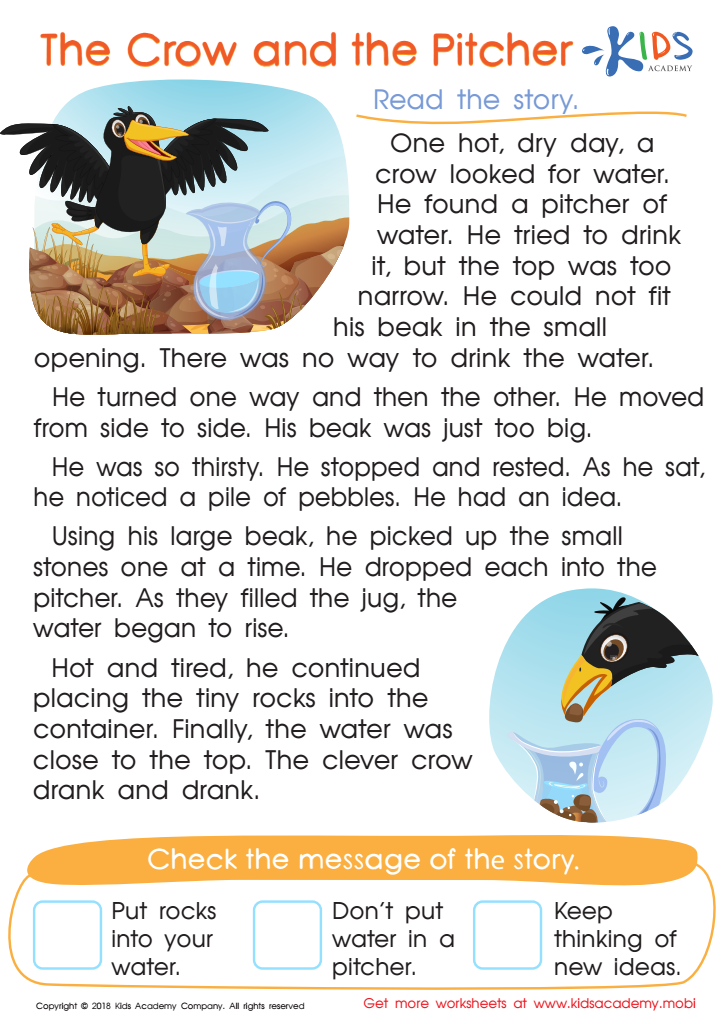
The Crow and the Pitcher Worksheet

The Crow and the Pitcher Worksheet

Introduce your child to reading comprehension with this fascinating worksheet from Kids Academy! Featuring Aesop's fable of a thirsty crow, your child will enjoy reading and determining the central theme of the passage. This worksheet is a great way to give your child a purpose for reading while helping to build their comprehension skills.
The Crow and the Pitcher Worksheet
Worksheet
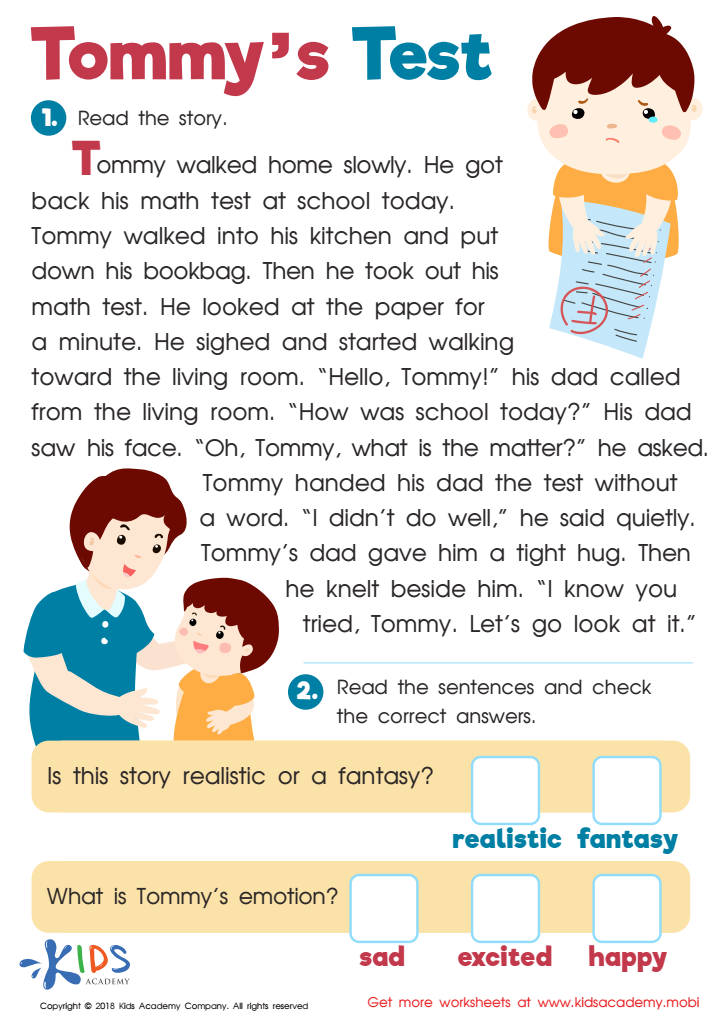
Tommys Test Worksheet

Tommys Test Worksheet

Reading short stories to your students builds a bond, teaches new words and lessons. Read the story aloud and then have them listen for details. Ask them the questions at the bottom and help them check the answers.
Tommys Test Worksheet
Worksheet
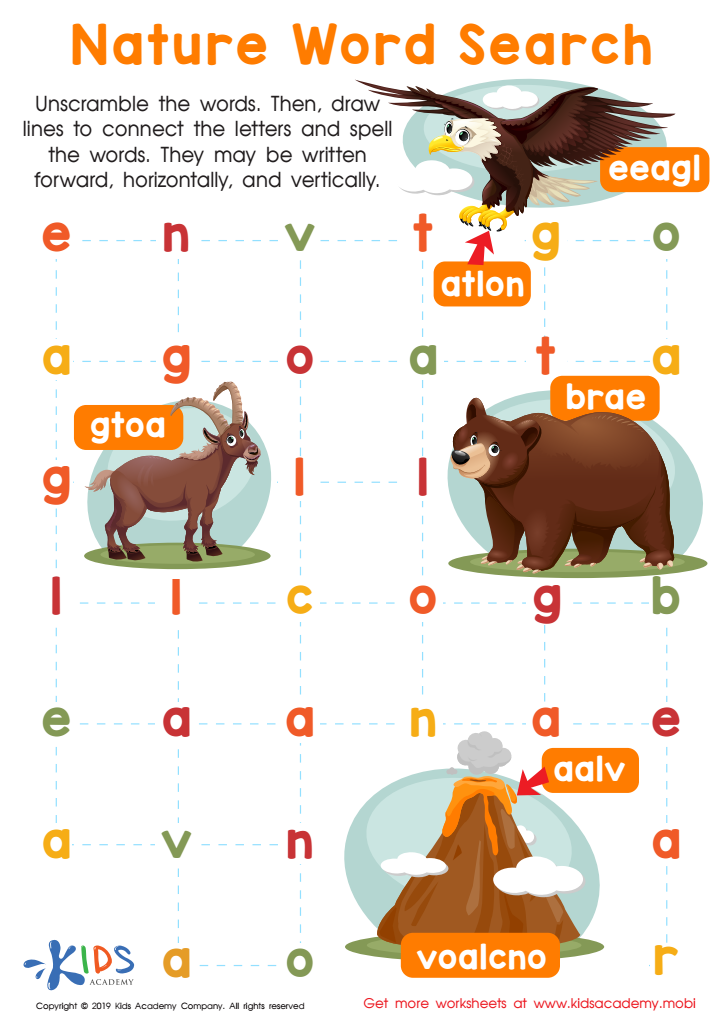
Nature Word Search Worksheet

Nature Word Search Worksheet

Unscramble science vocabulary words and find them in this fun worksheet! Use the pictures as clues if you get stumped; you can also write down the words for reference. Solve the puzzle when you're done to finish!
Nature Word Search Worksheet
Worksheet
Trait Maze Worksheet

Trait Maze Worksheet

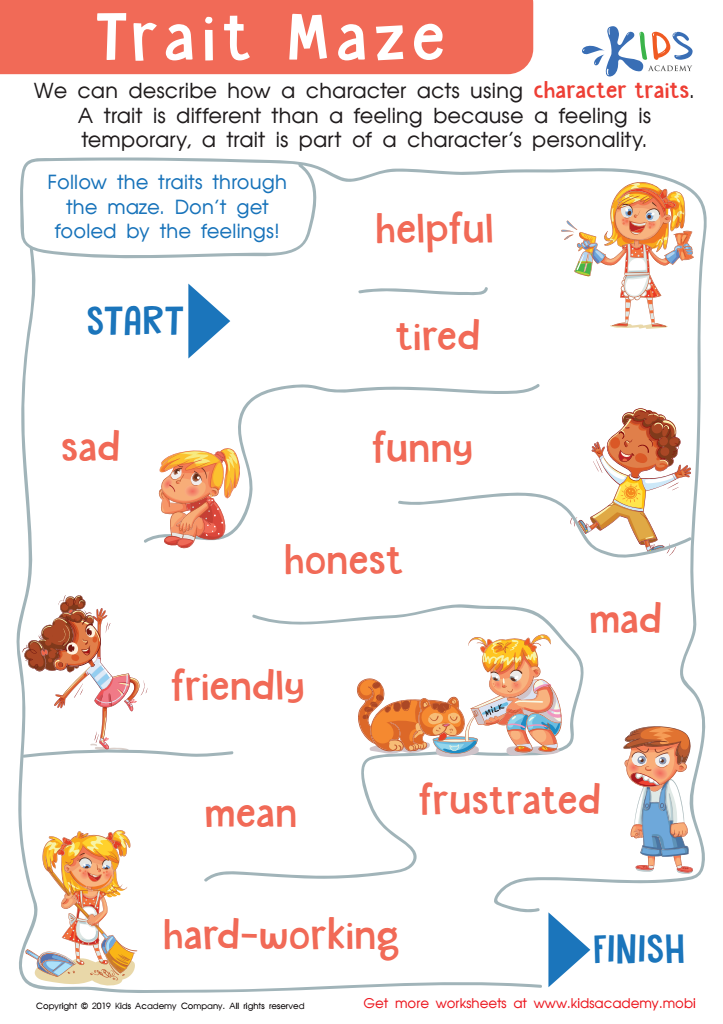
A trait is a character's personality and should not be confused with a feeling, which is temporary. In this worksheet, kids learn about traits by following them through a maze and ignoring the feelings on the path.
Trait Maze Worksheet
Worksheet
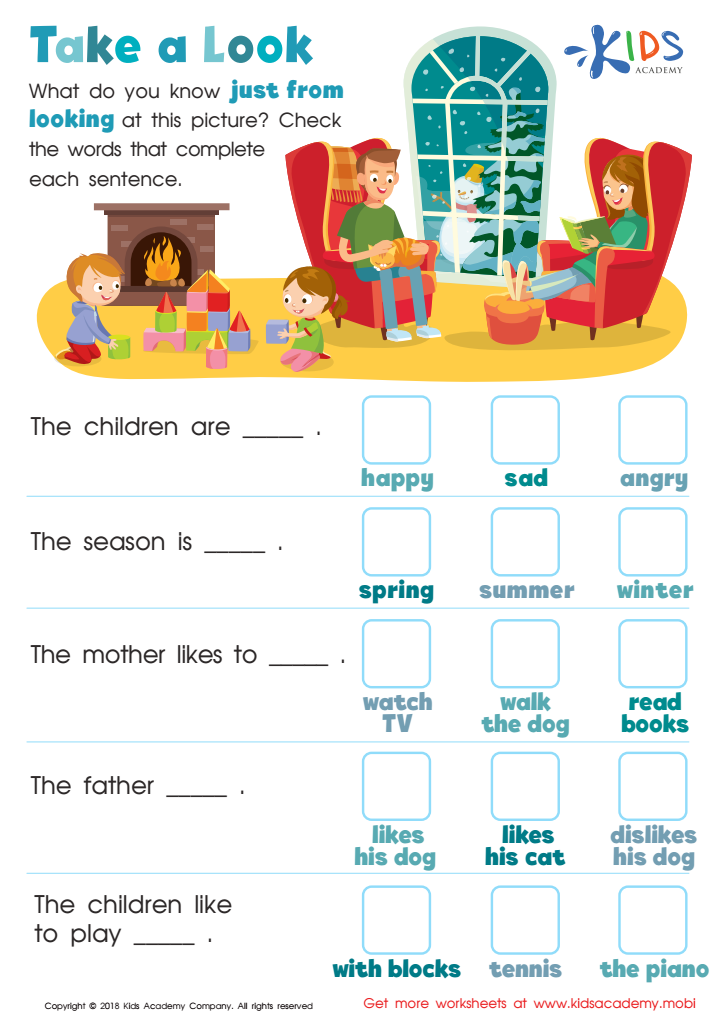
Take a Look - Part 1 Worksheet

Take a Look - Part 1 Worksheet

Young learners gain understanding when using picture clues when reading. Looking at illustrations can help students learn the meaning of key vocabulary when reading fiction or informational text. Ask your students to look at the worksheet and observe what they can learn from the picture. It's a great comprehension strategy for early readers.
Take a Look - Part 1 Worksheet
Worksheet
Think About It: Assessment Worksheet


Think About It: Assessment Worksheet

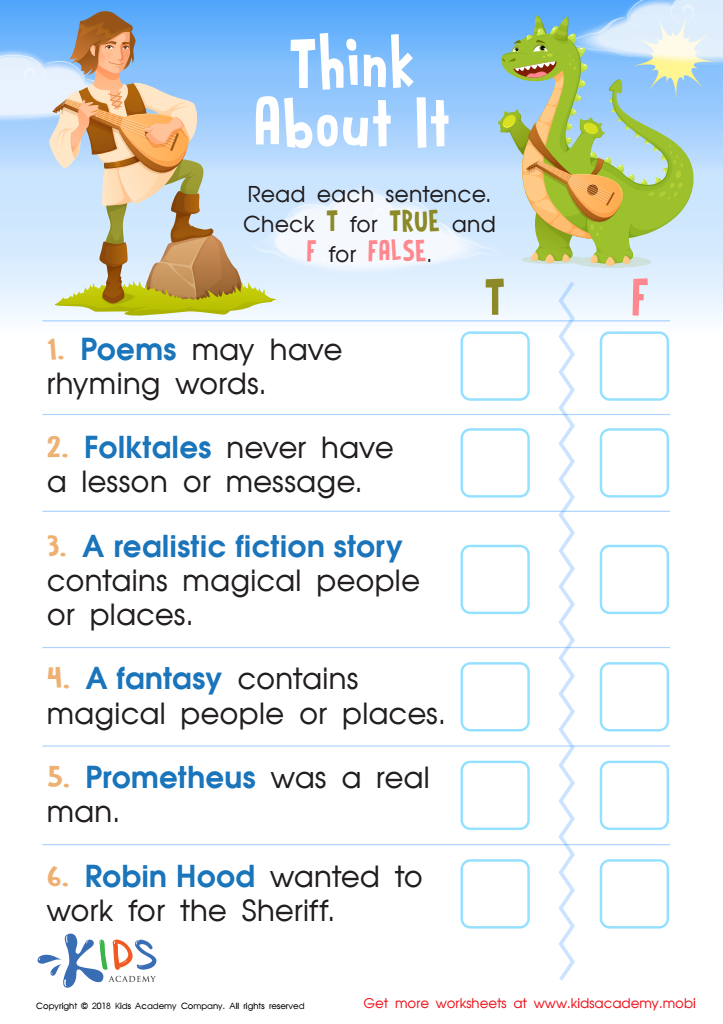
Reading is a fun and important way to learn. Help your students become better readers with this simple yet colorful worksheet. Read each sentence aloud, then have them read it by themselves. Ask them to check T for True and F for False. It's a great way to practice their reading skills!
Think About It: Assessment Worksheet

Worksheet


Parents and teachers should prioritize problem-solving skills alongside reading comprehension for children aged 8-9 because these abilities are interlinked and essential for academic and daily success. At this age, children are transitioning from learning to read to reading to learn, making reading comprehension a critical skill. When children can effectively understand and analyze texts, they enhance their ability to think critically and solve problems.

Moreover, strong problem-solving skills foster creativity, resilience, and independent thinking. As kids encounter challenges in stories or real-life situations, their ability to assess, hypothesize, and find solutions becomes paramount. This not only supports their academic performance but also equips them with the tools necessary to face life’s ups and downs.

By nurturing these competencies together, educators and parents can provide a more holistic approach to a child’s development. Enhancements in reading comprehension fuel problem-solving by enriching vocabulary and background knowledge, which are essential for understanding and engaging with complex problems.

Ultimately, prioritizing these skills allows children to develop a love for learning and fosters a growth mindset, preparing them for future challenges in both school and life.