Story sequencing Normal Reading Comprehension Worksheets for Ages 8-9
4 filtered results
-
From - To
Enhance your child's reading comprehension skills with our engaging story sequencing worksheets designed for ages 8-9. These normal reading comprehension exercises encourage young learners to connect events in a logical order, fostering critical thinking and narrative understanding. Each worksheet features age-appropriate stories that challenge students to analyze sequences and predict outcomes, crucial elements for developing their literacy skills. Our printable materials are perfect for classroom use or home learning, making reading fun and interactive. Equip your child with the tools they need to succeed in reading comprehension and stimulate their imaginations as they explore captivating tales, thoughtfully crafted for their learning level.
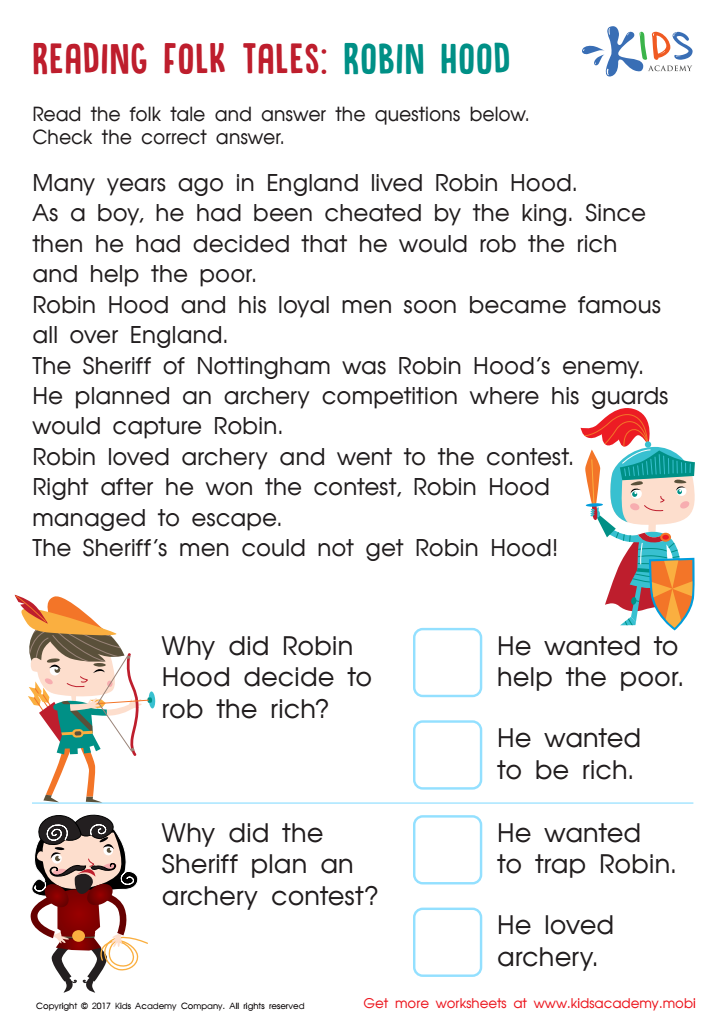
Robin Hood Folktale Worksheet
 Assign to My Students
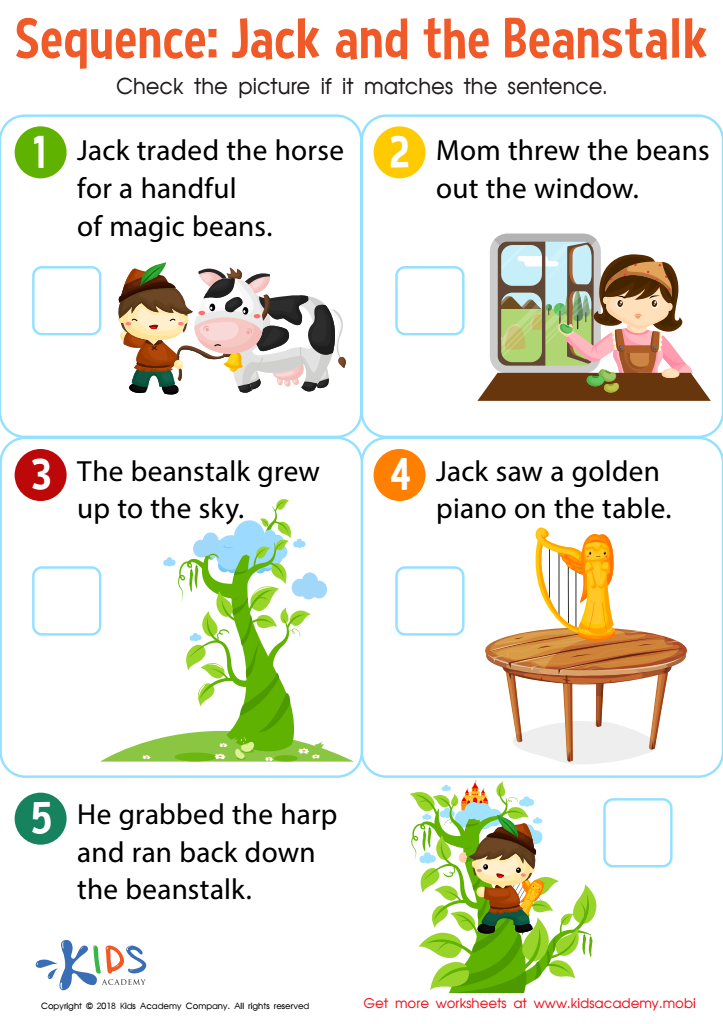
Sequence: Jack and The Beanstalk Worksheet
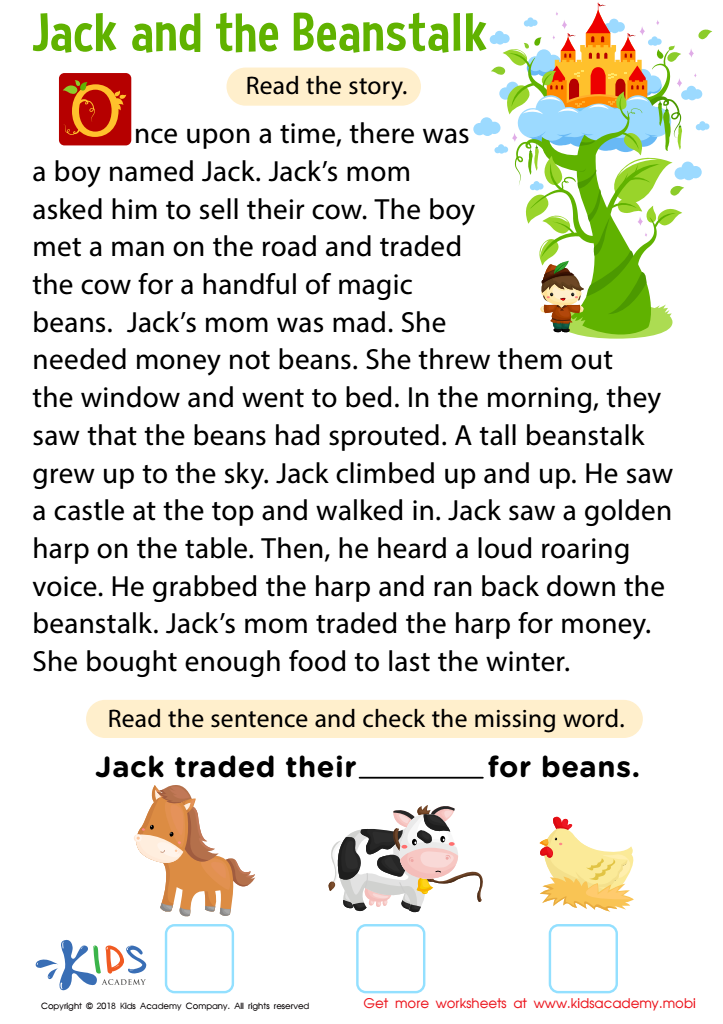
Jack and Beanstalk Worksheet
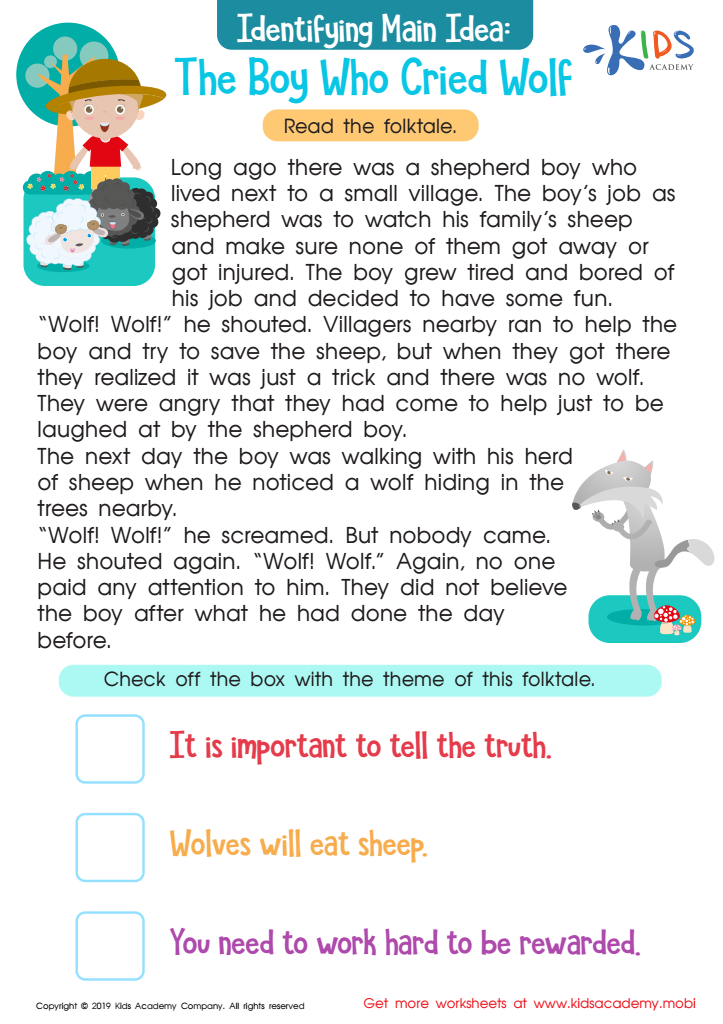
The Boy Who Cried Wolf Part 2 Worksheet


.jpg)





Story sequencing is a crucial component of reading comprehension for children aged 8-9, and it holds significant importance for both parents and teachers. At this age, children transition from learning to read to reading to learn. Effective comprehension skills not only enhance their understanding of texts but also develop critical cognitive and language abilities that will benefit them throughout their education.
Firstly, story sequencing helps children organize events logically, improving their narrative skills. When children understand the order of a story—beginning, middle, and end—they can better recall details, grasp themes, and make connections with their own experiences. This ability fosters higher-level thinking and boosts their analytical skills.
Additionally, developing story sequencing skills can encourage increased engagement with texts. Children gain confidence in their reading abilities, as they can follow and predict storylines. This can generate a love for reading, which is essential in nurturing lifelong learners.
Furthermore, teachers and parents can use story sequencing to identify any gaps in comprehension or critical thinking. By incorporating activities that promote sequencing, such as storytelling or interactive games, adults can further support children's learning. Ultimately, prioritizing story sequencing positively impacts not only comprehension but also overall academic success and emotional development.








