Moral understanding Normal Reading Fiction Worksheets for Ages 8-9
3 filtered results
-
From - To
Enhance your child's moral compass while improving reading skills with our Moral Understanding Normal Reading Fiction Worksheets for Ages 8-9. Through captivating stories and engaging questions, these worksheets help children grasp essential moral lessons and ethical themes. Ideal for building empathy, critical thinking, and comprehension, each worksheet encourages young readers to explore the motivations and consequences of characters' actions. Perfect for classroom use or at-home practice, these resources offer a fun and thought-provoking way to boost moral understanding and ethical reasoning. Elevate your child's reading experience and moral development with our expertly crafted worksheets.
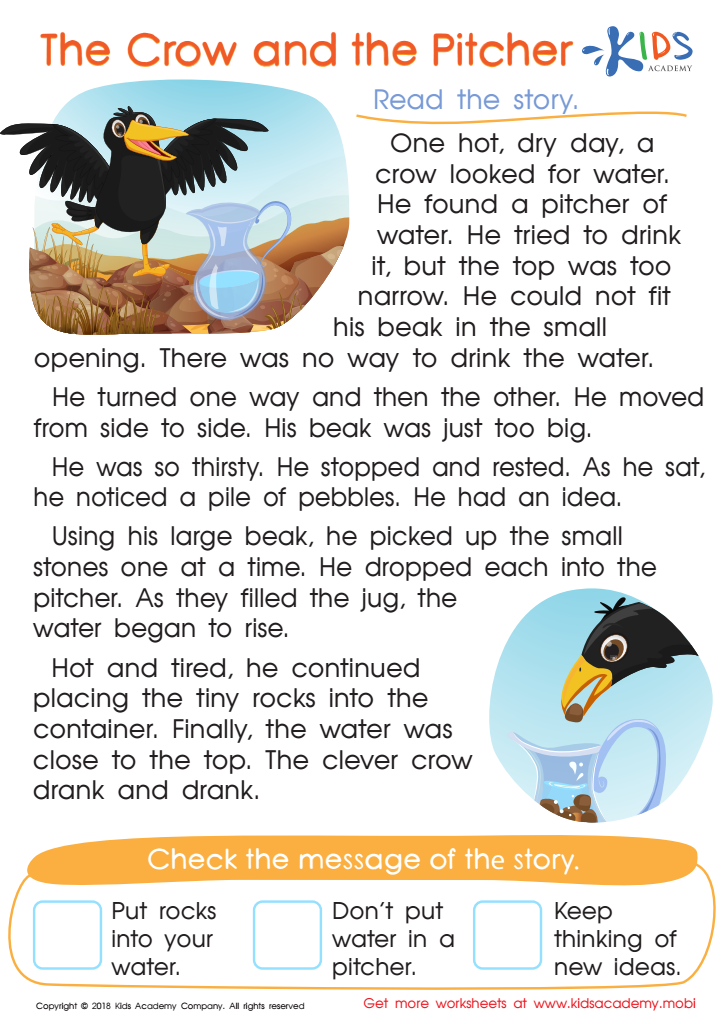
The Crow and the Pitcher Worksheet
 Assign to My Students
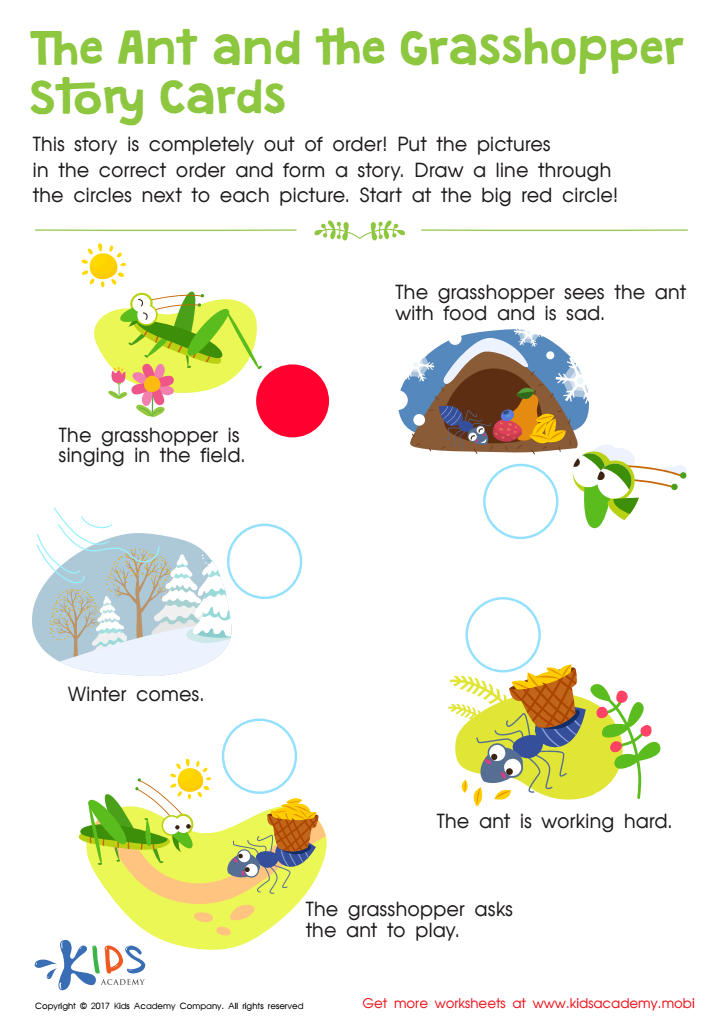
The Ant and The Grasshopper Worksheet
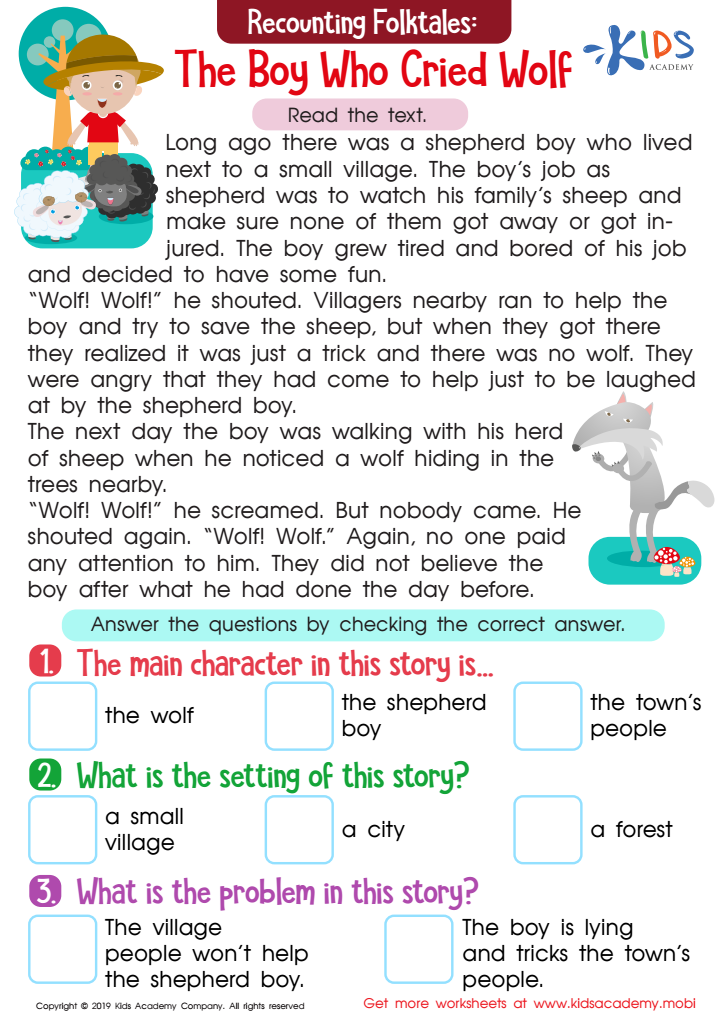
The Boy Who Cried Wolf Part 1 Worksheet








Moral understanding and normal reading fiction are crucial for children aged 8-9 because this period is foundational for developing empathy, imagination, and critical thinking. At this stage, children's brains are exceptionally receptive to new ideas and concepts. Reading fiction fosters creativity and allows them to experience diverse perspectives and situations in a safe and controlled environment. They learn to identify with characters, recognize emotions, and understand conflicts and resolutions, all of which shape their morals and values.
Moreover, moral stories in fiction provide clear examples of right and wrong, enabling children to internalize ethical principles. For instance, narratives about honesty, empathy, and justice can guide them to discern good behavior and discourage negative actions like lying or bullying. These stories become part of their moral toolkit, used when facing real-life dilemmas.
Teachers and parents play a pivotal role by choosing quality fiction that aligns with these goals. When engaged in discussions about a book’s content or characters' choices, children practice moral reasoning. Furthermore, regular reading enhances literacy skills, empowering them to better process complex concepts as they grow. Therefore, integrating moral-themed fiction into their reading routine not only nurtures their reading ability but also cultivates a strong ethical foundation for their future.







