Problem-Solving Skills Normal Reading Fiction Worksheets for Ages 8-9
5 filtered results
-
From - To
Enhance your child's problem-solving skills with our engaging fiction worksheets designed specifically for ages 8-9. These worksheets combine the joy of reading with critical thinking exercises, allowing young learners to explore various scenarios and challenges within captivating stories. Each activity encourages children to analyze situations, make predictions, and develop reasoning skills with guided questions that promote comprehension and creativity. Perfect for home or classroom use, our printable resources provide a fun and interactive way for kids to immerse themselves in fiction while strengthening essential problem-solving abilities. Foster a love for reading and critical thinking today!
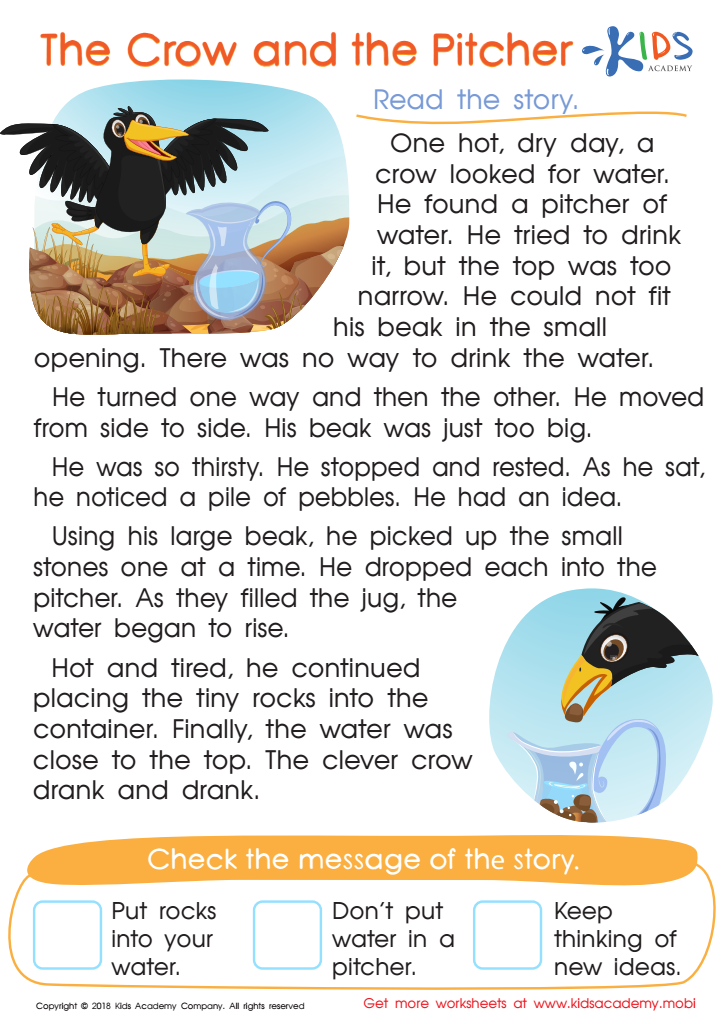
The Crow and the Pitcher Worksheet
 Assign to My Students
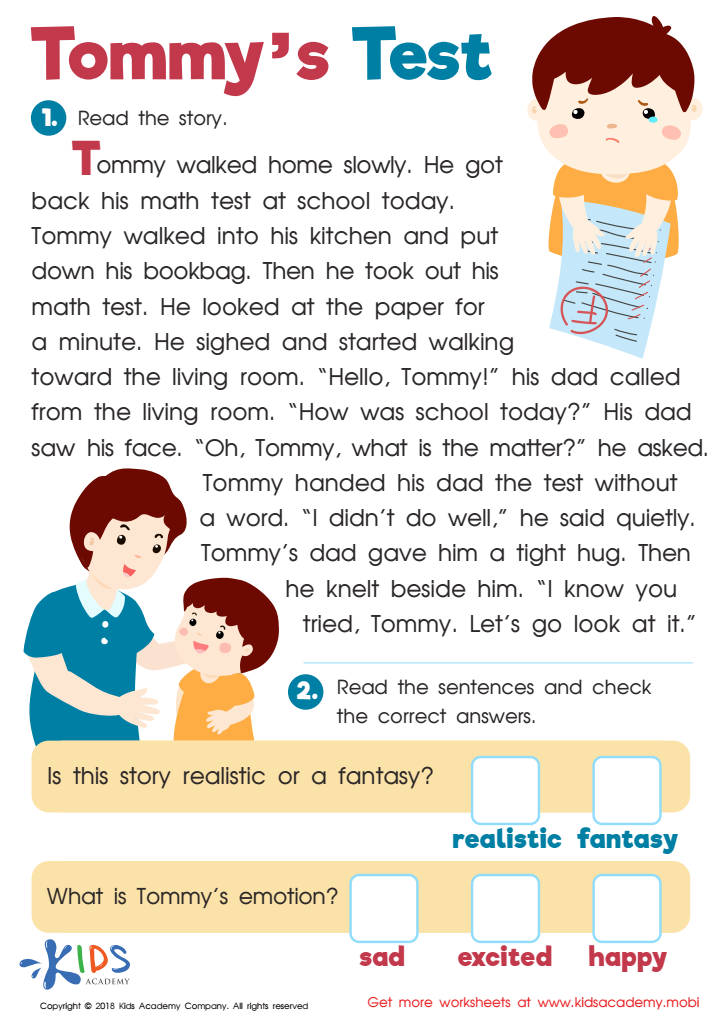
Tommys Test Worksheet
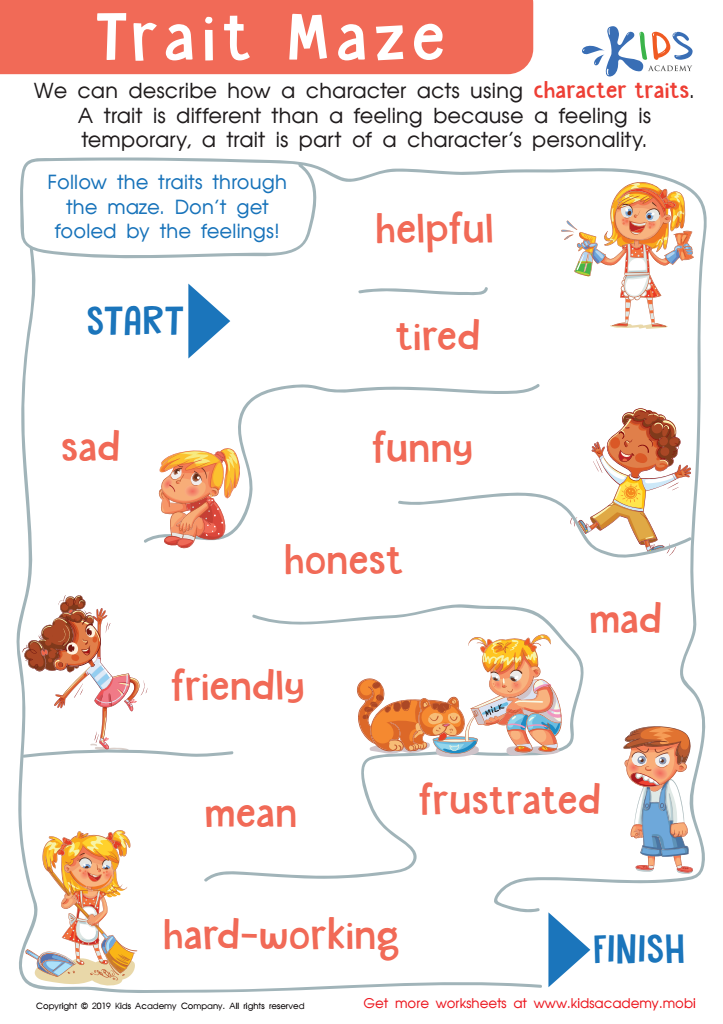
Trait Maze Worksheet
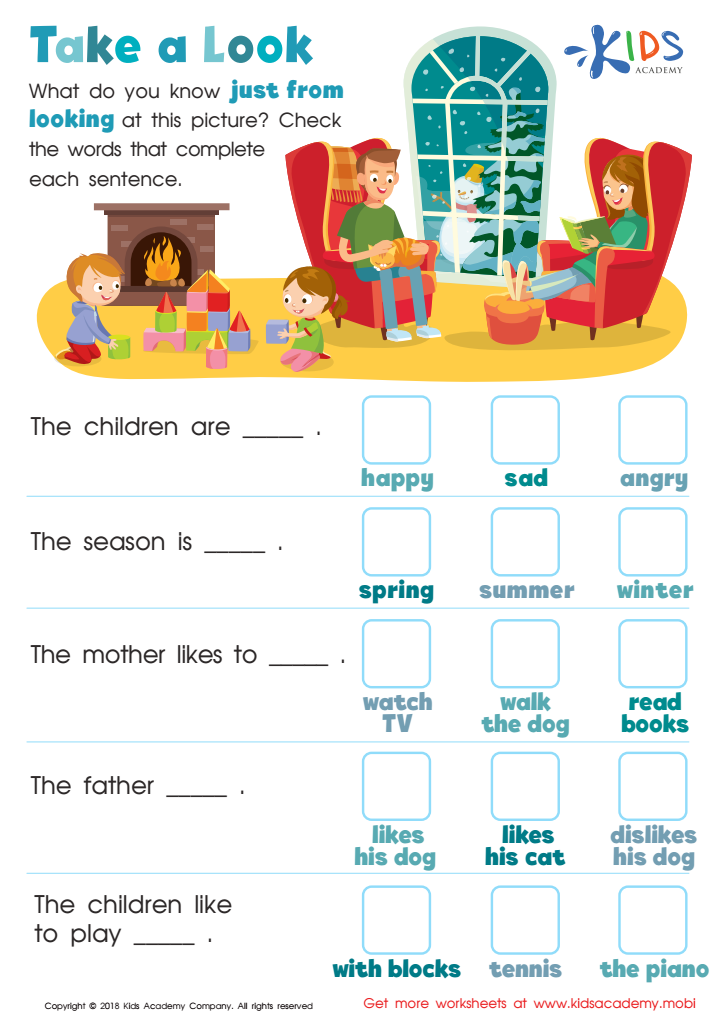
Take a Look - Part 1 Worksheet
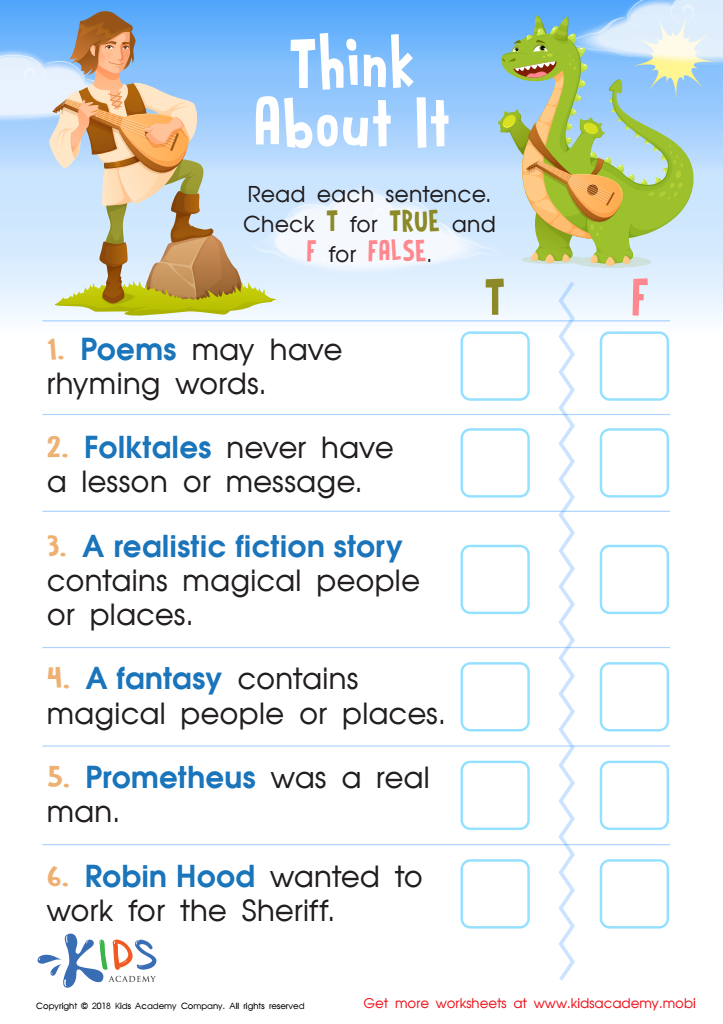
Think About It: Assessment Worksheet








Problem-solving skills are essential for children's cognitive and social development, making it vital for parents and teachers to emphasize their importance during reading activities, especially with age-appropriate fiction for 8-9-year-olds. At this age, children are beginning to understand narratives with complex scenarios, offering a perfect backdrop for exploring problem-solving strategies.
Reading fiction fosters empathy by allowing children to connect with characters and situations, enhancing their ability to think critically about problems. As they navigate plots, they learn to identify conflicts, consider multiple perspectives, and explore potential solutions. Discussions around these dilemmas can stimulate their analytical thinking and enhance their ability to approach real-life challenges with creativity and resilience.
Moreover, engaging with stories can bolster their communication skills, as they articulate their thoughts and justifications during discussions. This interaction not only nurtures their verbal abilities but can also increase their confidence in sharing ideas.
Ultimately, nurturing problem-solving skills through normal reading of fiction equips children with vital tools they will use throughout their lives, including but not limited to academic success, interpersonal relationships, and navigating society's complexities. Parents and teachers play a crucial role in facilitating this developmental journey by integrating literature into the learning process.







