Cognitive Development Normal Grammar Worksheets for Ages 8-9
3 filtered results
Difficulty Level
Grade
Age
-
From - To
Subject
Activity
Standards
Discover our specialized Cognitive Development Normal Grammar Worksheets designed for ages 8-9. These worksheets focus on enhancing young learners’ understanding of grammar while fostering cognitive growth. With engaging exercises, kids will explore key grammar concepts such as sentence structure, punctuation, and parts of speech. Our carefully crafted activities are aligned with educational standards, ensuring your child’s progress in both writing and cognitive skills. Ideal for supplementing classroom learning or for additional practice at home, these worksheets provide a fun and effective way to strengthen essential language arts abilities. Empower your child’s learning journey with our comprehensive, developmental approach.
Favorites
With answer key
Interactive
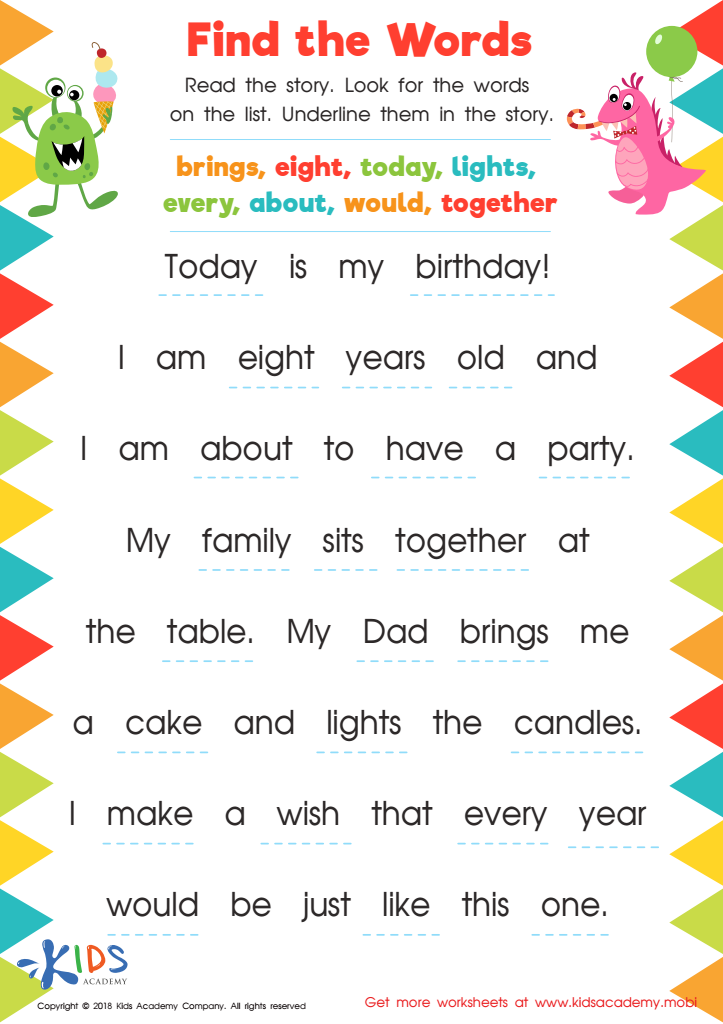
Find The Words Printable Worksheet
Hunt for words while reading this birthday story! This printable worksheet will help your child practice early reading skills as they search for words in the text. Enjoy the story and find the words!
 Assign to My Students
Find The Words Printable Worksheet
Worksheet
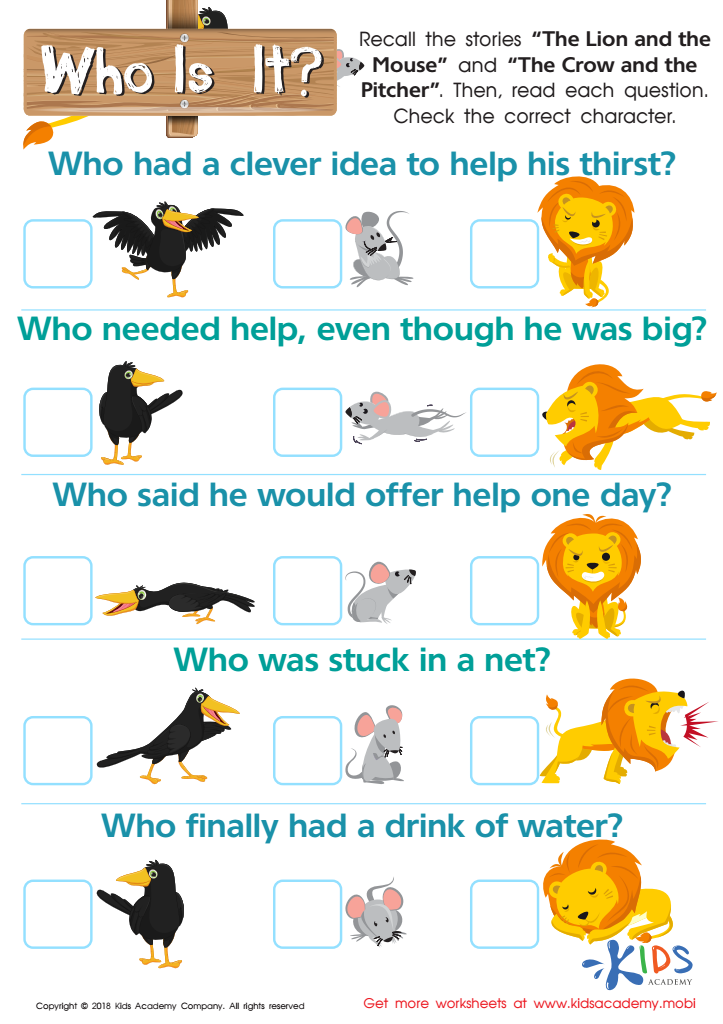
Who Is It? Worksheet
This worksheet helps students recall details from The Crow and the Pitcher and The Lion and the Mouse stories. Students will answer questions about the characters' actions. Use it to assess their understanding of both stories, as this is a key comprehension skill.
Who Is It? Worksheet
Worksheet
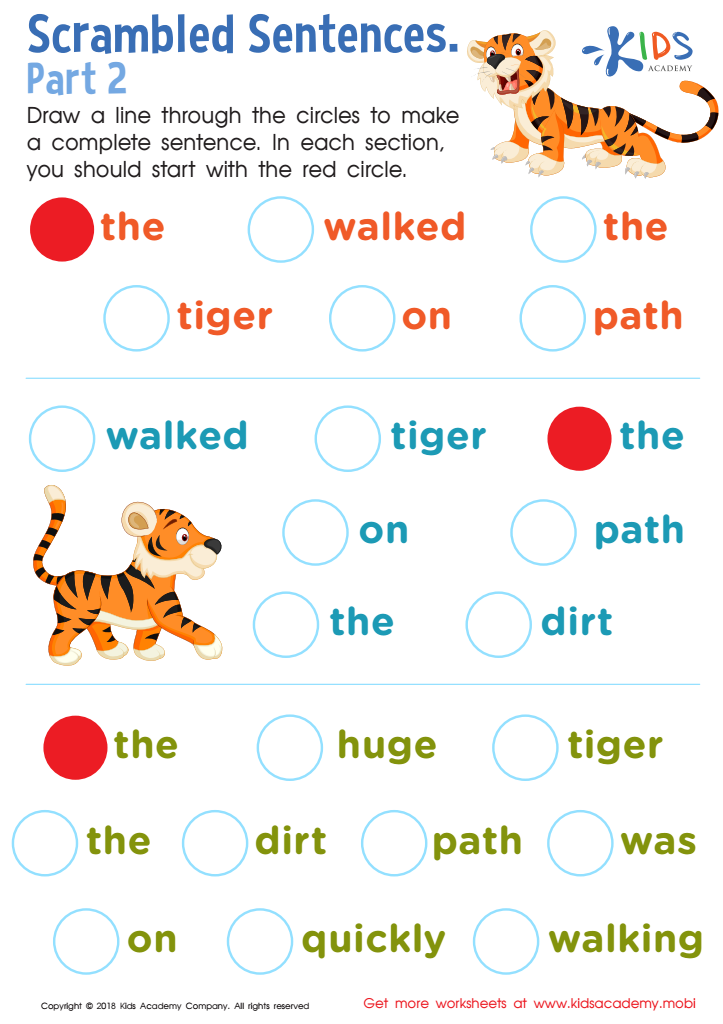
Scrambled Sentences Part 2 Worksheet
This printable worksheet helps kids construct simple, correct sentences. Introduce them to making sentences if they're new to it. Have them draw a line through the circles to form a sentence, starting with the red circle. After completing this exercise, they'll be able to craft short sentences with confidence.
Scrambled Sentences Part 2 Worksheet
Worksheet
Join Kids Academy for Free
Who is primarily going to use this learning content?



.jpg)




Parents and teachers should deeply care about cognitive development in children ages 8-9 because this stage is critical for building foundational thinking skills. During these years, kids begin to transition from concrete to more abstract thinking. They start to understand cause-and-effect relationships better, solve problems more logically, and grasp complex ideas.
Investing attention in this facet of development will significantly impact a child's academic performance and social interactions. For instance, children who are supported cognitively can better organize their thoughts, follow multi-step instructions, and engage in deeper conversations. This lays the groundwork for future learning and intellectual curiosity.
Additionally, cognitive development is closely tied to emotional and social growth. As children think more critically and empathetically, they also learn to manage their behaviors and understand others' perspectives, fostering better interpersonal relationships.
Parents and teachers can nurture this development through activities such as reading, puzzles, and stimulating conversation. Doing so can bolster educational success and lifelong skills, such as decision-making and problem-solving.
In essence, nurturing cognitive skills in 8- and 9-year-olds helps create capable, confident, and curious individuals, prepared for the complex demands of later schooling and life. It’s a pivotal investment into a child's future well-being and achievement.