Understanding prefixes Normal Writing Worksheets for Ages 8-9
6 filtered results
-
From - To
Discover our "Understanding Prefixes" normal writing worksheets designed specifically for children ages 8-9. These engaging resources help young learners explore and master the concept of prefixes, enhancing their vocabulary and reading comprehension skills. Through fun activities and exercises, students will learn how prefixes modify the meanings of base words, promoting language development in a supportive environment. Ideal for classroom use or at-home learning, our worksheets encourage creativity and critical thinking. Dive into the world of prefixes and watch your child's confidence in writing and communication flourish! Get started today and empower young learners to unlock the power of language.
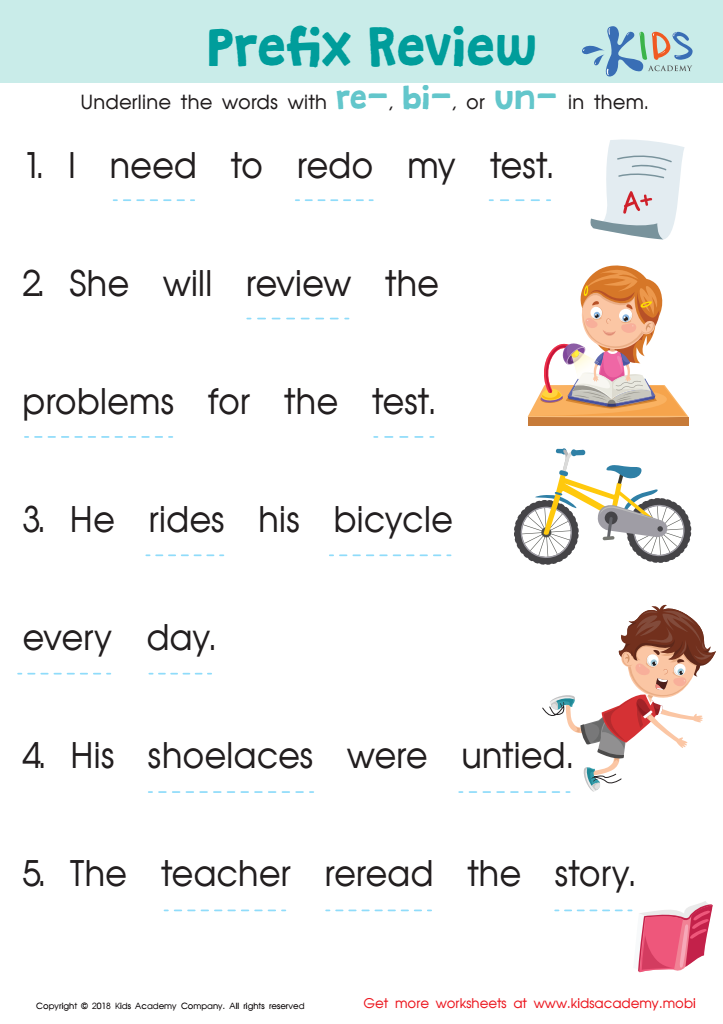
Prefix Review Worksheet
 Assign to My Students
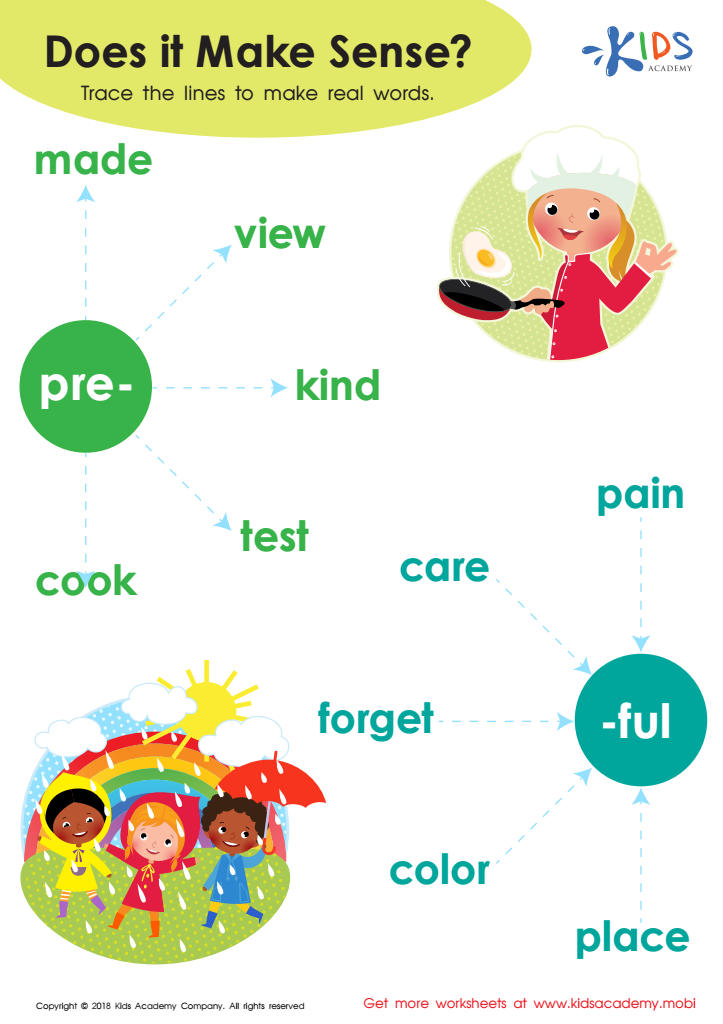
Prefix pre– and Suffix ful– Worksheet
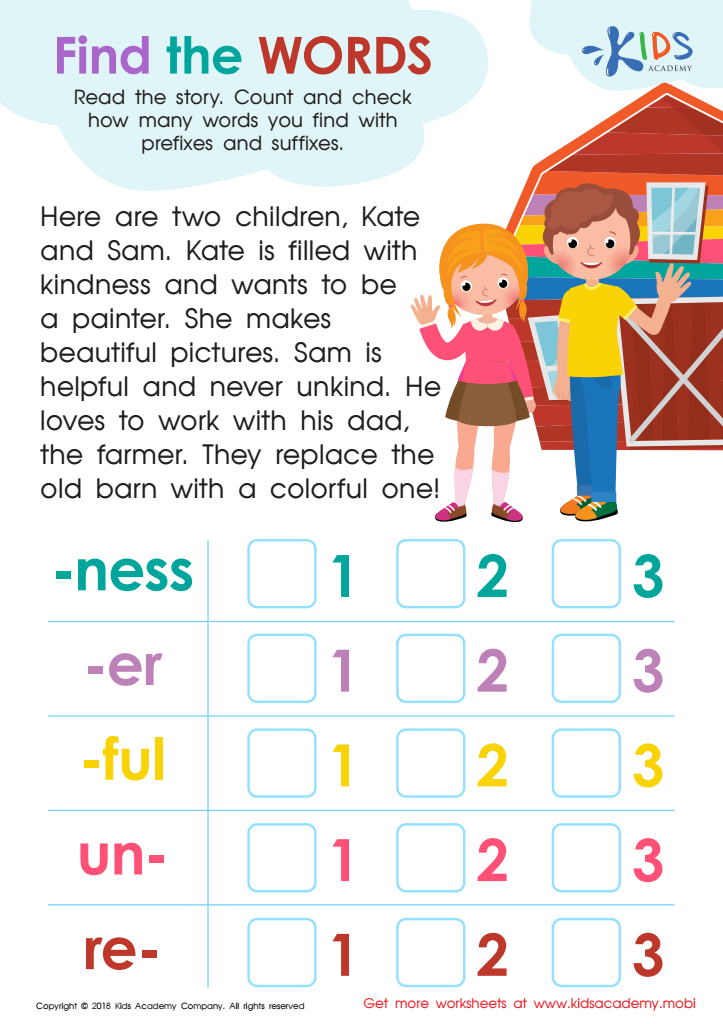
Prefix and Suffix Worksheet For Grade 3
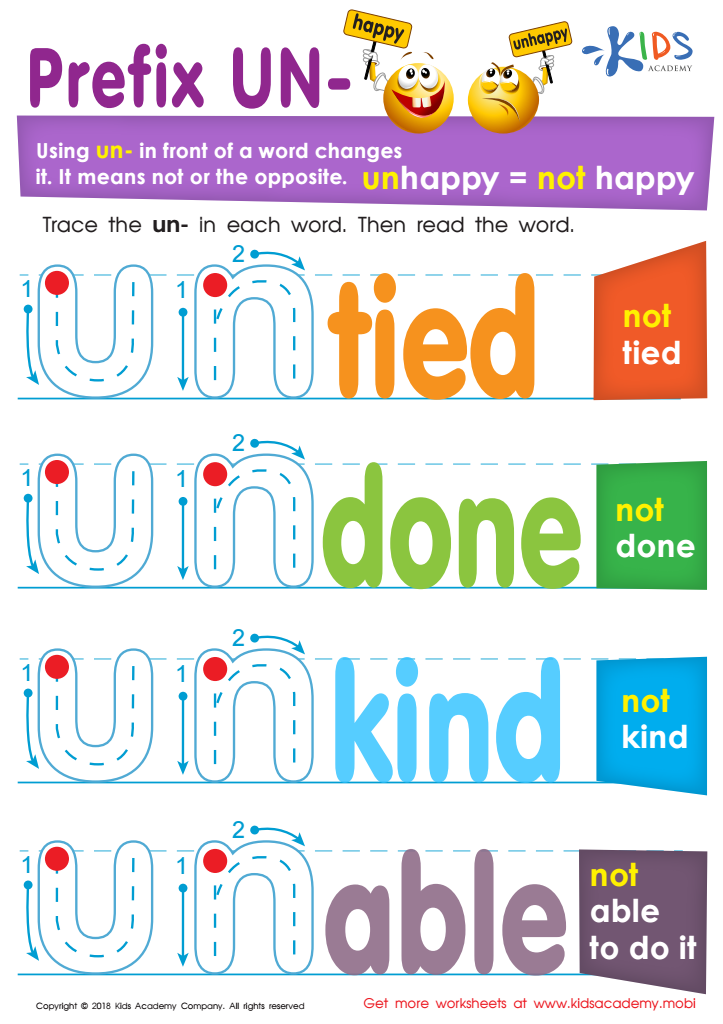
Prefix Un- Worksheet
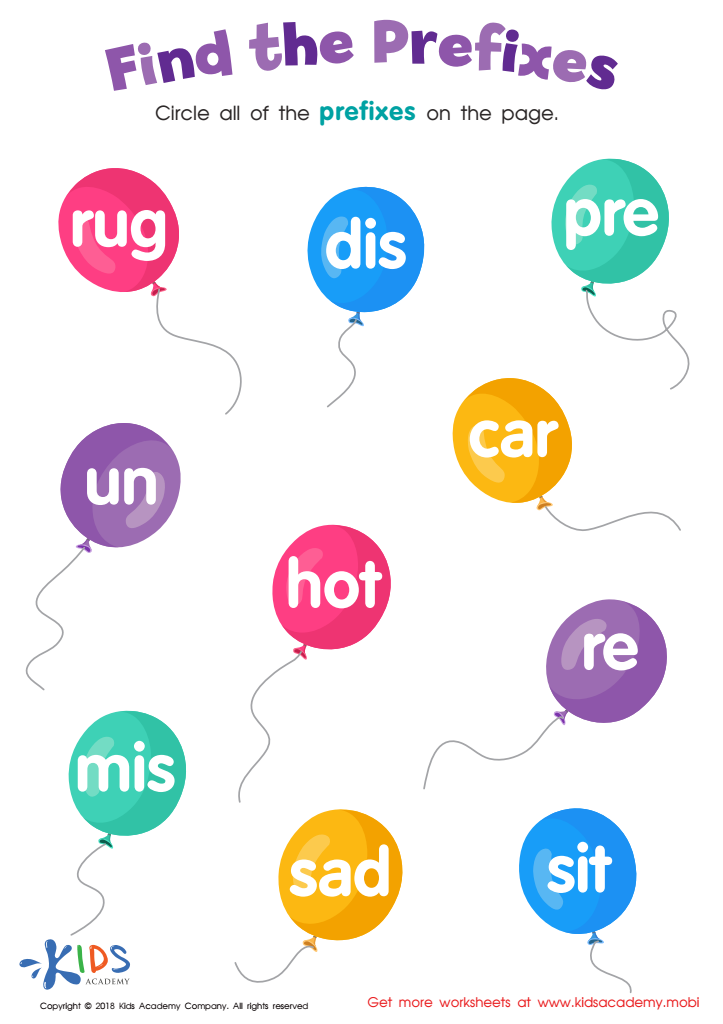
Reading: Find the Prefixes Worksheet
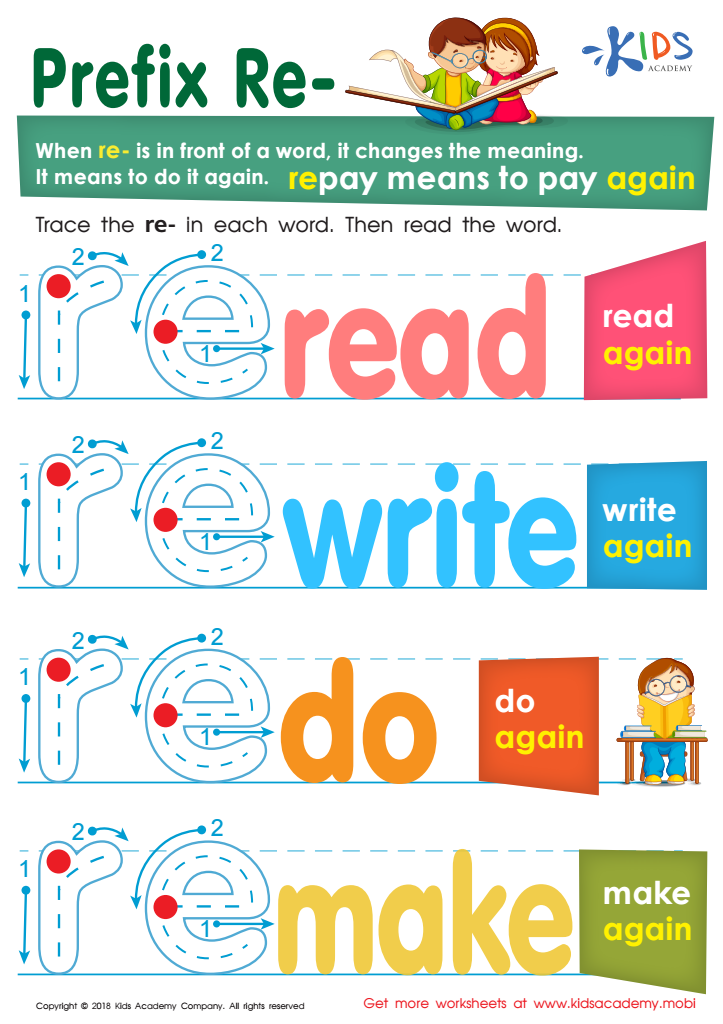
Prefix Re- Worksheet







Understanding prefixes is crucial for children aged 8-9 as it helps them unlock the meaning of new words, enhancing their vocabulary and reading comprehension. A prefix is a group of letters added to the beginning of a word to alter its meaning, such as "un-" in "undo" or "pre-" in "preview." By learning these small word parts, children can decode unfamiliar words more easily, boosting their confidence in reading and writing.
Moreover, prefixes can help children make connections between words. For instance, if they understand "happy," they can easily grasp its opposite, "unhappy," once they recognize the prefix "un-." This skill not only enriches their language but also improves their ability to express ideas clearly.
Parents and teachers play a vital role in this learning process. By introducing prefixes through engaging activities like word games, illustrated charts, or writing prompts, they can make learning fun. This foundational skill doesn't just apply to language arts; it also supports critical thinking and problem-solving abilities as children learn to analyze word structures.
Ultimately, understanding prefixes fosters a deeper love of language, empowering children to communicate effectively and explore the world of words around them.