Vocabulary Building Normal Writing Worksheets for Ages 8-9
5 filtered results
-
From - To
Enhance your child's vocabulary with our engaging Vocabulary Building Normal Writing Worksheets for ages 8-9! Designed to captivate young learners, these worksheets offer a variety of fun activities that improve word recognition, spelling, and comprehension. Children will explore new words in context, allowing them to express their thoughts more clearly and creatively. Each worksheet targets essential skills to boost their language development while keeping learning enjoyable. Perfect for classroom or home use, our resources are ideal for helping kids build confidence in their writing abilities. Start nurturing your child's language skills today with our thoughtfully crafted worksheets!
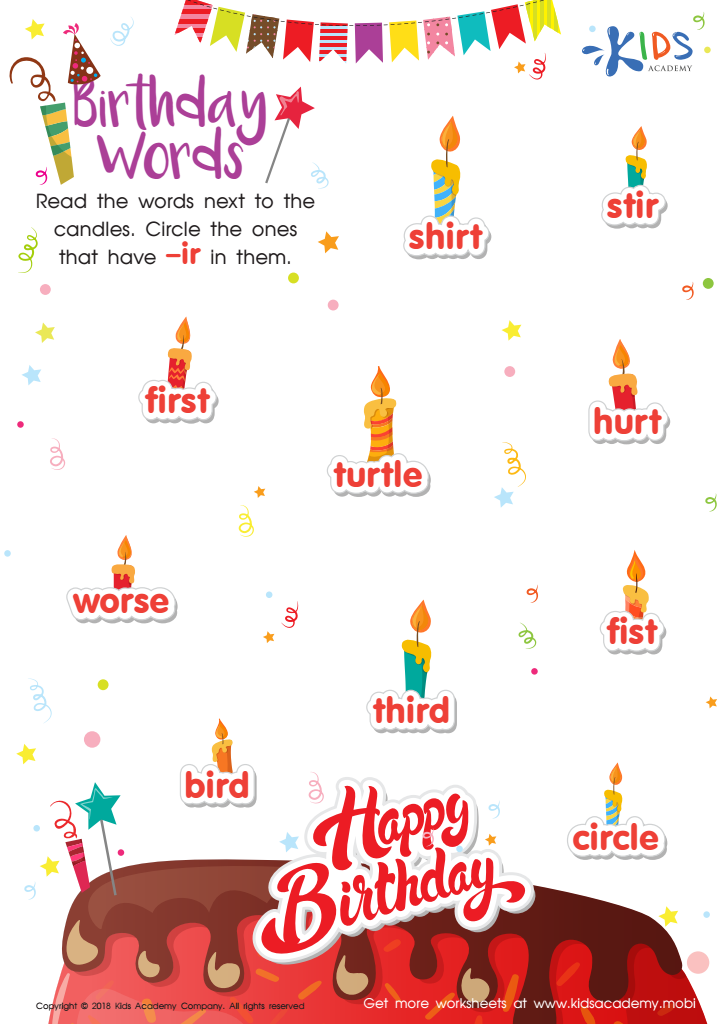
Birthday Words Worksheet
 Assign to My Students
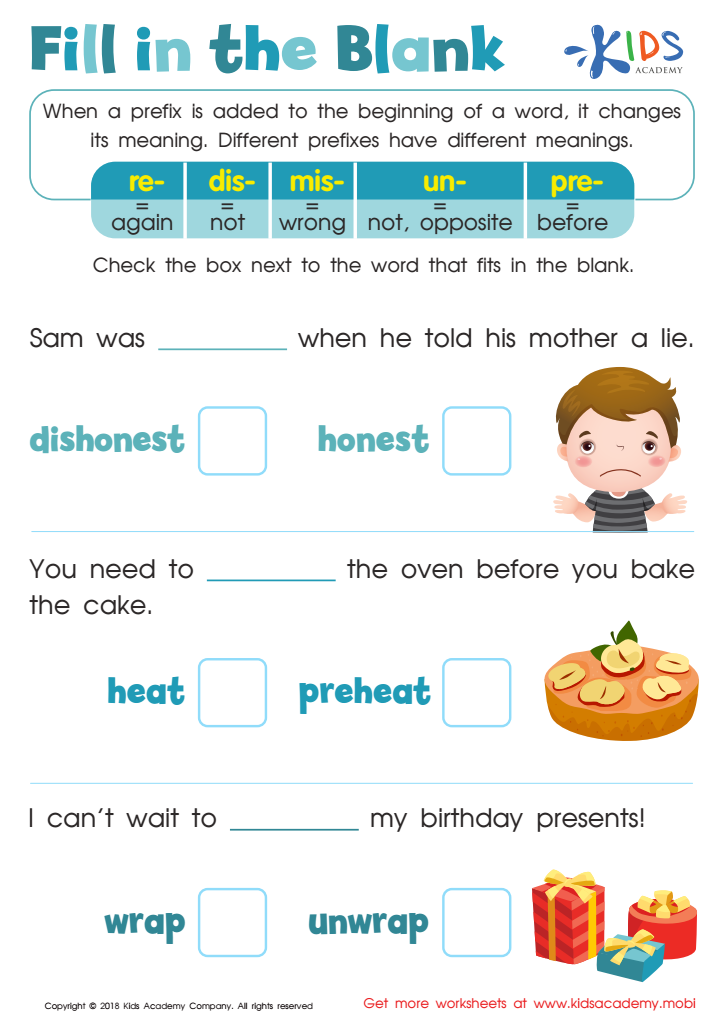
Reading: Fill in the Blank Worksheet
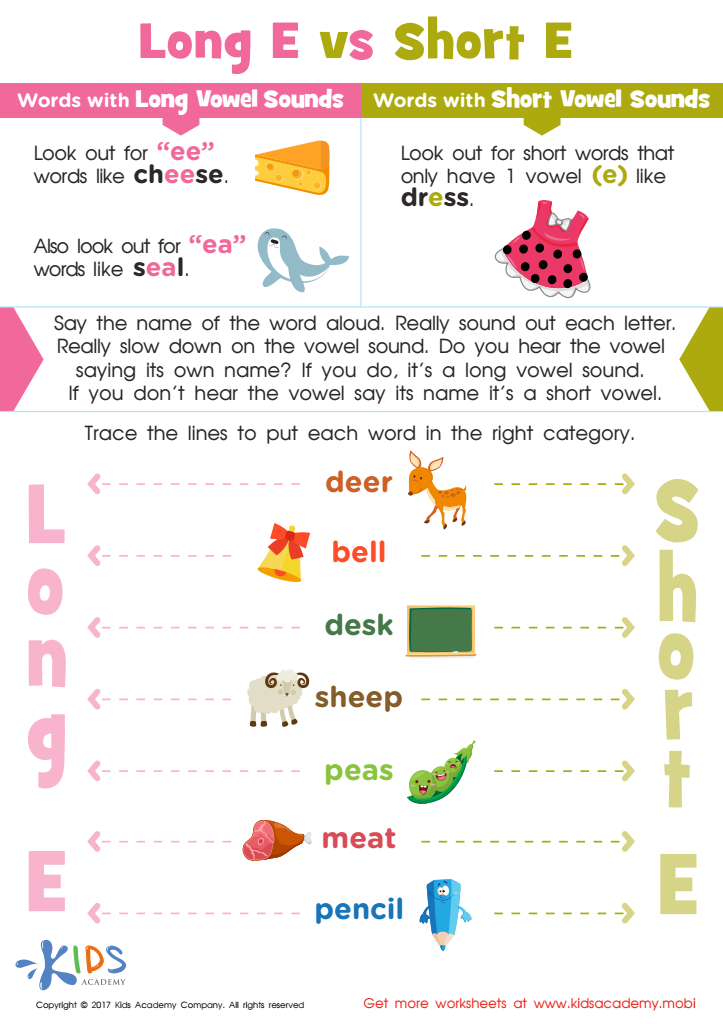
Long and Short Vowel E Spelling Worksheet
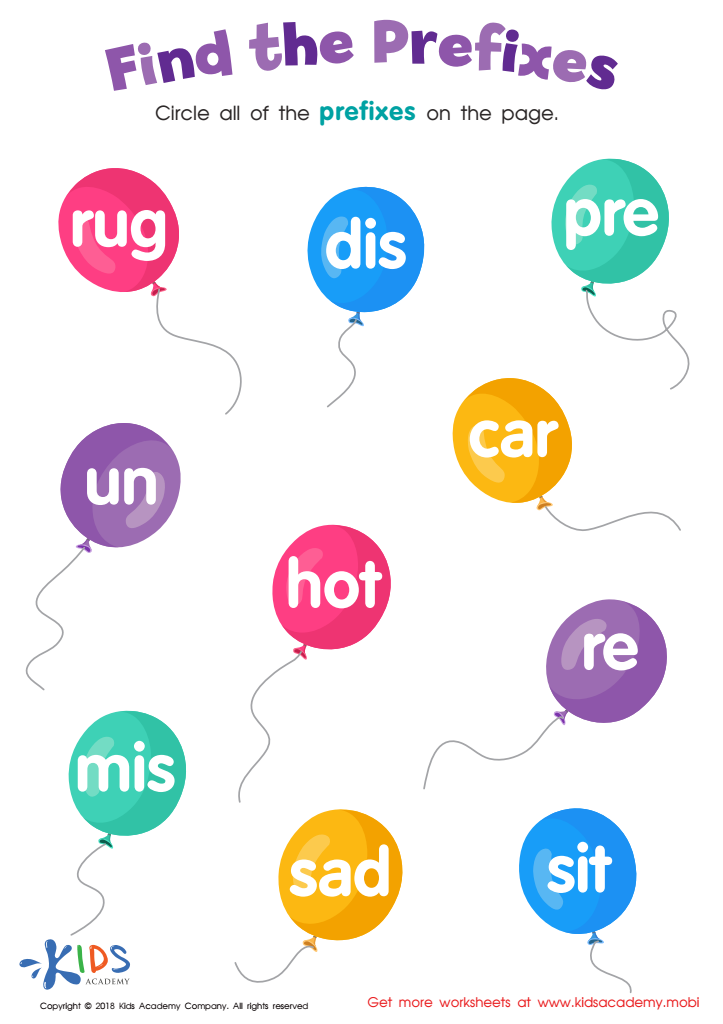
Reading: Find the Prefixes Worksheet
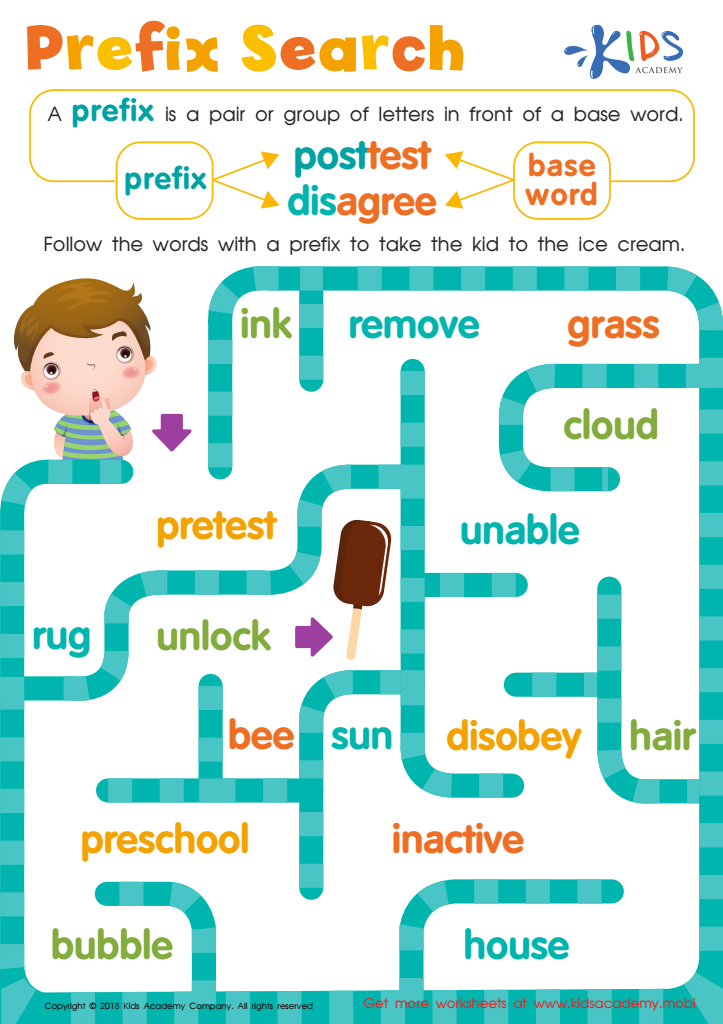
Reading: Prefix Search Worksheet








Parents and teachers should prioritize vocabulary building during the ages of 8-9 because this foundational stage is crucial for language development, reading comprehension, and effective communication. At this age, children’s vocabulary rapidly expands, and enhancing it can significantly impact their academic success. A robust vocabulary helps children understand complex texts, express thoughts clearly, and engage more meaningfully in discussions.
Furthermore, developing vocabulary skills improves writing proficiency. Children learn to use varied words and phrases, which not only enriches their writing but also makes it more engaging for readers. This age is also when students start shifting from "learning to read" to "reading to learn", making a rich vocabulary essential for grasping more sophisticated concepts across all subjects.
Moreover, strong vocabulary skills foster critical thinking and creativity. When children have the words to articulate their ideas, they are more likely to participate in classroom discussions, collaborate with peers, and explore differing perspectives. By actively participating in vocabulary building, whether through reading, games, or structured activities, parents and teachers can empower children to thrive academically and socially, helping to lay the groundwork for lifelong learning and success.