Vowel Recognition Normal Alphabet Worksheets for 8-Year-Olds
4 filtered results
-
From - To
Discover engaging Vowel Recognition Normal Alphabet Worksheets designed specifically for 8-year-olds to enhance their reading and writing skills. These worksheets provide a fun and interactive way for children to identify and practice vowels within an alphabet context. Each activity focuses on letter recognition and sound association, ensuring a comprehensive understanding of vowel usage in words. Perfect for classrooms or at-home learning, these worksheets encourage critical thinking and promote early literacy development. Transform learning into an enjoyable experience as your child builds foundational skills crucial for reading success. Explore our collection and support your child’s journey to literacy today!
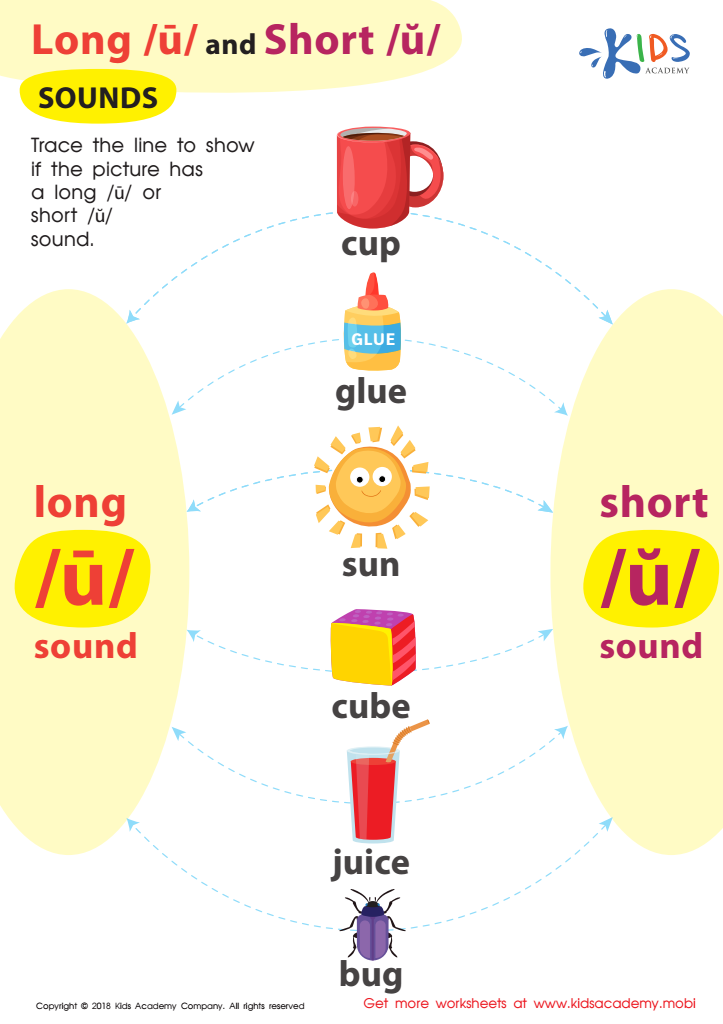
Reading: Long U and Short U Sounds Worksheet
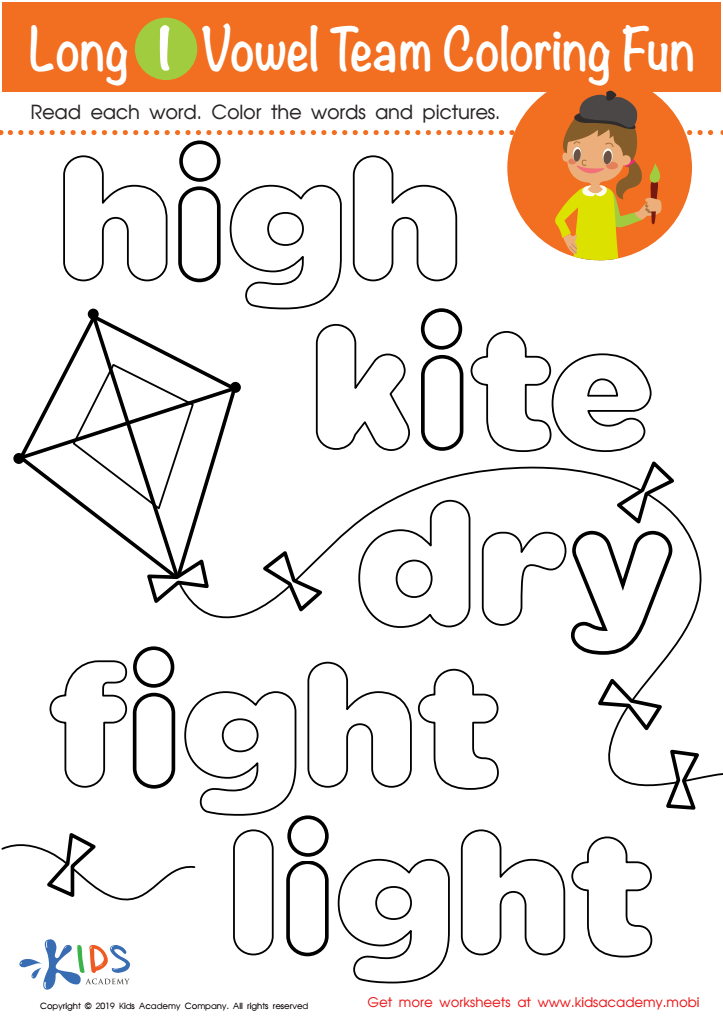
Long I Vowel Team Coloring Worksheet
 Assign to My Students
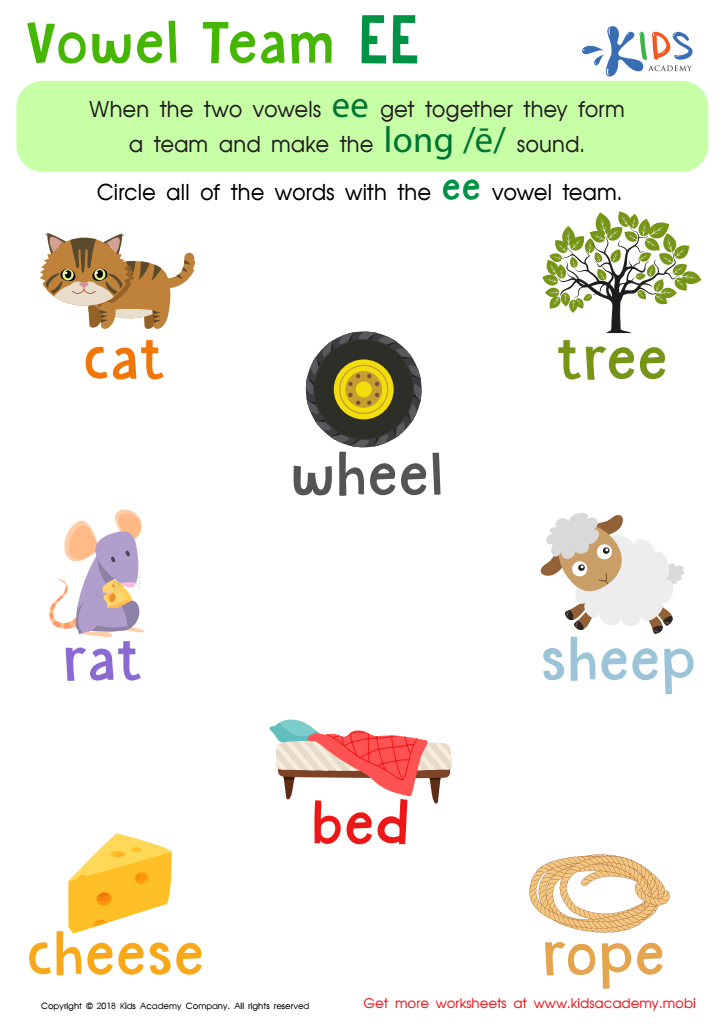
Reading: Vowel Team EE Worksheet
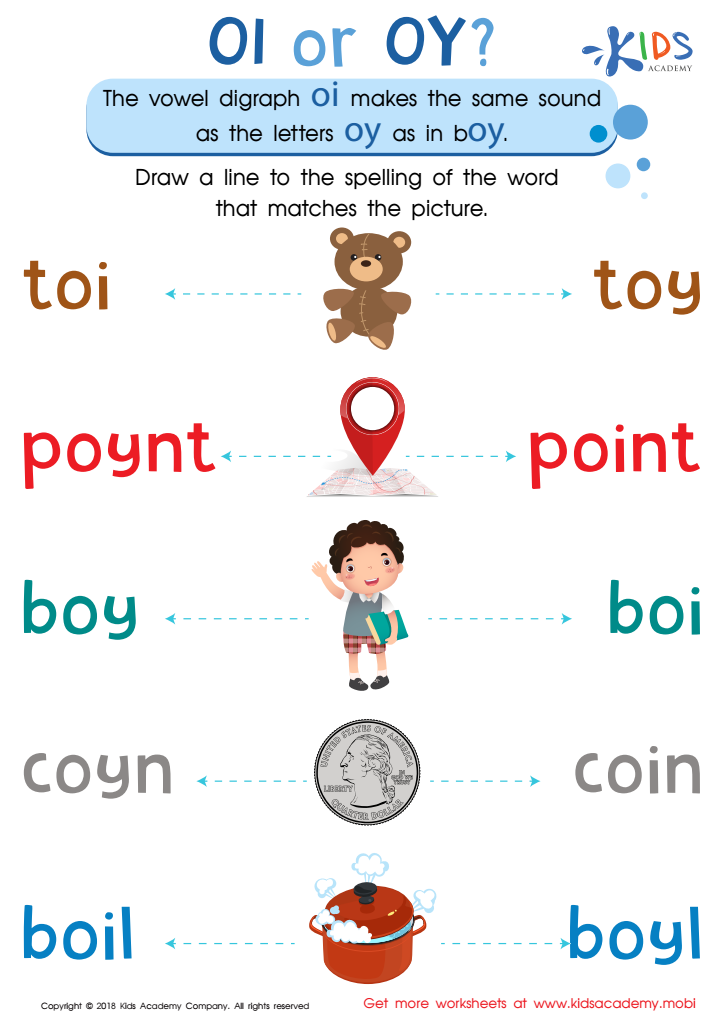
Reading: OI and OY Worksheet





Vowel recognition is a crucial component of early literacy development, particularly for 8-year-olds as they transition from learning to read to reading to learn. Mastery of vowels, including long and short sounds, enhances phonemic awareness, enabling children to decode and spell words more effectively. This foundational skill is integral to their overall language development and academic success.
Vowels are essential in nearly every English word, making their recognition vital for effective reading. Confusion around vowel sounds can lead to reading difficulties, affecting comprehension and confidence. By nurturing vowel recognition through engaging activities, teachers and parents can help children improve their reading fluency and comprehension.
Additionally, strong vowel skills support other areas of learning, including writing and vocabulary development. Recognizing vowel patterns helps students make connections between sounds and words, promoting richer language experiences. With increasingly complex texts in upper elementary grades, instilling a solid grasp of vowels at this age can empower students, fostering a love for reading and curiosity about language.
In conclusion, supporting vowel recognition in 8-year-olds is essential for children’s literacy journey, influencing their success in reading, writing, and overall academic performance, ultimately setting a strong foundation for lifelong learning.







