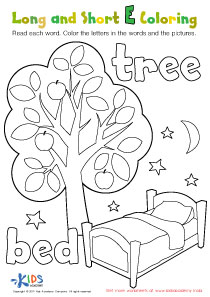
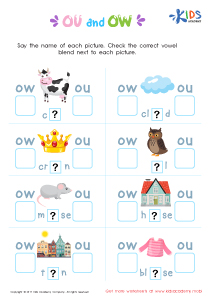
Vocabulary expansion Normal Long And Short Vowel Worksheets for 8-Year-Olds
4 filtered results
-
From - To
Enhance your 8-year-old's reading skills with our engaging vocabulary expansion worksheets focused on long and short vowels! Tailored for young learners, these worksheets provide a fun approach to understanding vowel sounds, fostering improved literacy and pronunciation. Through various activities such as matching, filling in the blanks, and word searches, children will explore a variety of vocabulary words in exciting contexts. Designed to be both beneficial and enjoyable, these worksheets support reading development while boosting confidence in language use. Perfect for home or classroom, our resources ensure your child builds a solid foundation in vocabulary that will serve them well in their educational journey!
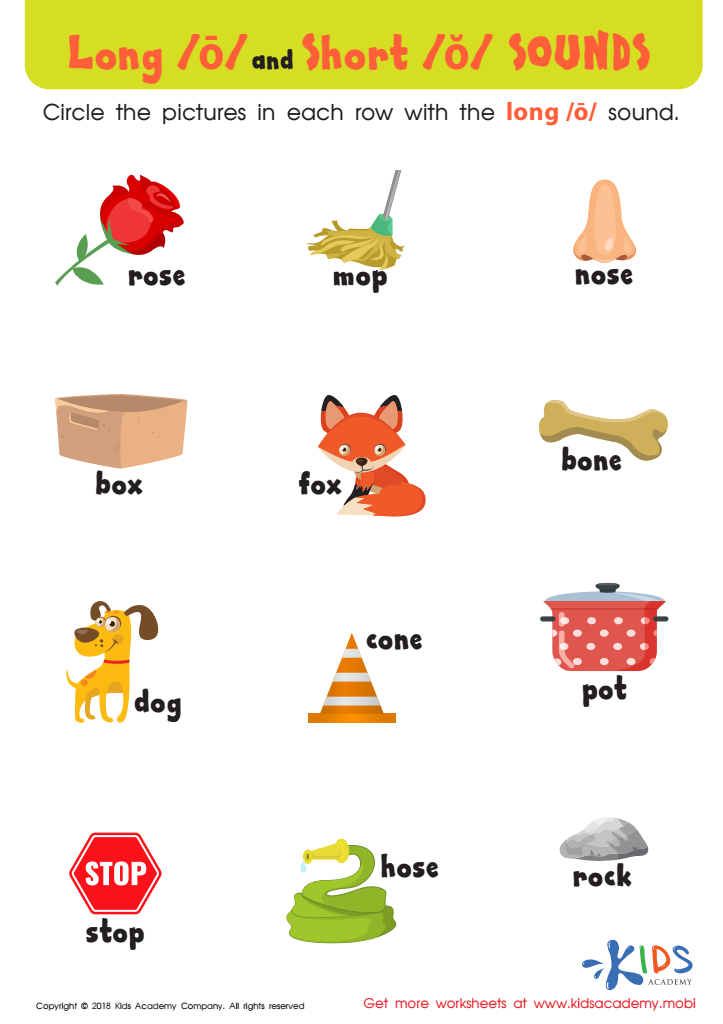
Reading: Long O and Short O Sounds Worksheet
 Assign to My Students
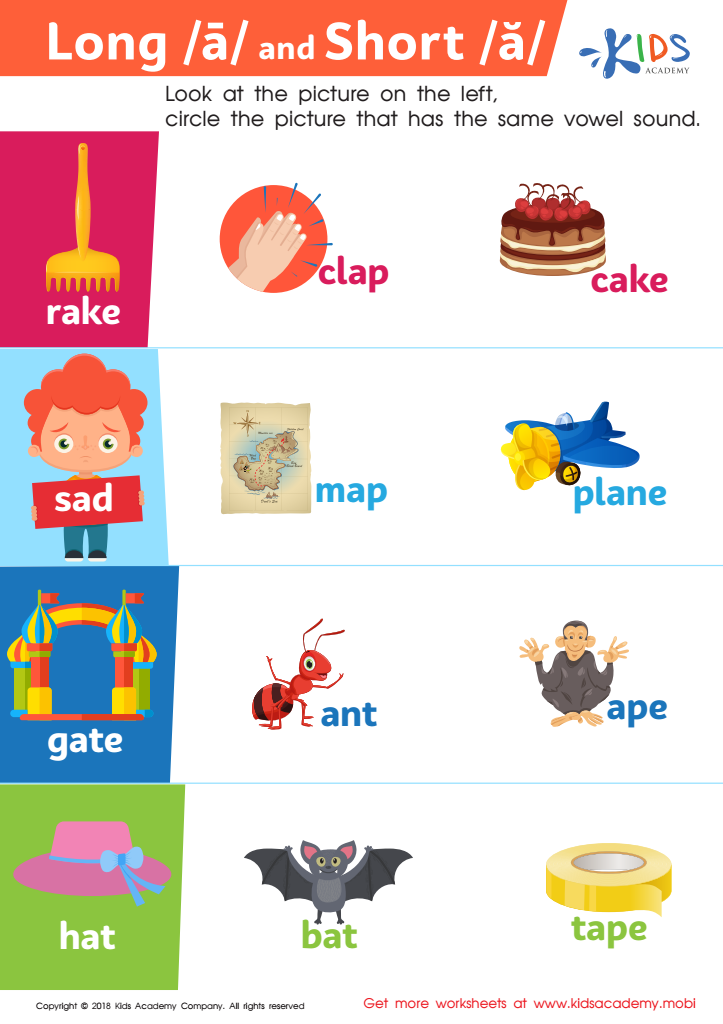
Reading: Long a and Short a Worksheet
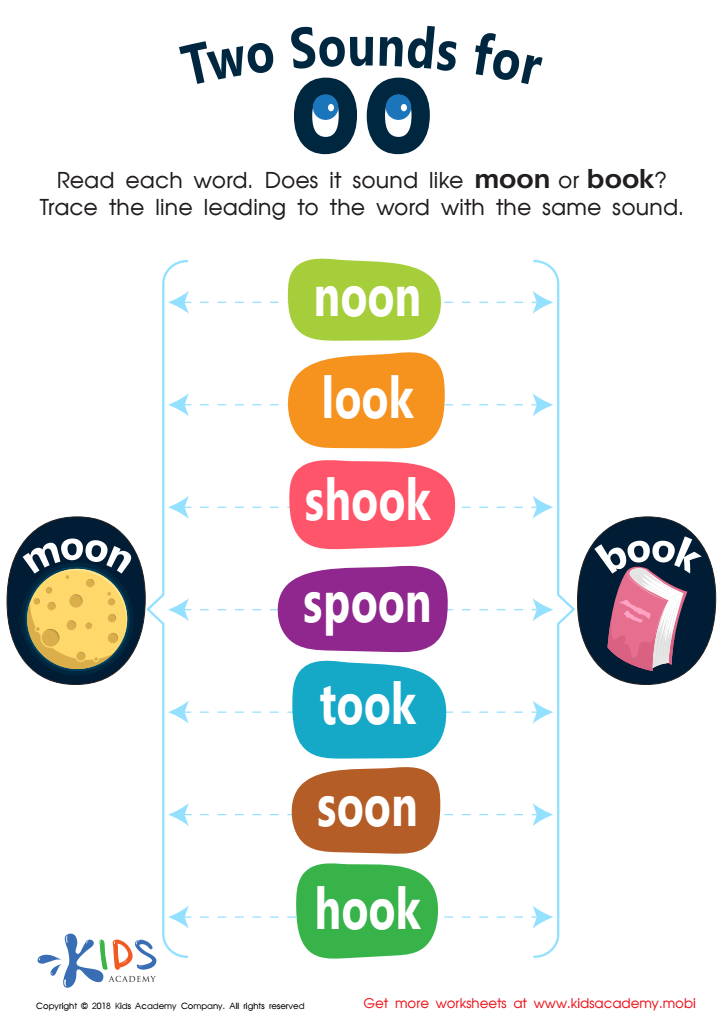
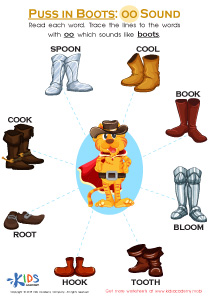
Two Sounds for OO Worksheet
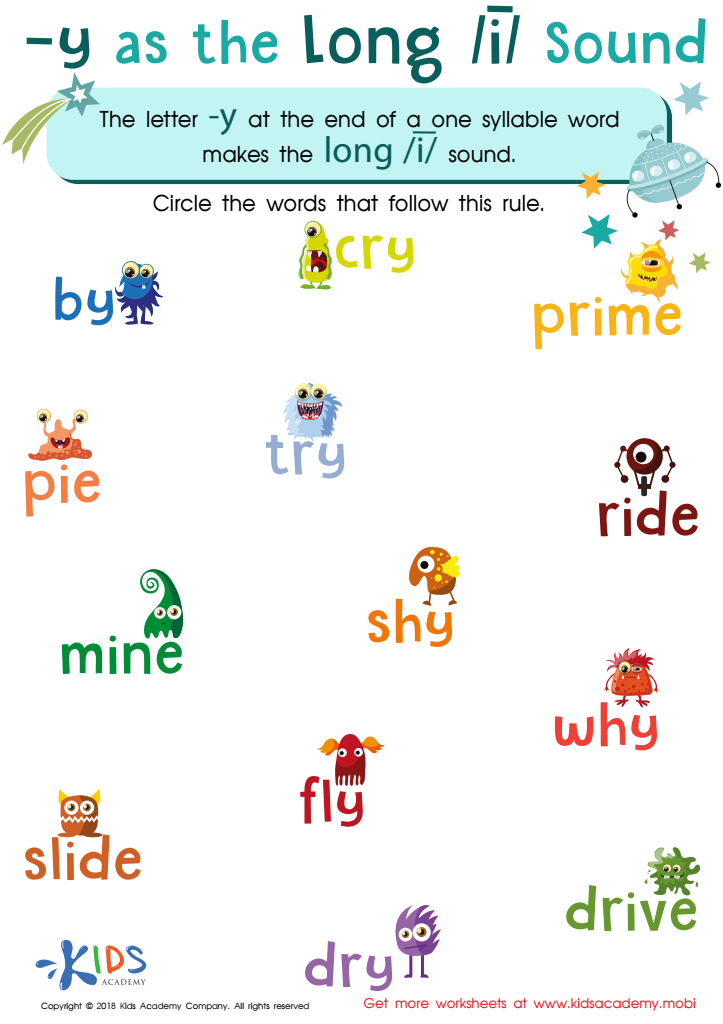
Reading: Y as Long I Worksheet




Expanding vocabulary, particularly with a focus on normal, long, and short vowels, is crucial for 8-year-olds as it significantly impacts their literacy development. At this age, children are transitioning from learning to read to reading to learn. A robust vocabulary equips them with the ability to comprehend texts more deeply, enabling them to engage with subject matter more effectively in school.
Understanding the differences between long and short vowels plays a vital role in phonics and spelling. It helps children decode words accurately, improving their reading fluency. When children can recognize and apply vowel patterns, they become more confident readers, which positively influences their overall academic performance.
Moreover, a rich vocabulary enables better communication skills, allowing children to express themselves more clearly in both spoken and written forms. This foundation is essential for developing critical thinking skills, as children articulate their ideas and arguments more effectively. Furthermore, a solid vocabulary encourages creativity and imagination, enabling them to share their thoughts and feelings through storytelling and writing.
Therefore, parents and teachers should prioritize vocabulary expansion to foster a love for reading and learning, ensuring that children are well-prepared for future academic success and personal growth.