
Alphabet Recognition Normal Tracing Letters Worksheets for 8-Year-Olds
9 filtered results
Difficulty Level
Grade
Age
-
From - To
Subject
Activity
Standards
Enhance your child's alphabet recognition with our Alphabet Recognition Normal Tracing Letters Worksheets designed specifically for 8-year-olds. These engaging worksheets from Kids Academy provide an excellent foundation in recognizing and writing the alphabet. Each page helps children practice tracing letters, reinforcing their phonics skills while improving their handwriting. Ideal for young learners, these activities blend fun with education, nurturing their confidence in letter formation and recognition. Perfect for parents and teachers seeking effective educational tools, our worksheets empower children to master the alphabet in an enjoyable and interactive way. Download now and start learning today!
Favorites
With answer key
Interactive
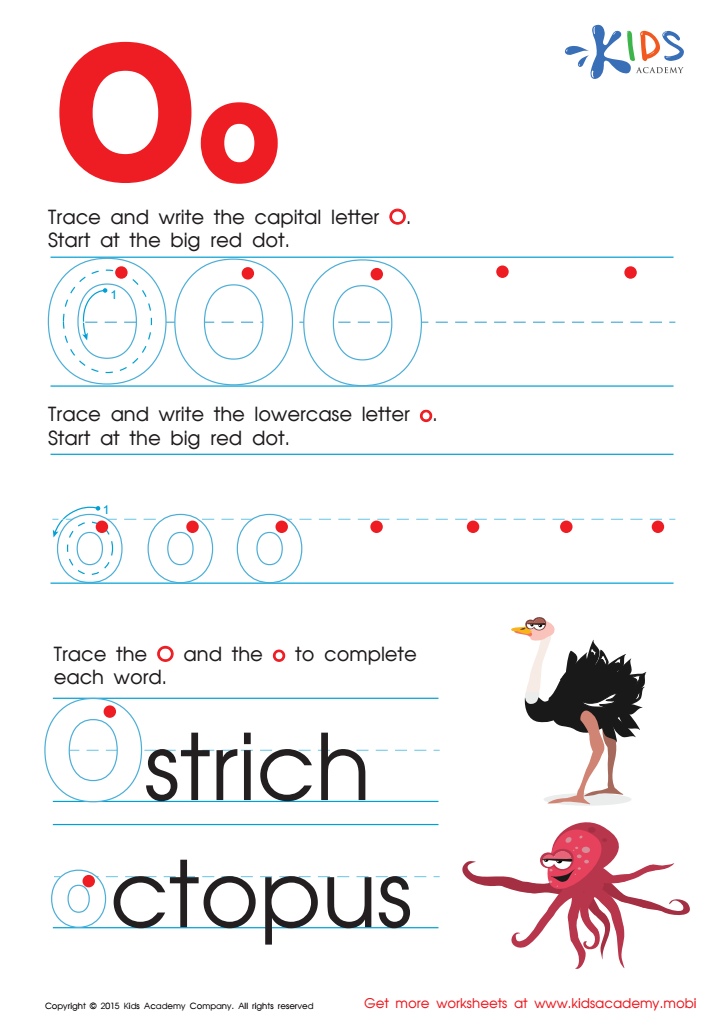
Letter O Tracing Page
Practice writing the letter "O" with our new worksheet. Trace and write the letter several times, starting at the red dot. First do the uppercase letter, then the lowercase. Use the pictures to complete the words "Ostrich" and "octopus". Kids Academy offers more fun alphabet worksheets.
 Assign to My Students
Letter O Tracing Page
Worksheet
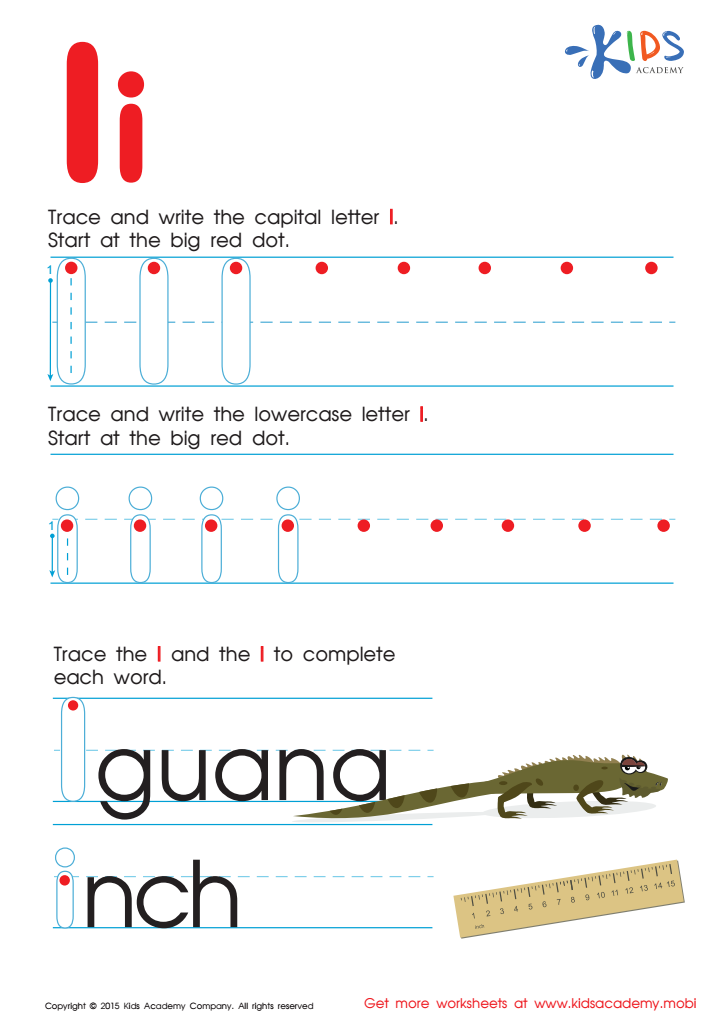
Letter I Tracing Page
Trace and write "I" uppercase and lowercase. An iguana's tail looks like the uppercase "I" and the lowercase "i" is as small as an inch. Make learning fun with Kids Academy worksheets.
Letter I Tracing Page
Worksheet
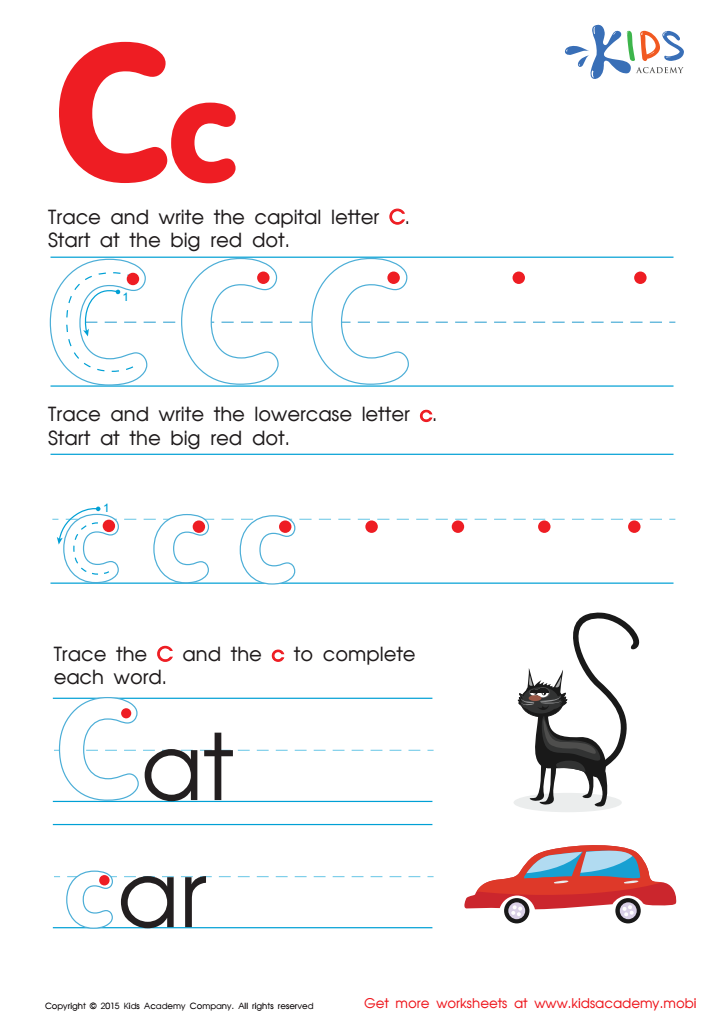
Letter C Tracing Page
Trace and write the letter 'C'! Put the pencil at the red dot then follow the lines – the capital letter first then the lowercase one. Cats love it and so will you! Get more free printables to practice tracing and writing.
Letter C Tracing Page
Worksheet
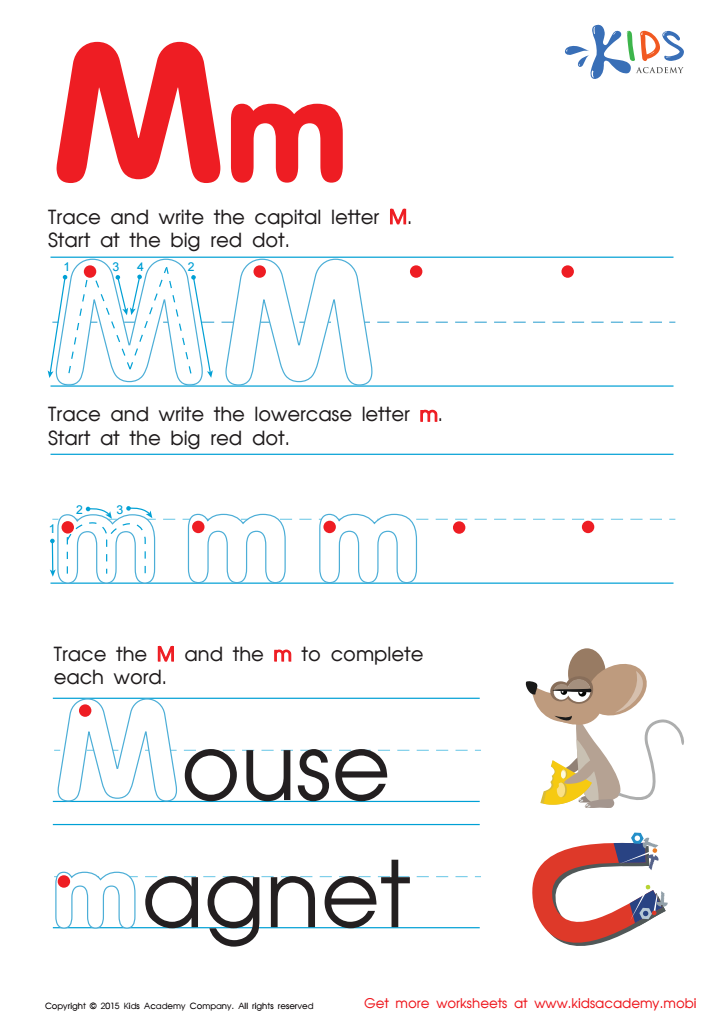
Letter M Tracing Page
Trace and write the letter "M" to help kids learn the alphabet. Start at the red dot and practice several times. Trace the capital letter first, then move on to the lowercase. Complete words like "mouse" and "magnet" in the further exercise. Get more free printables here.
Letter M Tracing Page
Worksheet
Letter J Tracing Page
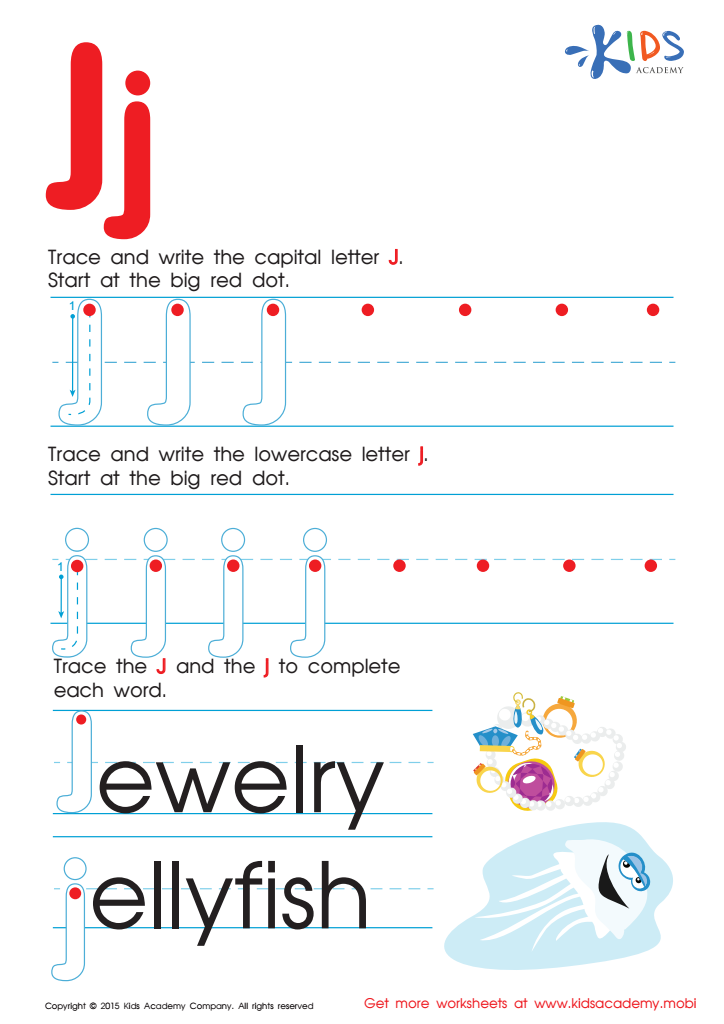
Trace and write the letter "J" with our ABC worksheet - start at the big red dot! Have fun completing words like jewelry, jellyfish and more. Check out our kindergarten activities for more alphabet practice.
Letter J Tracing Page
Worksheet
Letter E Tracing Worksheet
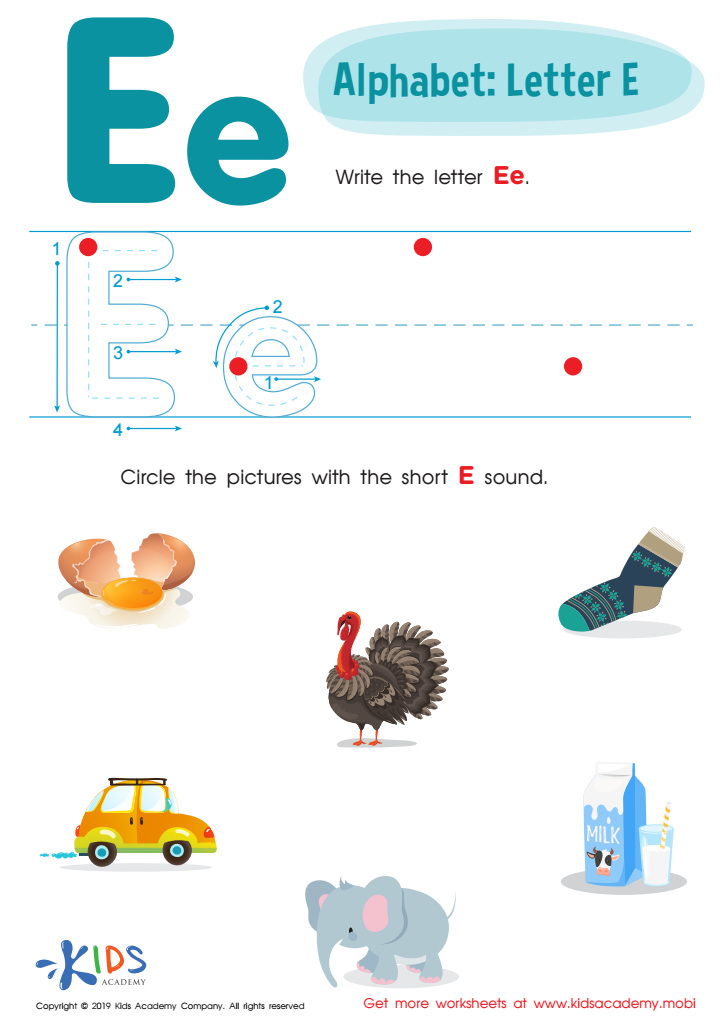
Students trace and write uppercase and lowercase letter E. They sound out "E" words, choosing those with short "E" sounds. Preschoolers identify the difference between the 'E' sounds in words like "egg" and "turkey." A tracing sheet helps them to understand.
Letter E Tracing Worksheet
Worksheet
Letter N Tracing Page
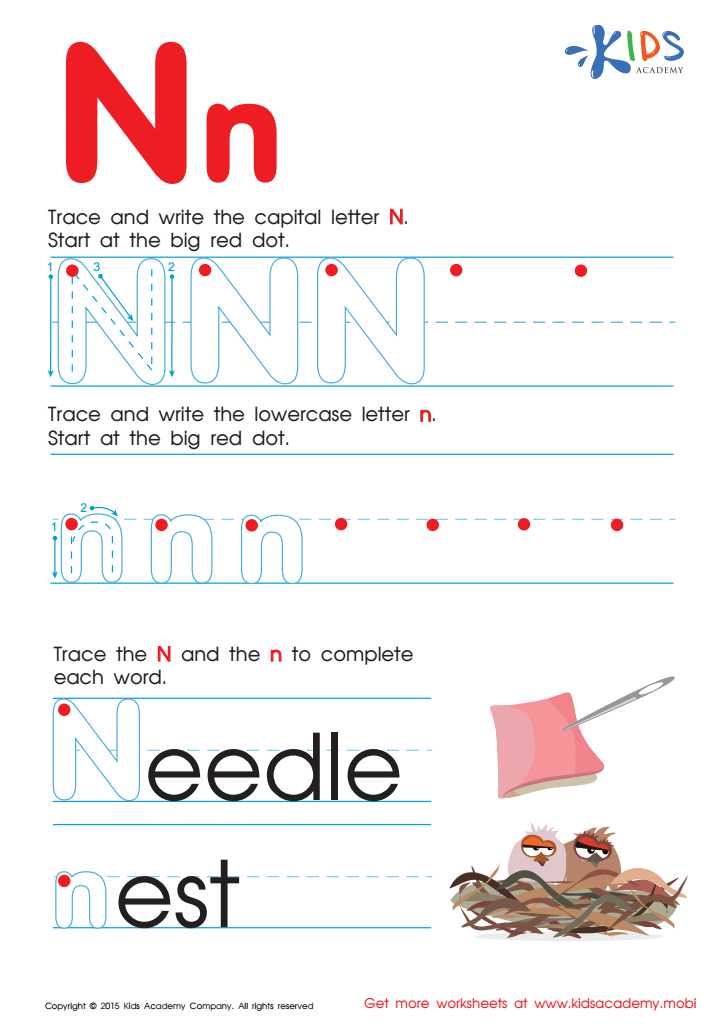
Trace and write capital "N" and lowercase "n" several times. Then try forming words like "needle" and "nest". Master letter writing with Kids Academy's collection of ABC worksheets for kindergarten.
Letter N Tracing Page
Worksheet
Letter B Tracing Page
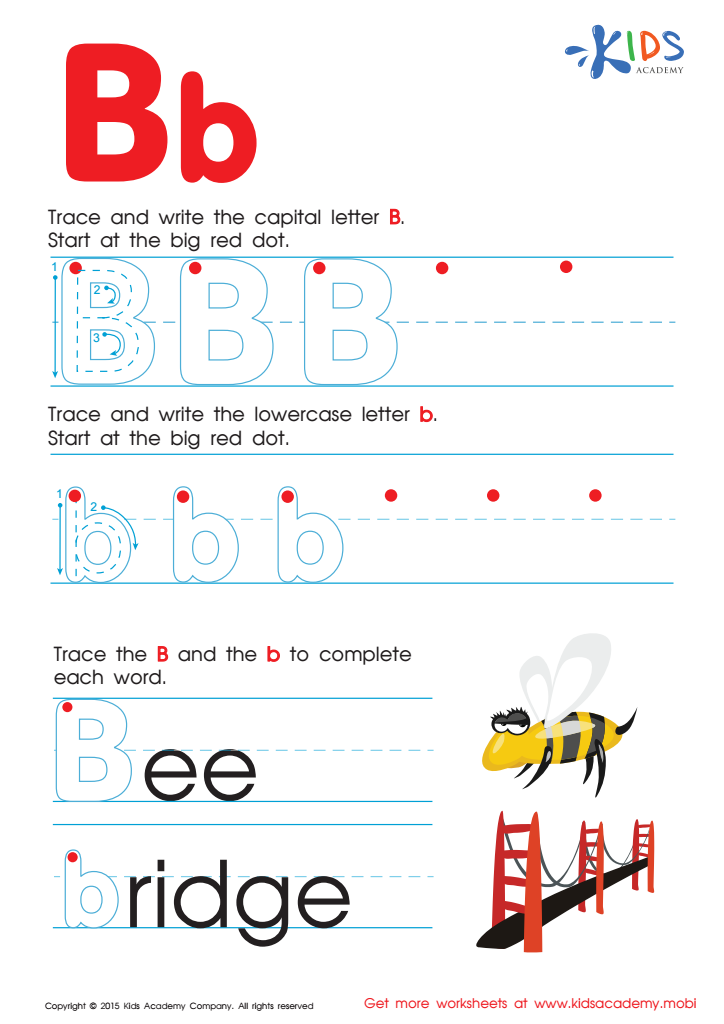
Ready to learn the Alphabet? Put your pencil on the red dot and trace & write both capital & lowercase "B". Then have a look at the pictures. Catch the bee, cross the bridge & write the letters to complete the words. More ABC worksheets for kindergarten available!
Letter B Tracing Page
Worksheet
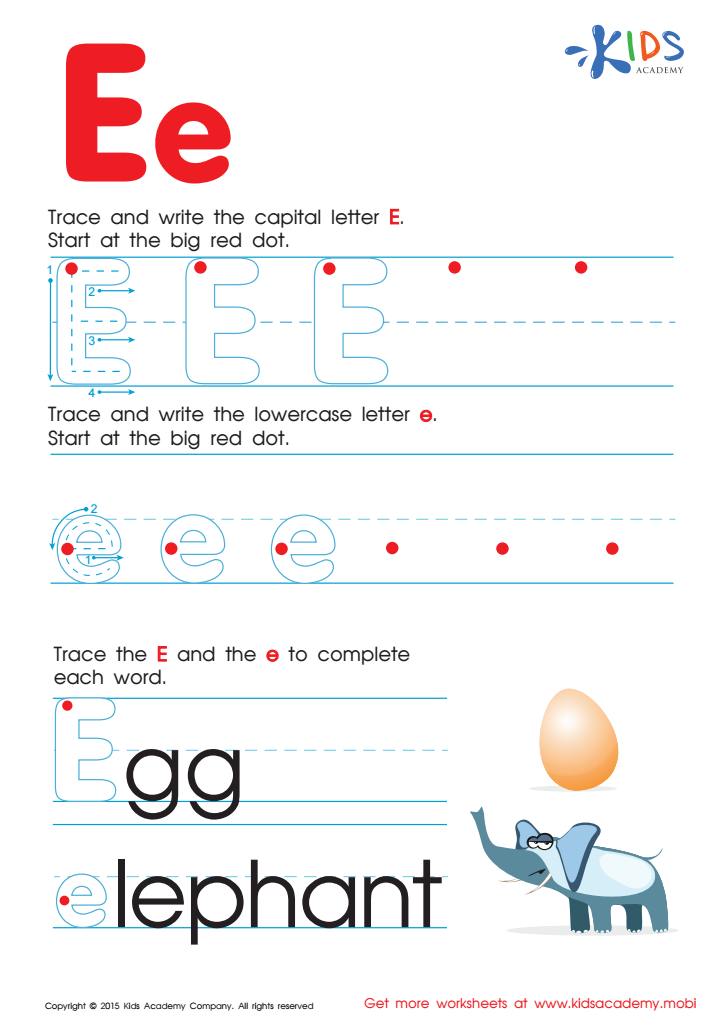
Letter E Tracing Page
Trace and write the uppercase and lowercase "E" starting at the big red dot. Complete words to perfect letter writing. Egg and Elephant must be written carefully. More alphabet worksheets for kindergarten are available for download to spend more time with your children learning.
Letter E Tracing Page
Worksheet
Join Kids Academy for Free
Who is primarily going to use this learning content?








Alphabet recognition and normal tracing letters are fundamental skills that spark a child’s journey into proficient reading and writing. For 8-year-olds, developing these skills is pivotal for several reasons. Firstly, strong alphabet recognition ensures that children can seamlessly identify and relate specific letters with both their sounds and corresponding shapes, which is a cornerstone for reading competence. Proficiency in this area enhances fluency, enabling kids to read texts effortlessly and understand content better.
Normal tracing of letters bolsters fine motor skills and handwriting quality. Properly forming each letter affects legibility and speed, crucial for effective written communication. This practice builds muscle memory, making writing a more automated and less challenging task as children encounter more complex writing assignments in the future.
Early mastery in these areas can mitigate frustration and boost self-esteem, fostering a confident learner who views reading and writing as accessible and enjoyable. Additionally, these skills align with academic benchmarks, equipping children to meet and excel the educational standards expected at their grade level. Thus, parents and teachers encouraging consistent alphabet recognition and practicing normal tracing set children on a definitive path toward academic success and lifelong literacy.








