Basic Math Skills Normal Addition and Subtraction Word Problems Worksheets for 8-Year-Olds
3 filtered results
-
From - To
Enhance your child's math proficiency with our engaging Basic Math Skills worksheets focused on normal addition and subtraction word problems, specifically designed for 8-year-olds. These worksheets help young learners practice essential math concepts through fun scenarios and relatable contexts. By solving various real-life math problems, kids will improve their critical thinking and problem-solving abilities while gaining confidence in their arithmetic skills. Perfect for classroom use or at-home learning, our worksheets offer clear instructions, step-by-step guidance, and supportive visuals to foster a strong mathematical foundation. Start your child's journey towards math mastery today with our interactive and enjoyable resources!
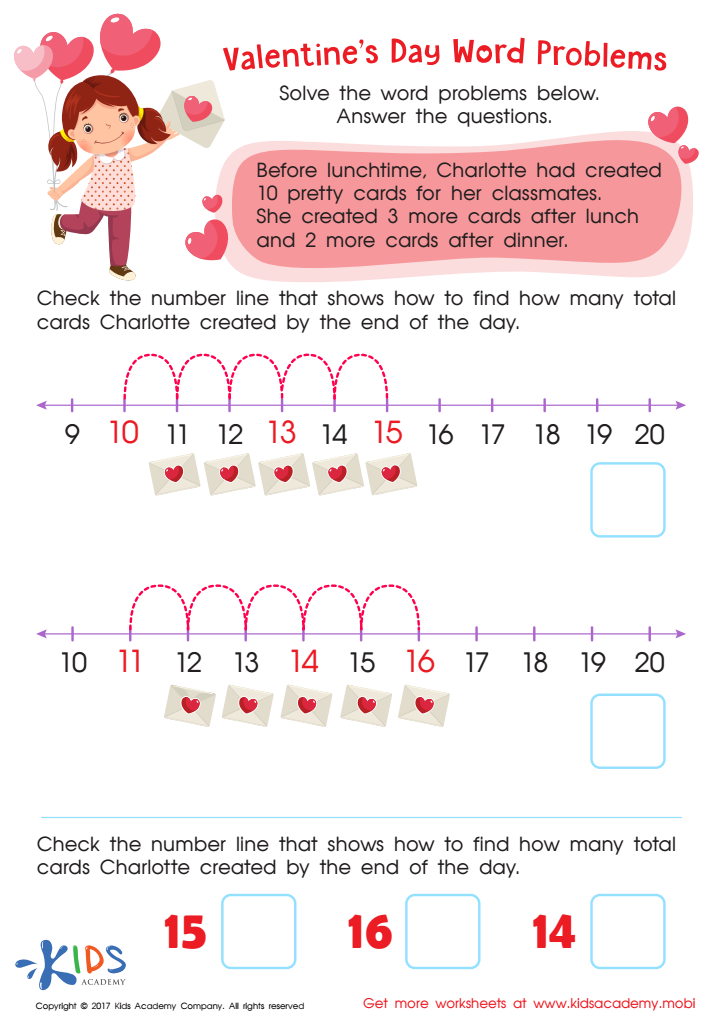
Valentines Day Word Problem Worksheet
 Assign to My Students
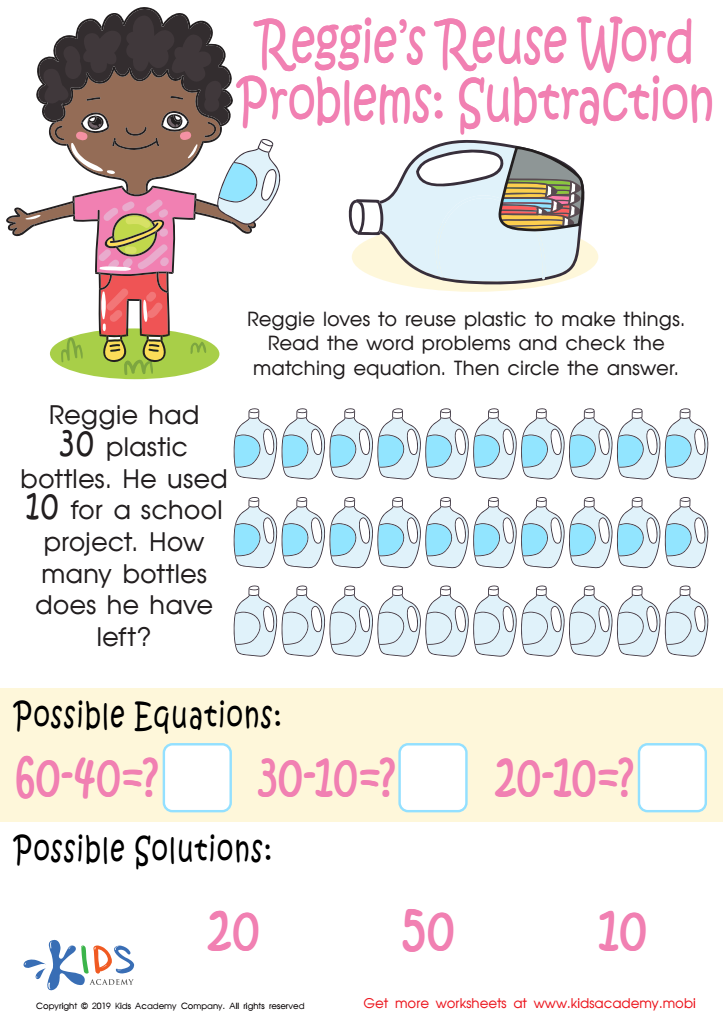
Reggie's Reuse Word Problems: Subtraction Worksheet
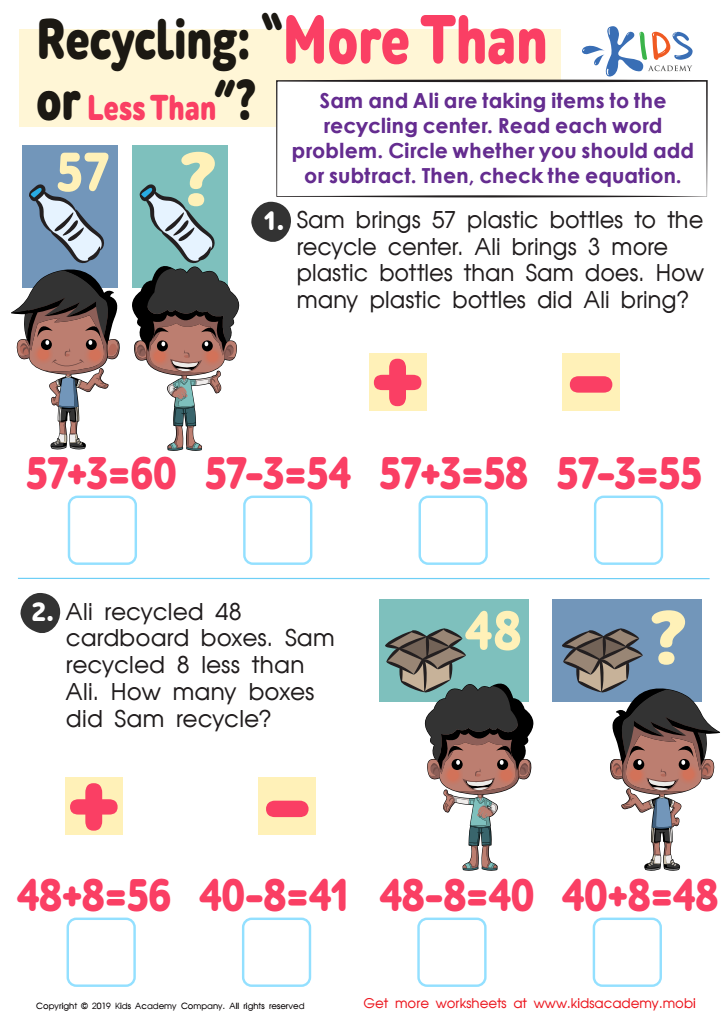
Recycling - More or Less Worksheet








Parents and teachers should prioritize basic math skills, particularly normal addition and subtraction word problems for 8-year-olds, for several key reasons. At this developmental stage, children are forming the building blocks of their mathematical understanding. Mastering these fundamental concepts not only fosters critical thinking but also enhances problem-solving abilities.
Word problems encourage students to relate math to real-life situations, helping them see the relevance of what they’re learning. By navigating through addition and subtraction scenarios, children develop comprehension strategies, enabling them to decipher information and extract necessary data effectively.
Furthermore, excelling in basic math boosts confidence, leading to a positive attitude towards more complex mathematical concepts in the future. As proficiency grows, children become more engaged and motivated, which can significantly impact their overall academic success.
Additionally, collaborating with both parents and teachers can create a supportive learning environment. Parents who reinforce these skills at home complement the instruction received at school, ensuring a consistent approach to learning. In today’s data-driven world, strong math skills are essential not only for academic achievement but for everyday decision-making, making this foundational training invaluable for a child’s future.