Historical Knowledge Normal Reading Comprehension Worksheets for 8-Year-Olds
3 filtered results
-
From - To
Enhance your child's reading skills and historical knowledge with our engaging reading comprehension worksheets designed for 8-year-olds. These worksheets offer educational passages about significant historical events and figures, helping to develop an understanding of the past. Suitable for young learners, each worksheet includes well-structured questions that enhance critical thinking and comprehension skills. Ideal for both classroom use and at-home learning, these resources align with educational standards to provide a strong foundation in history while improving reading abilities. With vivid visuals and diverse topics, kids will find history fun and exciting. Explore a range of free worksheets today!
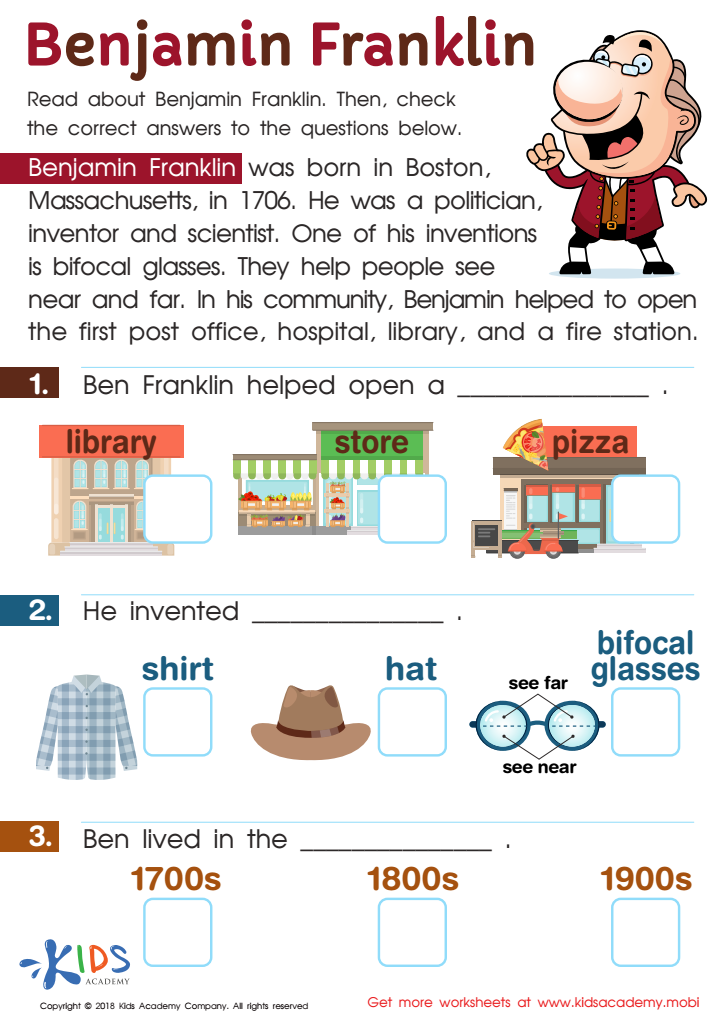
Benjamin Franklin Worksheet
 Assign to My Students
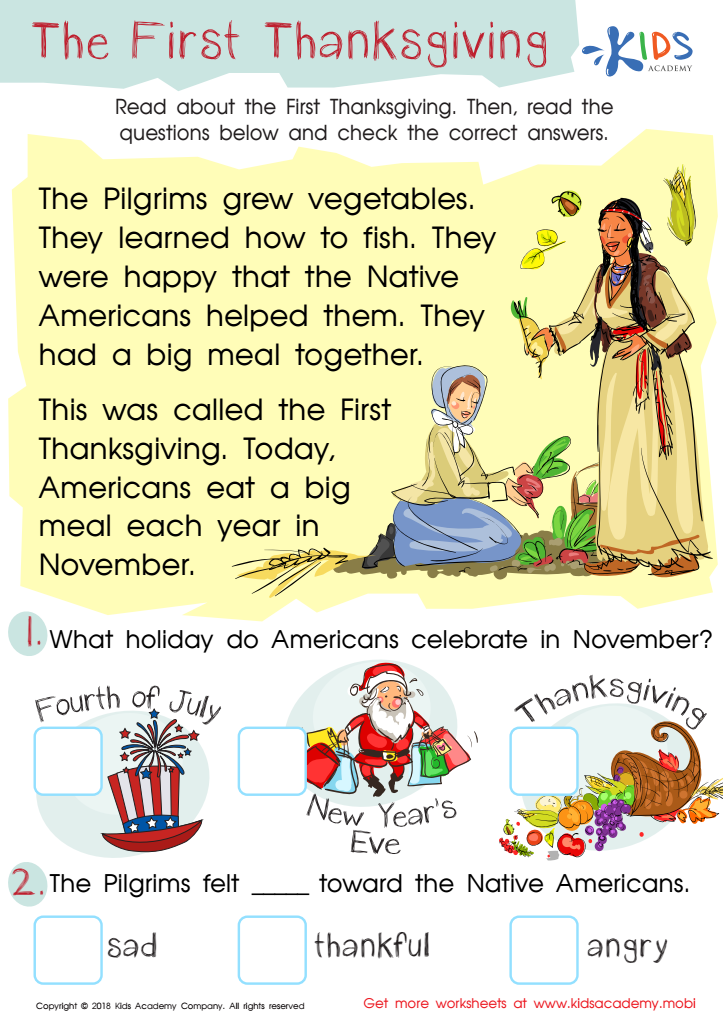
Assessment: First Thanksgiving Worksheet
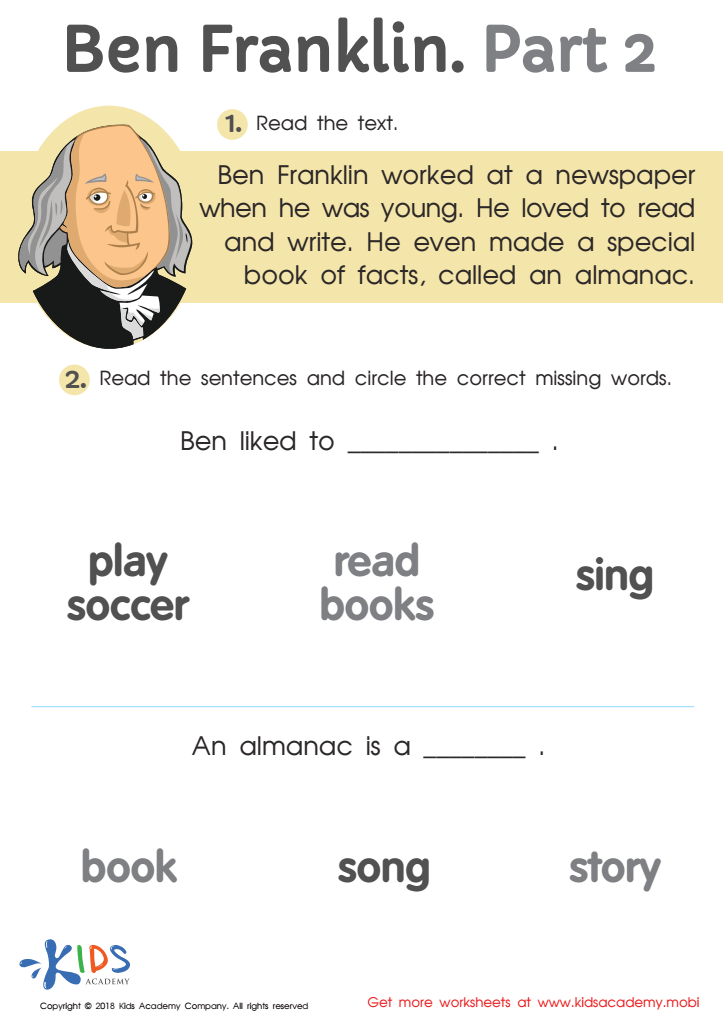
Ben Franklin Part 2 Worksheet




.jpg)

.jpg)
For parents and teachers, fostering historical knowledge and reading comprehension in 8-year-olds is critical for several reasons. Firstly, understanding history helps children develop a sense of identity and context, enabling them to understand the past and how it shapes the present. This foundational knowledge fosters critical thinking skills, as young learners begin to distinguish between facts and interpretations.
Reading comprehension, on the other hand, is a fundamental skill that underpins all learning areas. Mastery in reading allows children to access and engage with various types of texts, deepening their understanding of complex concepts across subjects. By integrating historical knowledge with reading activities, educators can make learning more engaging and relevant. For instance, reading stories about historical events or figures not only improves comprehension but also makes history intriguing and relatable.
Moreover, these integrated skills encourage empathy and cultural awareness, as students learn about different perspectives and the evolution of societies. They become informed citizens who appreciate diversity and are better prepared for future academic and life challenges.
In sum, the combined emphasis on historical knowledge and reading comprehension builds essential life skills in young learners, fostering an informed, thoughtful, and literate future generation. Prioritizing these areas prepares them for more advanced, interconnected understanding as they progress through their education.








