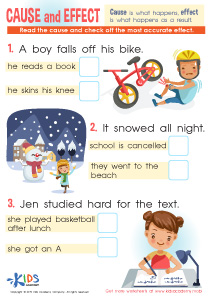
Improve reading comprehension Normal Reading Non-Fiction Worksheets for 8-Year-Olds
3 filtered results
-
From - To
Boost your child's reading skills with our carefully designed non-fiction worksheets! Tailored for 8-year-olds, these engaging printables aim to enhance reading comprehension through a variety of intriguing topics. Each worksheet includes informative passages followed by well-thought-out questions that challenge kids to extract key details, understand deeper meanings, and make connections. Perfect for both classroom settings and at-home learning, our worksheets are crafted to foster a love for reading while bolstering critical thinking and analytical skills. Dive into the world of non-fiction and watch your child’s understanding and appreciation of the written word flourish!
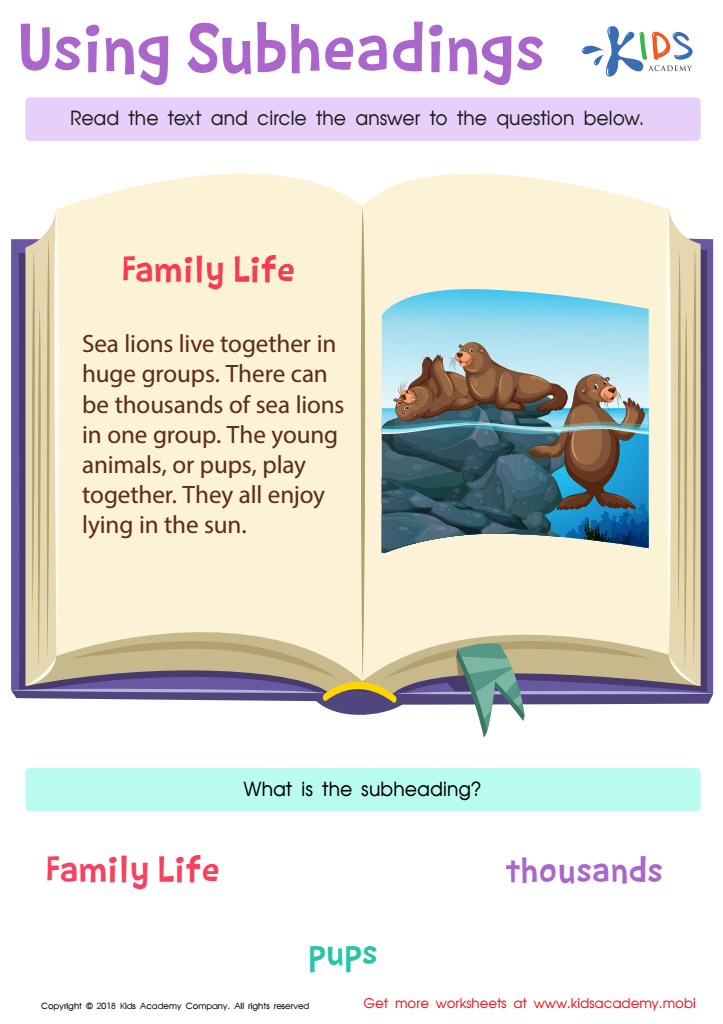
Using Subheadings Worksheet
 Assign to My Students
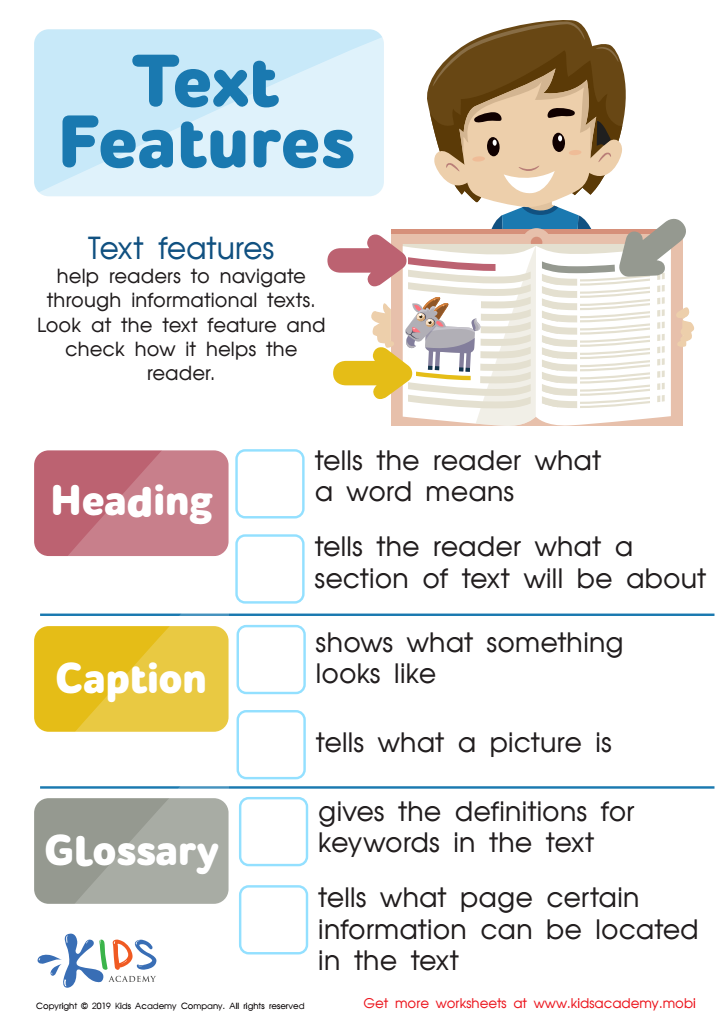
Text Features Worksheet
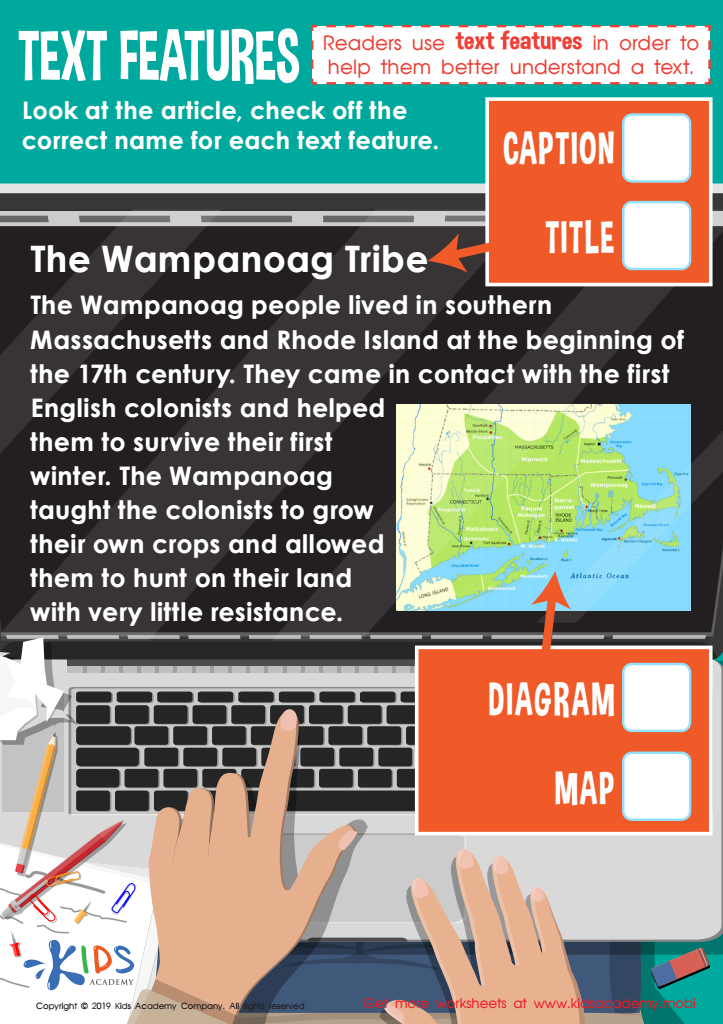
Text Features Worksheet








Parents and teachers should prioritize improving reading comprehension in 8-year-olds when reading non-fiction because it lays the foundation for lifelong learning and critical thinking skills. At this age, children transition from learning to read to reading to learn. Non-fiction texts decode the real world by providing factual information and supporting children’s inquiry about science, history, and various other subjects. When 8-year-olds effectively comprehend what they read, they can better absorb and apply new knowledge, fostering a curiosity-driven mindset.
Moreover, strong reading comprehension skills are crucial for academic success across all subjects, not just in language arts. Comprehending informational texts is often part of standardized assessments and daily lessons in natural and social sciences. Kids with higher reading comprehension levels are more likely to excel academically, boosting their confidence and motivation.
In addition, proficient reading comprehension promotes enhanced communication skills. Children learn to articulate their thoughts clearly and engage in meaningful discussions. It encourages them to synthesize information, form their own opinions, and develop problem-solving abilities—all invaluable skills for future challenges.
By prioritizing reading comprehension with non-fiction, parents and teachers equip children with the tools they need to become curious, informed, and effective learners. Such a foundation is instrumental in preparing them for academic, social, and personal success.