
Animal Classification Normal Science Worksheets for 8-Year-Olds
3 filtered results
Difficulty Level
Grade
Age
-
From - To
Subject
Activity
Standards
Explore the animal kingdom with our engaging Animal Classification Science Worksheets for 8-Year-Olds! Designed to captivate young minds, these worksheets help children understand the fundamentals of classifying animals based on their characteristics. From identifying mammals to recognizing reptiles, each activity sharpens critical thinking and observational skills. Perfect for both classroom settings and at-home learning, these worksheets align with educational standards and promote a hands-on approach to science. Unleash your child's curiosity and foster a love for biology with Kids Academy's meticulously crafted printables. Download now and embark on a fascinating journey through the world of animals!
Favorites
With answer key
Interactive
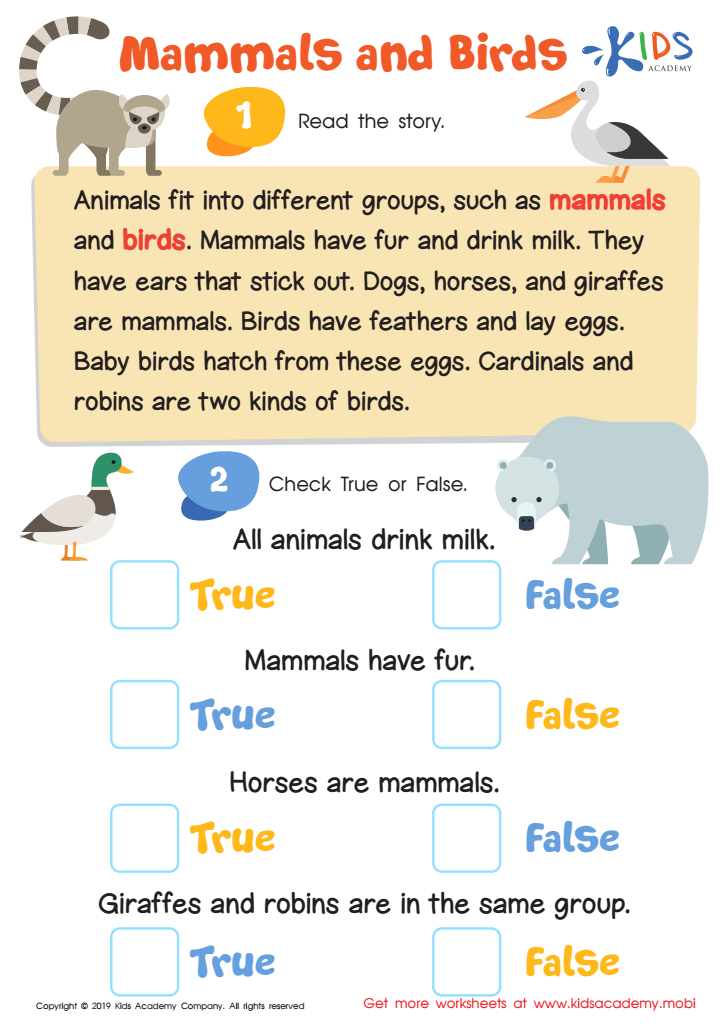
Mammals and Birds Worksheet
This worksheet challenges kids to read an informational text and review science facts about mammals and birds. Have them read the passage then mark statements true or false. Remind them to go back to the text if they get stuck! Get started now and help your child enhance multiple skills in one go!
 Assign to My Students
Mammals and Birds Worksheet
Worksheet
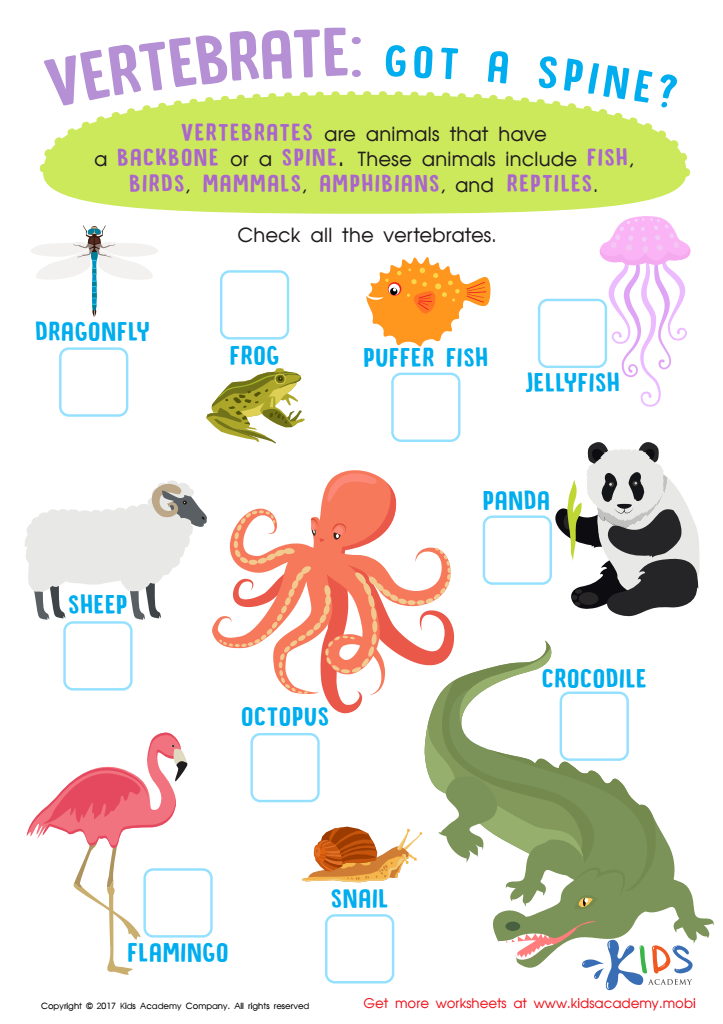
Vertebrates Animals Worksheet for 3rd Grade
This 3rd grade worksheet introduces your child to the wonders of vertebrate animals. They will have fun sorting them from those without a spine, while learning more about the animal kingdom!
Vertebrates Animals Worksheet for 3rd Grade
Worksheet
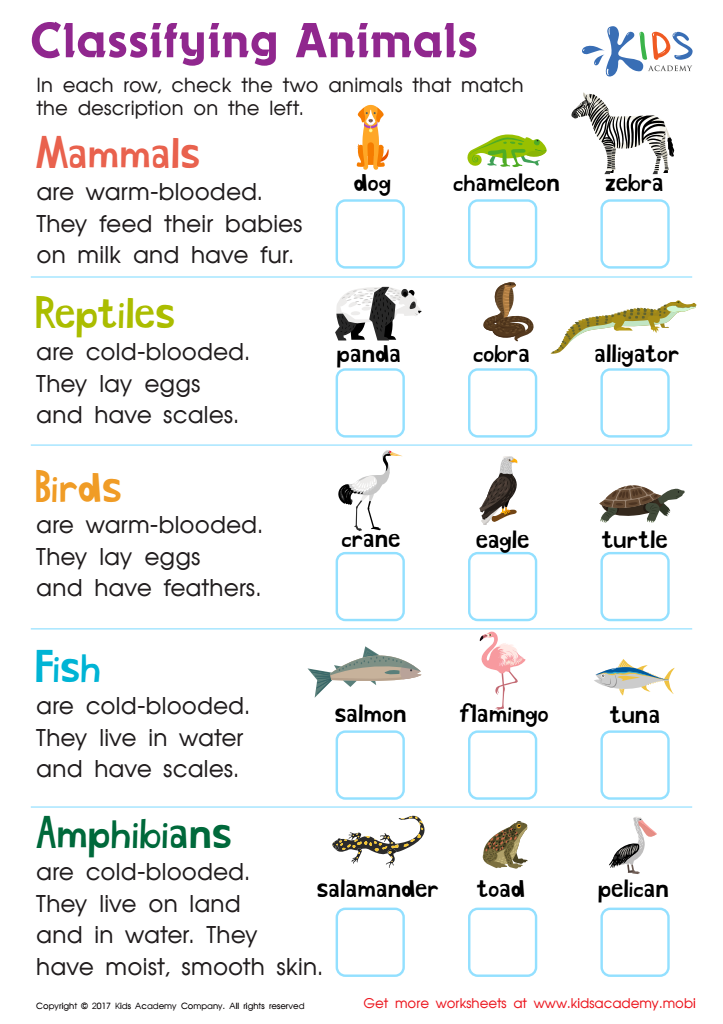
Classifying Animals Worksheet
Print the 2nd grade animal classification worksheet and help kids study the differences between mammals, reptiles, birds, fish and amphibians. Let them pick two examples from the options given.
Classifying Animals Worksheet
Worksheet
Join Kids Academy for Free
Who is primarily going to use this learning content?





Parents and teachers should care about teaching Animal Classification to 8-year-olds as part of their Normal Science curriculum because it lays a critical foundation for understanding the natural world. At this age, children are naturally curious and prone to ask questions about their surroundings. By introducing them to the concept of animal classification, we nurture this curiosity and promote scientific thinking.
Firstly, learning about animal classification helps children recognize and appreciate biodiversity. They develop an understanding of how living organisms are grouped based on similarities and differences, fostering respect for all creatures. This can lead to a lifelong interest in biology, conservation, and a general sense of environmental stewardship.
Secondly, the process of classifying animals helps sharpen critical thinking skills. Students learn to observe, compare, categorize, and hypothesize—skills that are fundamental to scientific inquiry. These analytical abilities are not only essential for science but are also transferable to other subjects such as math, reading, and social studies.
Furthermore, teaching animal classification supports language development. Children learn new vocabulary and concepts, such as “mammal,” “reptile,” and “amphibian,” which expands their language skills and cognitive development.
Overall, early lessons in animal classification cultivate a sense of wonder, critical thinking, and respect for the environment, setting the stage for well-rounded, curious, and responsible individuals.







