Comparing Fractions Normal Worksheets for 9-Year-Olds
4 filtered results
-
From - To
Enhance your child's math skills with our Comparing Fractions Normal Worksheets, designed specifically for 9-year-olds! These engaging worksheets offer a variety of fun and interactive activities that help students grasp the concept of comparing fractions. Through visual aids and practical exercises, children will learn how to identify greater and lesser fractions, understand equivalent fractions, and solve comparison problems. Tailored for different learning paces, our resources promote confidence and understanding in math. Ideal for classroom settings or at-home practice, these worksheets support skill development in an enjoyable and rewarding way. Start comparing fractions with ease today!
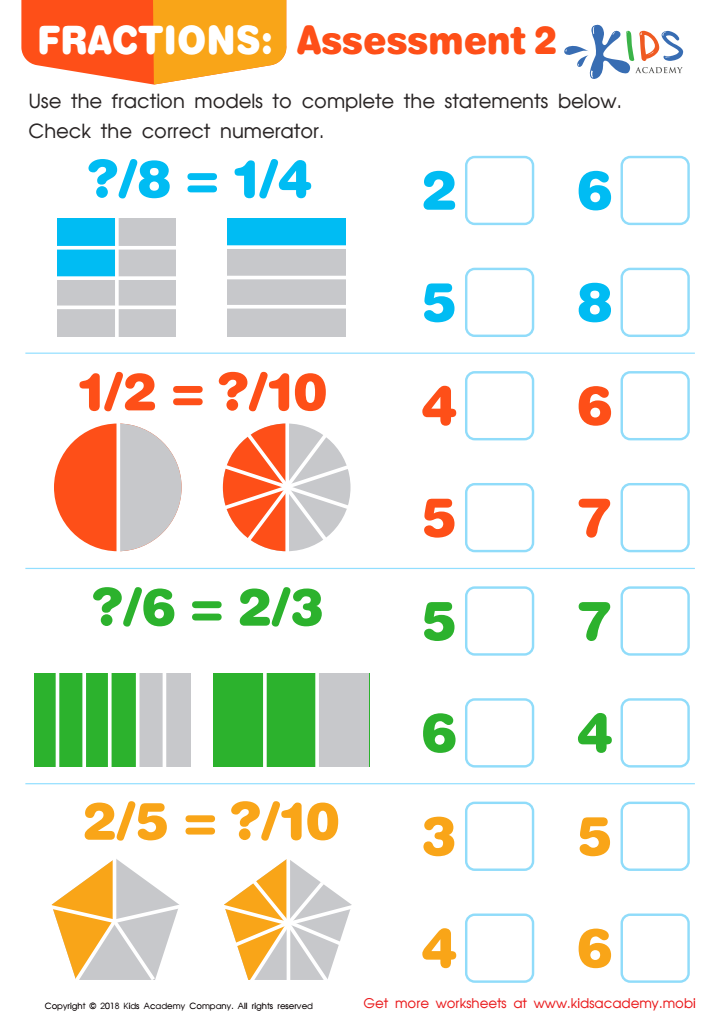
Fractions: Assessment 2 Worksheet
 Assign to My Students
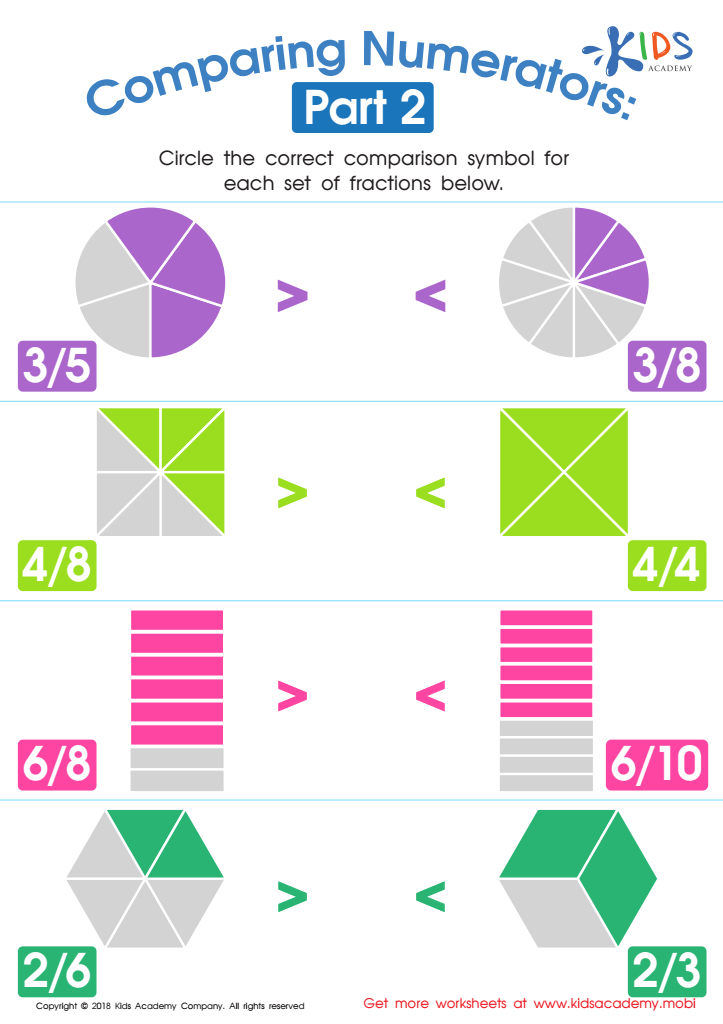
Comparing Numerators Part 2 Worksheet
Horse Race Worksheet
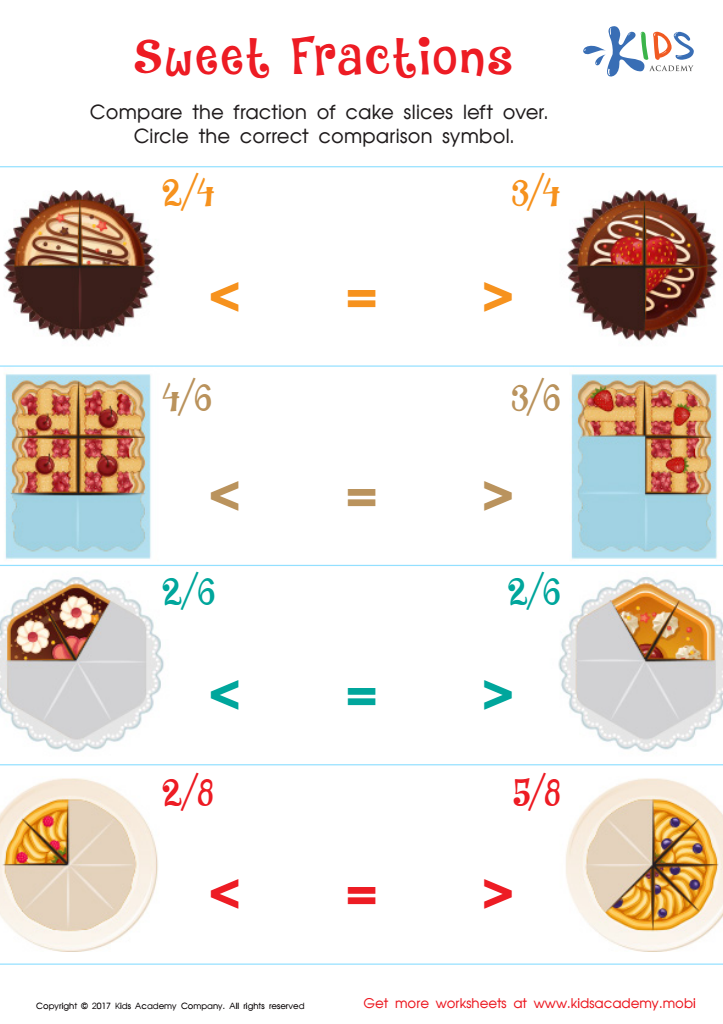
Compare Fractions Worksheet







Comparing fractions is a fundamental math skill that serves as a building block for more advanced concepts. For 9-year-olds, mastering this skill is essential for several reasons. First, it helps students develop critical thinking skills, as they must analyze and evaluate different fractions based on their mathematical properties. Understanding how to compare fractions lays the groundwork for more complex operations, such as addition, subtraction, and even multiplication of fractions later on.
Additionally, comparing fractions connects with real-life situations, such as measuring ingredients for cooking, sharing items, or interpreting data. This practical application makes learning engaging and meaningful. Parents and teachers should care about this concept because it promotes numeracy and better prepares students for real-world problem-solving.
Moreover, a solid grasp of comparing fractions aids in building confidence in math, reducing anxiety and fostering a positive attitude toward the subject. By emphasizing this skill in the classroom or at home, adults can help children develop a strong mathematical foundation, ultimately contributing to their overall academic success. In essence, prioritizing the understanding of comparing fractions is crucial for cultivating both mathematical competence and enthusiasm in young learners.








