Mental math skills Normal Worksheets for 9-Year-Olds
4 filtered results
-
From - To
Enhance your child's arithmetic abilities with our specially designed Mental Math Skills Normal Worksheets for 9-Year-Olds. These engaging worksheets focus on improving quick-calculation skills, sharpening problem-solving abilities, and boosting math confidence. Our diverse activities cover addition, subtraction, multiplication, and division, all developed to challenge and motivate young minds. Tailored for 9-year-olds, these printables provide an excellent balance of fun and learning, ensuring that every exercise captivates and educates. Perfect for both classroom and at-home practice, our mental math worksheets are an essential resource for building a strong mathematical foundation. Get started today and watch your child excel!
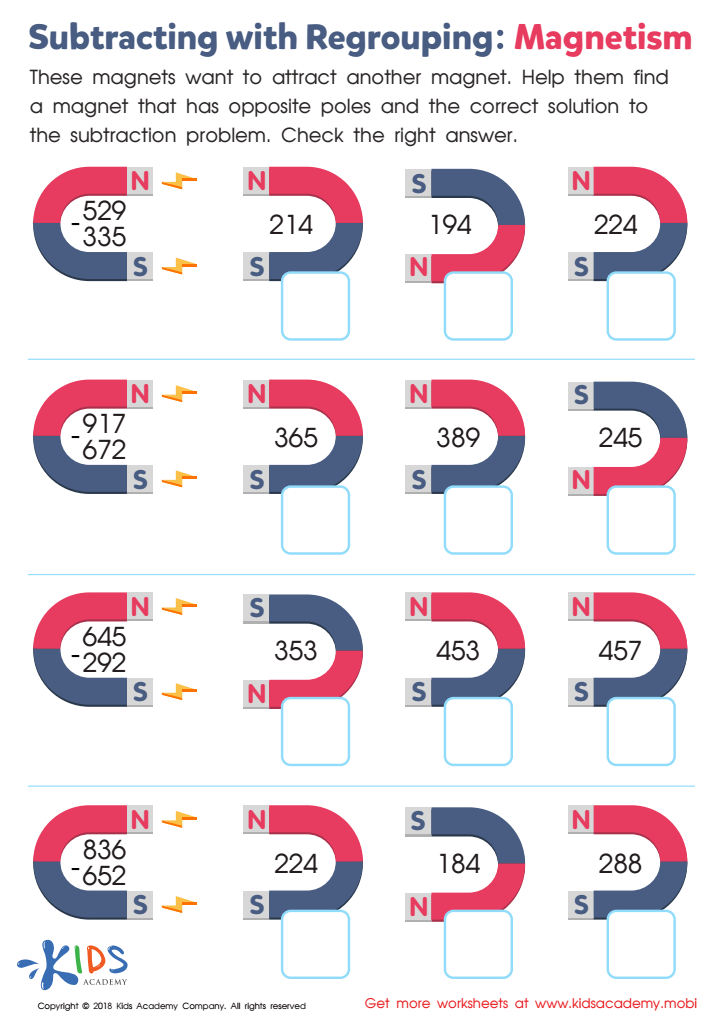
Subtracting with Regrouping: Magnetism Worksheet
 Assign to My Students
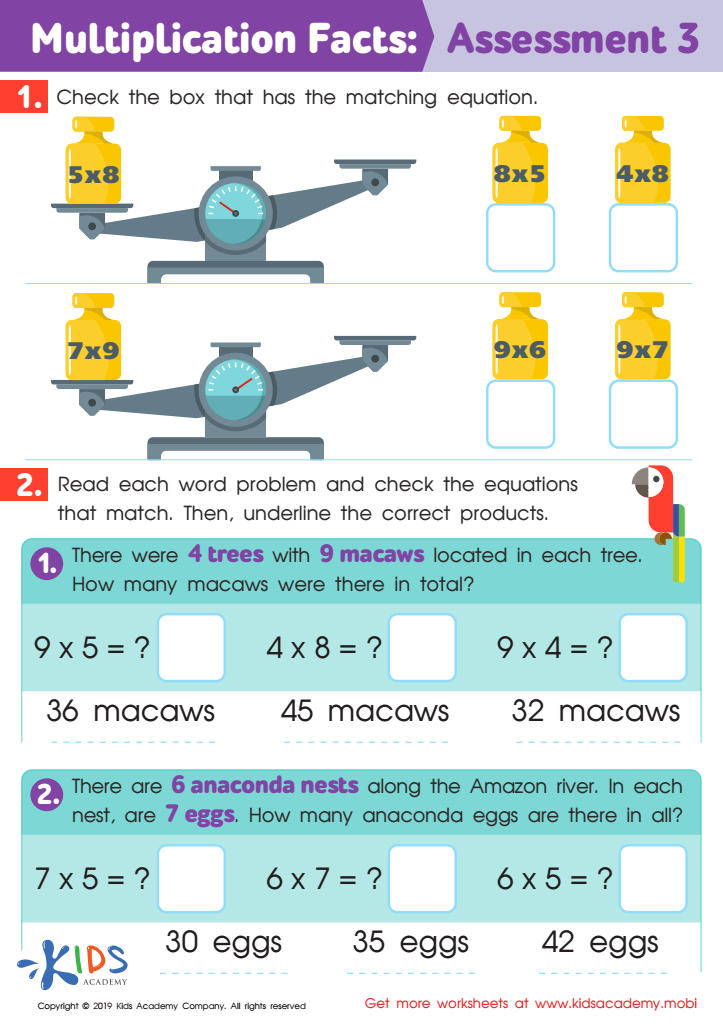
Multiplication Facts: Assessment 3 Worksheet
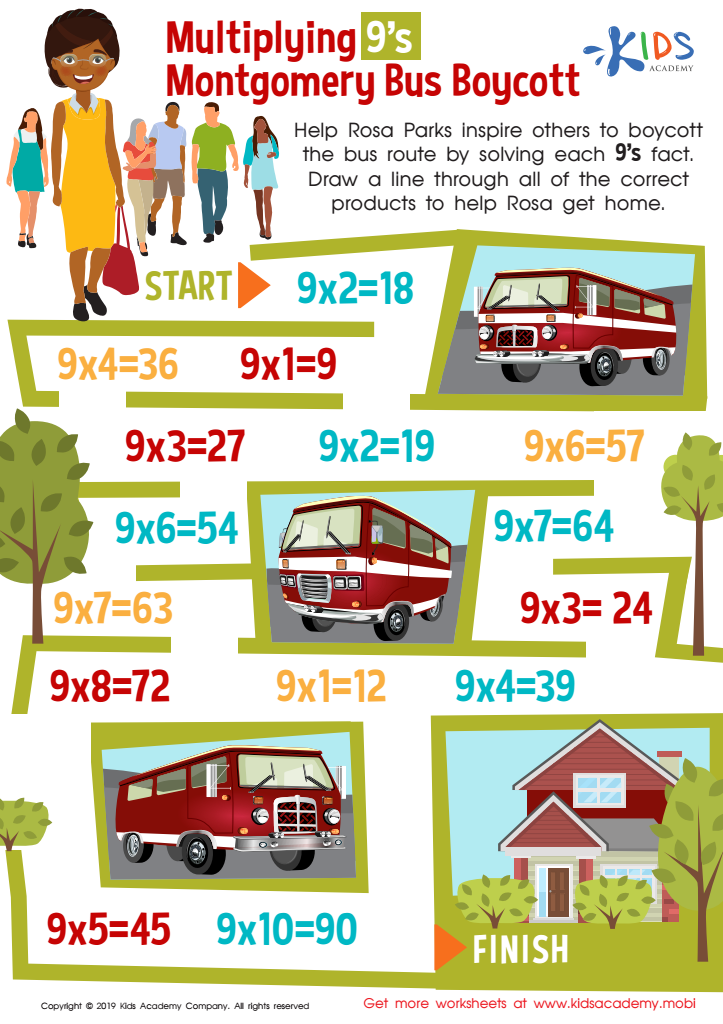
Multiplying 9’s Montgomery Bus Boycott Worksheet
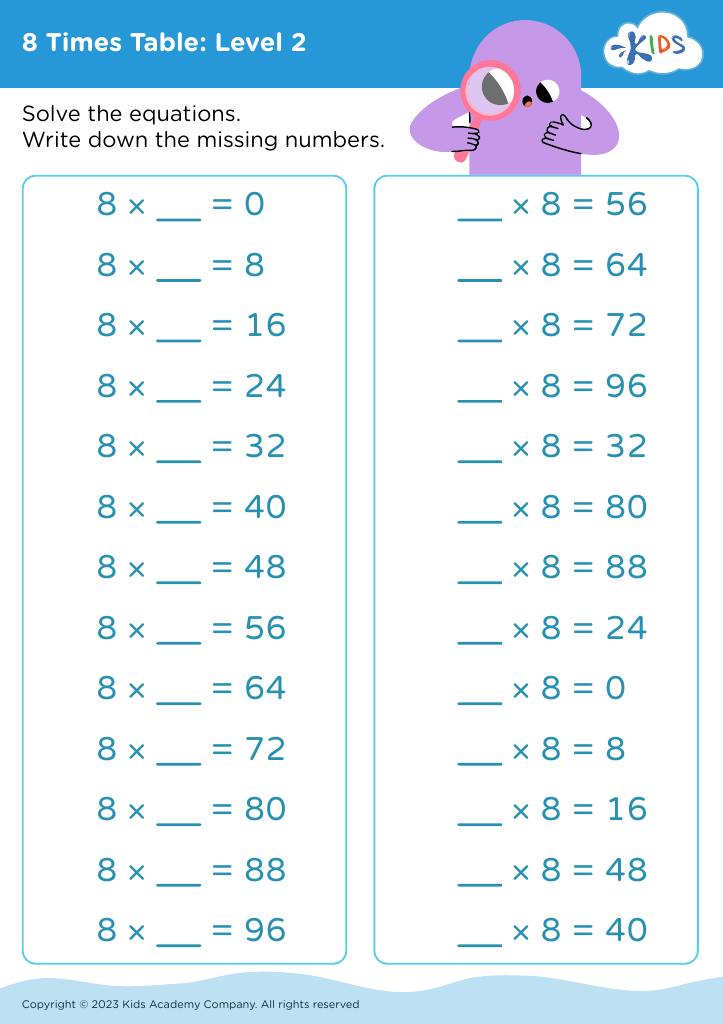







Mental math skills are crucial for 9-year-olds as they serve as the cornerstone for future mathematical learning and cognitive development. At this age, children are transitioning from basic arithmetic to more complex math concepts. Mental math, which involves performing calculations in the mind without writing them down, enhances their number sense – an intuitive understanding of numbers and their relationships. This fosters quicker and more effective problem-solving abilities.
For parents and teachers, nurturing these skills means supporting a child’s academic achievements and everyday life competencies. Mental math trains the brain to think logically and enhances memory, concentration, and cognitive agility. These skills are not only important for mathematics but also for subjects like science and engineering which require analytical thinking.
Moreover, mental math prepares young learners for standardized tests and real-life situations. Everyday activities, such as shopping, traveling, or even playing games, become more manageable and enriching when children can perform quick calculations mentally.
In short, fostering mental math skills at the age of 9 equips children with foundational tools for academic success and practical life challenges, instilling confidence and a proactive approach to learning. Prioritizing these skills ensures well-rounded, resilient learners capable of tackling various challenges both inside and outside the classroom.








