Understanding adjectives Normal Worksheets for 9-Year-Olds
3 filtered results
-
From - To
Engage your 9-year-olds in mastering adjectives with our expertly designed worksheets! These activities enhance understanding by asking students to identify and use adjectives in diverse contexts. Crafted to be stimulating and educational, each worksheet encourages young learners to expand their vocabulary, improve grammar skills, and express themselves more vividly. Perfect for both classroom and home use, they offer a blend of fun and learning to keep kids interested. From colorful exercises to engaging prompts, these worksheets provide comprehensive practice in recognizing and applying adjectives, laying a solid foundation for future linguistic success. Visit us today to explore our fantastic collection!
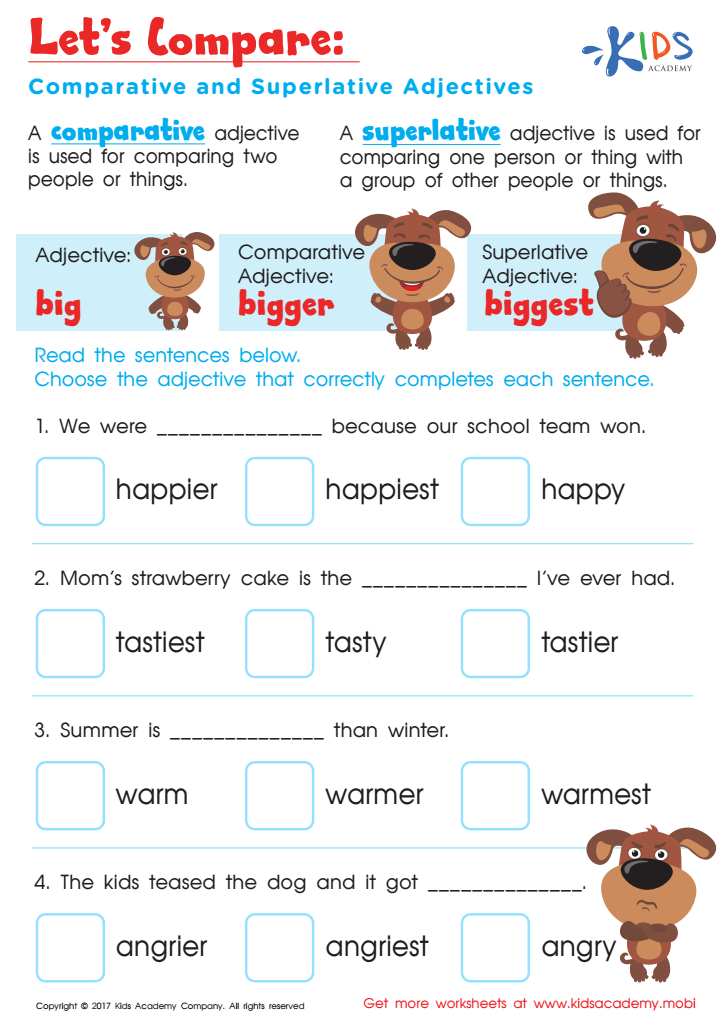
Comparative and Superlative Worksheet
 Assign to My Students
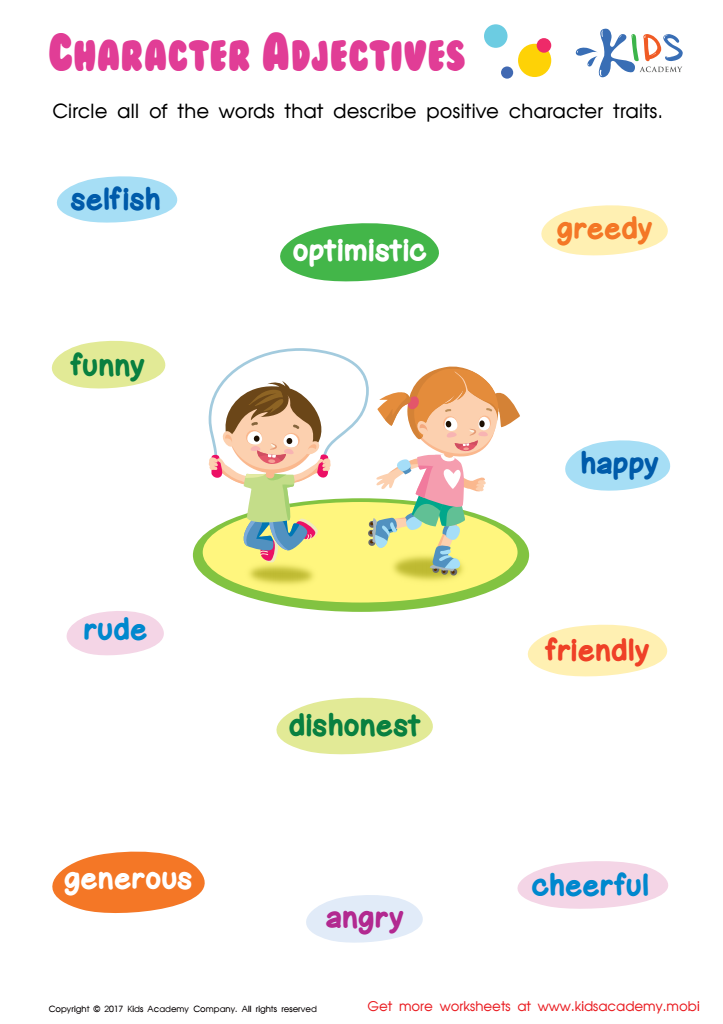
Character Adjectives Worksheet
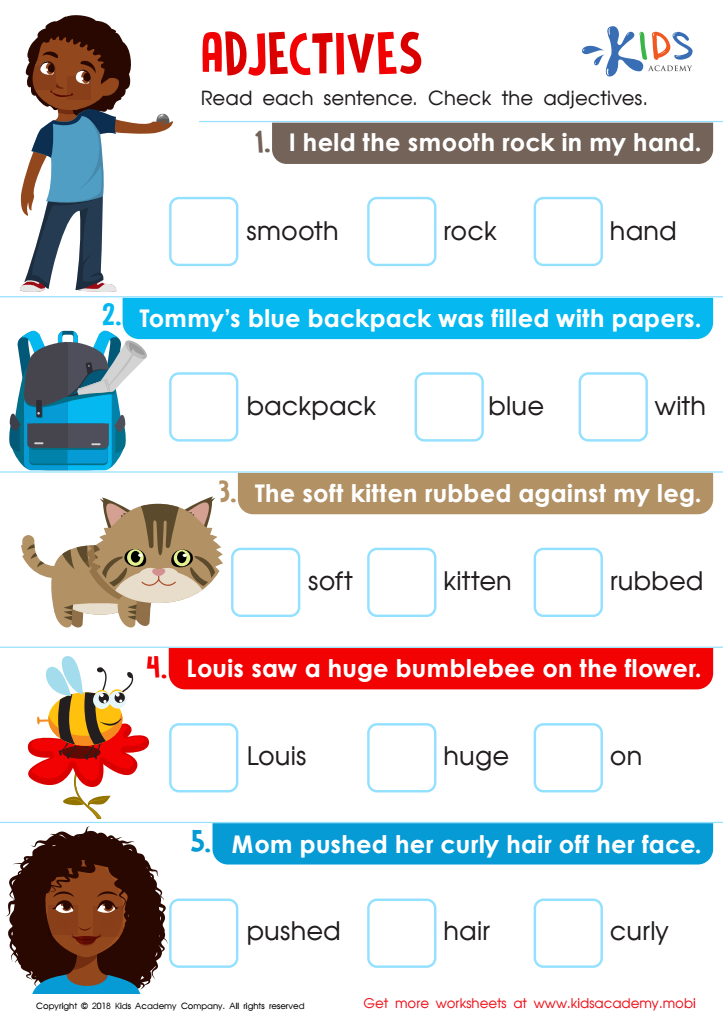
Adjectives Worksheet




.jpg)


Understanding adjectives is crucial for 9-year-olds because it significantly bolsters their language and literacy development. At this age, children are transitioning from learning to read to reading to learn, and having a robust vocabulary is essential for them to articulate thoughts, understand stories, and absorb new concepts. Adjectives enhance descriptive skills, enabling children to convey more precise and detailed ideas.
For parents and teachers, grasping the role of adjectives aids in creating richer, more engaging communication. When adults model the use of varied adjectives, children are exposed to a broader range of language, which can improve their own descriptive abilities. This, in turn, strengthens their writing and speech, allowing them to express emotions and describe experiences more vividly. This skill is foundational for comprehending more complex texts in future academic settings.
Additionally, understanding adjectives aids in cognitive development by helping children categorize and differentiate between various attributes of objects, events, and people. This categorization enhances their critical thinking and observational skills, which are pivotal for problem-solving and learning across subjects.
In summary, appreciating the importance of adjectives helps parents and teachers support children’s educational journeys effectively, fostering stronger communication, critical thinking, and cognitive development.








