
Understanding timelines Normal Worksheets for 9-Year-Olds
3 filtered results
Difficulty Level
Grade
Age
-
From - To
Subject
Activity
Standards
Unlock the world of history and events with our "Understanding Timelines Worksheets" tailored for 9-year-olds. These engaging worksheets help young learners visualize the chronological order of events, enhancing their comprehension of time progression and sequencing. Each worksheet is designed to stimulate critical thinking and improve organizational skills, making history interactive and fun. With a variety of activities, students will practice mapping out personal experiences alongside historical events, fostering a deeper understanding of timelines. Perfect for home or classroom use, these resources encourage students to connect the past with the present, ensuring they grasp the significance and context of timelines effortlessly.
Favorites
With answer key
Interactive
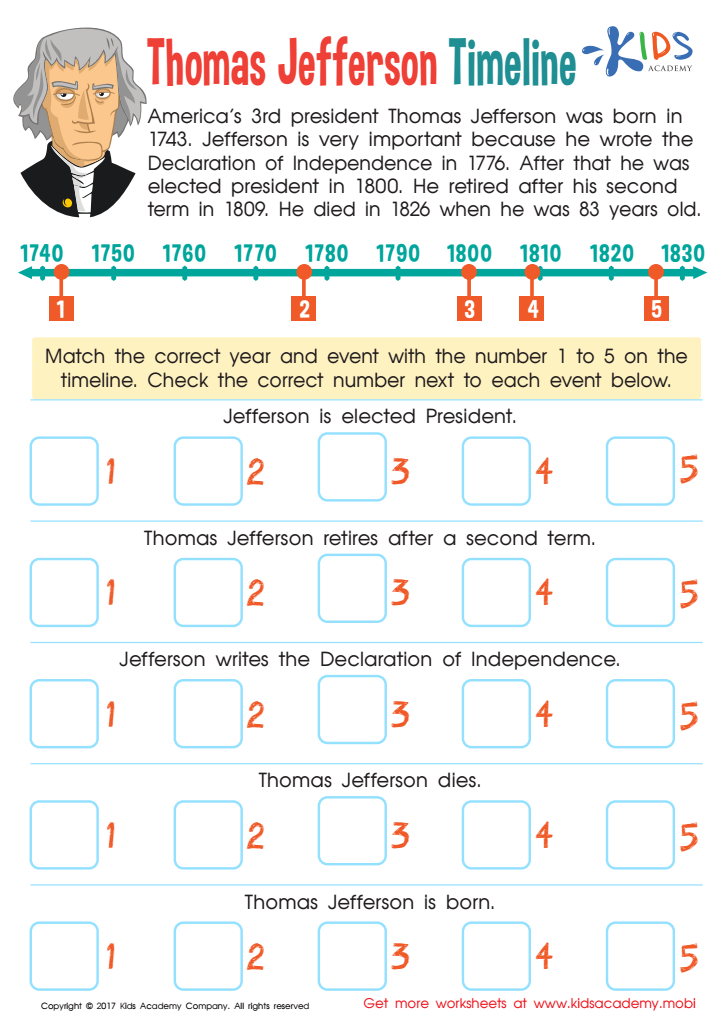
Thomas Jefferson Timeline Worksheet
Check your child's reading comprehension and knowledge of US history with this Thomas Jefferson timeline worksheet! Have them read the paragraph to learn about him, then use what they've read to fill in the timeline.
 Assign to My Students
Thomas Jefferson Timeline Worksheet
Worksheet
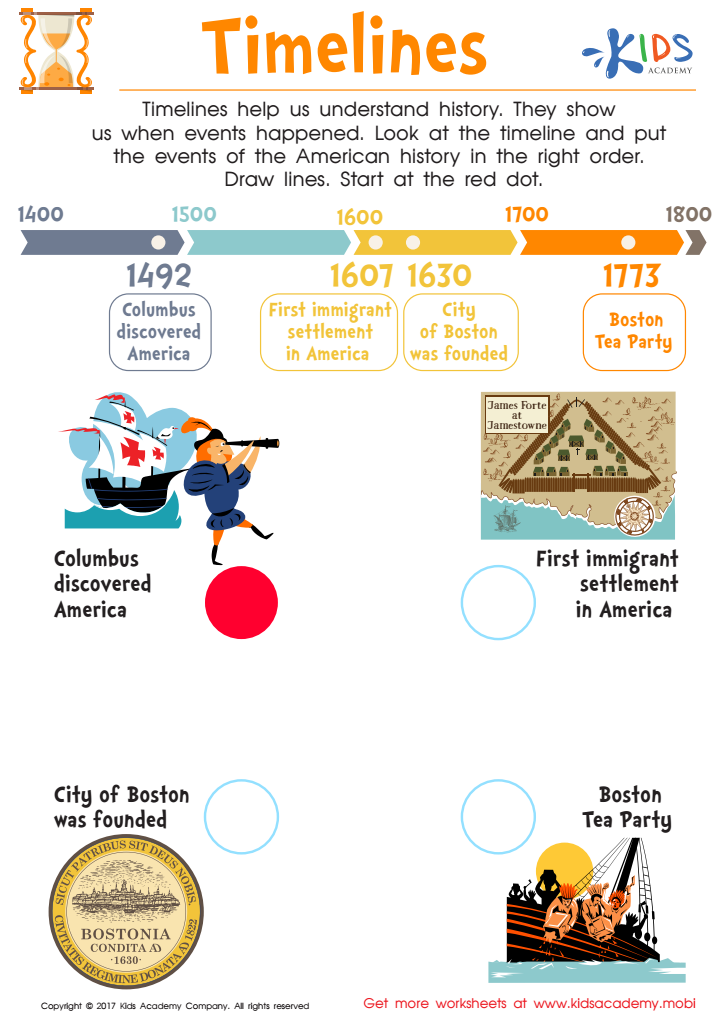
American History Timeline Worksheet
Encourage your child to explore American history with a fun timeline worksheet! It tracks major events in history and helps make sense of the past. It's an easy way to boost their knowledge and further their understanding of a key subject.
American History Timeline Worksheet
Worksheet
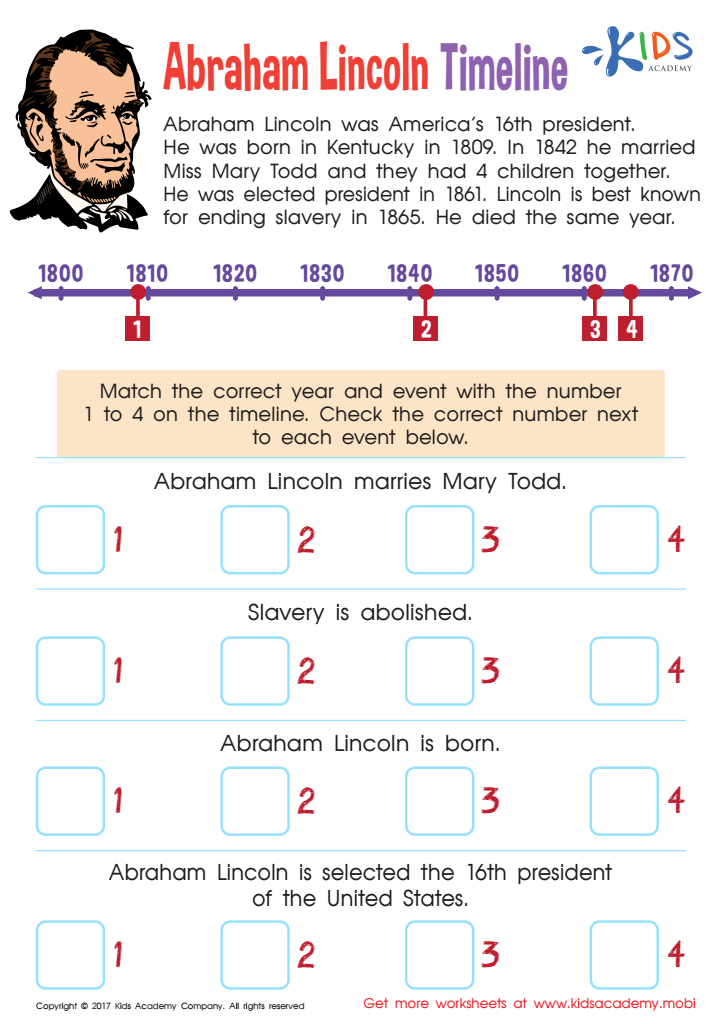
Abraham Lincoln Timeline Worksheet
Revised (76 words): Let's review America's most important president with this Abraham Lincoln timeline worksheet! Kids will read the paragraph and answer the questions using the timeline to increase their reading comprehension skills.
Abraham Lincoln Timeline Worksheet
Worksheet
Join Kids Academy for Free
Who is primarily going to use this learning content?







Understanding timelines is crucial for 9-year-olds as it helps them grasp foundational concepts in history, science, and even personal development. First and foremost, timelines encourage chronological thinking, enabling children to relate events in a sequential manner, which is essential for grasping cause and effect relationships. This cognitive skill fosters critical thinking and enhances their ability to make connections between historical events, enhancing their understanding of the world.
Moreover, learning to create and interpret timelines aids in the development of organizational skills. Children learn to categorize events by dates, which is particularly helpful in subject areas like history, where the context of events is critical. Additionally, becoming familiar with timelines improves literacy skills through reading and writing activities centered around them.
Furthermore, timelines can be a fun and engaging way to explore personal growth. Children can create timelines of their own lives, making history relevant by connecting it to their experiences. This activity can improve self-awareness and self-reflection, fostering a sense of identity.
Involving parents in discussing timelines provides opportunities for meaningful bonding moments and shared learning experiences, supporting their child’s emotional and intellectual development while enriching their educational journey. Overall, understanding timelines is not just an academic requirement; it is a vital life skill.








