Mathematical reasoning Normal Division Worksheets for 9-Year-Olds
3 filtered results
-
From - To
Discover our engaging "Mathematical Reasoning Normal Division Worksheets" designed specifically for 9-year-olds! These worksheets focus on enhancing students' comprehension of division concepts through practical examples and reasoning skills. By working through a variety of division problems, children will develop critical thinking and problem-solving abilities essential for their mathematical journey. Our thoughtfully crafted exercises encourage students to explore division in a fun and interactive way, making learning both effective and enjoyable. Perfect for classroom use or at-home practice, these resources aim to boost confidence and ensure a solid foundation in division while promoting mathematical reasoning skills. Get started today!
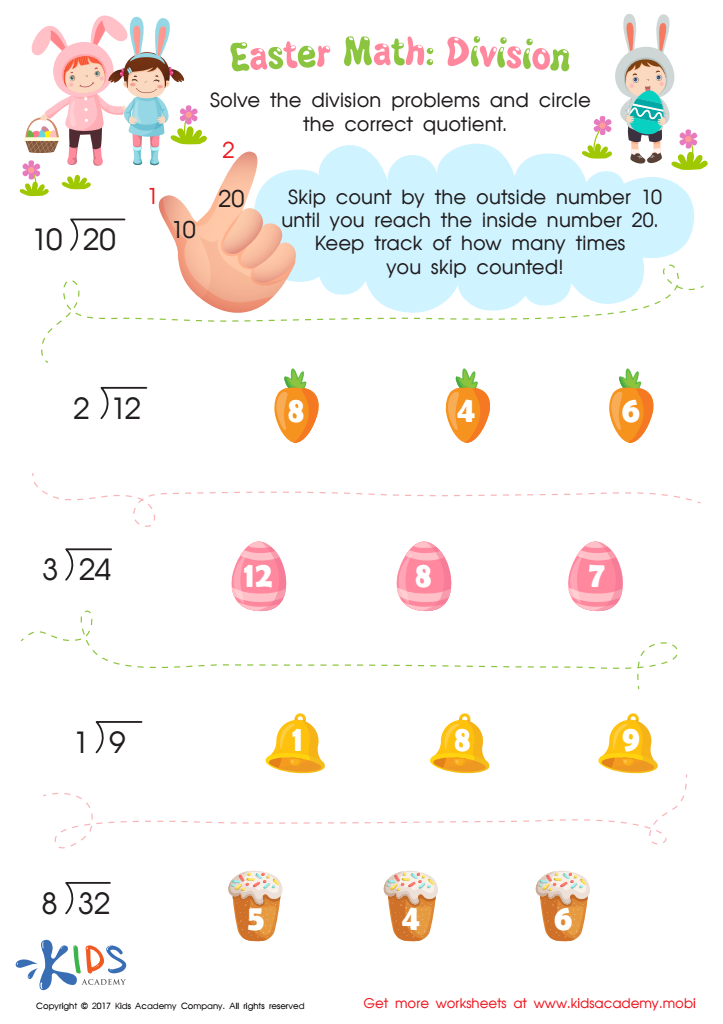
Division Worksheet
 Assign to My Students
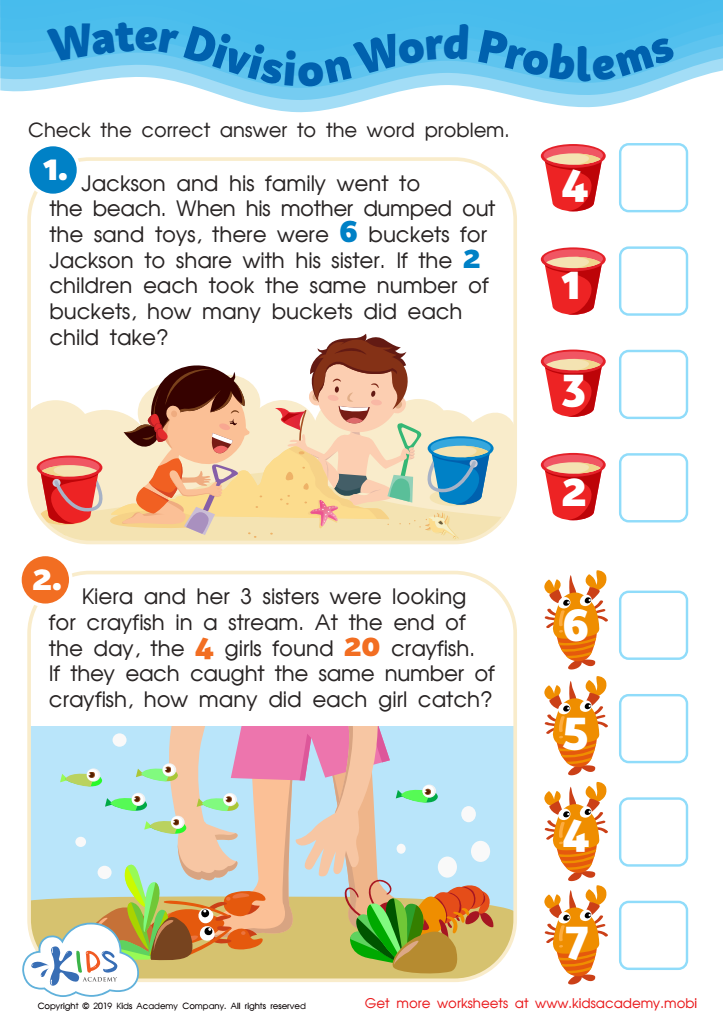
Water Division Word Problems Worksheet
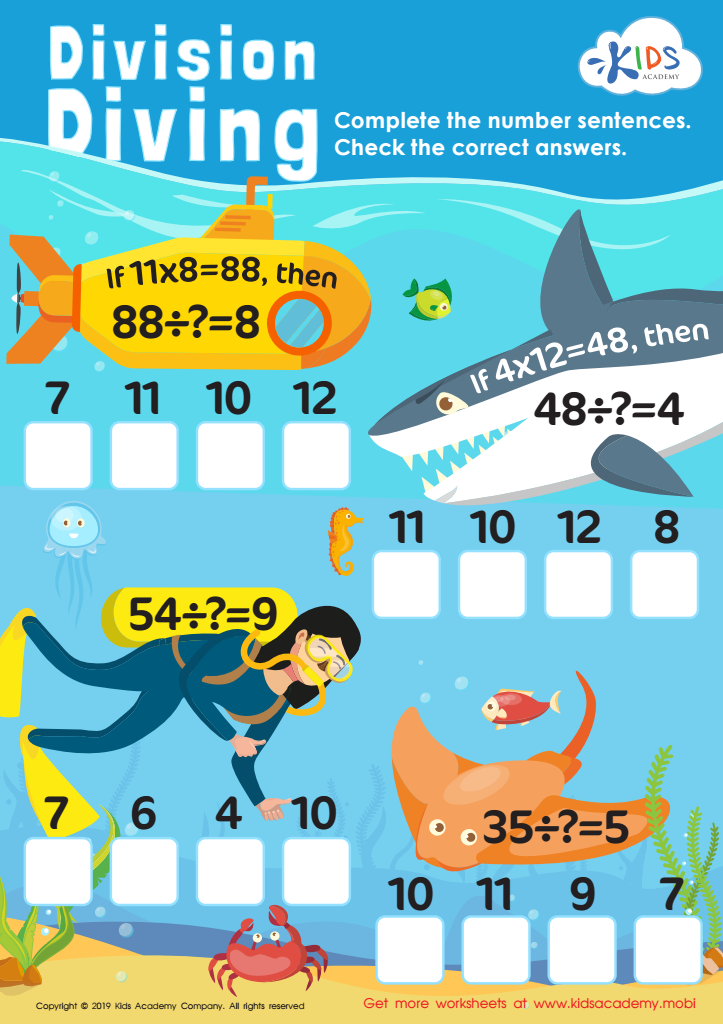
Division Diving Worksheet








Mathematical reasoning and division are foundational skills for 9-year-olds, critical for their academic growth and future competencies. At this age, students develop their reasoning abilities, which allows them to solve problems logically and understand mathematical concepts deeply. Normal division, or the ability to split a number into equal parts, reinforces their understanding of operations and numerical relationships.
Parents and teachers should care about this because a solid grasp of division aids in grasping more complex mathematical concepts, such as fractions, ratios, and long division. This early mastery can boost a child's confidence in math and enhance their problem-solving skills across other subjects, as mathematics connects to various fields, including science and economics.
Furthermore, promoting strong mathematical reasoning fosters critical thinking, encouraging children to approach challenges systematically. Early interventions and focused practice in normal division help prevent learning gaps, setting a strong foundation for future education. In a world where data interpretation and analytical thinking are increasingly relevant, ensuring that children develop strong division skills prepares them for success in math and everyday decision-making. Ultimately, fostering these skills in children allows them to thrive both academically and personally.








