
Historical Knowledge Normal Multiplication Worksheets for 9-Year-Olds
4 filtered results
Difficulty Level
Grade
Age
-
From - To
Subject
Activity
Standards
Discover our engaging "Historical Knowledge Normal Multiplication Worksheets" designed specifically for 9-year-olds! These worksheets not only enhance multiplication skills but also immerse students in fascinating historical contexts. With vibrant illustrations and intriguing facts, children learn to multiply while exploring significant events and figures from the past. This unique approach fosters both math confidence and a love for history, making learning a fun and enriching experience. Ideal for at-home practice or classroom use, our worksheets promote critical thinking and encourage curiosity. Start your child's journey into history and multiplication today with creative exercises that stimulate their minds and spark their imagination!
Favorites
With answer key
Interactive
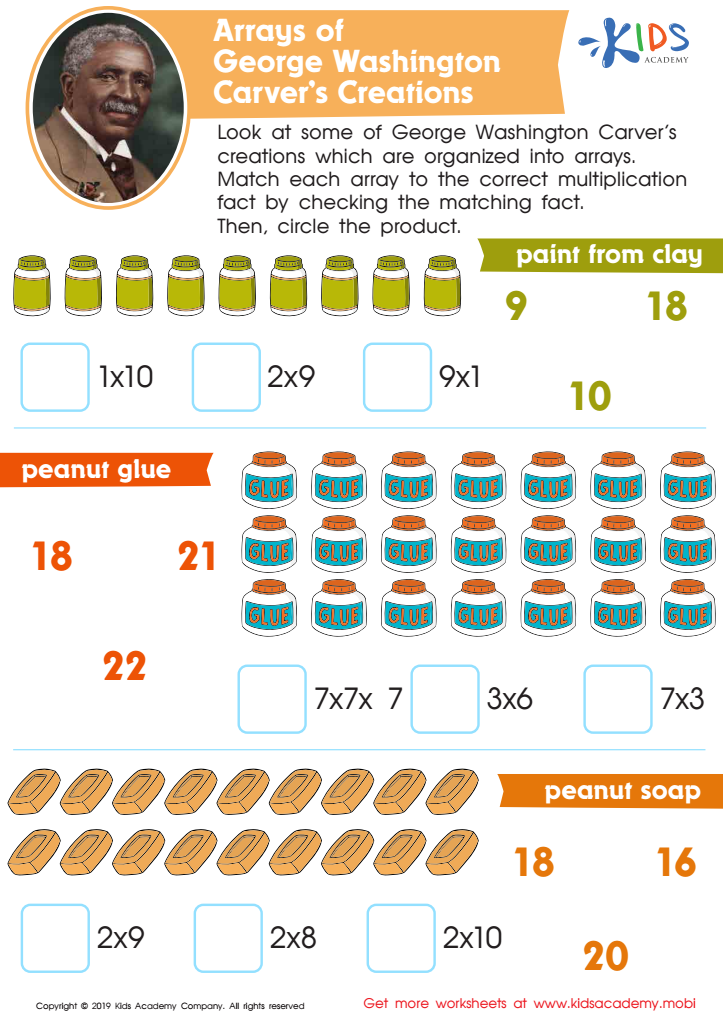
Arrays of George Washington Carver’s Creations Worksheet
Remind your child of what George Washington Carver created. Can they tell you? This worksheet has arrays with his creations. Match the array to the multiplication fact and help your child to circle the product.
 Assign to My Students
Arrays of George Washington Carver’s Creations Worksheet
Worksheet
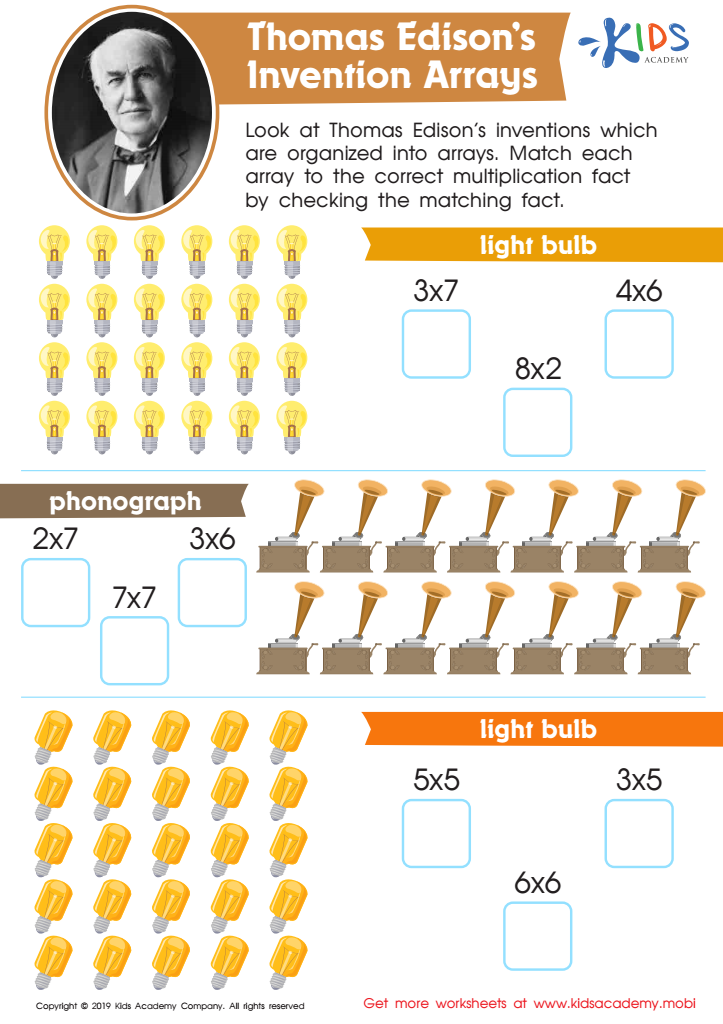
Thomas Edison’s Invention Arrays Worksheet
Test your students' knowledge on history by asking them what Thomas Edison invented. If they get the right answer, provide more information on other inventors. Check out this printout of Edison's light bulb inventions laid out in arrays. Get them to match each array to the correct multiplication fact.
Thomas Edison’s Invention Arrays Worksheet
Worksheet
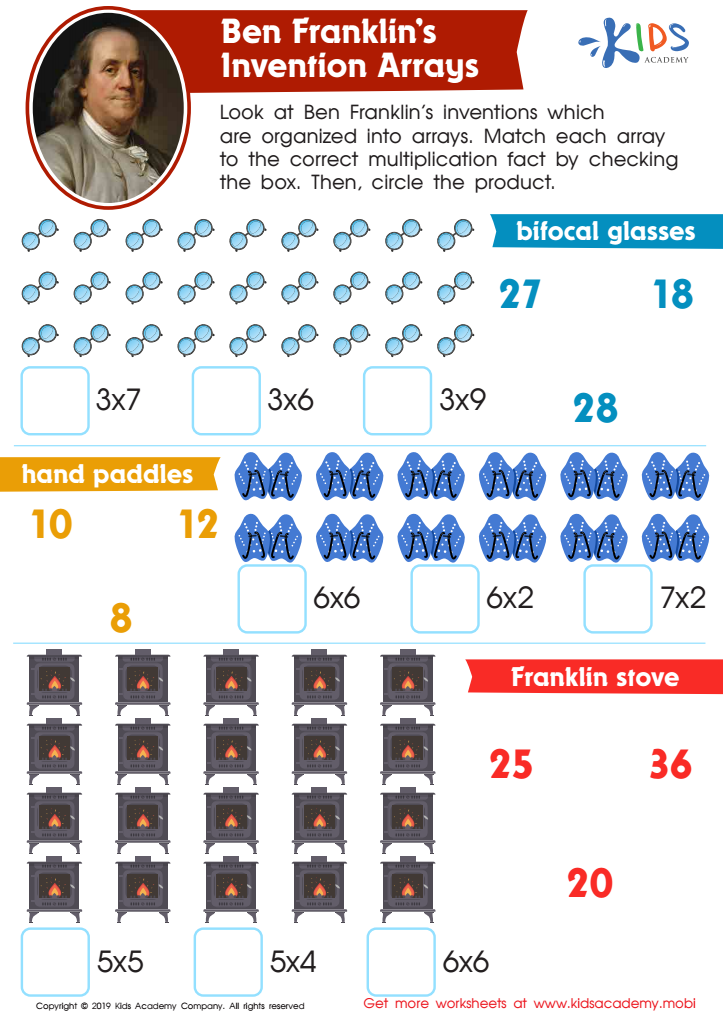
Ben Franklin’s Invention Arrays Worksheet
Have your child guess some of the inventors of the popular items we use today. For instance, the light bulb was invented by Thomas Edison. Look at Ben Franklin's inventions and help your kids match the arrays to the correct multiplication fact. Check the box and circle the product.
Ben Franklin’s Invention Arrays Worksheet
Worksheet
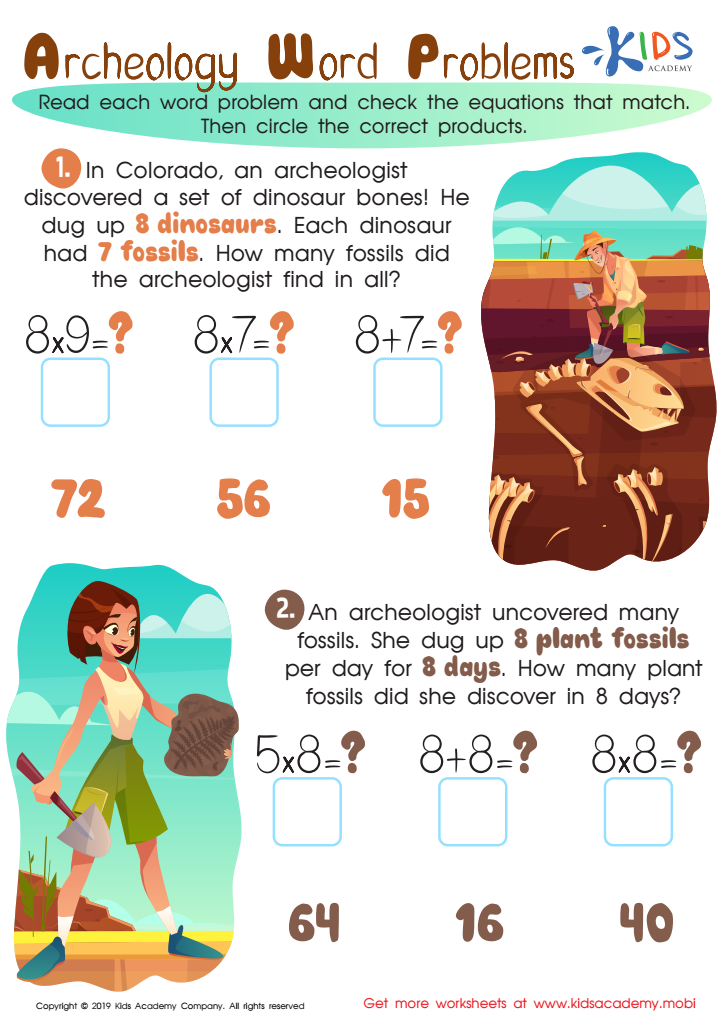
Archeology Word Problems Worksheet
Encourage your child to explore their career options! Show them an archeologist's job with this worksheet - featuring a picture of a dinosaur bone discovery. Read the accompanying text, then solve the word problems. Help your kids circle the correct answers to better understand this profession.
Archeology Word Problems Worksheet
Worksheet
Join Kids Academy for Free
Who is primarily going to use this learning content?








Parents and teachers should prioritize teaching historical knowledge of normal multiplication to 9-year-olds because it plays a crucial role in cognitive development and contextual understanding of mathematics. At this age, children are not only mastering multiplication as a mathematical operation but also developing problem-solving skills and logical reasoning. Understanding the historical origins of multiplication reinforces its relevance and application in real life.
Historical knowledge offers students insight into how multiplication is used across different cultures and how it has evolved. It fosters a sense of appreciation for math, making it more engaging and relatable. By learning about how ancient civilizations solved multiplication problems, children can grasp the significance of math in daily life, from budgeting to science.
Furthermore, this knowledge aids in building a robust foundational framework for future mathematical concepts, such as division, factors, and prime numbers. Understanding the basics also strengthens their resilience and confidence in tackling more challenging problems.
Worksheets connected to historical events or figures related to multiplication can make learning more interactive, enriching their overall educational experience. By connecting history and mathematics, we prepare children not just as learners in math but as informed citizens capable of applying their knowledge thoughtfully in a diverse world.








