
Division practice Normal Word Problems Worksheets for 9-Year-Olds
4 filtered results
Difficulty Level
Grade
Age
-
From - To
Subject
Activity
Standards
Help your 9-year-olds master division concepts with our engaging Division Practice Normal Word Problems Worksheets! Crafted to enhance problem-solving skills, these worksheets present relatable scenarios that make learning division fun and practical. From sharing treats among friends to solving real-life situations, each problem encourages critical thinking and reinforces division mastery. Tailored specifically for this age group, our resources are designed to build confidence and foster a love for math in young learners. Perfect for classroom use or at-home practice, download our worksheets today and set your child on the path to division success! Start their math journey with inspiring, hands-on problems!
Favorites
With answer key
Interactive
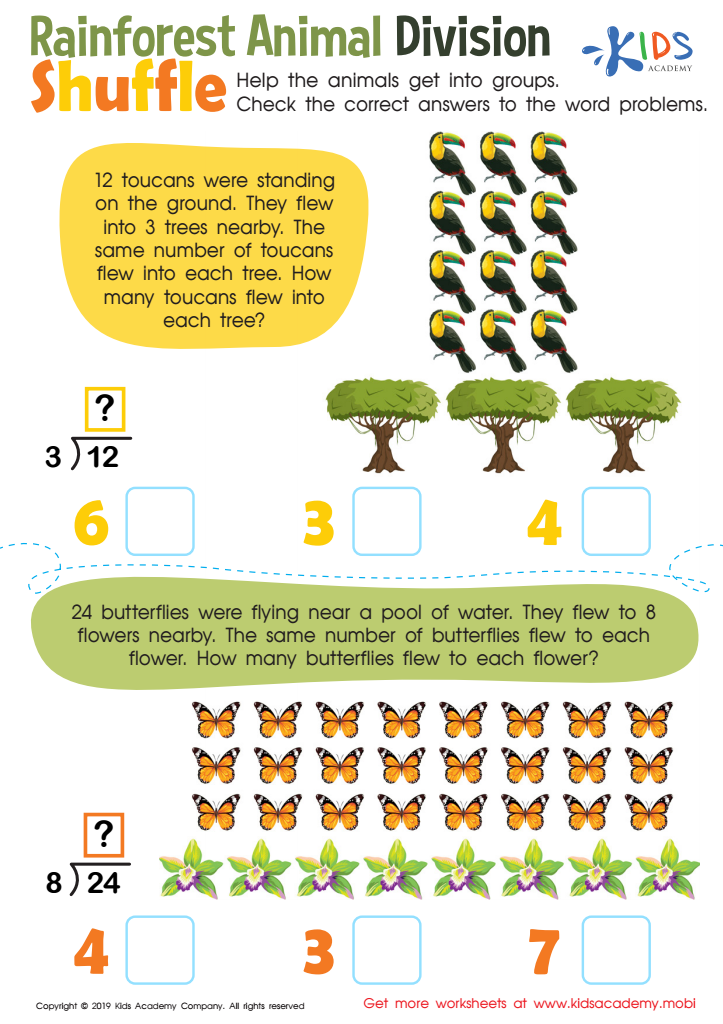
Rainforest Animal Division Worksheet
Children can save the rainforest and learn about division with this worksheet! It helps kids understand that division involves creating equal groups of specific numbers, and with its visual representation, they can grasp the concept more easily. They'll have fun learning about their place in the world and their role in protecting the environment.
 Assign to My Students
Rainforest Animal Division Worksheet
Worksheet
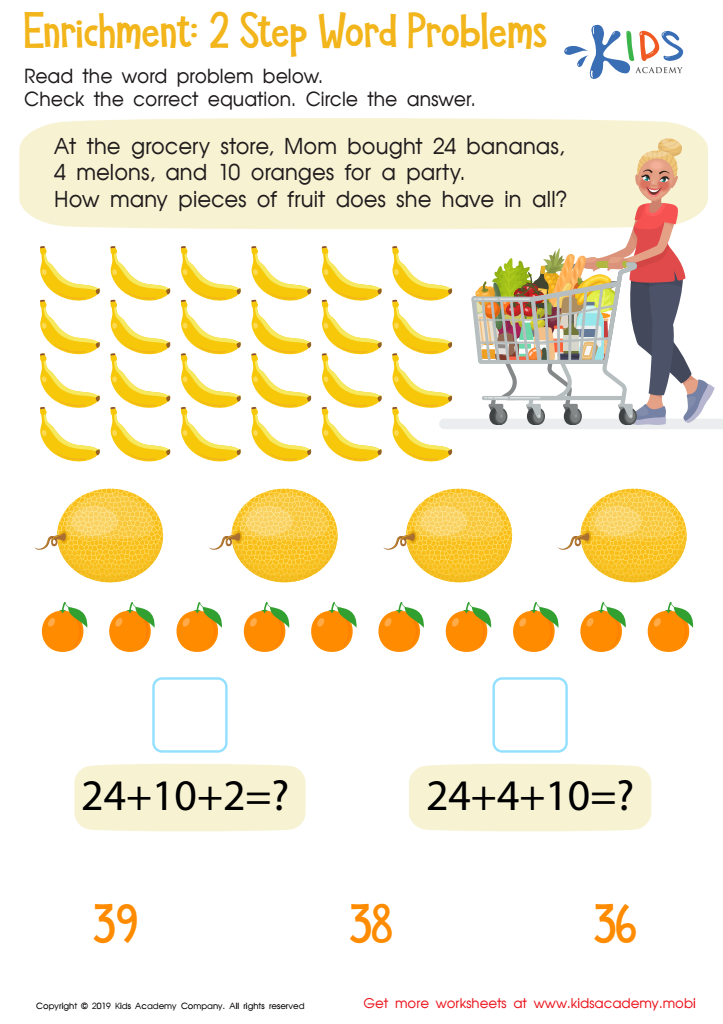
Enrichment -2 Step Word Problems Worksheet
Help your students learn math easier and faster with this colorful worksheet. Read the word problem and then guide them in checking the correct equation and finding the answer. Your students will benefit from the extra help, as they work through new concepts each day.
Enrichment -2 Step Word Problems Worksheet
Worksheet
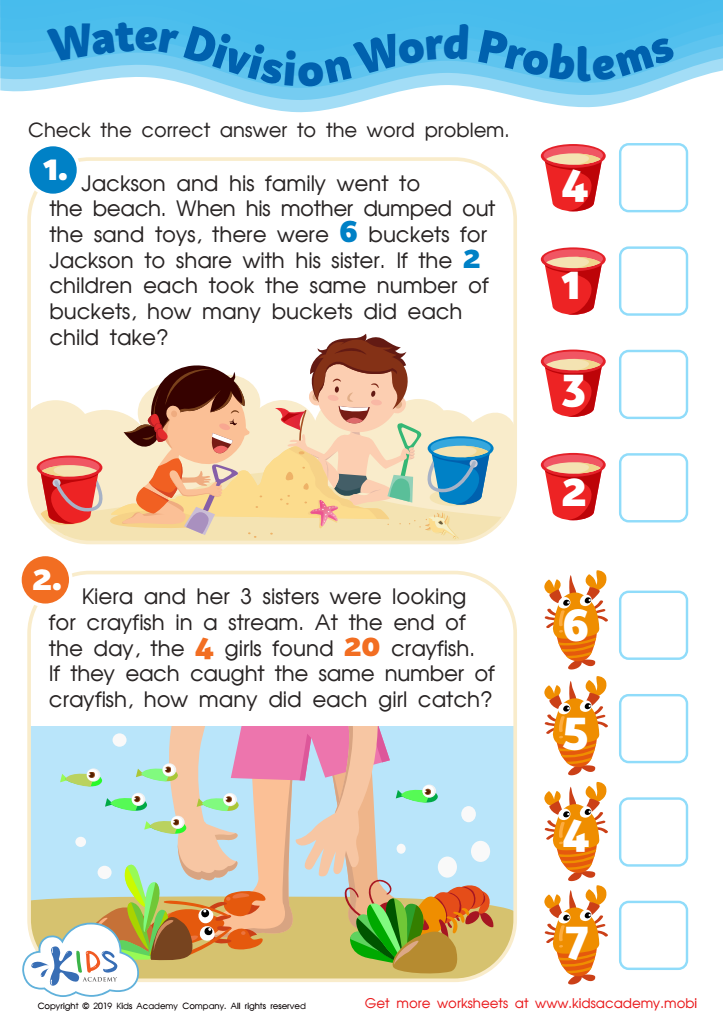
Water Division Word Problems Worksheet
Kids can sharpen their math skills with this fun PDF! They'll see pictures of friends at the beach, plus bold numbers and colorful pictures. All they need to do is read and understand the problem to find the answer - without even realizing they're doing division. A great way to make math enjoyable!
Water Division Word Problems Worksheet
Worksheet
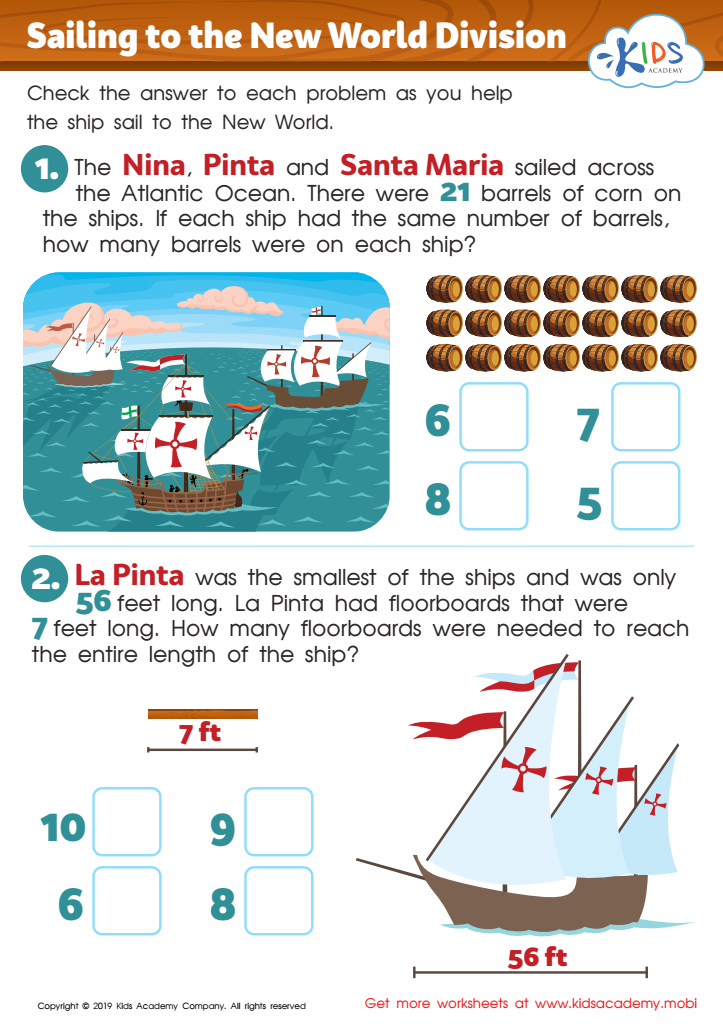
Sailing to the New World Division Worksheet
This worksheet combines history and math, helping kids make sense of problem-solving. Christopher Columbus sailing the ocean blue is combined with picture representations of division word problems in bold colors and highlighted numbers. Kids can learn while having fun figuring out the problems, regardless of whether it's math or history.
Sailing to the New World Division Worksheet
Worksheet
Join Kids Academy for Free
Who is primarily going to use this learning content?




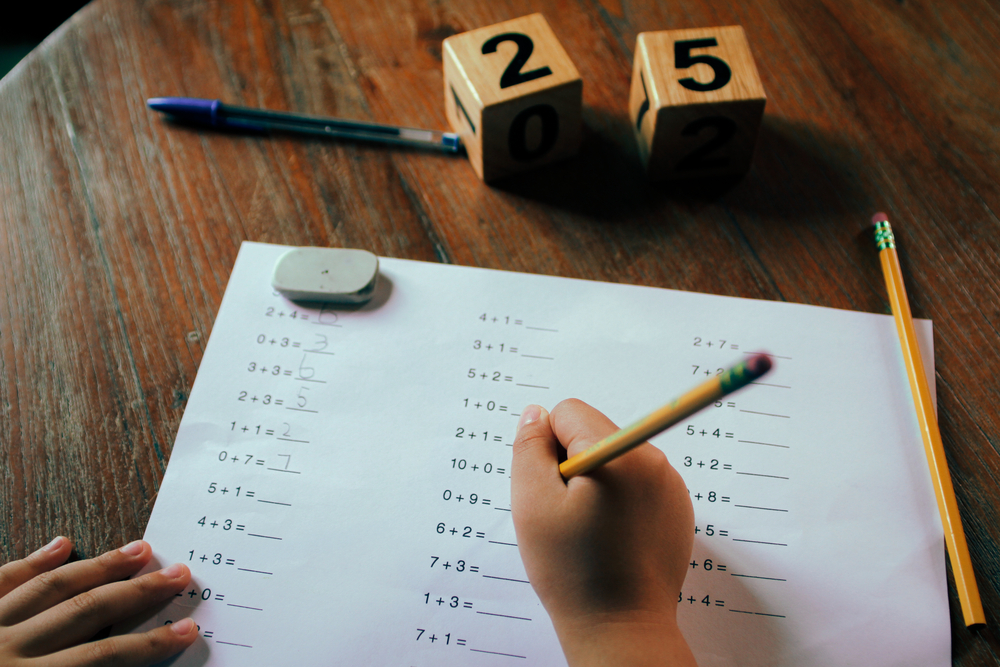



Division practice with normal word problems is crucial for 9-year-olds as it enhances their mathematical understanding and problem-solving skills. At this age, children are developing their ability to think critically and abstractly. Word problems require students to translate real-life scenarios into mathematical operations, which helps in reinforcing concepts beyond rote memorization.
Parents and teachers should care about this practice because it not only solidifies the concept of division but also fosters important life skills. By encountering division in relatable contexts, children learn to apply mathematics to everyday situations, such as sharing snacks or organizing items, making math relevant and engaging.
Successful engagement with division word problems also builds confidence in their abilities. When students can break down complex problems into manageable steps, they develop perseverance and resilience, which are essential traits for future learning. Additionally, mastery in these skills can lead to reduced math anxiety and increased enjoyment of the subject, paving the way for continued academic interest.
Ultimately, grounded in both cognitive and emotional development, consistent engagement with division word problems equips children with essential problem-solving tools, perfectly setting the stage for more complex mathematical concepts in future grades.








