Sight words recognition Normal Reading Worksheets for 9-Year-Olds
3 filtered results
-
From - To
Enhance your 9-year-old's reading skills with our engaging Sight Words Recognition Normal Reading Worksheets! Designed specifically for this age group, these worksheets focus on improving sight word recognition—an essential skill for fluent reading. Through fun and interactive activities, children will practice identifying and using high-frequency words in various contexts. Our worksheets support a balanced literacy approach, fostering both reading comprehension and confidence. Perfect for at-home learning or classroom use, these resources cater to diverse learning styles, ensuring every child excels. Free downloadable worksheets are integrated with colorful visuals and relatable themes, keeping learning exciting and effective. Start enhancing your child’s reading journey today!
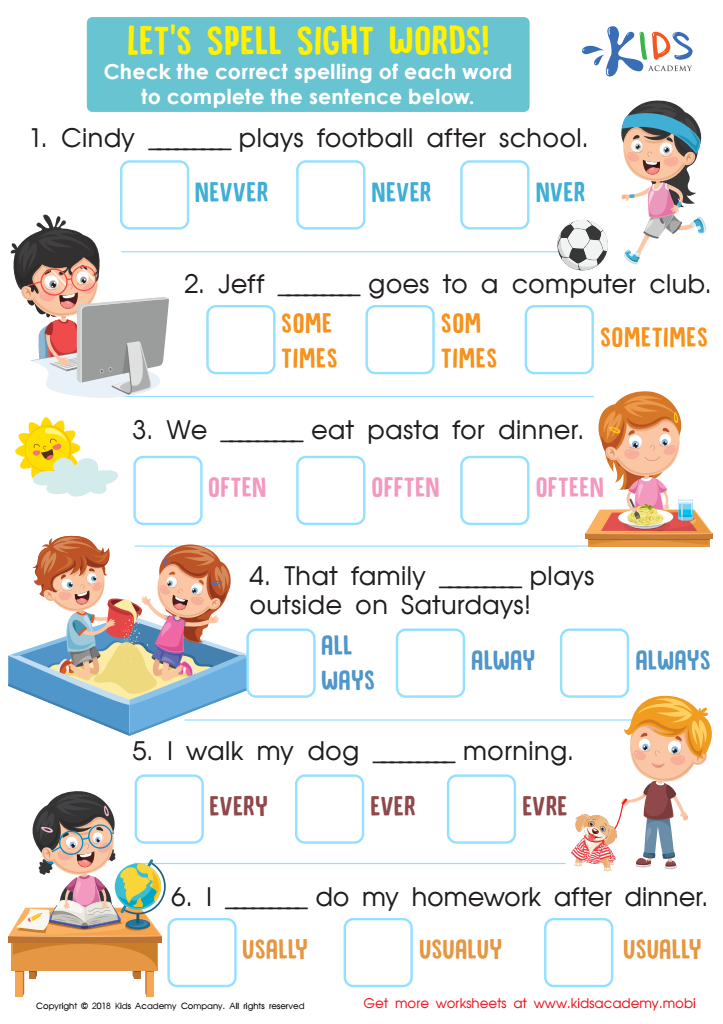
Let's Spell Sight Words Worksheet
 Assign to My Students
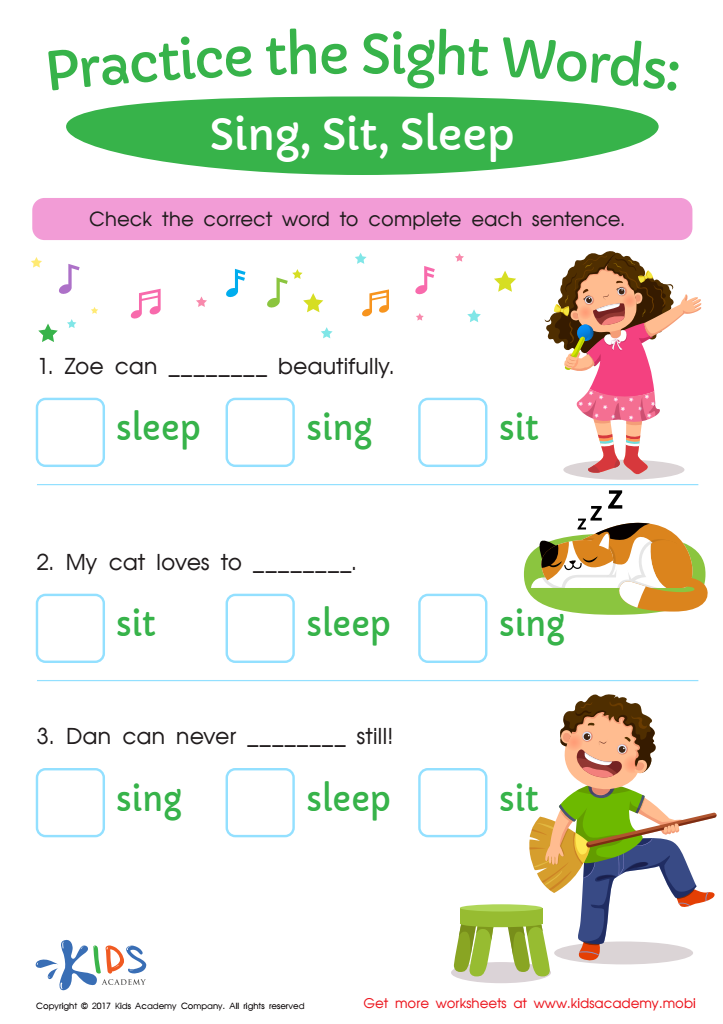
Sing, Sit, Sleep Sight Words Worksheet
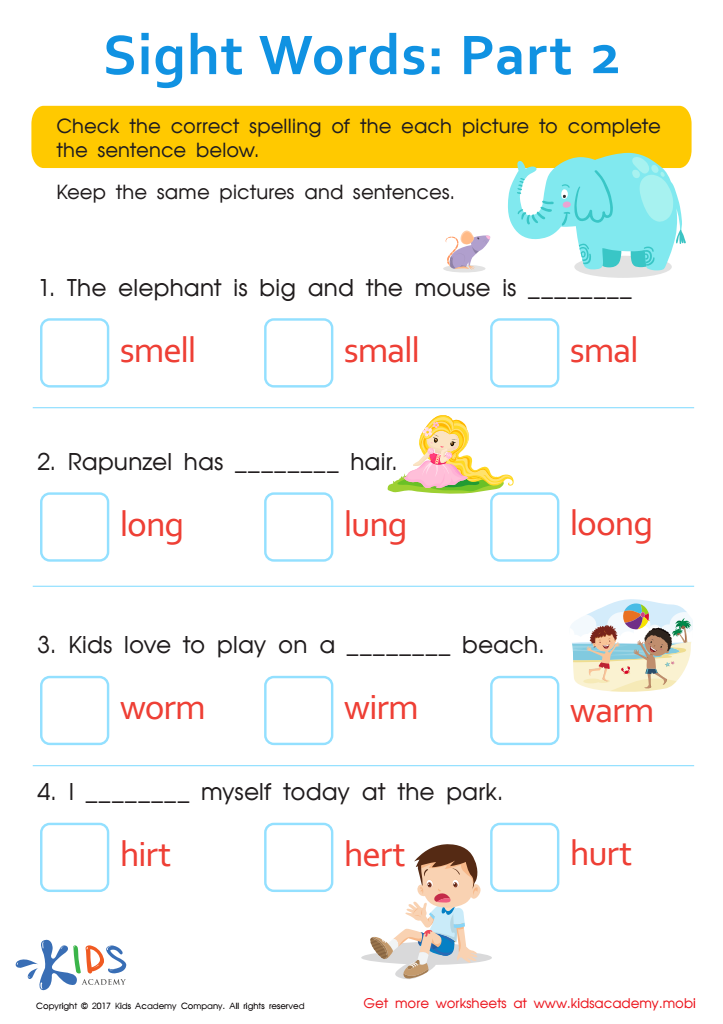
Sight Words Worksheet






.jpg)

Sight word recognition is crucial for developing fluent reading skills in 9-year-olds. At this age, children transition from learning to read to reading to learn, making proficient reading essential for their academic success. Sight words, commonly used words that children can recognize without sounding them out, contribute significantly to reading fluency. When students can quickly identify these words, they can focus more on comprehension and the meaning of the text, rather than getting stuck on decoding individual words.
Parents and teachers should care about recognition of sight words because it lays a strong foundation for overall literacy development. Children who struggle with sight word recognition may experience frustration and decreased motivation, impacting their attitude towards reading. Additionally, strong reading skills are closely linked to success in other subjects, as many texts involve a variety of academic content.
By encouraging pediatric reading practice and incorporating sight words into lessons or home activities, parents and teachers can help children develop confidence in their reading abilities. This will empower 9-year-olds to engage more deeply with literature and content, enhancing their educational journey and setting them up for future academic achievement. Understanding the significance of sight word recognition fosters a proactive approach to nurturing young readers.








