Understanding Sequences Normal Reading Worksheets for 9-Year-Olds
3 filtered results
-
From - To
Enhance your 9-year-old's reading skills with our "Understanding Sequences" worksheets. Designed to engage young learners, these printable resources focus on helping children grasp the concept of sequences in reading. Utilizing fun and interactive activities, students will practice identifying the order of events, filling in missing information, and recognizing patterns in stories. These worksheets promote critical thinking and comprehension, making reading more enjoyable and structured. Whether you’re in the classroom or at home, our carefully crafted materials support diverse learning styles and help foster a love for reading. Explore our collection to enrich your child's literacy journey today!
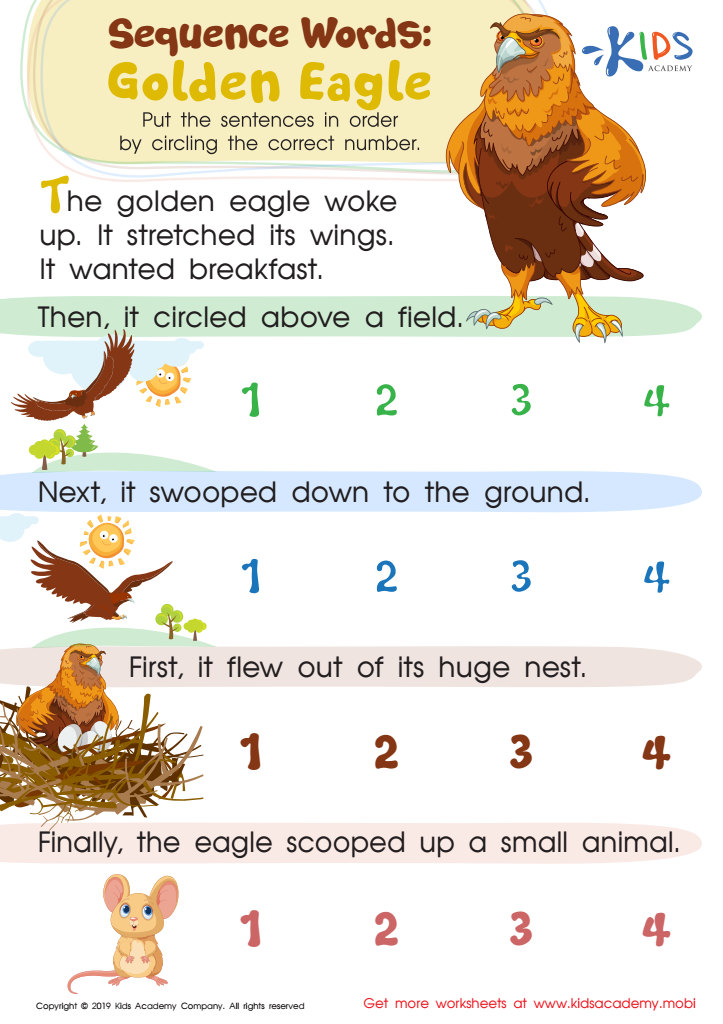
Sequence Word Eagle Worksheet
 Assign to My Students
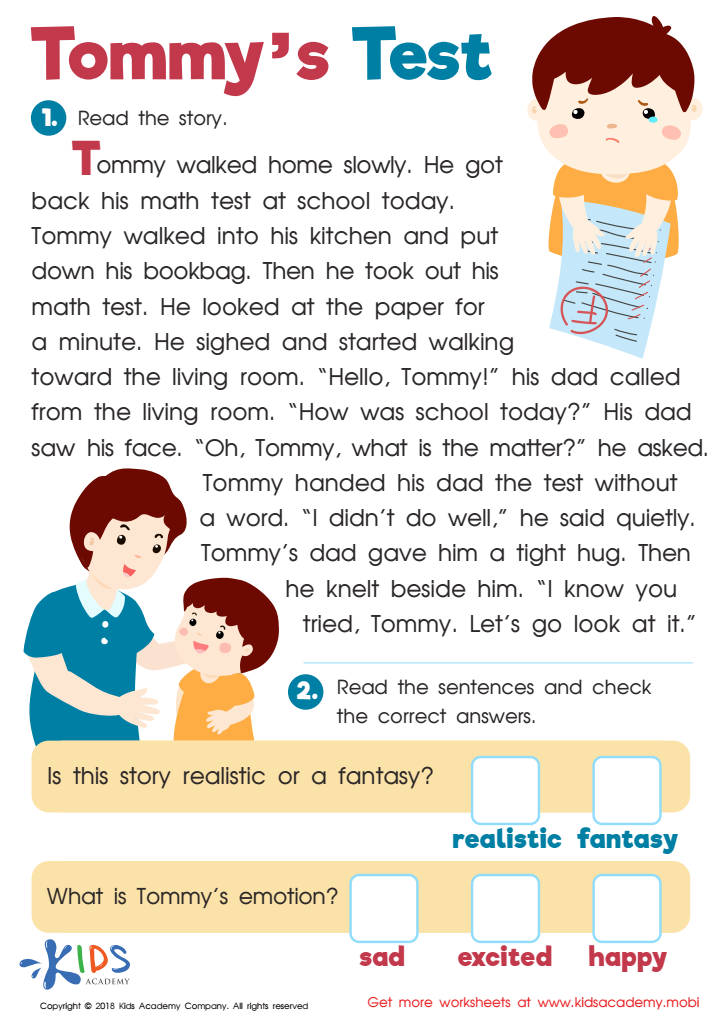
Tommys Test Worksheet
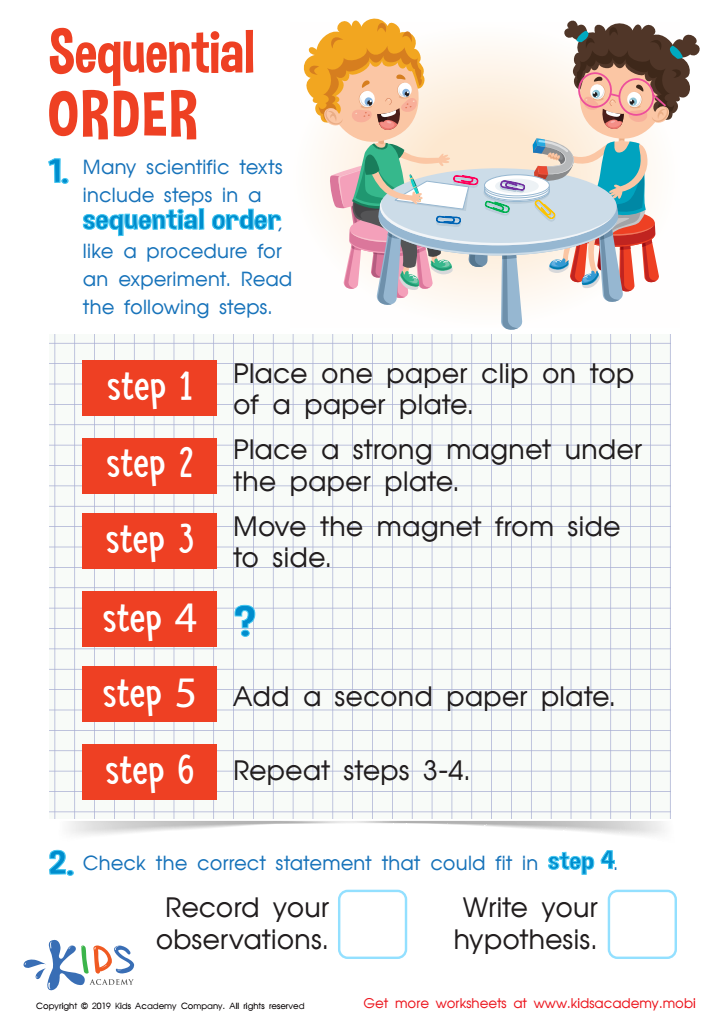
Sequencential Order Worksheet








Understanding sequences is a fundamental skill for 9-year-olds, crucial not only in reading but also in cognitive development. At this age, children's ability to comprehend narratives deeply improves, enhancing their overall literacy. Sequences help learners grasp how stories unfold—recognizing the beginning, middle, and end structures of texts. This understanding fosters critical thinking as students learn to identify cause-and-effect relationships and predict outcomes based on the story's flow.
For parents and teachers, fostering proficiency in understanding sequences means promoting better retention of information and enhancing a child's ability to summarize and make connections between different events. Mastery of sequencing also translates into problem-solving skills, as children apply the same thinking process in subjects like math and science. Moreover, aiding students in recognizing different sequencing styles across genres enriches their appreciation for diverse literature.
Early intervention in this area can lay a solid foundation for lifelong learning, helping children become confident readers. By engaging in activities like story mapping or retelling stories, caregivers can make this learning process enjoyable. Moreover, monitoring and supporting progress in understanding sequences not only empowers children academically but also boosts their enthusiasm for reading and comprehension journeys.








