Filters

8 filtered results

Clear all filters
Favorites
With answer key
Interactive

8 filtered results

Difficulty Level

Grade


Unlock the power of words with our Vocabulary Enhancement Normal Reading Fiction Worksheets specially designed for 9-year-olds! These engaging worksheets combine captivating fiction texts with targeted vocabulary exercises, helping young readers expand their language skills while enjoying literature. Our carefully crafted activities encourage comprehension, context clues, and word usage, making vocabulary learning both fun and effective. With a variety of themes and difficulty levels, these resources cater to diverse learning styles and help boost confidence in young readers. Enhance your child's literacy journey and foster a lifetime love of reading with our interactive and kid-friendly worksheets today!

Check out this FREE Trial Lesson on Reading Fiction for age 9!

English

Favorites
With answer key
Interactive
  • 9
  • Vocabulary enhancement
  • Reading Fiction
  • Normal
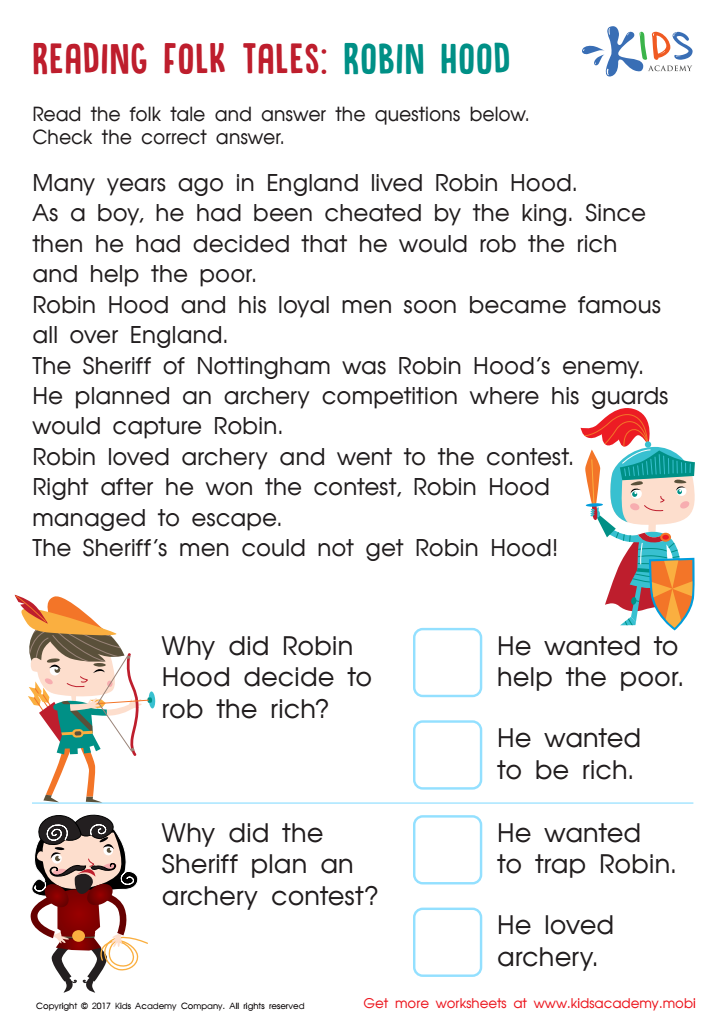
Robin Hood Folktale Worksheet

Robin Hood Folktale Worksheet

Have your child practice reading comprehension and inferencing with this Robin Hood folktale worksheet! Get them to read between the lines to find character motivation and answer important questions about the passage. It's a fun way to test their reading skills!
Robin Hood Folktale Worksheet
Worksheet
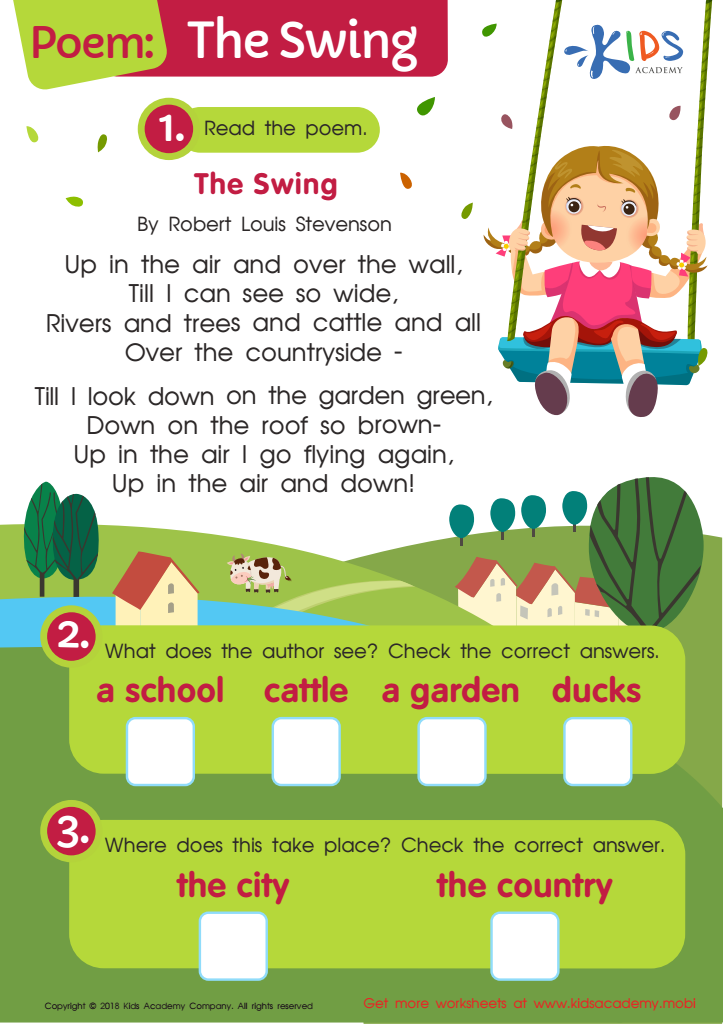
Poem: The Swing Worksheet

Poem: The Swing Worksheet

Encourage your child's love of writing by displaying their poems on the fridge or walls. This worksheet focuses on a swing, something your child enjoys, and contains questions to help your child think more deeply about the poem. Read it together, then answer the questions and watch as your child's creativity and writing skills blossom!
Poem: The Swing Worksheet
Worksheet
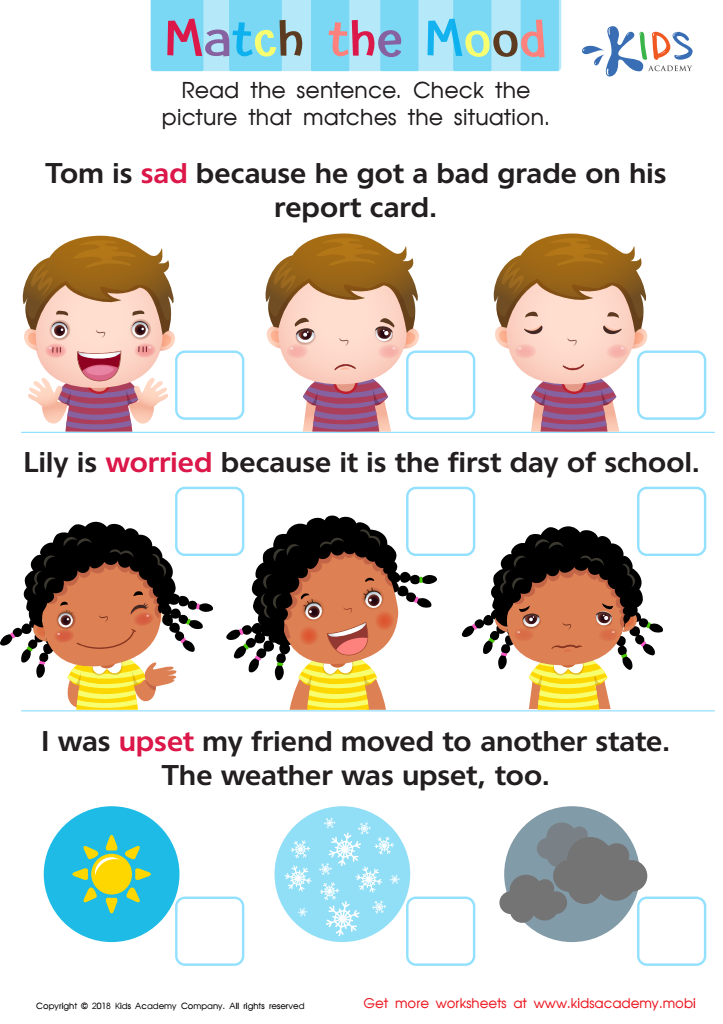
Match The Mood Worksheet

Match The Mood Worksheet

Ask your kid what kind of moods they usually experience; e.g. sad, happy, hurt or worried. Read aloud the sentences in the worksheet and help them match the situation to the picture. Max 80 words.
Match The Mood Worksheet
Worksheet
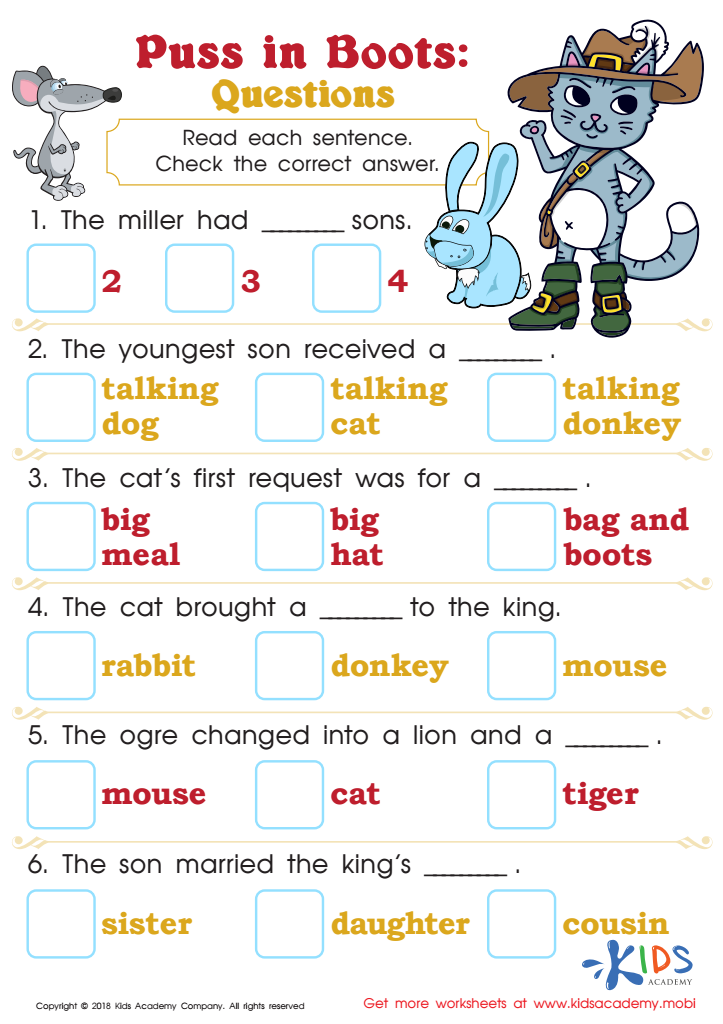
Puss in Boots: Questions Worksheet

Puss in Boots: Questions Worksheet

This worksheet contains questions to be checked with boxes for the correct answers. It also has pictures of animals; ask kids to identify them, noting the objects with them. Read the questions and have kids provide the answers. Help them check the boxes for the right answer.
Puss in Boots: Questions Worksheet
Worksheet
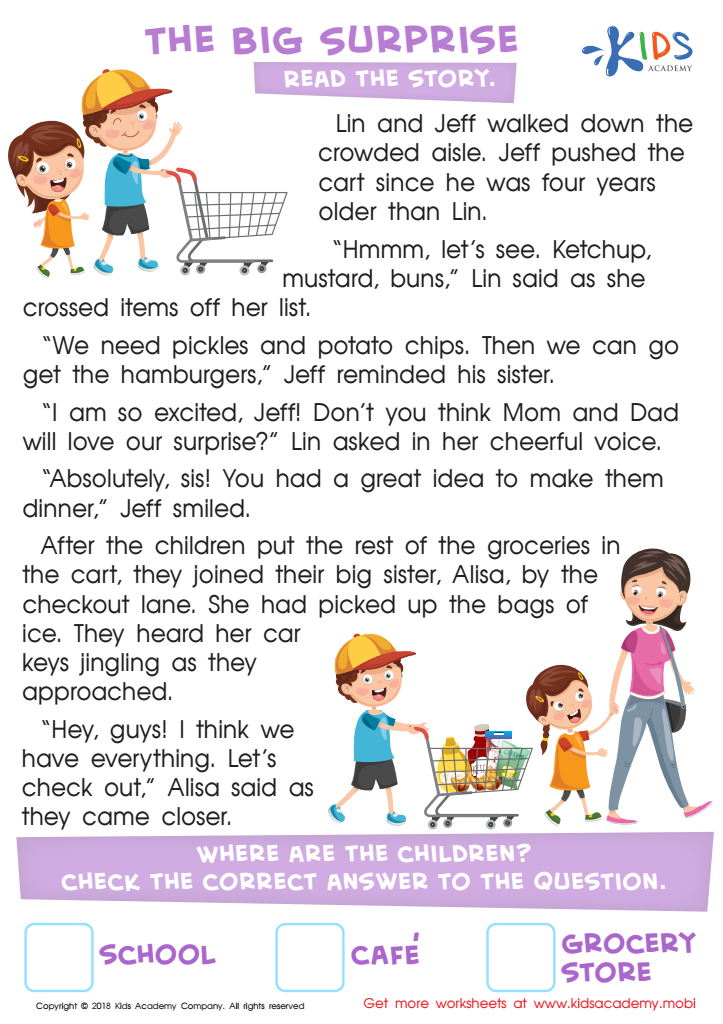
The Big Surprise Worksheet

The Big Surprise Worksheet

Read this story to your kids: Lin and Jeff are in the supermarket with their big sister Alisa. They're excited to buy groceries. Listen closely to the details and ask the questions at the end to check your understanding. Read it twice to ensure full comprehension.
The Big Surprise Worksheet
Worksheet
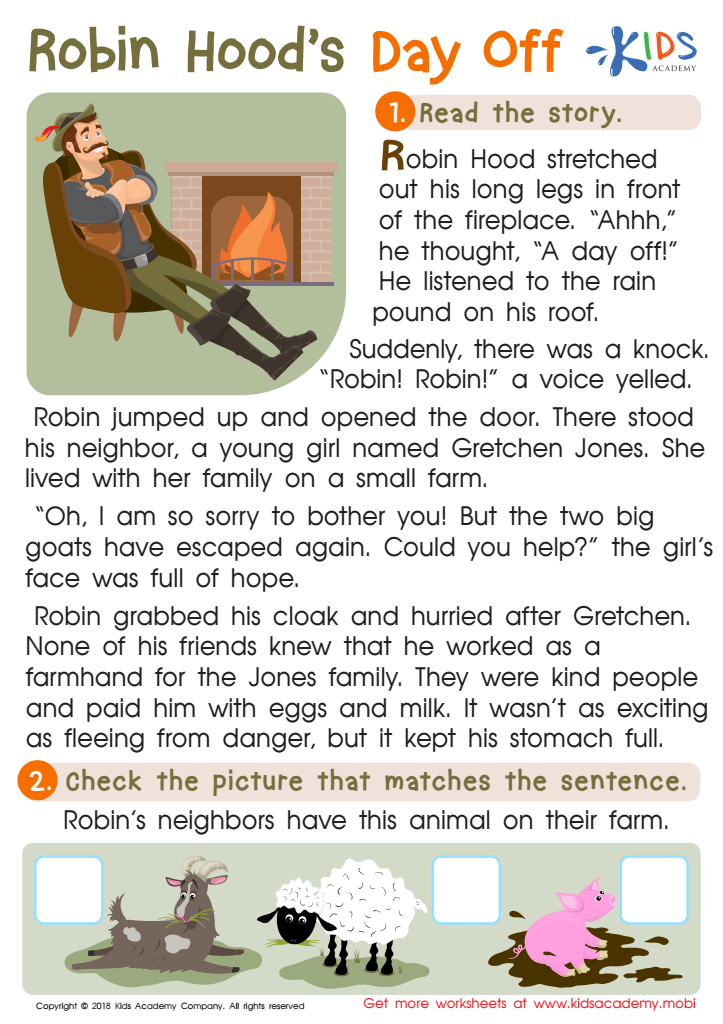
Robin Hood's Day Off Worksheet

Robin Hood's Day Off Worksheet

Encourage your child to express their personality by writing stories. Show them this worksheet's short story about Robin Hood and read it slowly and carefully. Read it again if needed and ask the question below the story. This will help your child use their knowledge to answer it.
Robin Hood's Day Off Worksheet
Worksheet
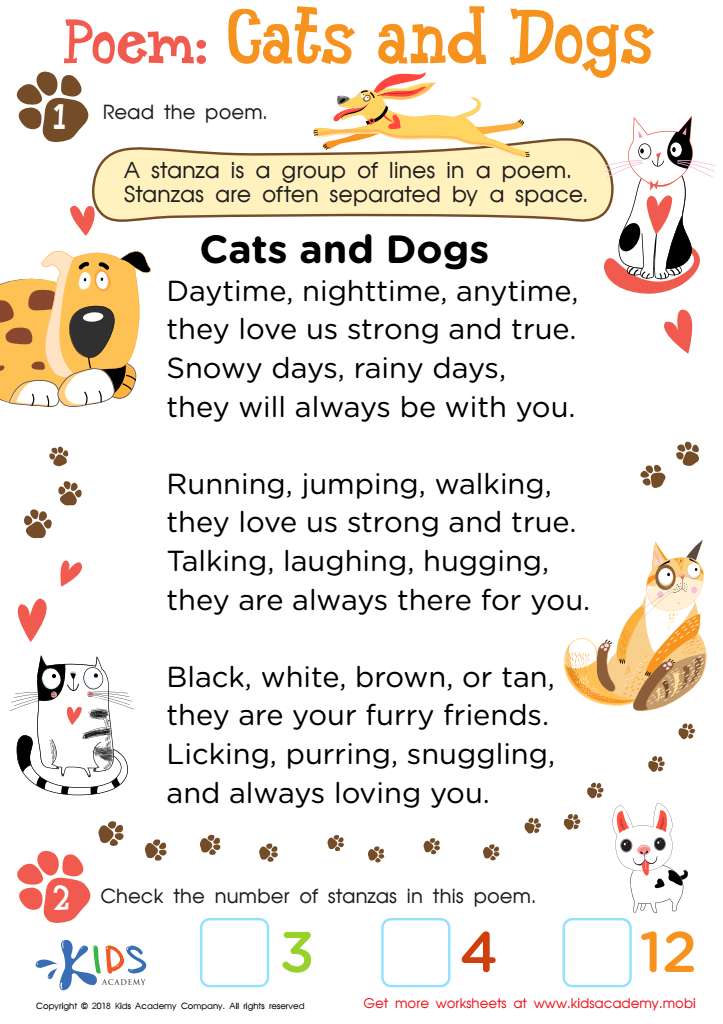
Poem: Cats and Dogs Worksheet

Poem: Cats and Dogs Worksheet

Read the poem to your child and point out where each stanza ends. Ask if they know what a stanza is (if not, explain it's a group of lines in a poem). Help them answer the question at the bottom of the printout. This simple, sweet poem about cats is easy for your child to relate to.
Poem: Cats and Dogs Worksheet
Worksheet
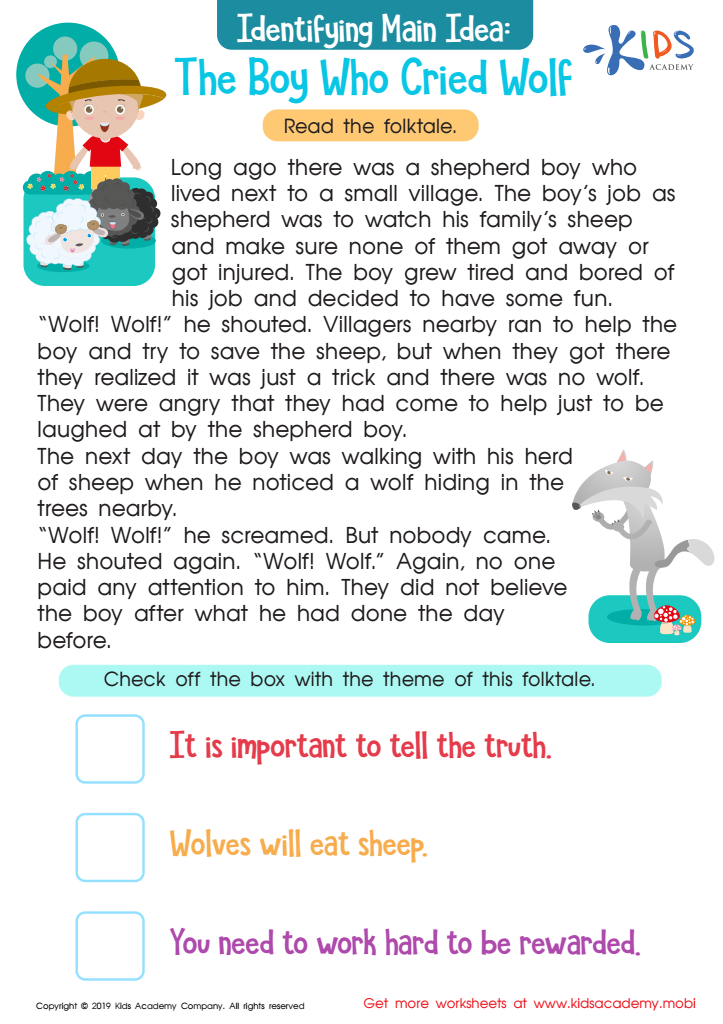
The Boy Who Cried Wolf Part 2 Worksheet


The Boy Who Cried Wolf Part 2 Worksheet

Kids love story time - no doubt they know their favorites! This worksheet tells a story with a theme or main idea. Read it carefully with your kids and ensure they understand every word. Then, help them answer the simple questions at the bottom of the page.
The Boy Who Cried Wolf Part 2 Worksheet

Worksheet


Vocabulary enhancement through normal reading fiction is crucial for 9-year-olds, as it plays a significant role in their language development and academic success. At this age, children are expanding their comprehension skills and beginning to tackle more complex texts. Exposure to diverse vocabulary in fictional contexts helps them understand new words, phrases, and their meanings, which is critical for effective communication and expression.

Reading fiction fosters imagination and creativity, allowing children to experience different perspectives and cultures. This not only enriches their vocabulary but also aids in developing empathy and social understanding. Moreover, strong vocabulary skills positively correlate with reading comprehension, critical thinking, and the ability to analyze texts—skills that are essential for their academic journey.

For parents and teachers, encouraging vocabulary enhancement through reading is proactive. It cultivates a love for reading, encourages independent thought, and enhances students' confidence in their abilities. Incorporating discussions about story elements, themes, and character motivations during reading can lead to a deeper engagement and understanding of the material. Overall, investing time in vocabulary development through normal reading fiction equips children with tools that facilitate lifelong learning and communication skills.