Fine Motor Skills Normal Letter E Worksheets
3 filtered results
-
From - To
Discover the ultimate learning resource with our Fine Motor Skills Normal Letter E Worksheets at Kids Academy! Designed specifically for early learners, these engaging worksheets help children develop crucial fine motor skills while mastering the basics of the letter E. Each page offers a variety of fun activities, including tracing, coloring, and writing, ensuring your child gains confidence and improves pencil control. Perfect for both classroom and home settings, our worksheets provide an enjoyable way to strengthen hand-eye coordination and prepare your little one for academic success. Start building a strong foundation in literacy and fine motor skills today!
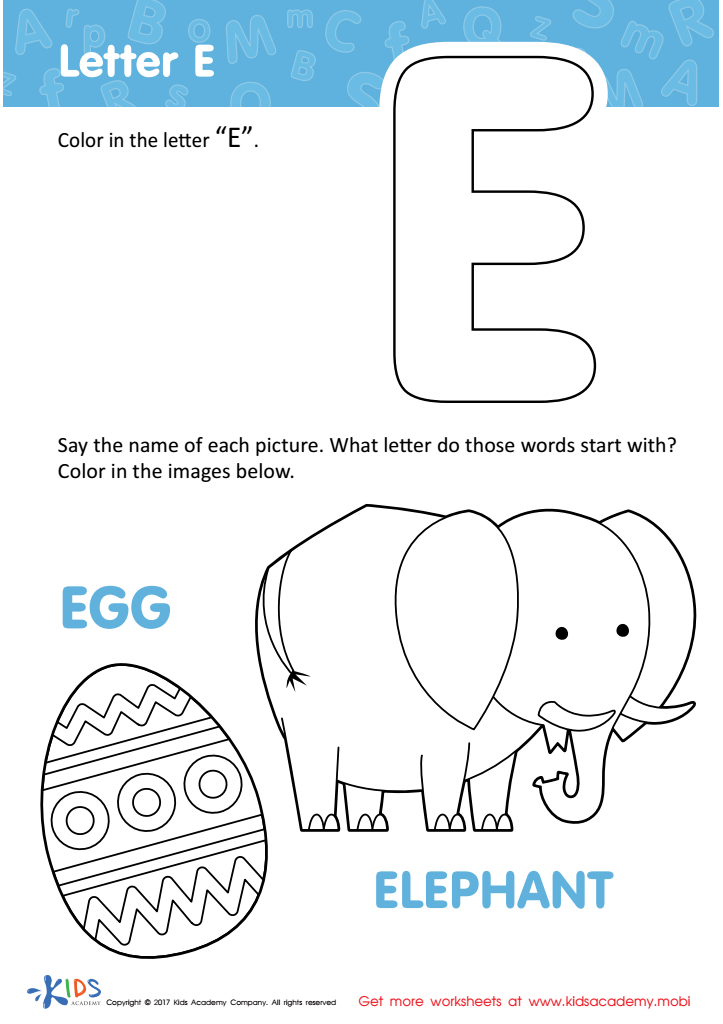
Letter E Coloring Sheet
 Assign to My Students
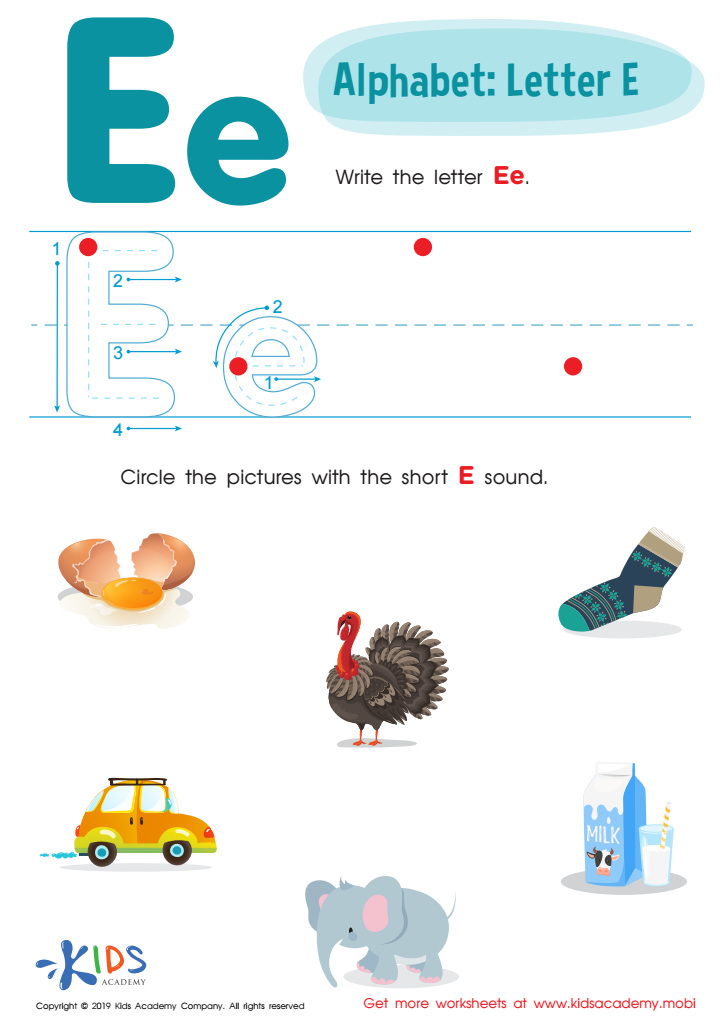
Letter E Tracing Worksheet
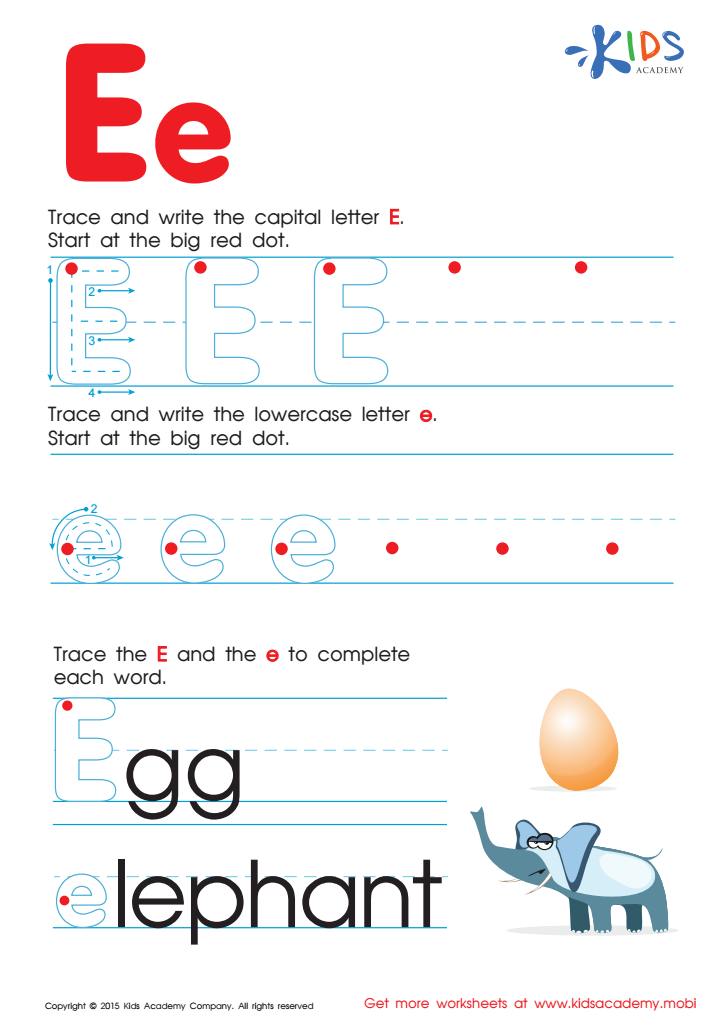
Letter E Tracing Page






Fine motor skills refer to the coordination of small muscles in movements—typically involving the synchronization of hands and fingers—with the eyes. These skills are crucial for young children's development as they directly impact their ability to perform essential daily tasks and participate in routine classroom activities.
For example, forming the letter "E" with normal handwriting precision requires fine motor skills such as hand-eye coordination, finger dexterity, and muscle control. Mastering these skills allows children to engage effectively in reading and writing activities, which are foundational for academic success. Poor fine motor skills can lead to difficulties in producing legible handwriting, impacting self-esteem, overall academic performance, and communication abilities.
Additionally, developing fine motor skills supports other areas of growth, including cognitive development and problem-solving skills. Engaging in play activities that promote fine motor control, such as playing with building blocks, puzzles, or arts and crafts, can enhance these skills.
By focusing on refining fine motor skills early on, parents and teachers can better prepare children for more complex tasks, ultimately setting them up for greater success both inside and outside of the classroom. Ensuring that these foundational skills are developed appropriately can prevent future educational and developmental challenges.