Handwriting improvement Normal Letter Recognition Worksheets
3 filtered results
-
From - To
Enhance your child's handwriting with our engaging Handwriting Improvement Normal Letter Recognition Worksheets! Designed for early learners, these worksheets combine letter recognition and writing practice to promote clear and confident penmanship. Each worksheet features fun activities that help children identify uppercase and lowercase letters while developing fine motor skills needed for writing. With a focus on both letter formation and recognition, our resources support foundational literacy in a playful and interactive way. Perfect for home or classroom use, these worksheets are an essential tool for building strong writing habits in young learners. Download now and watch your child's skills flourish!
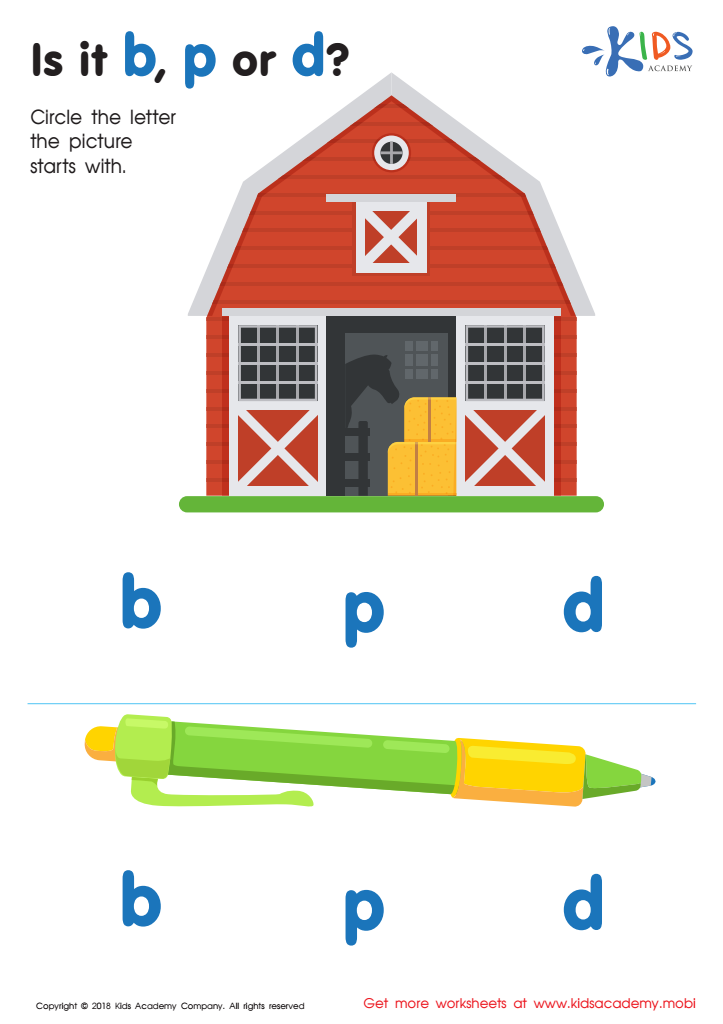
Is it b, p or d? Worksheet
 Assign to My Students

Letter J Tracing Page

Letter B Tracing Page








Parents and teachers should prioritize handwriting improvement and letter recognition because both skills are foundational for children’s education and communication. Handwriting is not just about penmanship; it plays a crucial role in cognitive development. Legible handwriting supports learning by allowing students to articulate their thoughts clearly on paper. As they practice, children develop fine motor skills, which are essential for various daily tasks.
Moreover, letter recognition serves as the cornerstone of literacy. Children who can recognize letters and associate them with sounds are better equipped to learn to read and write. This skill directly impacts their academic performance and confidence as they progress through school. When children struggle with letter recognition or have poor handwriting, it can lead to frustration and decreased motivation.
By focusing on these skills early, parents and teachers can foster a love for learning, set a positive trajectory for literacy development, and boost academic success. Additionally, improving handwriting and letter recognition equips children with tools necessary for effective communication, which is vital in our increasingly digital world. In sum, nurturing these skills contributes to students’ overall development, ultimately laying the groundwork for future learning and personal expression.








