Motor skills development Normal Letter Recognition Worksheets
3 filtered results
-
From - To
Our "Motor Skills Development Normal Letter Recognition Worksheets" are designed to help young learners enhance both their fine motor skills and letter recognition abilities. These printable worksheets combine fun activities like tracing and coloring with educational content to improve hand-eye coordination, pencil control, and familiarity with letters. Perfect for early learners, they provide a solid foundation in alphabet knowledge, crucial for future reading and writing success. Ideal for kindergarten and preschool settings, these worksheets make learning engaging and effective, ensuring children develop essential skills while enjoying the process of discovery and creativity.

Letter H Tracing Page
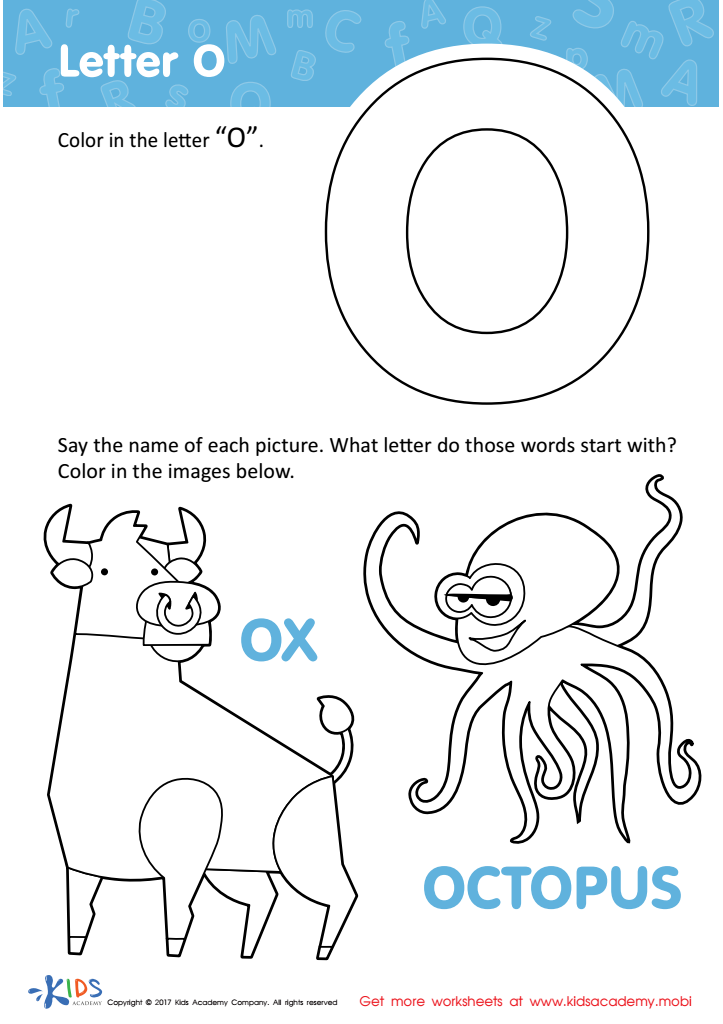
Letter O Coloring Sheet
 Assign to My Students
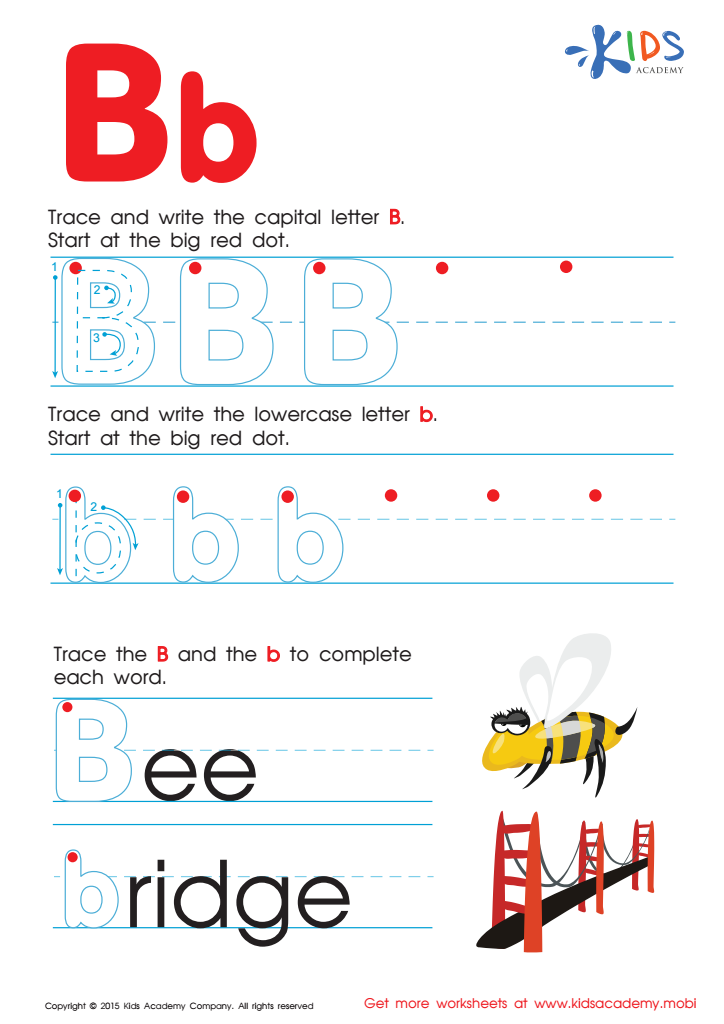
Letter B Tracing Page








Motor skills development and normal letter recognition play pivotal roles in early childhood education, affecting a child's overall learning trajectory. Parents and teachers should prioritize these developmental milestones as they lay the groundwork for future academic success and everyday functionality.
Motor skills, including both fine and gross motor skills, are foundational to tasks such as holding a pencil, cutting with scissors, and other classroom activities. Proper development in this area ensures that children can effectively participate in classroom tasks without undue frustration or difficulty, boosting their confidence and willingness to engage in learning.
Letter recognition is fundamental to reading readiness. Developing this skill enables children to identify letters, associate them with corresponding sounds, and progress to word formation and reading. Early proficiency in letter recognition is often linked to smoother transitions to fluent reading, which in turn supports comprehension and language development. Struggles in this area can cause delays, making it harder for children to keep pace with curriculum requirements and leading to potential future academic challenges.
Furthermore, combined motor skills and letter recognition enable multitasking, like writing while reading or copying from the board, essential for effective learning. Early intervention and support can help solidify these skills, putting young learners on a confident path towards academic achievement and overall development.








