
Visual discrimination Normal Letter Recognition Worksheets
4 filtered results
Difficulty Level
Grade
Age
-
From - To
Subject
Activity
Standards
Enhance your child's reading and writing proficiency with our Visual Discrimination Normal Letter Recognition Worksheets. Ideal for early learners, these engaging activities focus on developing critical visual discrimination skills. By differentiating between letters of the alphabet through fun, interactive exercises, kids can improve their ability to recognize and distinguish commonly confused letters. Perfect for kindergarten and preschool students, our worksheets are designed to build a solid phonics foundation, aiding in letter recognition, sight word identification, and early literacy skills. Boost your child's confidence and academic performance with these essential tools, available now on Kids Academy.
Favorites
With answer key
Interactive
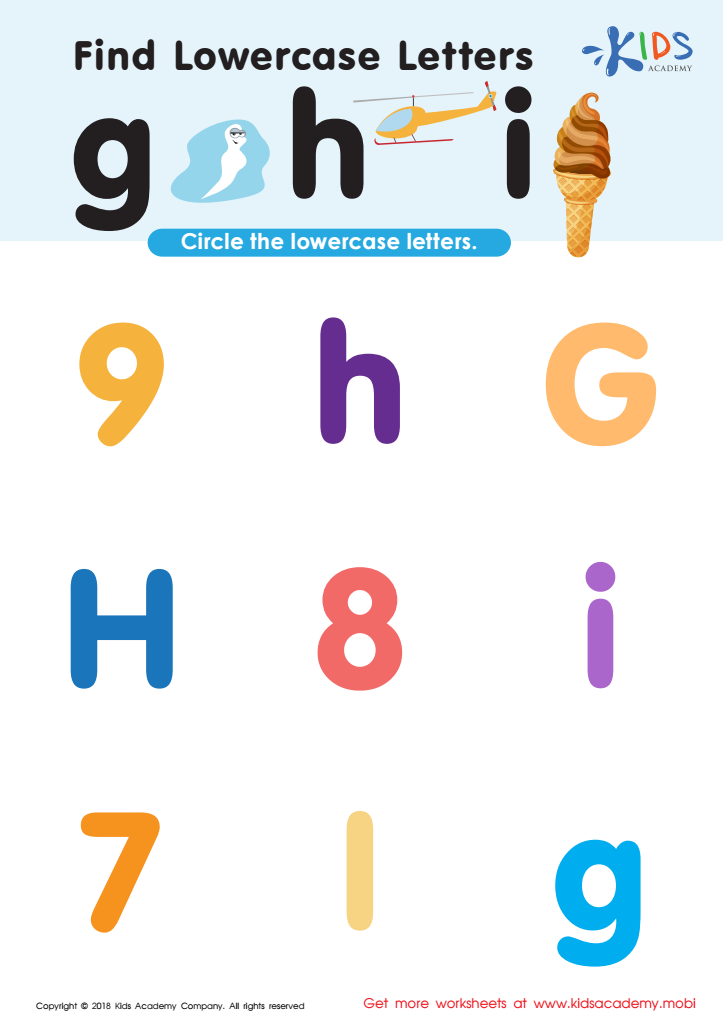
Find Lowercase Letters g h i Worksheet
Turn learning into a fun journey with your child! Use this free worksheet to find and circle the lowercase letters hidden amongst uppercase letters and numbers. Your child will understand what you're teaching them as they enjoy the search.
 Assign to My Students
Find Lowercase Letters g h i Worksheet
Worksheet
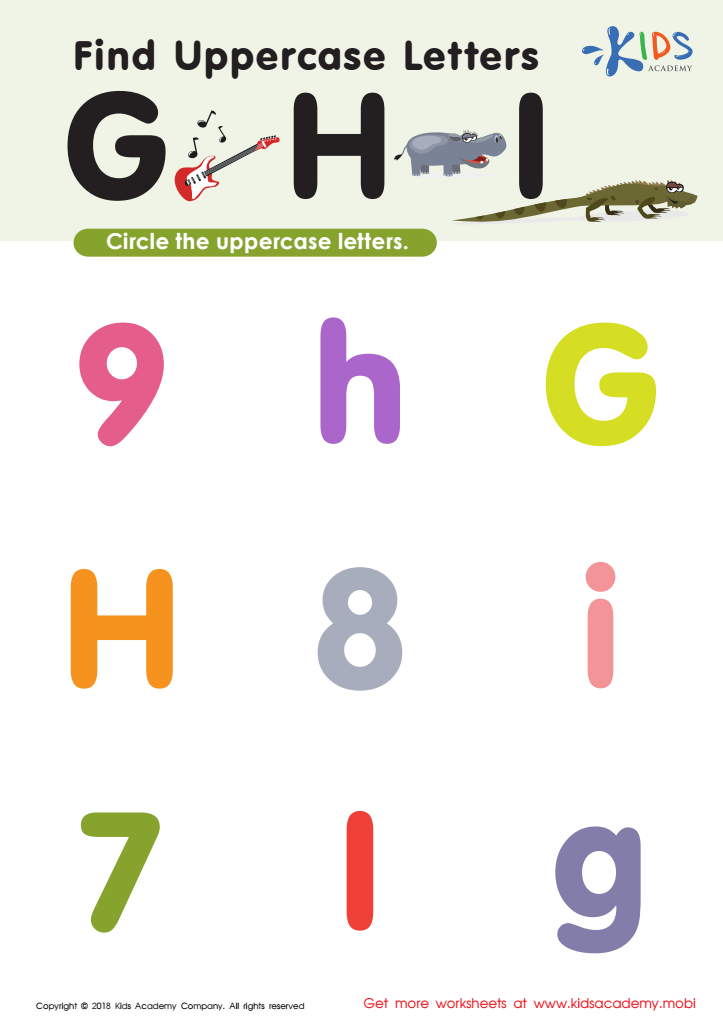
Find Uppercase Letters G, H, and I Worksheet
Find G, H, and I in uppercase with this downloadable worksheet! Numbers are included to challenge your kindergartener's letter recognition skills. Plus, practice G, H, and I sounds using the cute graphics. Perfect for learning letter case recognition!
Find Uppercase Letters G, H, and I Worksheet
Worksheet
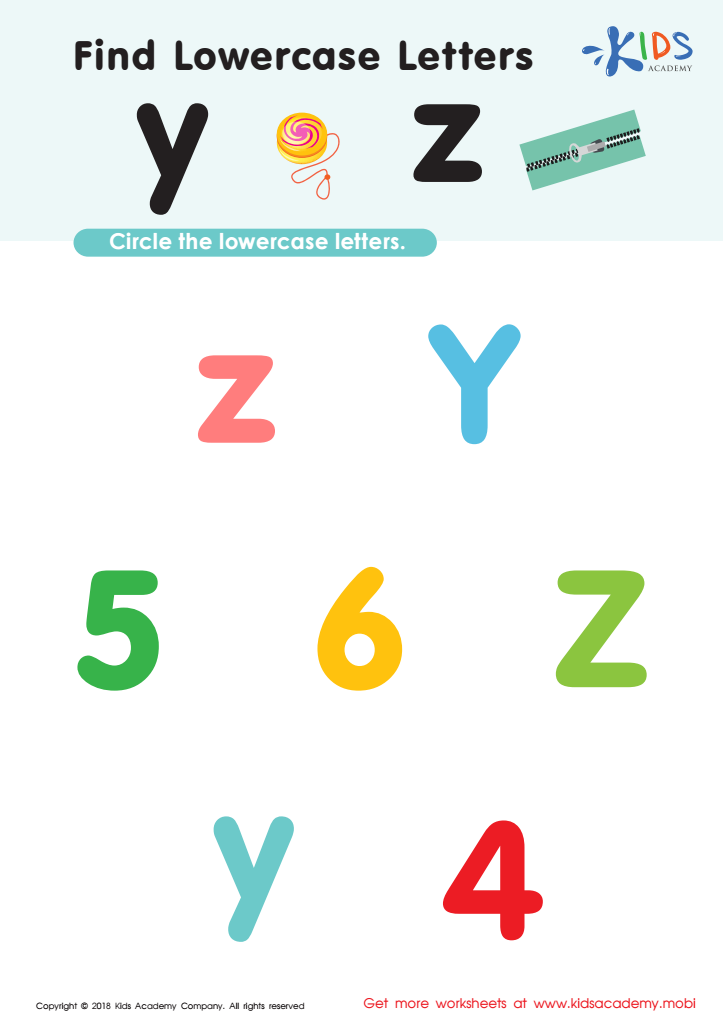
Find Lowercase Letters y z Worksheet
Help your kid learn the alphabet. Before they can move on to words and reading, they must first know the lower and uppercase letters. Show them how to find the letters y and z in this worksheet, which is filled with uppercase letters and numbers. Together, find and circle them.
Find Lowercase Letters y z Worksheet
Worksheet
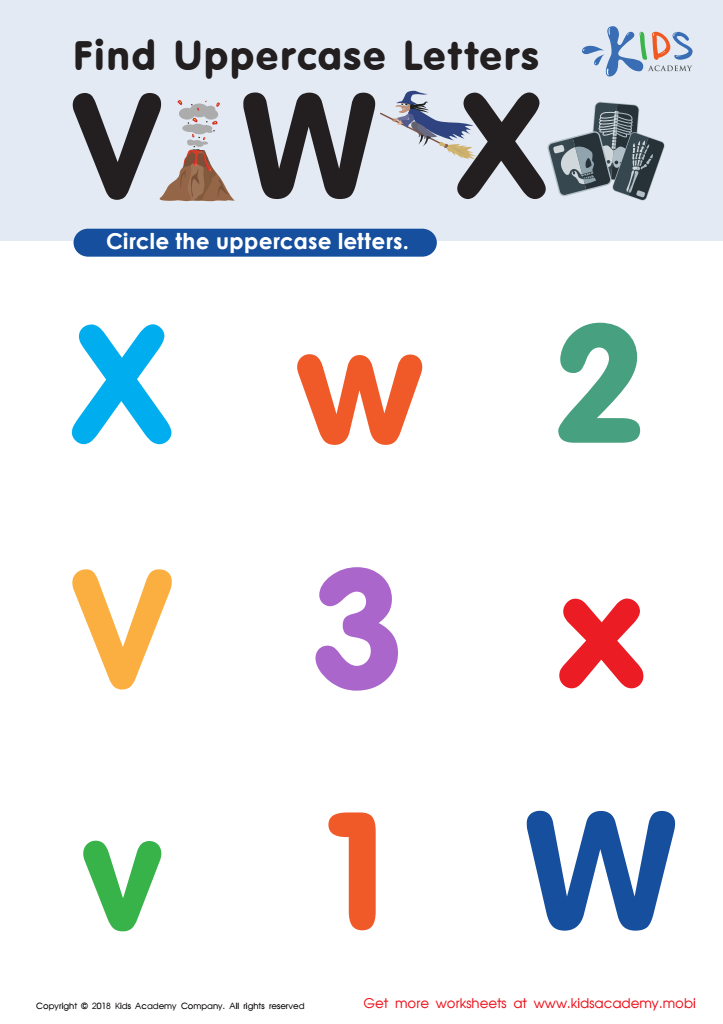
Find Uppercase Letters V, W, X Worksheet
Ask your kids if they can spot the uppercase letters V, W and X hidden in the lowercase letters and numbers, then have them circle them. After that, ask them to give you examples of words beginning with those letters. This worksheet will help them get started.
Find Uppercase Letters V, W, X Worksheet
Worksheet
Join Kids Academy for Free
Who is primarily going to use this learning content?








Visual discrimination and normal letter recognition are crucial skills that profoundly impact a child's educational journey. Parents and teachers should prioritize these skills because they form the bedrock of early literacy. Visual discrimination is the ability to notice differences and similarities among objects, shapes, or symbols, while letter recognition involves identifying letters accurately and effortlessly.
Firstly, these skills are essential for reading development. Children who can readily distinguish between letters are better equipped to sound out words, comprehend texts, and develop a love for reading. This aptitude also aids in writing, as students learn to produce familiar letter shapes confidently.
Secondly, visual discrimination and letter recognition are fundamental for learning many other subjects. Mathematics, science, and even social studies often require students to interpret symbols, numbers, and diagrams. Strong visual discrimination skills enable children to process and understand visual information more efficiently.
Moreover, early success in visual recognition tasks can boost a child's confidence and academic self-esteem, prepping them for more advanced concepts. Since early challenges in these areas can lead to struggles with reading and poor academic performance, early intervention is key.
Hence, fostering visual discrimination and normal letter recognition can pave the way for a robust educational foundation, promoting lifelong learning and academic achievements.








