
Handwriting practice Normal Phonics Worksheets
4 filtered results
Difficulty Level
Grade
Age
-
From - To
Subject
Activity
Standards
Enhance your child's handwriting skills with our engaging Handwriting Practice Normal Phonics Worksheets designed for preschool and elementary students. These worksheets combine fun phonics activities with handwriting practice, reinforcing essential early literacy skills. Each worksheet focuses on letter formation, phonemic awareness, and fine motor development, helping young learners confidently write and recognize letters. Through interactive exercises and tracing activities, children will improve their penmanship, phonics understanding, and reading fluency. Ideal for both classroom use and at-home learning, our Handwriting Practice Normal Phonics Worksheets make mastering early writing and reading skills enjoyable and effective.
Favorites
With answer key
Interactive
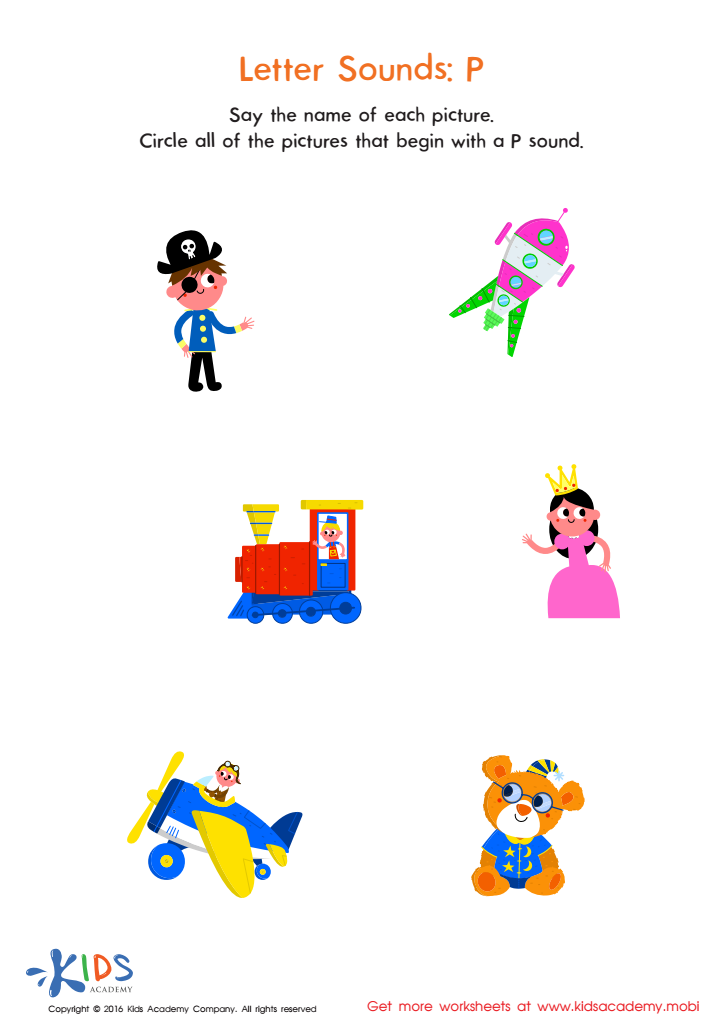
Letter P Sound Worksheet
Think P! Kids practice phonics with this fun letter P worksheet. With delightful illustrations, they'll sound out simple words and get closer to reading.
 Assign to My Students
Letter P Sound Worksheet
Worksheet
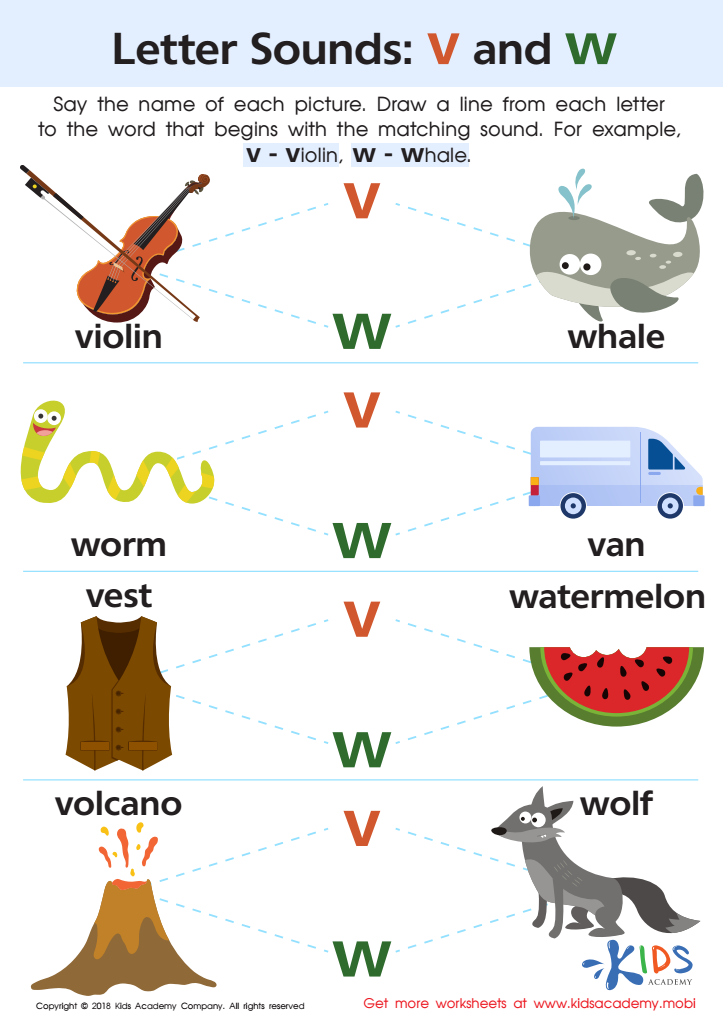
Letter V and W Sounds Worksheet
Help your child master the sounds of W & V while completing this fun phonics worksheet. Have them trace the dotted line from letter to picture while saying words like "worm", "violin" and "van" aloud to notice how each word begins with either W or V. Listen and pay attention to the pronunciation to complete the practice.
Letter V and W Sounds Worksheet
Worksheet
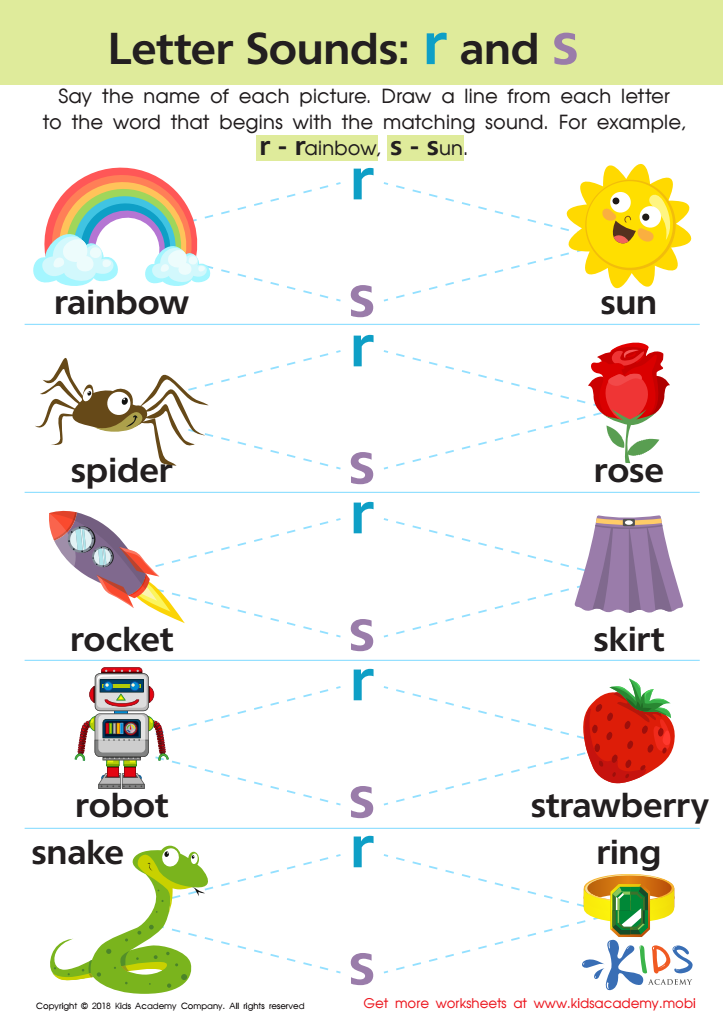
Letter R and S Sounds Worksheet
Kids Academy's phonics worksheet is full of fun and color! Help your child name the pictures and read the words under each one. Does it begin with an R or S? Then, use a pencil to trace the dotted line from the letter to its image. It's a great way to practice phonics skills!
Letter R and S Sounds Worksheet
Worksheet
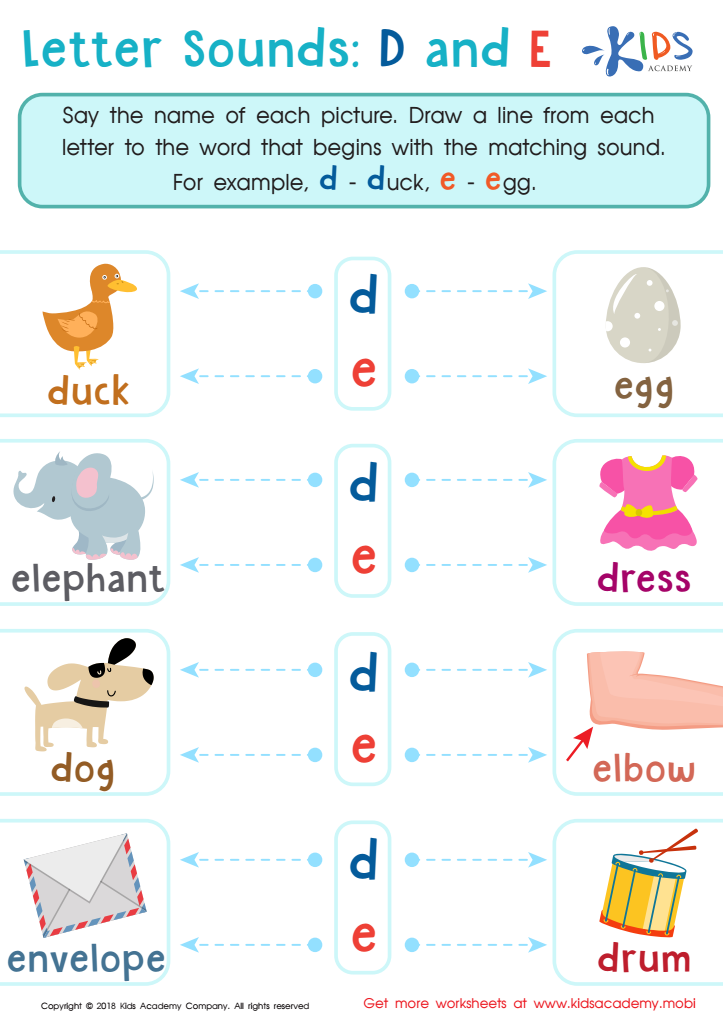
Letter D and E Sounds Worksheet
Kids can use picture clues and visual discrimination to name cheerful pics and isolate the beginning sound. This free PDF worksheet will help them develop phonological awareness, differentiate between "D" and "E", and hone fine-motor skills. It'll also boost their confidence as they become readers.
Letter D and E Sounds Worksheet
Worksheet
Join Kids Academy for Free
Who is primarily going to use this learning content?








Parents and teachers should prioritize handwriting practice coupled with normal phonics education for a number of compelling reasons. Handwriting practice enhances fine motor skills and hand-eye coordination, which are crucial for young children's overall development. As children learn to form letters and words, they also build the foundation for efficient, clear written communication, an essential lifelong skill.
Simultaneously, integrating handwriting with normal phonics — the method of teaching reading by correlating sounds with letters or groups of letters — significantly strengthens reading and spelling abilities. When children practice writing the letters while learning their associated sounds, they reinforce their understanding of letter-sound relationships. This multisensory approach helps solidify their grasp on phonetic principles, aiding in both decoding and encoding words.
Additionally, the practice of handwriting engages memory and cognitive processes differently from typing, fostering deeper retention of learned material. Handwriting encourages children to slow down and reflect on their learning, promoting greater comprehension and critical thinking skills.
Finally, children often gain a sense of accomplishment and confidence from mastering handwriting, which can positively influence their self-esteem and enthusiasm toward schoolwork. Supporting handwriting and daily phonics practice sets a strong academic foundation, paving the way for students' future success in reading, writing, and beyond.







