Phonics development Normal Phonics Worksheets
3 filtered results
-
From - To
Discover engaging "Normal Phonics Worksheets" designed to enhance phonics development for early learners. Our printable worksheets focus on key skills such as letter recognition, sound associations, and word formation. Perfect for young minds, these resources aid in building a strong foundation in reading and writing. Each worksheet is crafted to be interactive and fun, encouraging children to learn through play. With an array of activities, including matching, tracing, and coloring, your students will gain confidence in their phonics abilities. Visit our site today to access a variety of carefully curated resources that support your child's literacy journey!
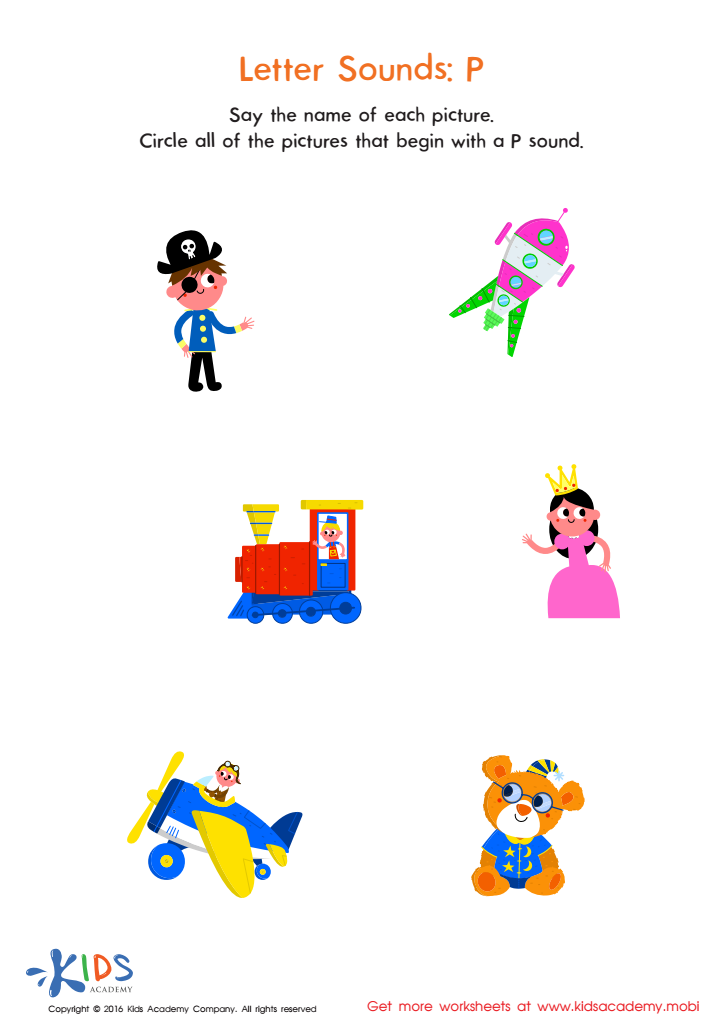
Letter P Sound Worksheet
 Assign to My Students
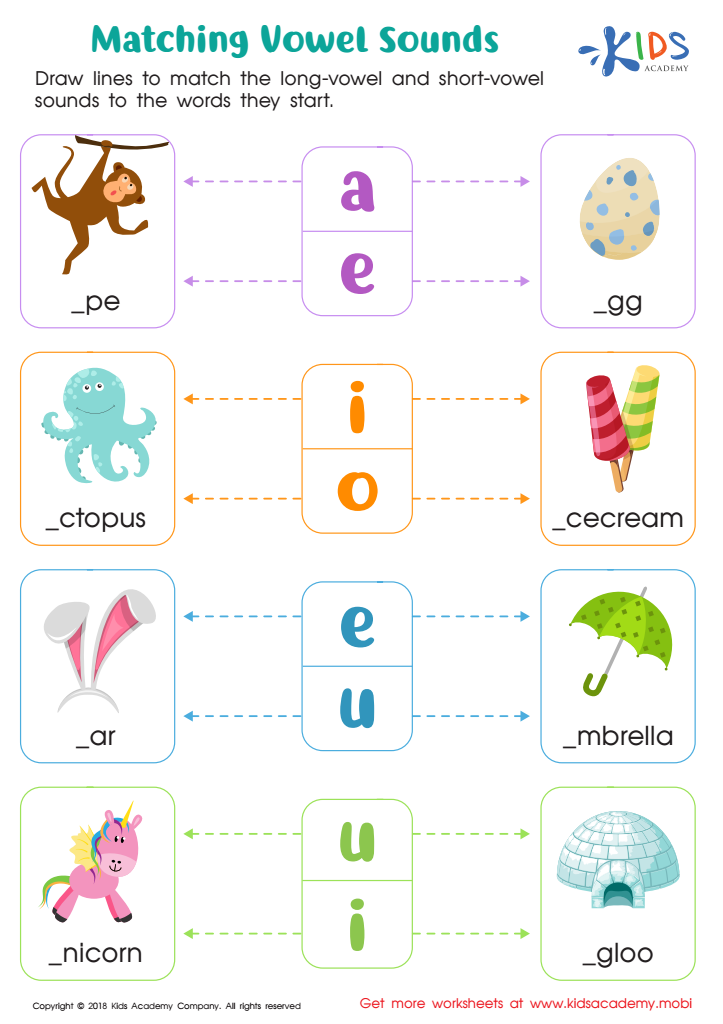
Matching Vowel Sounds Worksheet
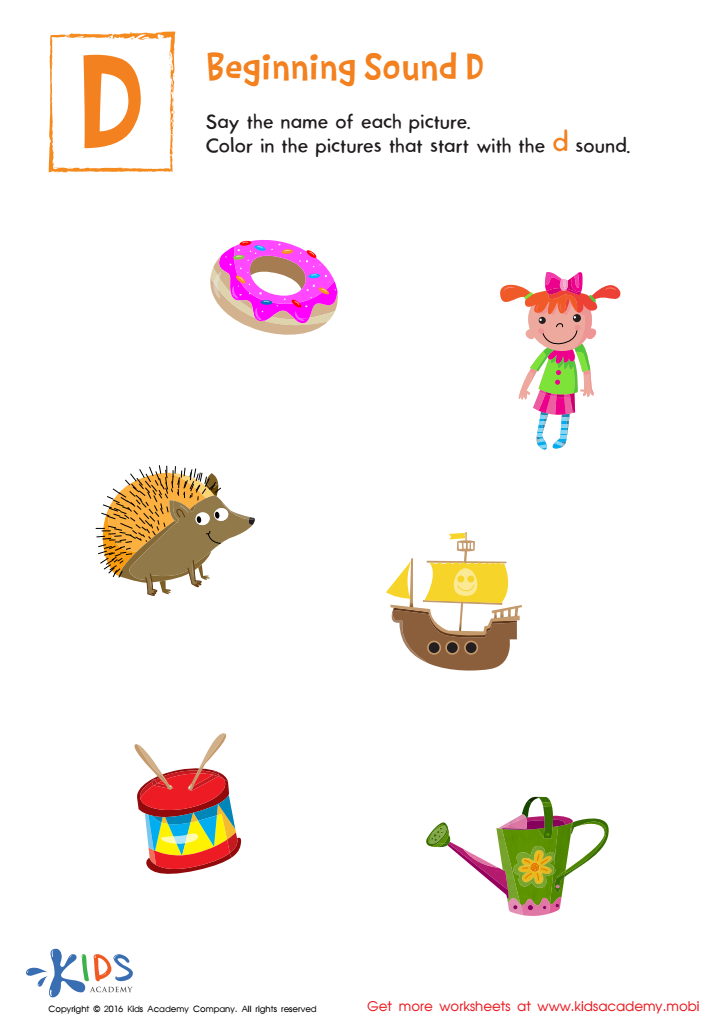
Beginning Sound D Worksheet








Phonics development is crucial for early literacy, and parents and teachers should prioritize it for several reasons. First, phonics provides the foundation for reading by helping children understand the relationship between sounds and letters. This knowledge enables them to decode new words, making reading more accessible and enjoyable.
Furthermore, strong phonics skills are linked to improved spelling and writing abilities. When children grasp phonemic awareness, they become more confident in their communication skills, leading to greater academic success. Interventions that focus on phonics can significantly reduce reading difficulties, including dyslexia, empowering children to thrive in a learning environment.
Moreover, early phonics instruction can enhance vocabulary and comprehension skills, as children learn to sound out words and manipulate sounds. Engaging in phonics activities, such as rhyme games or sound matching, also promotes listening skills and cognitive development, making learning interactive and fun.
Ultimately, fostering phonics development not only supports immediate literacy outcomes but lays the groundwork for lifelong learning. By equipping children with these essential skills, parents and teachers can help instill a love for reading, paving the way for future educational achievements and personal growth. The early cumulative effects of proficient phonics are invaluable and far-reaching.







