Visual discrimination skills Normal Upper & Lowercase Letters Worksheets
4 filtered results
-
From - To
Enhance your child's early literacy with our "Visual Discrimination Skills: Normal Upper & Lowercase Letters Worksheets." These engaging worksheets are designed to help young learners distinguish between upper and lowercase letters, a crucial step in their reading and writing journey. Through fun and interactive exercises, children will practice matching, identifying, and differentiating letters, honing their visual discrimination skills. Perfect for preschool and kindergarten students, these printables provide a foundation for academic success while making learning enjoyable. Support your child's educational growth today with our expertly crafted worksheets.
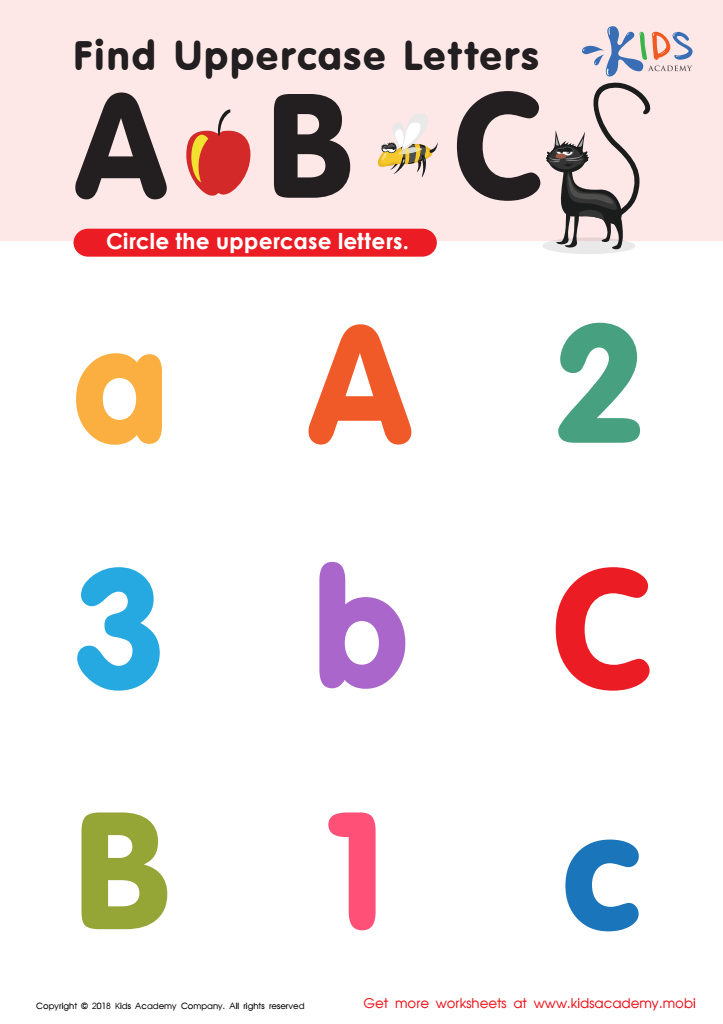
Find Uppercase Letters A, B, and C Worksheet
 Assign to My Students
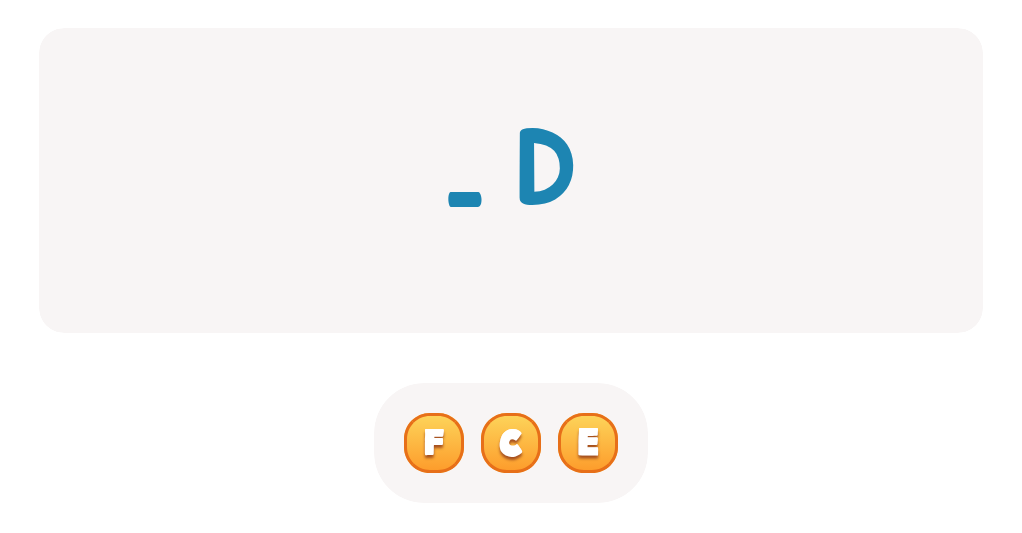

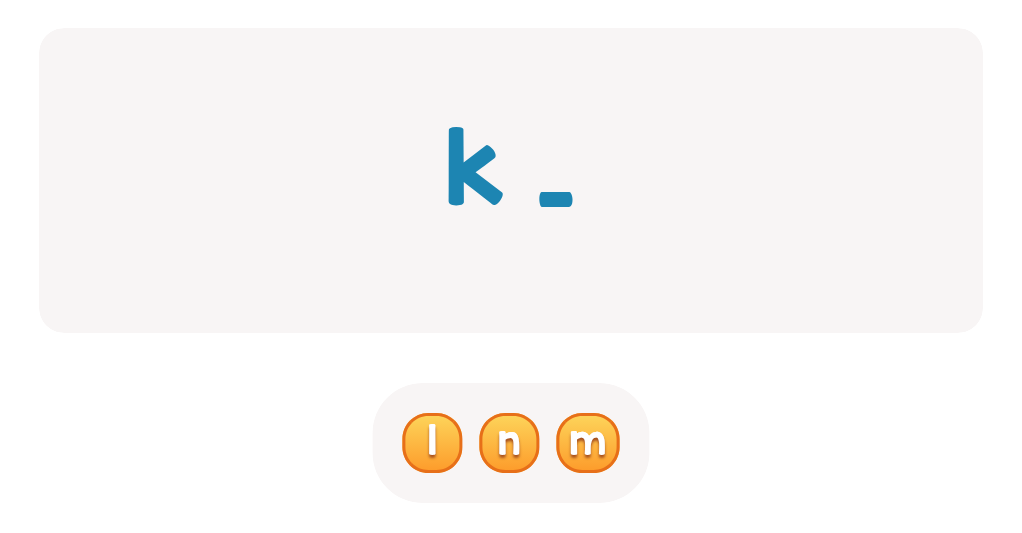
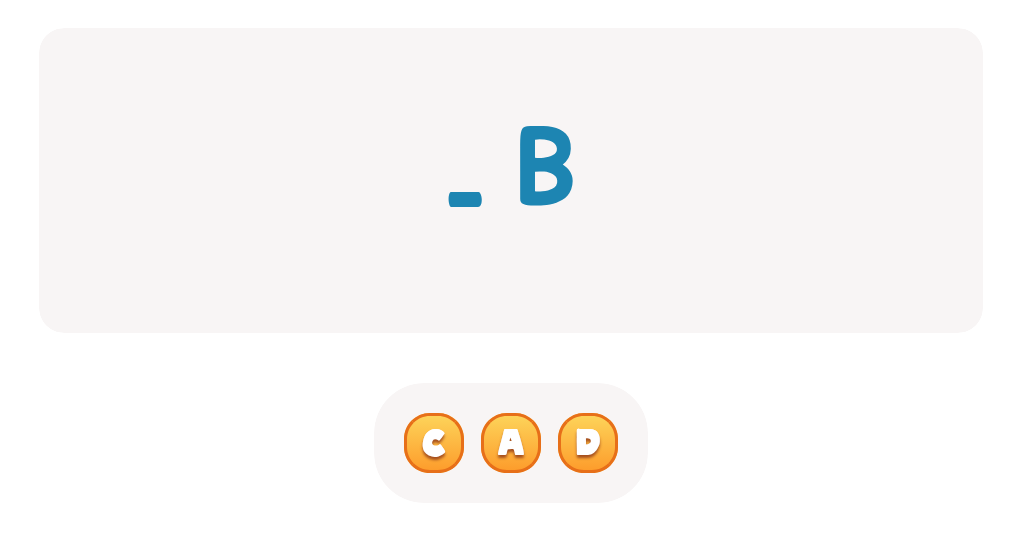
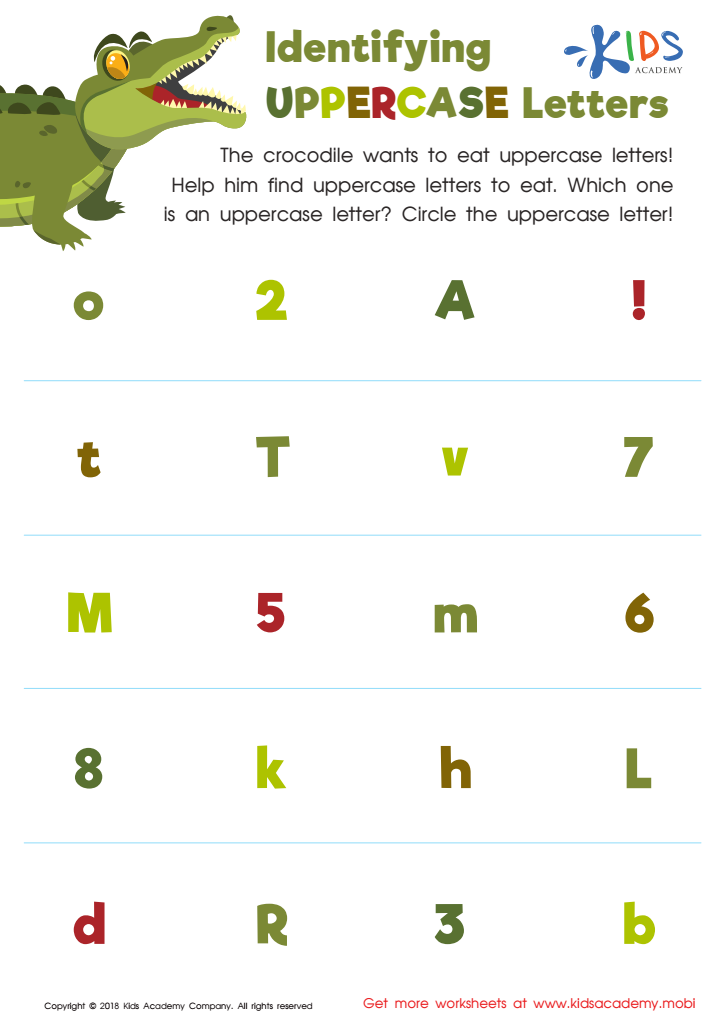
Identifying Uppercase Letters Worksheet
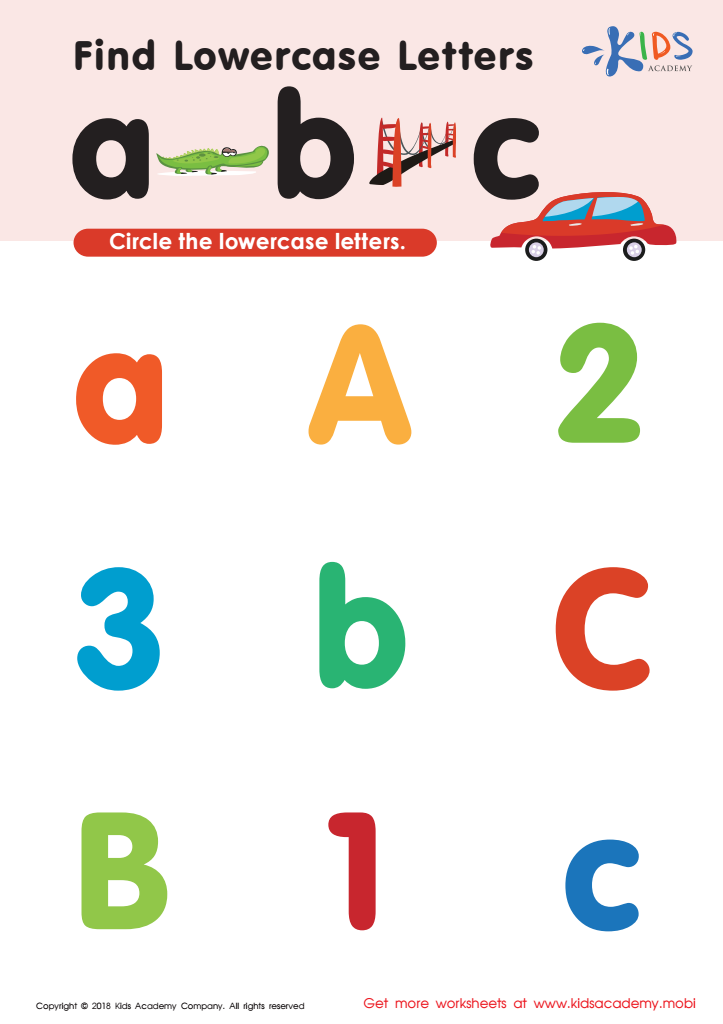
Find lowercase letters a b c Worksheet
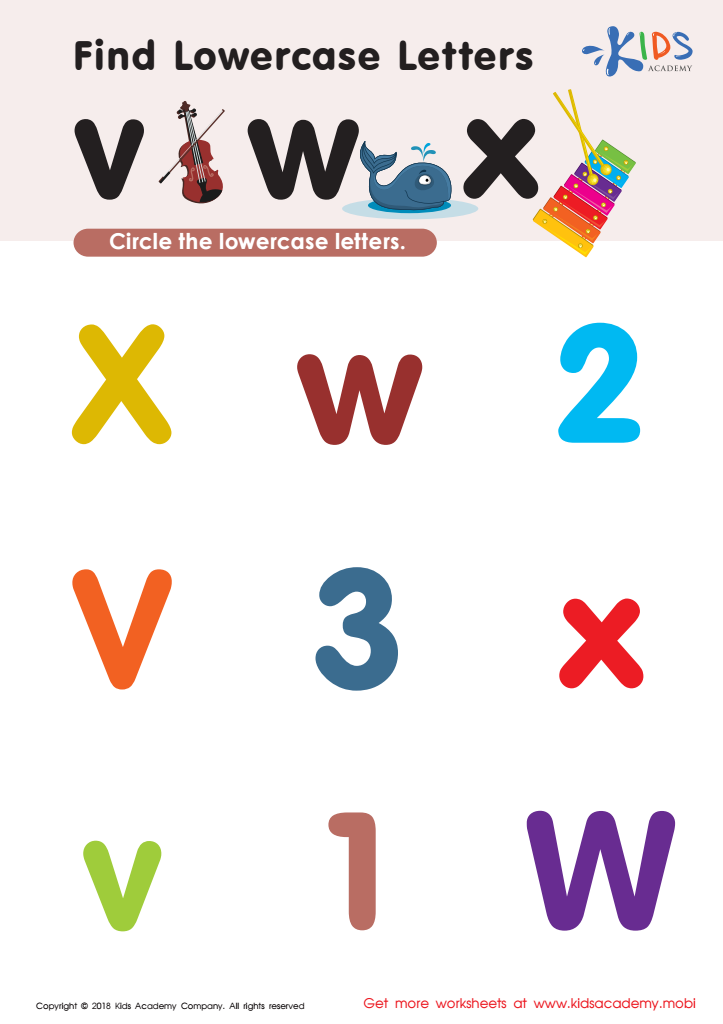
Find Lowercase Letters v w x Worksheet






Visual discrimination skills are essential for young learners as they aid in recognizing and differentiating between various visual stimuli, which is foundational for literacy development. Normal upper and lowercase letter recognition is a critical component of these skills. When parents and teachers emphasize the distinction between upper and lowercase letters, they are helping children understand the nuances of written language, which is crucial for reading and writing proficiency.
Engaging children in activities that strengthen visual discrimination, such as matching games, letter tracing, and sorting exercises, provides benefits beyond literacy. These activities enhance cognitive development, attention to detail, and perceptual skills, equipping children to navigate their learning environments more effectively.
Moreover, a strong grasp of both letter forms influences decoding—the ability to sound out words while reading. This, in turn, fosters reading fluency and comprehension. If children struggle with distinguishing between 'b' and 'd' or 'P' and 'p', it can lead to confusion and impede their reading progress.
In essence, by nurturing visual discrimination skills and ensuring familiarity with both upper and lowercase letters, parents and teachers lay the groundwork for academic success. It’s an investment in a child's ability to read, write, and thrive, impacting their overall learning journey in significant ways.







