Uppercase identification Normal Uppercase Letters Worksheets
5 filtered results
-
From - To
Enhance your child's reading and writing skills with our "Uppercase Identification Normal Uppercase Letters Worksheets." Specially designed for early learners, these engaging worksheets help kids recognize and differentiate between uppercase letters. Each worksheet offers a fun and educational approach, using visually appealing activities that promote letter recognition and cognitive development. Perfect for both classroom and home use, our worksheets support foundational literacy skills, ensuring your little one is well-prepared for future learning milestones. Explore our comprehensive collection today and empower your child to master uppercase letters with confidence!
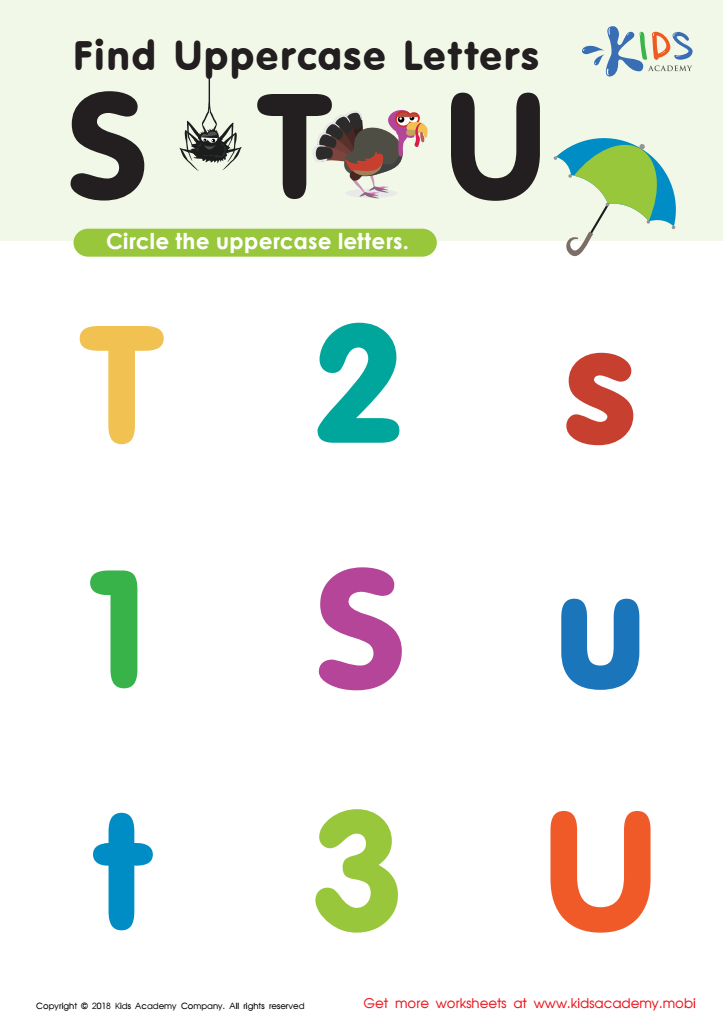
Find Uppercase Letters Worksheet
 Assign to My Students
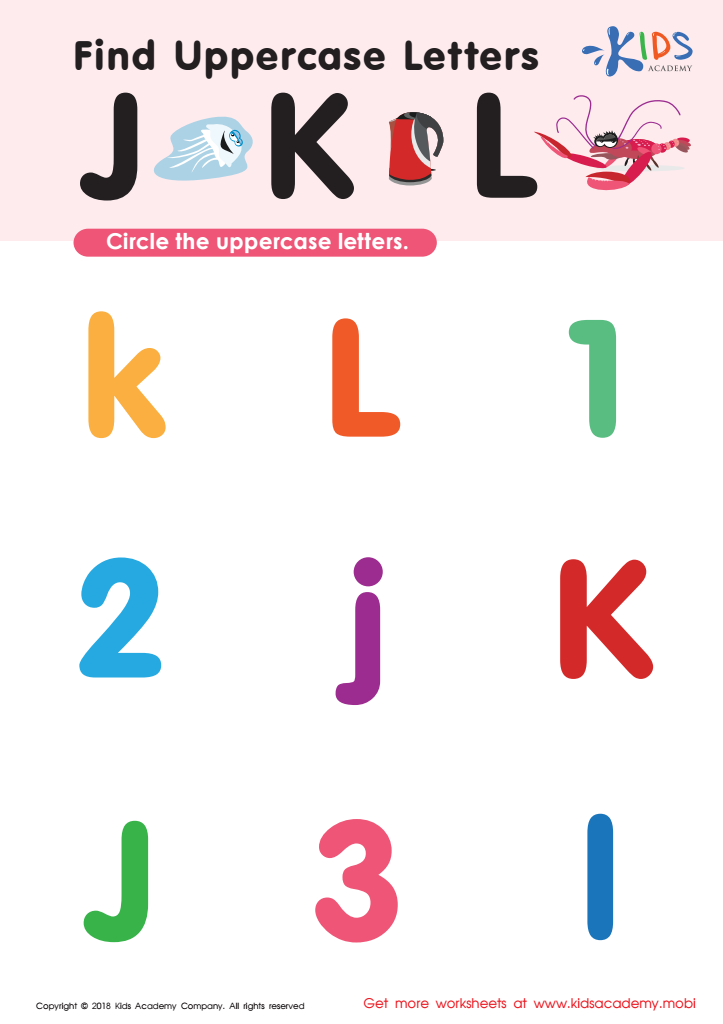
Find Uppercase Letters J, K, and L Worksheet
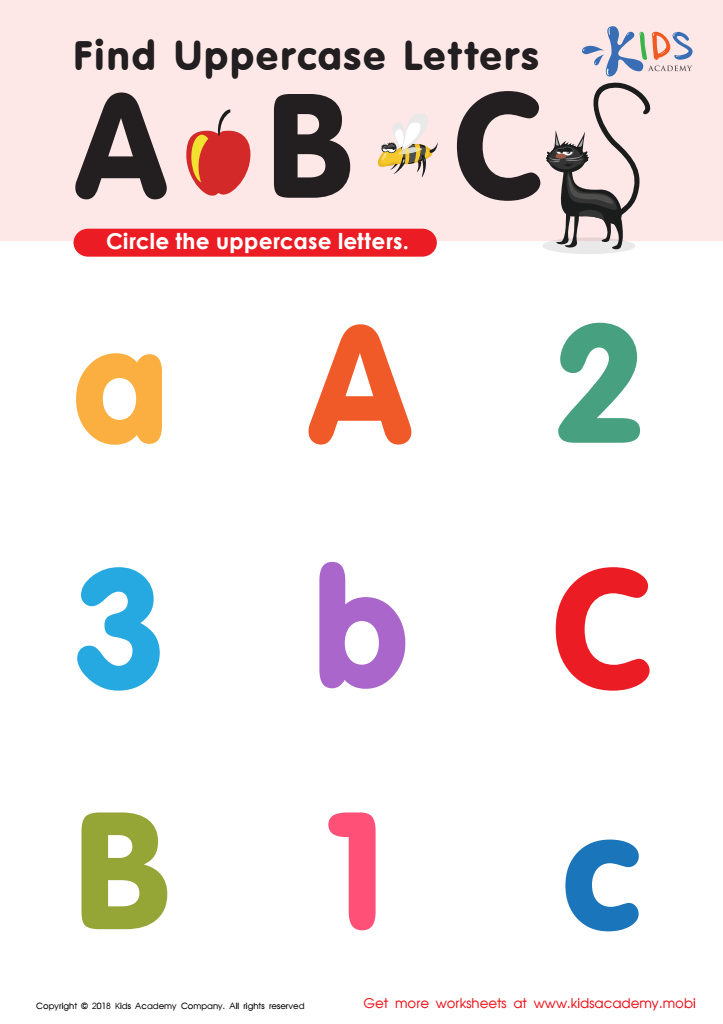
Find Uppercase Letters A, B, and C Worksheet
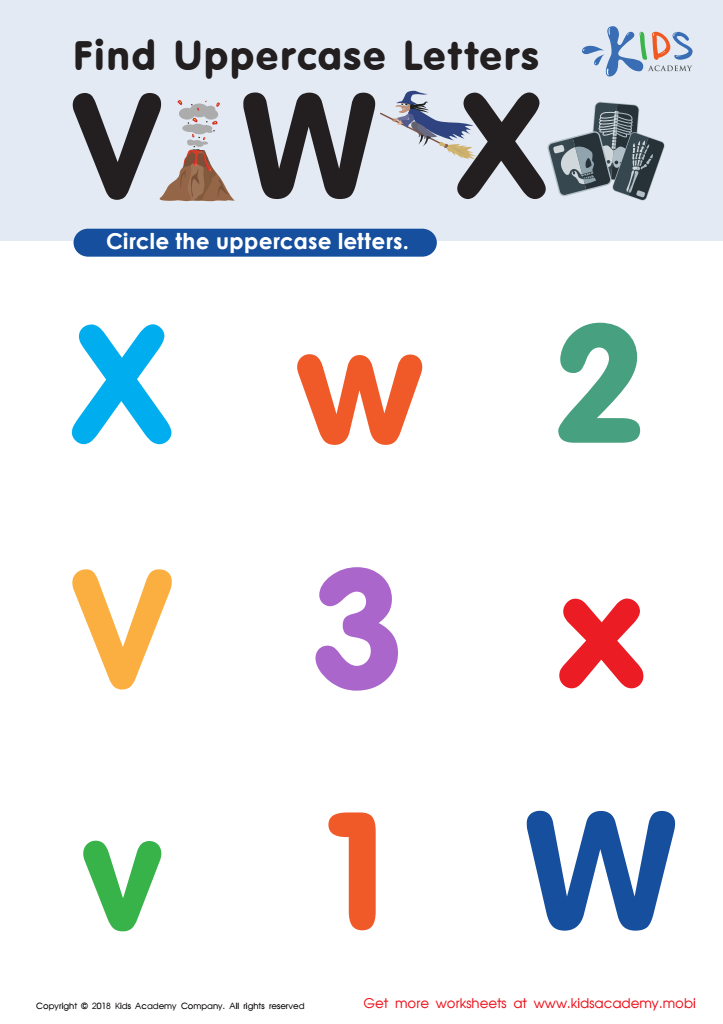
Find Uppercase Letters V, W, X Worksheet
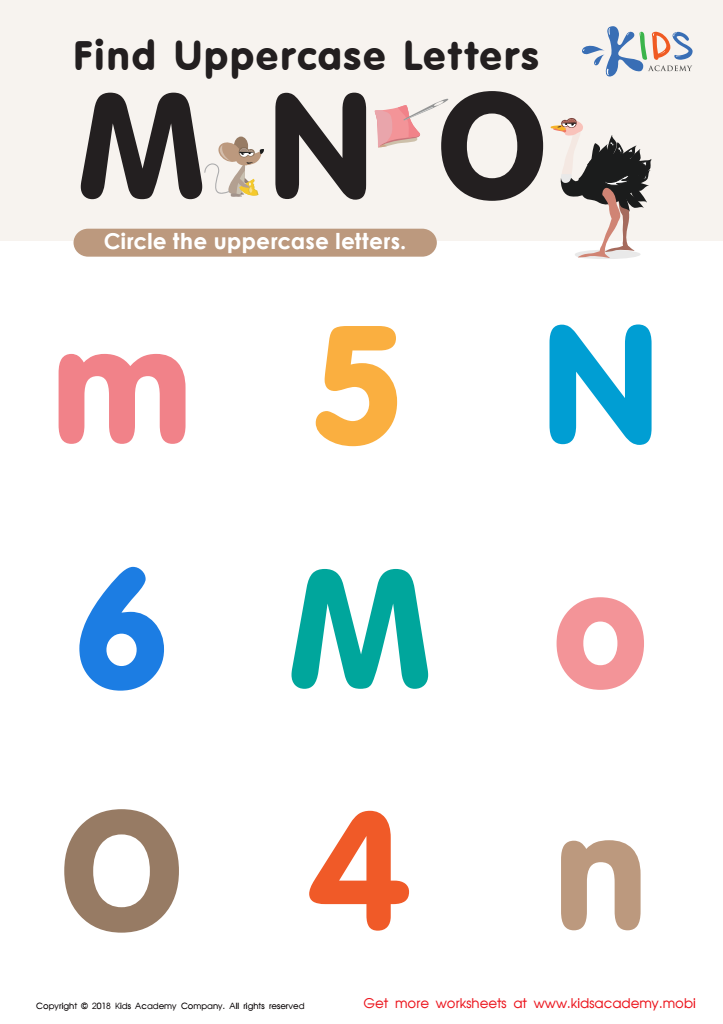
Find Uppercase Letters M, N, and O Worksheet








Understanding and identifying uppercase letters, also known as capital letters, is an essential milestone in early childhood literacy. Parents and teachers should prioritize this educational component because uppercase letters provide a foundational framework for learning to read and write effectively.
Primarily, uppercase letters are easier for young children to recognize and differentiate. They have distinct and regular shapes compared to lowercase letters, making them less prone to confusion. This simplicity aids early learners in developing letter-recognition skills, which are crucial for reading fluency. Familiarity with uppercase letters boosts a child's confidence, serving as a stepping stone to understanding complex components of language.
In practical terms, uppercase letters are frequently encountered in the environment around the children—such as on road signs, in names, and at the beginning of sentences. This ambient exposure reinforces the significance and usage of capital letters. Additionally, teaching uppercase letters helps instill correct writing conventions, ensuring that children adhere to proper grammar rules from a young age.
For educators and parents, fostering uppercase letter identification ensures that children build a robust foundation in literacy. It paves the way for successful reading and writing experiences, essential for their academic growth and overall communication skills.