Letter-sound association Normal Grade 1 Alphabet Worksheets
3 filtered results
-
From - To
Our Letter-Sound Association Normal Grade 1 Alphabet Worksheets are designed to help young learners develop essential reading skills. These fun, interactive worksheets introduce first graders to the basics of letter sounds and phonetic relationships, enhancing their ability to decode and read words confidently. Each worksheet features engaging activities such as matching letters to their sounds, tracing, and identifying beginning and ending sounds. Aligned with educational standards, these resources ensure a strong foundation in literacy for every child. Perfect for classroom use or at-home practice, these worksheets provide a supportive and enjoyable learning experience.
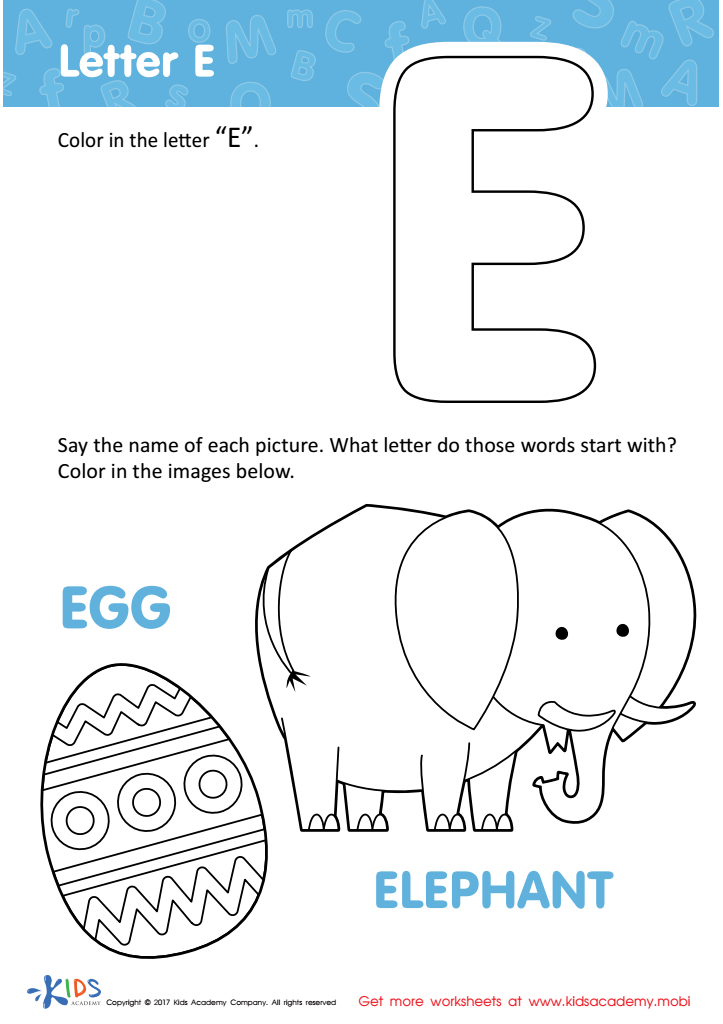
Letter E Coloring Sheet
 Assign to My Students
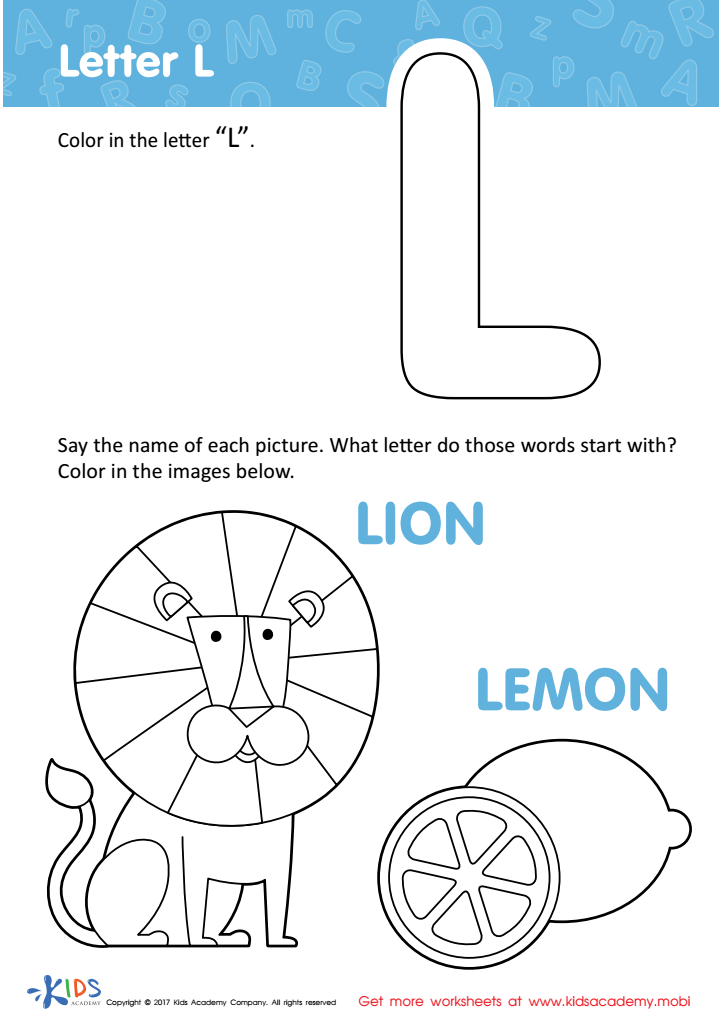
Letter L Coloring Sheet
Assign to My Students
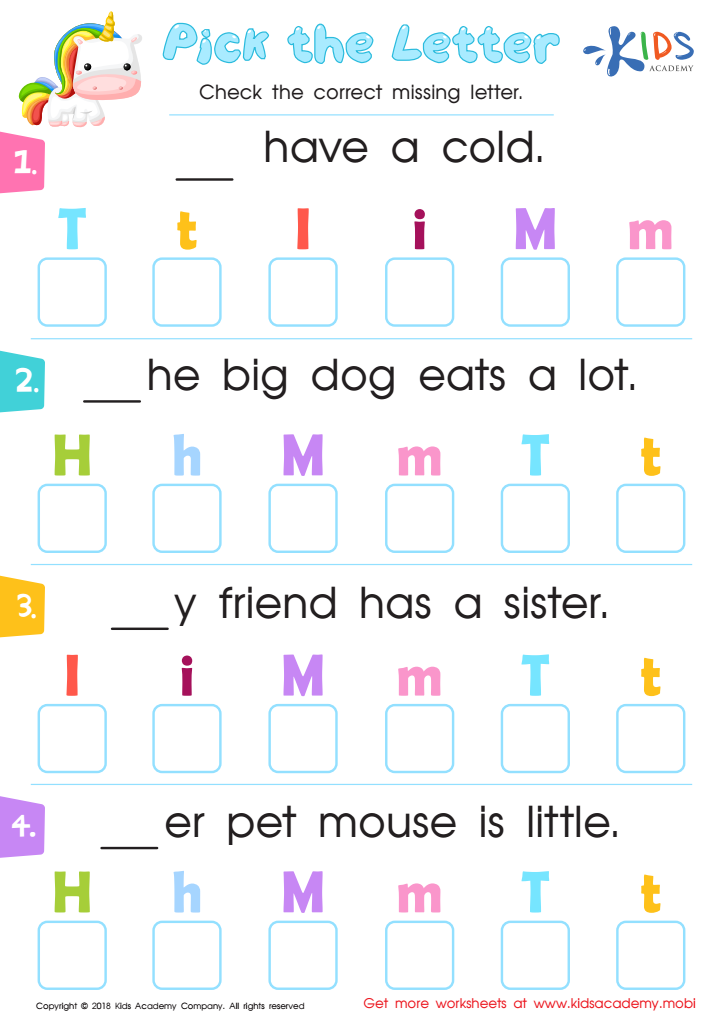
Pick the Letter Worksheet








Letter-sound association is foundational for early reading and writing skills, making it crucial for parents and teachers to prioritize it in a Grade 1 curriculum. At this developmental stage, children are typically beginning to recognize the relationship between letters and their corresponding sounds, which is essential for decoding words and building literacy.
First and foremost, fluency in letter-sound associations enables children to sound out words in textbooks, storybooks, and other educational materials. This skill not only boosts their reading ability but builds their confidence, making them more eager learners. By understanding how letters combine to form words, children can also improve their spelling, as they learn to segment and sound out words.
Moreover, a solid grasp of letter-sound relationships is pivotal for cognitive development. It enhances phonemic awareness, a key component of early education that involves the ability to hear, identify, and manipulate individual sounds in spoken words. Children with strong phonemic awareness tend to experience greater academic success, as this skill underpins various aspects of the language arts curriculum, including reading comprehension and written expression.
In essence, focusing on letter-sound association in Grade 1 sets a strong foundation for literacy. It equips children with the necessary skills to become proficient readers and effective communicators, ensuring long-term academic success. Therefore, parents and teachers should place a high priority on ensuring children master this essential building block.