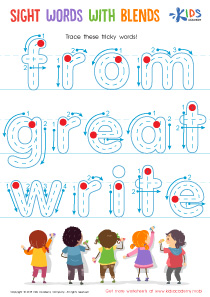
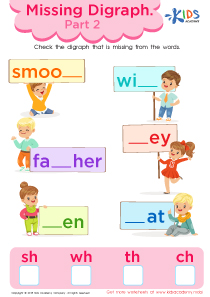
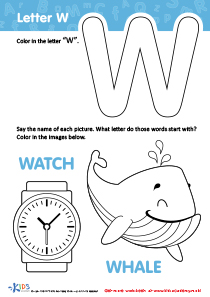
Sound Association Normal Grade 1 Alphabet Worksheets
7 filtered results
Difficulty Level
Grade
Age
-
From - To
Subject
Activity
Standards
Enhance your Grade 1 students' literacy skills with our Sound Association Normal Grade 1 Alphabet Worksheets! These engaging, printable worksheets are designed to help young learners connect letters to their corresponding sounds, vital for fostering early reading abilities. Each worksheet features fun activities that introduce phonemic awareness through illustrations and sound-matching exercises. Perfect for classroom or home use, they support differentiated learning and encourage a love for learning. Access these worksheets easily, and provide your child with the foundational skills vital for reading success. Spark their imagination while building essential language skills today with our interactive alphabet resources!
Favorites
With answer key
Interactive
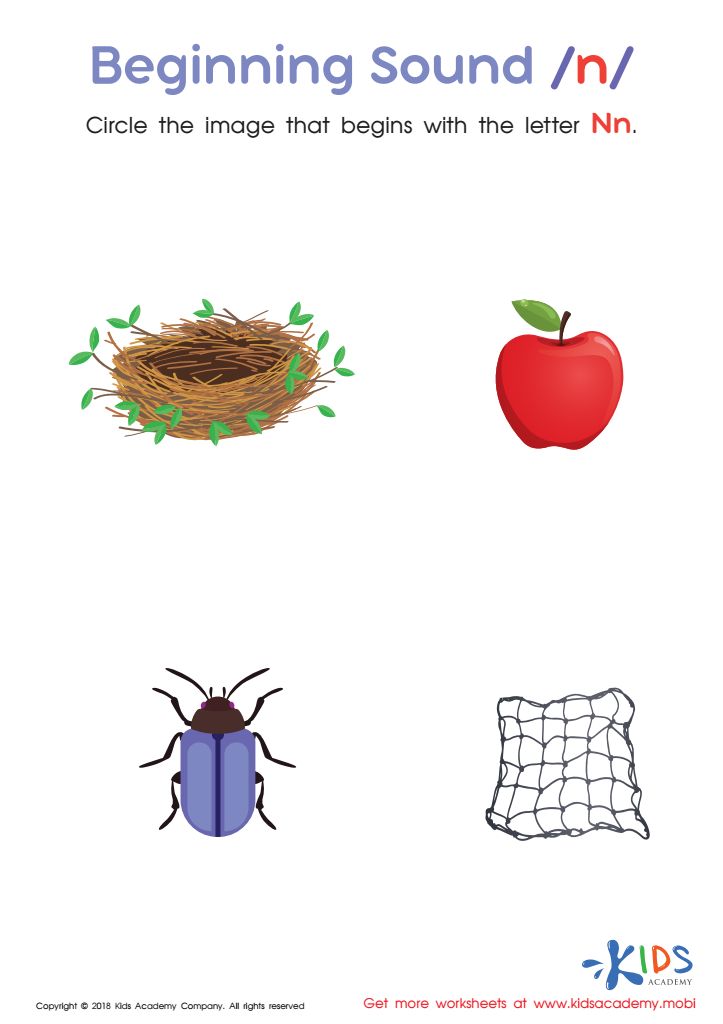
Beginning Sound «n» Worksheet
Help your emerging reader learn the initial «n» sound with this free PDF worksheet! Strengthen fine motor skills by tracing circles around words beginning with «n». Pictures are clear and engaging, giving beginning Phonics learners the right amount of practice and the confidence to succeed.
Beginning Sound «n» Worksheet
Worksheet
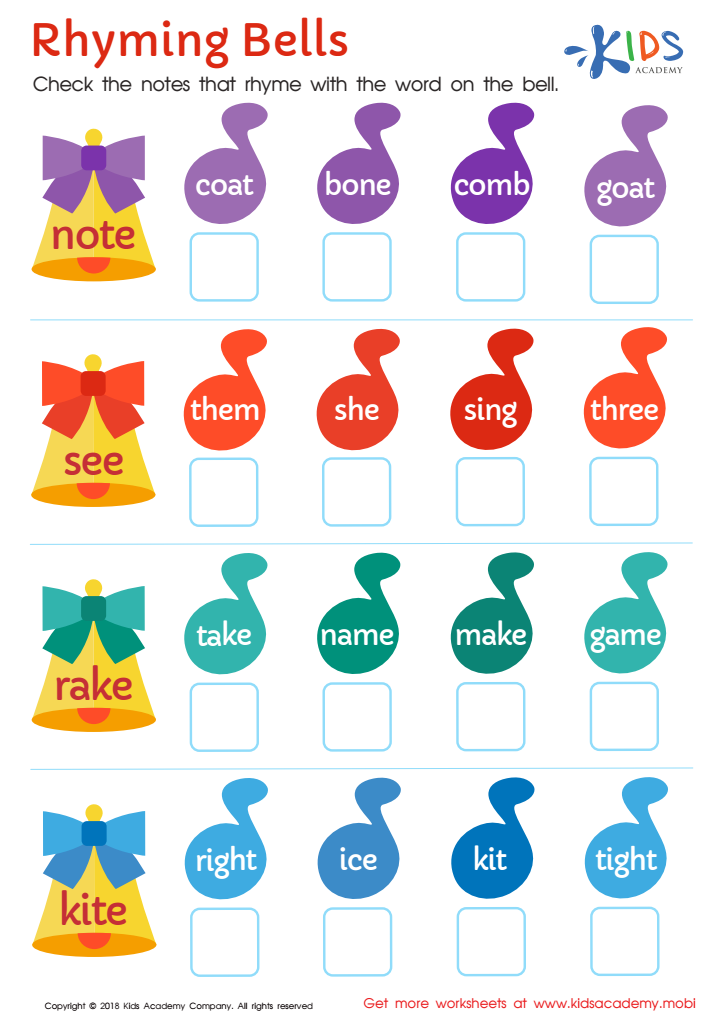
Rhyming Bells Worksheet
This printable worksheet helps students recognize rhyming words. Read a word, then pick the 4 words that rhyme. Look out for words with different spellings but same ending sound. It's a great exercise to improve understanding of rhyming words.
Rhyming Bells Worksheet
Worksheet
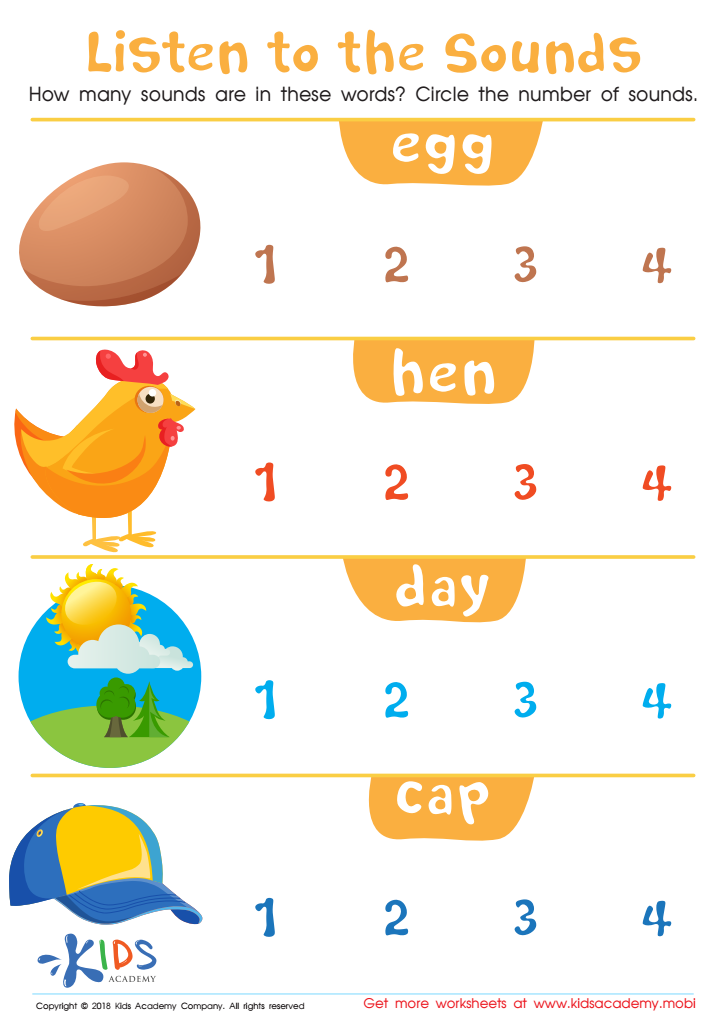
Listen to the Sounds Worksheet
This worksheet builds emerging readers' skills in using sounds for reading and spelling. It helps strengthen auditory processing by having them count the sounds in each word, then trace the corresponding number. Fun and cheerful!
Listen to the Sounds Worksheet
Worksheet
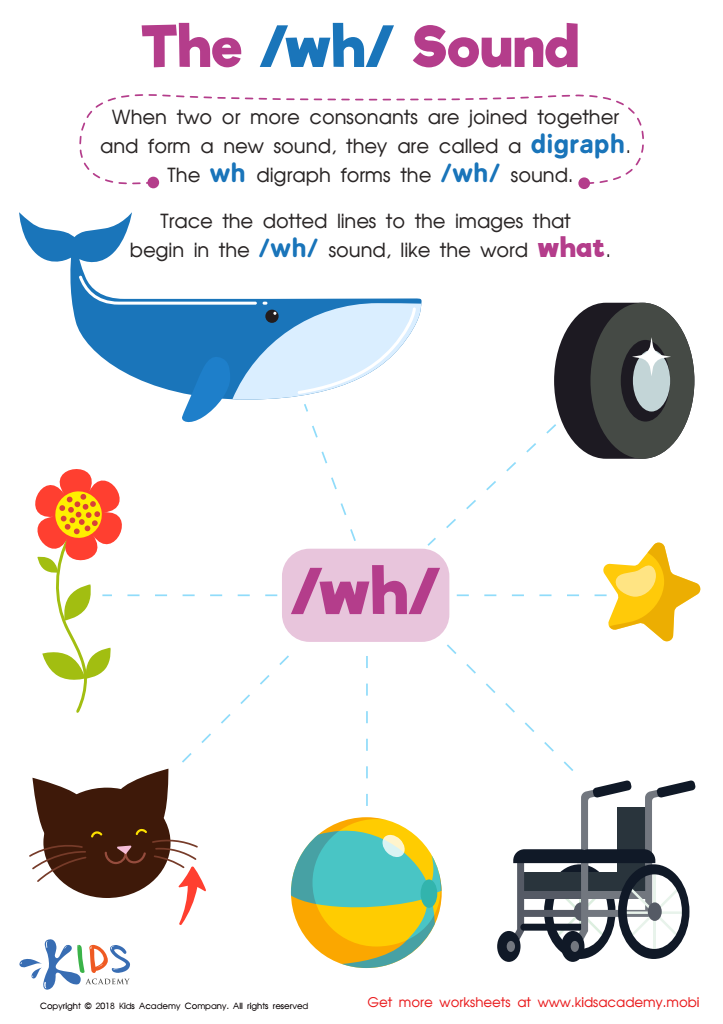
The /wh/ Sound Worksheet
Digraphs join two consonants to make a new sound, like /wh/. Give examples, like "whale", "when" and "why". Ask kids to name pictures in a worksheet and trace dotted lines to images beginning with the /wh/ sound; "what" is one example.
The /wh/ Sound Worksheet
Worksheet
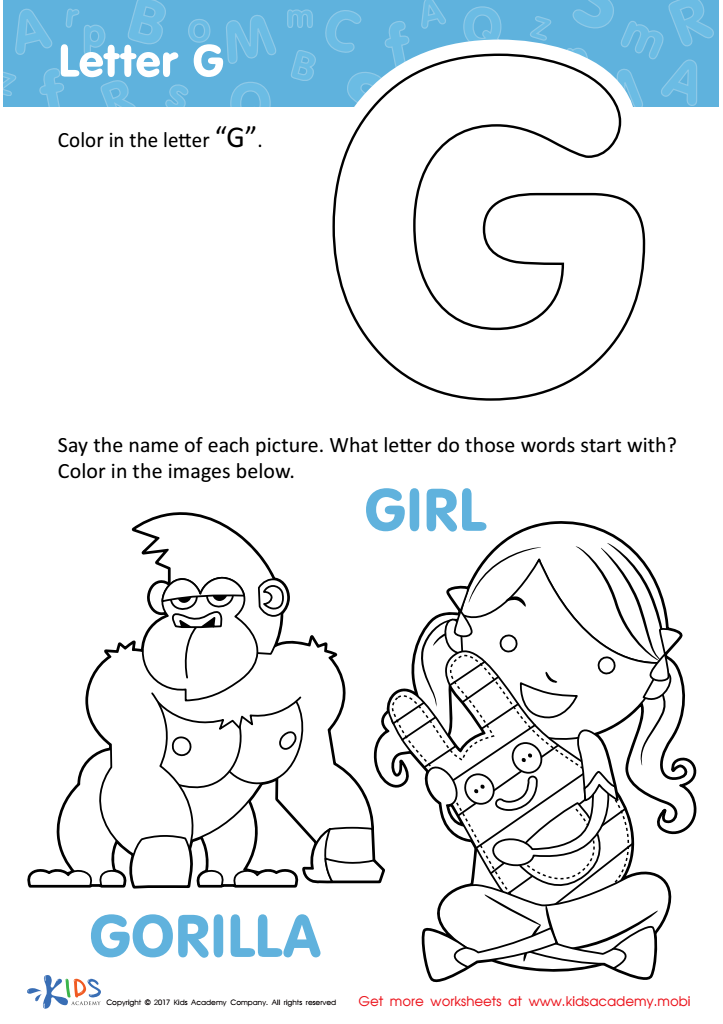
Letter G Coloring Sheet
This "G" coloring page encourages creativity and teaches kids the letter "G" sound. With its fun visuals and familiar words, it's sure to excite your child. Plus, you can talk about the letter’s sound with the pictures given.
Download (PDF)
 Assign to My Students
Assign to My Students
Letter G Coloring Sheet
Worksheet
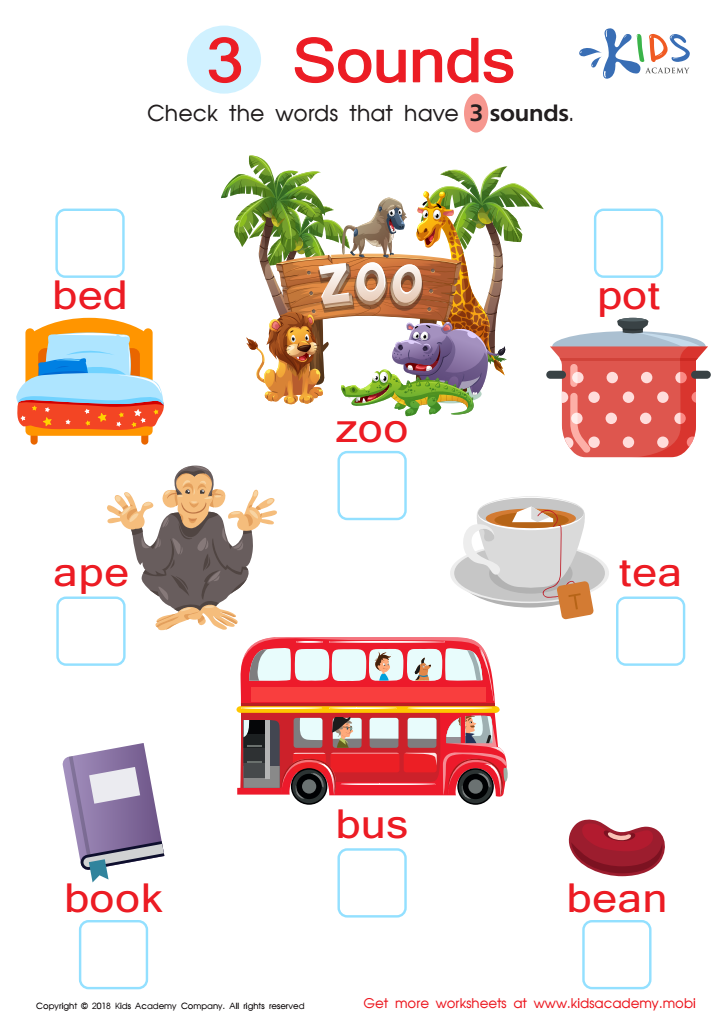
3 Sounds Worksheet
Kids will love learning with this free, colorful worksheet. It's full of familiar words they can name and sound out with three distinct sounds. This helps build decoding skills, plus they get to check off words they read. It's a fun way to teach children to identify and use sounds.
3 Sounds Worksheet
Worksheet
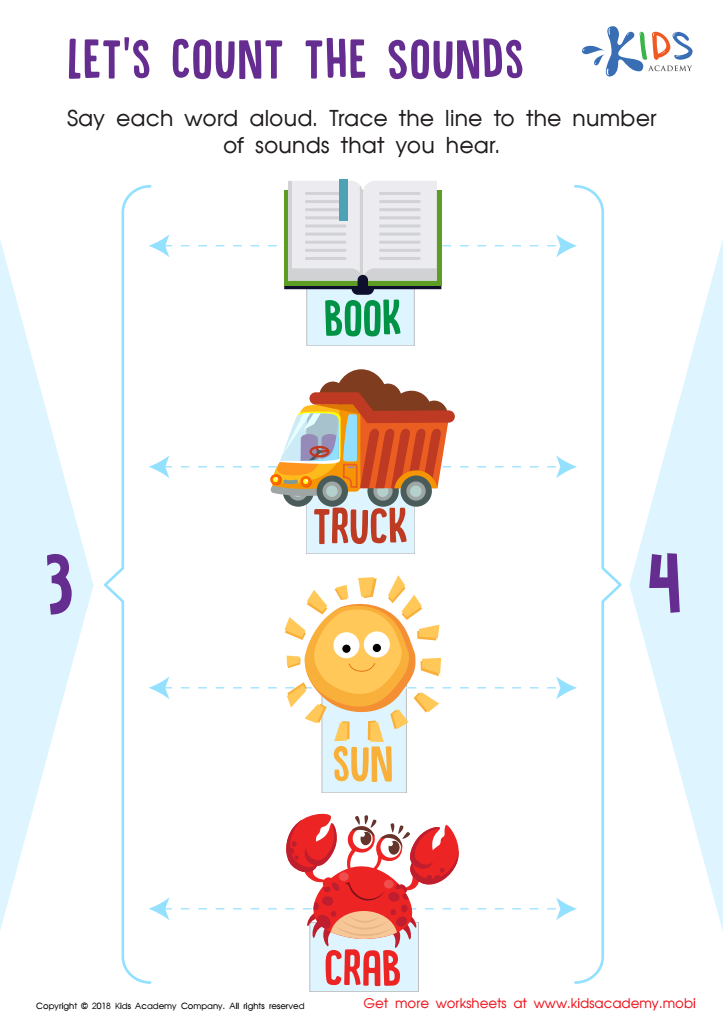
Let's Count the Sounds Worksheet
This bright and cheery traceable worksheet encourages children to practice auditory discrimination and phonological awareness. Using picture clues, they read each word and trace the line that represents the number of sounds heard. This builds decoding skills and helps them become successful readers.
Let's Count the Sounds Worksheet
Worksheet
Join Kids Academy for Free
Who is primarily going to use this learning content?








Understanding sound association in early grade education, specifically for first grade, is crucial for several reasons. First, sound association—the connection between letters and the sounds they represent—is fundamental for reading and writing proficiency. As children learn to associate letters with their corresponding sounds, they develop phonemic awareness, which is essential for decoding words. This skill not only aids in early literacy but also lays the groundwork for fluency in reading.
Additionally, when parents and teachers emphasize sound association, they foster a positive learning environment. Engaging children in interactive activities like phonics games strengthens their language abilities and encourages a love for reading. Parents who participate in their child's literacy development, through reading together or playing sound-based games, significantly enhance their child’s learning experience.
Finally, as sound association skills improve, children gain confidence in their abilities, which motivates them to explore reading independently. This confidence can extend beyond the classroom, impacting their overall academic performance and self-esteem. By prioritizing sound association in grade 1, parents and teachers not only support foundational literacy but also cultivate a lifelong passion for learning.