Chess strategy understanding Normal Grade 1 Chess Worksheets
3 filtered results
-
From - To
Explore our Grade 1 Chess Worksheets on "Chess Strategy Understanding" designed to nurture young minds in strategic thinking! These engaging worksheets introduce fundamental concepts of chess strategies, helping students learn essential tactics while developing problem-solving skills. The activities not only strengthen cognitive abilities but also promote patience and focus. Perfect for classroom use or at-home learning, our worksheets feature age-appropriate exercises that guide kids through the basics of piece movement, capture strategies, and game planning. Start your child's journey into the world of chess with our fun and interactive resources, making learning an exciting adventure!
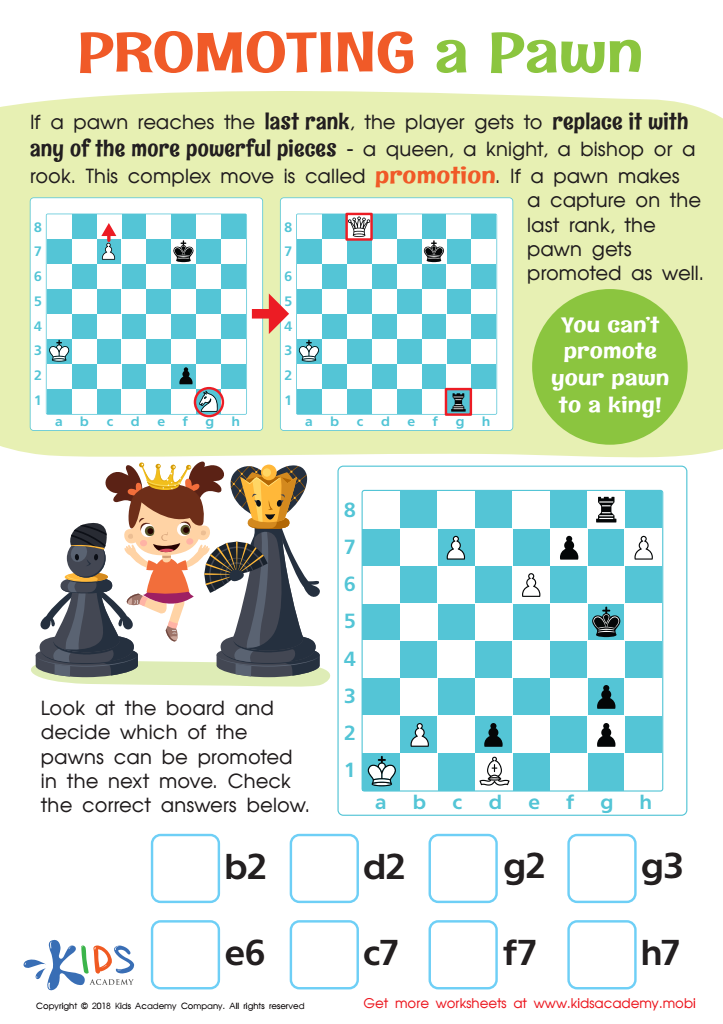
Promoting a Pawn Worksheet
 Assign to My Students
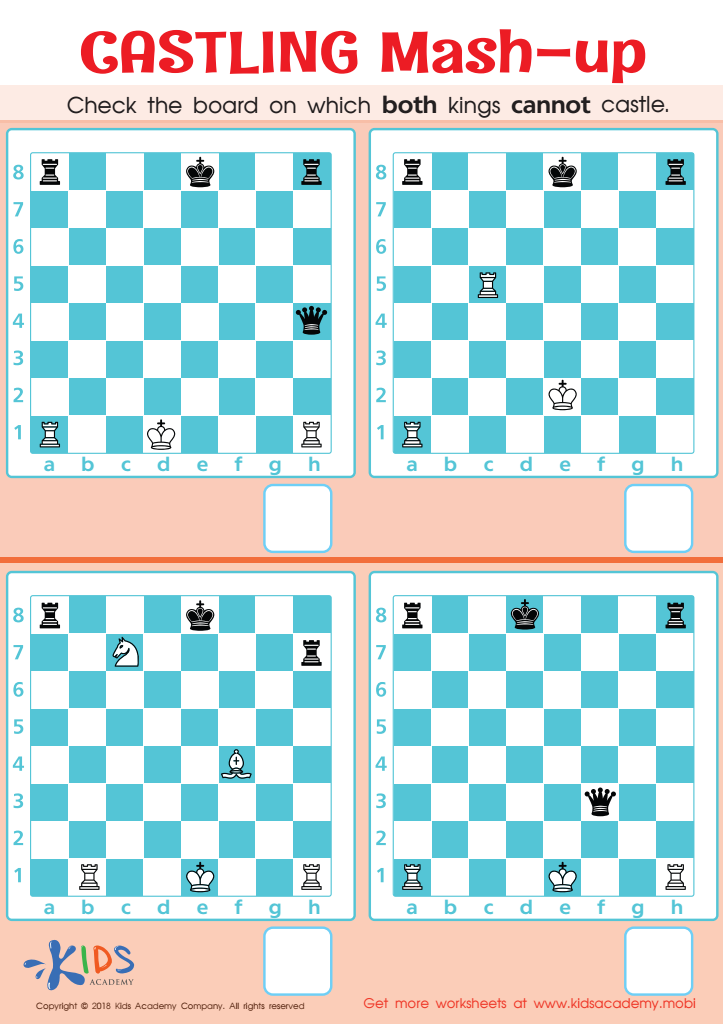
Castling Mash–up Worksheet
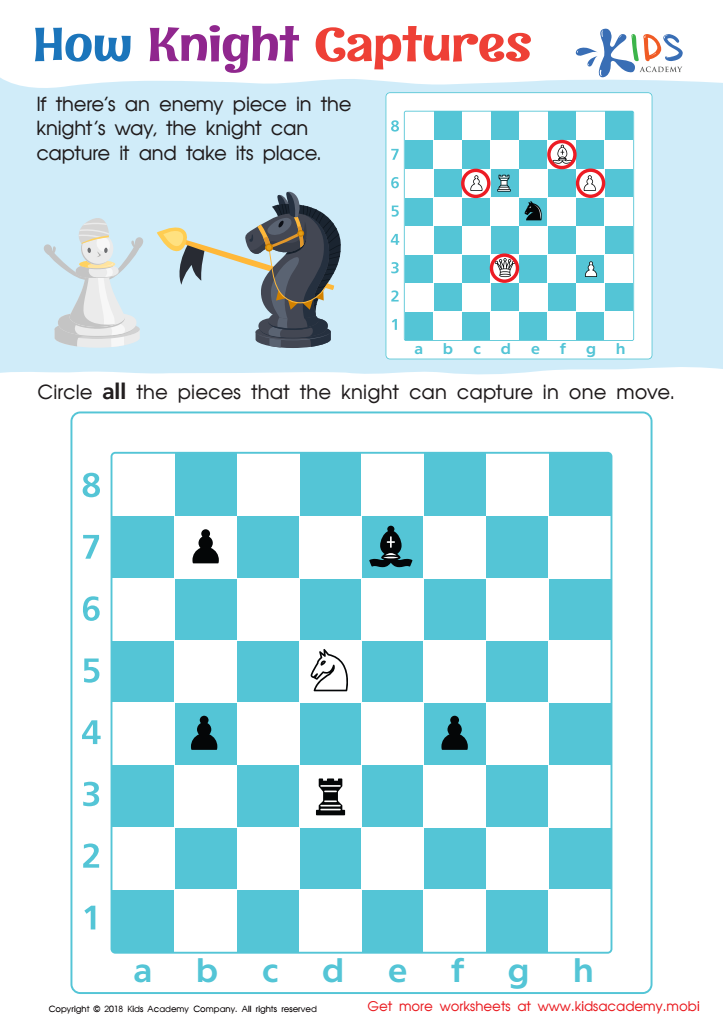
How Knight Captures Worksheet





Understanding chess strategy, even at the Normal Grade 1 level, is vital for both parents and teachers. First and foremost, chess nurtures critical thinking and problem-solving skills. At a young age, children learn to assess situations, think several moves ahead, and consider their opponents’ perspectives. These cognitive skills extend beyond the chessboard, benefiting academic performance in subjects like math and reading.
Moreover, chess encourages patience and focus. Young learners must practice restraint and attentiveness as they navigate the game’s complexities, helping them develop concentration in other areas of learning. Engaging in chess also promotes social skills, as children share, discuss strategies, and respectfully compete against peers, fostering teamwork and sportsmanship.
For parents, educational engagement becomes a vital aspect of nurturing a child's growth. By understanding chess strategy, parents can support their child's learning journey, leading fun and educational games that enhance family bonds. Teachers, on the other hand, can integrate chess into their curriculum, offering an interactive tool that complements lessons in critical thinking and moral lessons about winning and losing.
Ultimately, embracing chess strategy in early education cultivates well-rounded, strategic thinkers prepared for various challenges. Investing in these skills during early childhood yields benefits that extend far beyond the chessboard.