Matching skills Normal Grade 1 Worksheets
4 filtered results
Difficulty Level
Grade
Age
-
From - To
Subject
Activity
Standards
Enhance your child's learning experience with our engaging Normal Grade 1 Matching Skills Worksheets! Designed specifically for first graders, these printable resources promote cognitive development while making learning fun. Students will practice identifying similarities and differences as they match pictures, words, and concepts, reinforcing key skills necessary for their academic growth. Our worksheets not only support foundational literacy and numeracy but also encourage critical thinking and problem-solving abilities. Perfect for classroom or at-home use, these activities make learning enjoyable and interactive. Explore our vibrant collection and watch your child thrive as they master essential matching skills with ease!
Favorites
With answer key
Interactive
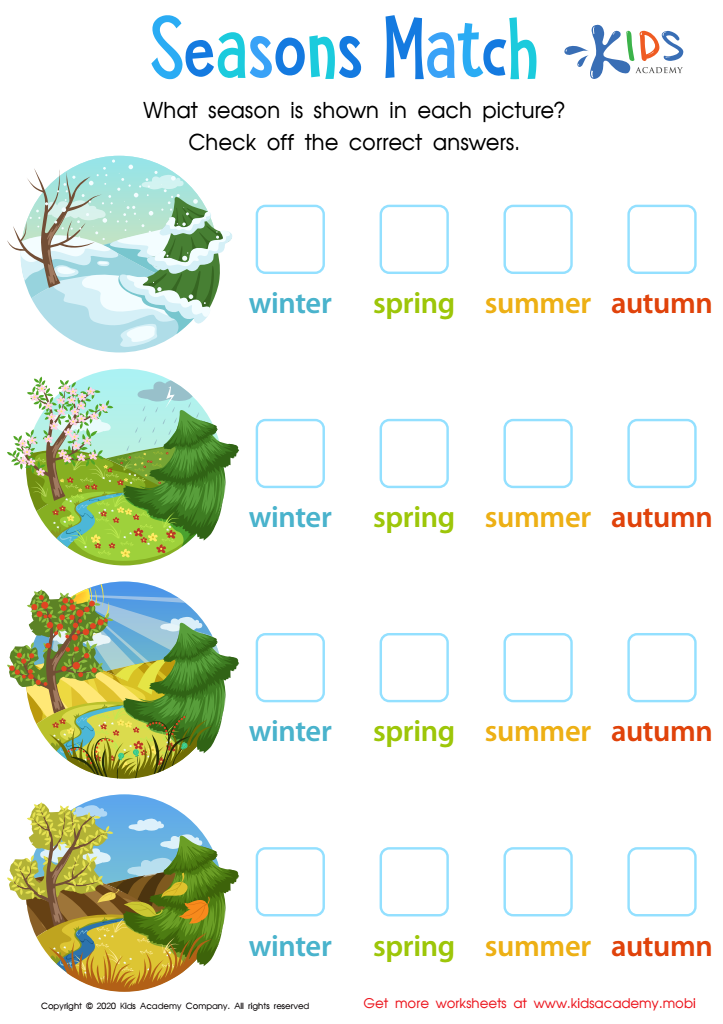
Seasons Match Worksheet
Preschoolers should begin learning about seasons and weather early. Most can tell what season it is by upcoming holidays or school activities. Test their knowledge with a printable PDF worksheet. It asks them to match each image with its corresponding season!
Seasons Match Worksheet
Worksheet
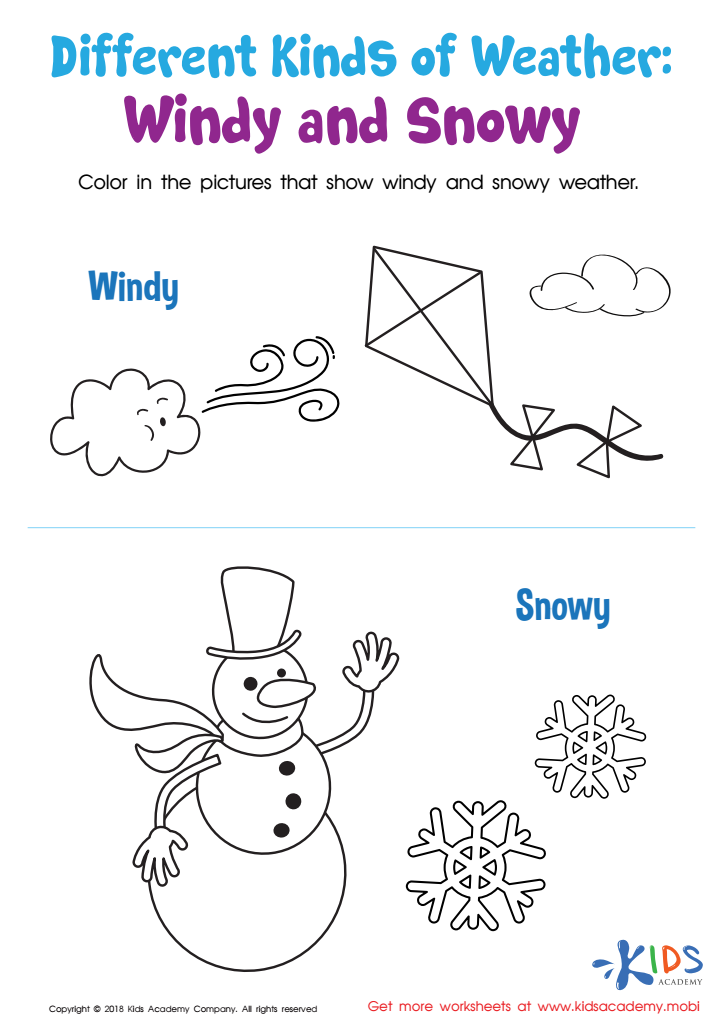
Different Kinds of Weather: Windy and Snowy Worksheet
Invite your little learner to practice their fine motor skills and learn about nature with this fun and charming PDF worksheet! Reinforce weather patterns and examine their environment as they color, giving them a foundation for understanding how weather affects them. No matter the weather, your learner will have a blast!
Download (PDF)
 Assign to My Students
Assign to My Students
Different Kinds of Weather: Windy and Snowy Worksheet
Worksheet
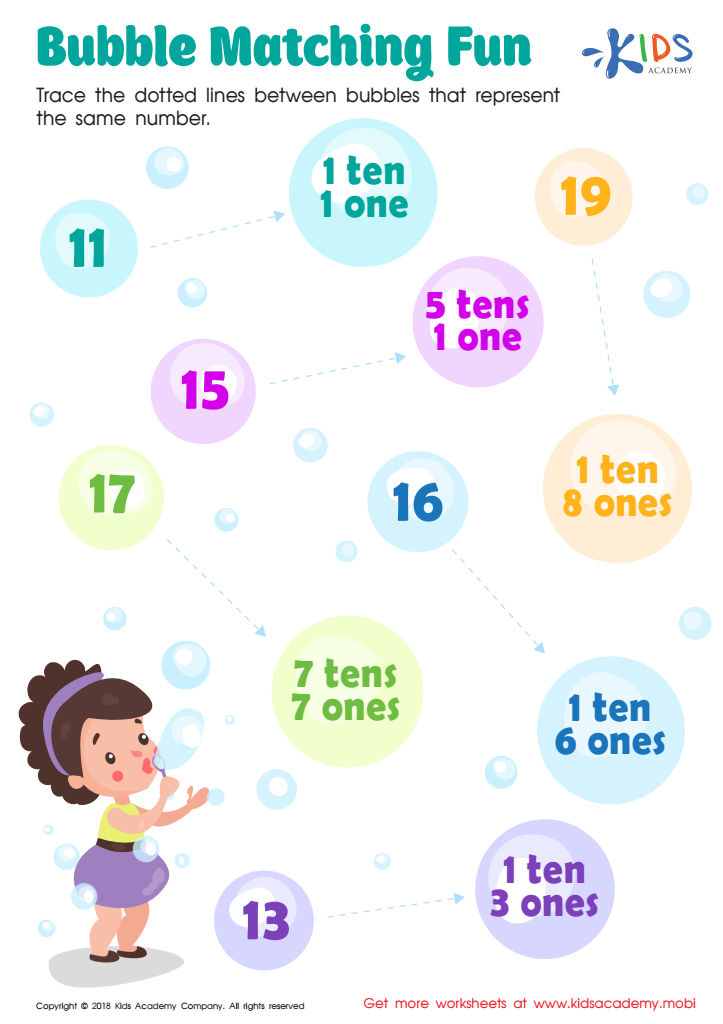
Bubble Matching Fun Worksheet
Try this fun worksheet to stimulate your young one's learning! Test their number matching skills by having them trace the dotted lines between bubbles representing the same numbers. Look through the exercise with your child and watch their understanding of how two numbers can add up to the same value grow!
Bubble Matching Fun Worksheet
Worksheet
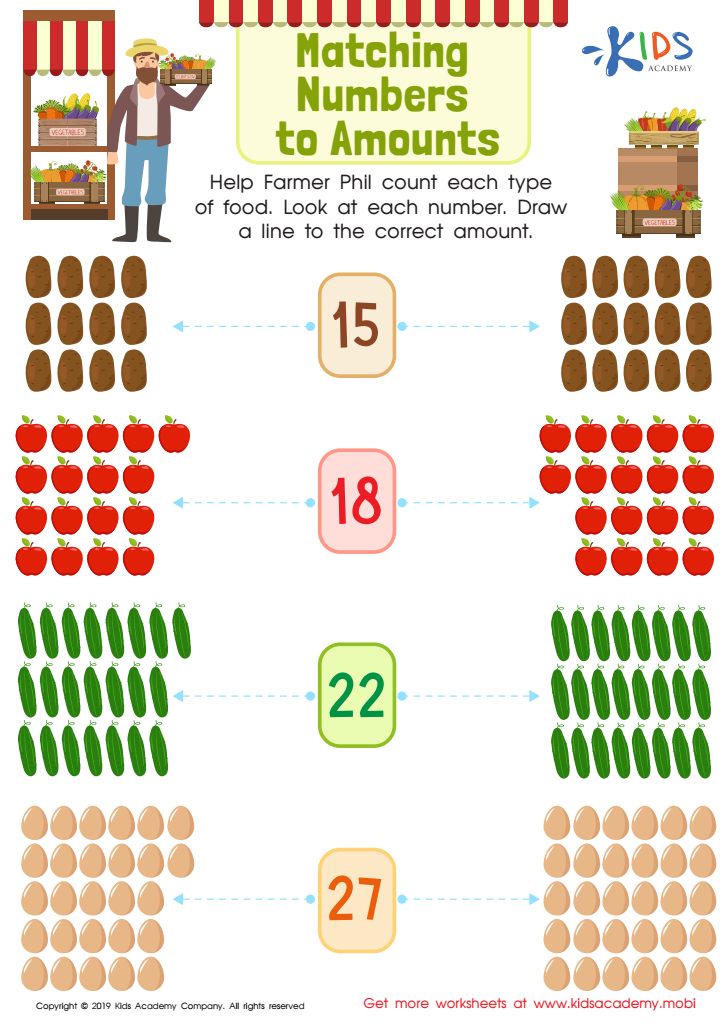
Matching Numbers to Amounts Worksheet
Farmer Phil needs your kid's help! Ensure they know the basics of math such as counting, adding and subtracting. Before beginning, help your child identify and count the different foods in the picture. Then, draw a line to the correct amount.
Matching Numbers to Amounts Worksheet
Worksheet
Join Kids Academy for Free
Who is primarily going to use this learning content?




.jpg)



Parents and teachers should care about matching skills at the normal grade 1 level because these skills are foundational for a child’s cognitive development and future learning. Matching skills involve recognizing similarities and differences between objects, which is essential for early literacy, numeracy, and problem-solving abilities.
In grade 1, children begin to navigate more complex concepts in reading, writing, and math. Developing matching skills helps them classify items, understand patterns, and make connections between ideas—critical abilities for success in school. For instance, when children match pictures to letters, they strengthen their phonemic awareness, leading to improved reading skills. Similarly, identifying matching shapes or numbers lays the groundwork for understanding mathematical concepts.
Furthermore, these skills foster independence and confidence. When children can match shapes, colors, or words, they feel a sense of accomplishment, which boosts their self-esteem and motivates them to engage in other learning activities.
By emphasizing matching skills, parents and teachers can ensure that children build essential cognitive tools, promoting not only academic success but also critical thinking and social skills needed for collaborative learning. Thus, prioritizing matching skills in early education can lead to long-term benefits and a more comprehensive, well-rounded educational experience.