Phonics practice Normal Grade 1 Worksheets
5 filtered results
Difficulty Level
Grade
Age
-
From - To
Subject
Activity
Standards
Welcome to our Phonics Practice Grade 1 Worksheets! Designed specifically for first graders, these engaging printable worksheets help young learners build essential phonics skills. Students will explore letter sounds, blends, and digraphs through fun activities that promote reading comprehension and writing abilities. Our worksheets are both educational and entertaining, featuring colorful illustrations that capture children's interest. Perfect for reinforcing classroom lessons or for supplemental practice at home, these resources support early literacy development. Help your child become a confident reader with our comprehensive collection of phonics worksheets, tailored to enhance learning through play and creativity. Start exploring today!
Favorites
With answer key
Interactive
Missing Digraph: Part 1 Worksheet
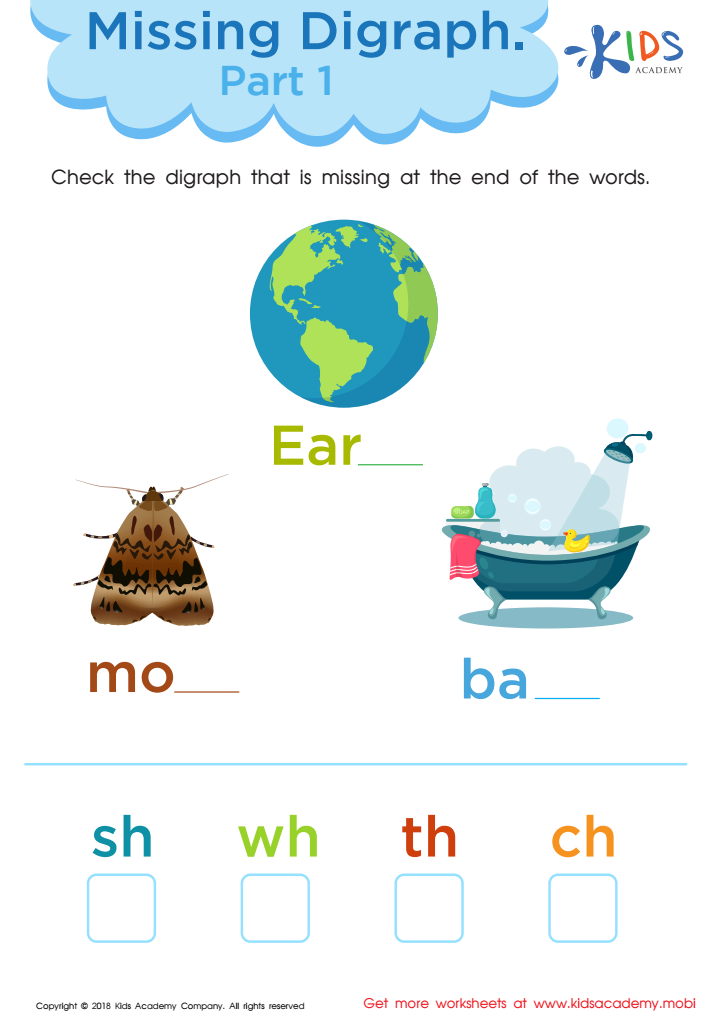
Practice the 'th' digraph with this worksheet! Ask kids to say the words shown and sound out the letters below each image. Check the box with the correct digraph to complete. Examples include 'earth', 'bath' and 'moth', all ending with the same two letters. Phonics teaches that digraphs are two letters that make one sound.
Missing Digraph: Part 1 Worksheet
Worksheet
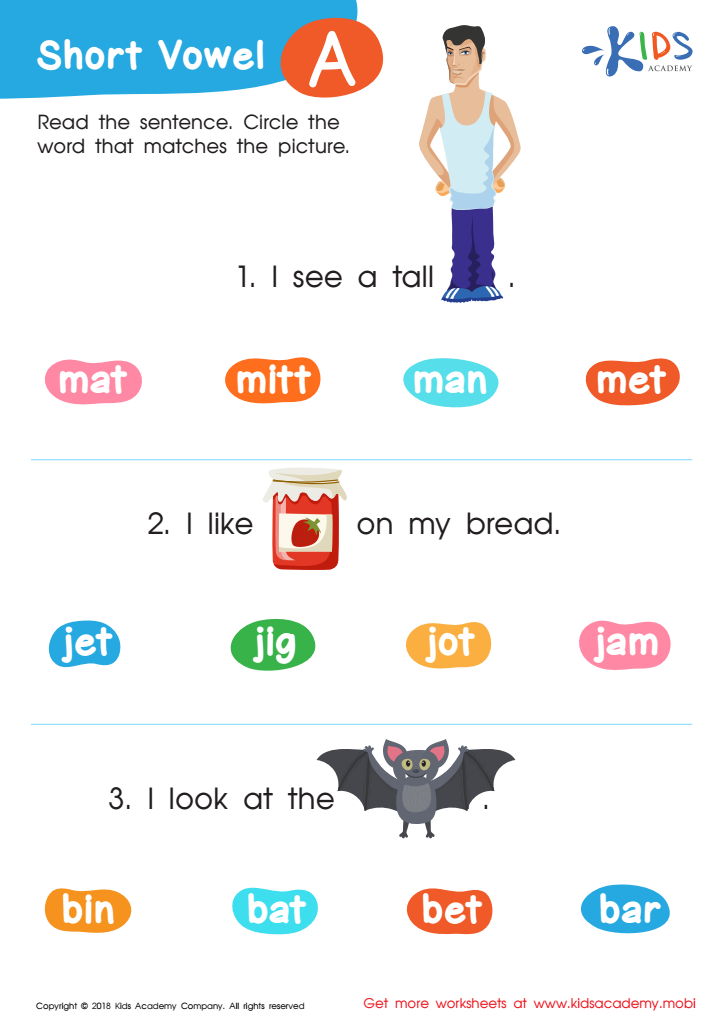
Short Vowel /a/ Worksheet
This free PDF helps new readers use sight words and pictures to read basic sentences. Then, they use accompanying word choices to find the correct word with the short a vowel sound. A key early reading skill, discriminating between short vowel sounds can be tricky in monosyllabic words, so use this PDF to help your reader reinforce it.
Short Vowel /a/ Worksheet
Worksheet
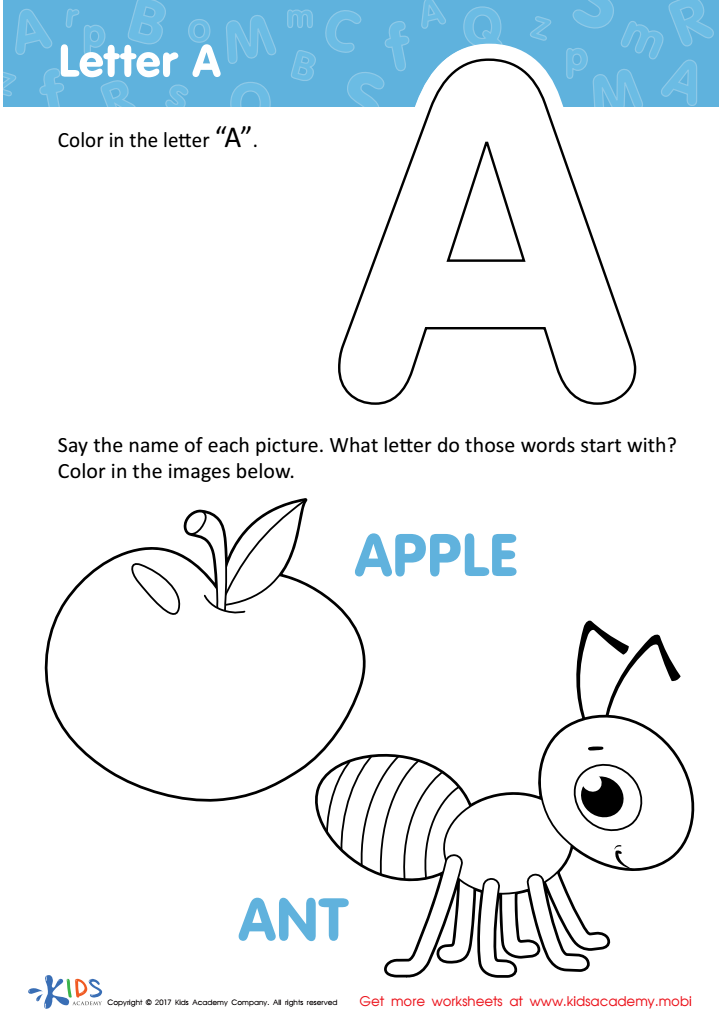
Letter A Coloring Sheet
This letter "A" coloring page is great for introducing kids to the alphabet! Let them exercise their creativity while they learn to recognize letters and sounds - it's a fun and easy way to help them get started.
Download (PDF)
 Assign to My Students
Assign to My Students
Letter A Coloring Sheet
Worksheet
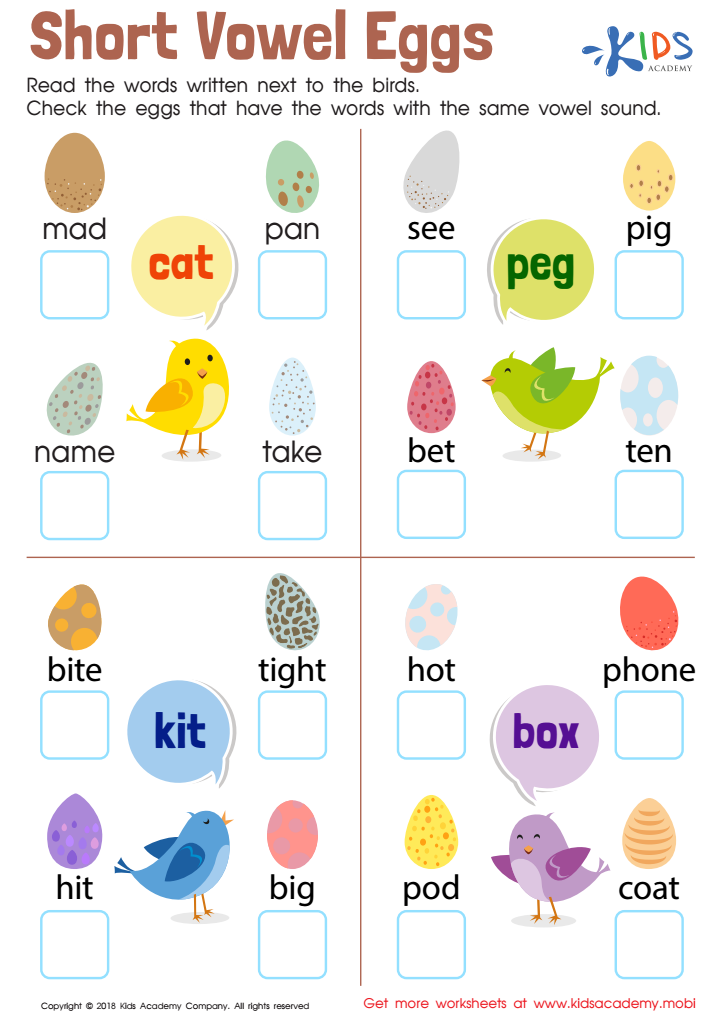
Short Vowel Eggs Worksheet
Your students will love helping these birdies pick the short vowel eggs! Have them read the words in the thought bubbles, then check off the boxes with the same short vowel sounds. The bright colors of this free Worksheet will draw them in and get them practicing their vowels!
Short Vowel Eggs Worksheet
Worksheet
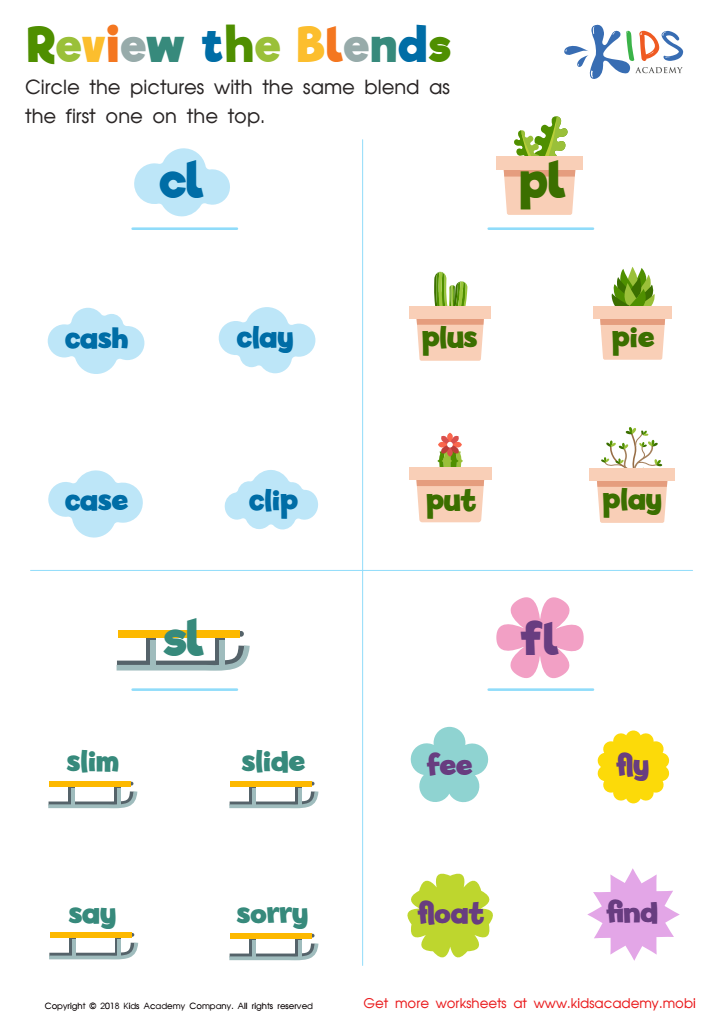
Review the Blends Worksheet
Consonant blends are two or three consonants that make a sound when pronounced together. L-blends like cl, bl, sl, fl and 3-letter blends like str, slp are common. This phonics worksheet helps early readers identify words containing two letter L-blends. Students must circle the words then read them aloud.
Review the Blends Worksheet
Worksheet
Join Kids Academy for Free
Who is primarily going to use this learning content?






Phonics practice is crucial for Grade 1 students as it lays the foundation for successful reading and writing skills. At this age, children are transitioning from learning letters to understanding how they come together to form sounds and words. Mastering phonics helps young learners decode text, which is essential for reading fluency. Effective phonics instruction fosters a positive attitude towards reading, enabling students to explore and enjoy books independently.
Additionally, phonics practice enhances vocabulary acquisition and comprehension skills, ensuring students can comprehend what they read. Teachers and parents play an integral role in supporting phonics learning; by engaging in phonics activities, they can create a collaborative learning environment. This involvement not only strengthens the child's literacy skills but also boosts their confidence and motivation to read.
Furthermore, phonics is linked to long-term academic success. Strong phonics skills correlate with improved performance across various subjects in later grades. When adults prioritize phonics practice, they invest in a child’s future, paving the way for lifelong learning. Overall, phonics practice is not just about reading; it envelops emotional and cognitive development, making it essential for parents and teachers to support this critical learning phase.