Basic Math Skills Normal Grade 1 Addition and Subtraction Word Problems Worksheets
3 filtered results
-
From - To
Enhance your first grader's math journey with our "Basic Math Skills: Normal Grade 1 Addition and Subtraction Word Problems Worksheets." Designed specifically for young learners, these engaging worksheets focus on solving practical and relatable word problems, helping students develop critical thinking and problem-solving skills. Each worksheet supports children in understanding addition and subtraction concepts through real-life scenarios, encouraging them to apply math in daily situations. With colorful visuals and age-appropriate language, these worksheets make learning fun and accessible. Equip your child with essential math skills and help them gain confidence as they navigate the world of numbers with these invaluable resources!
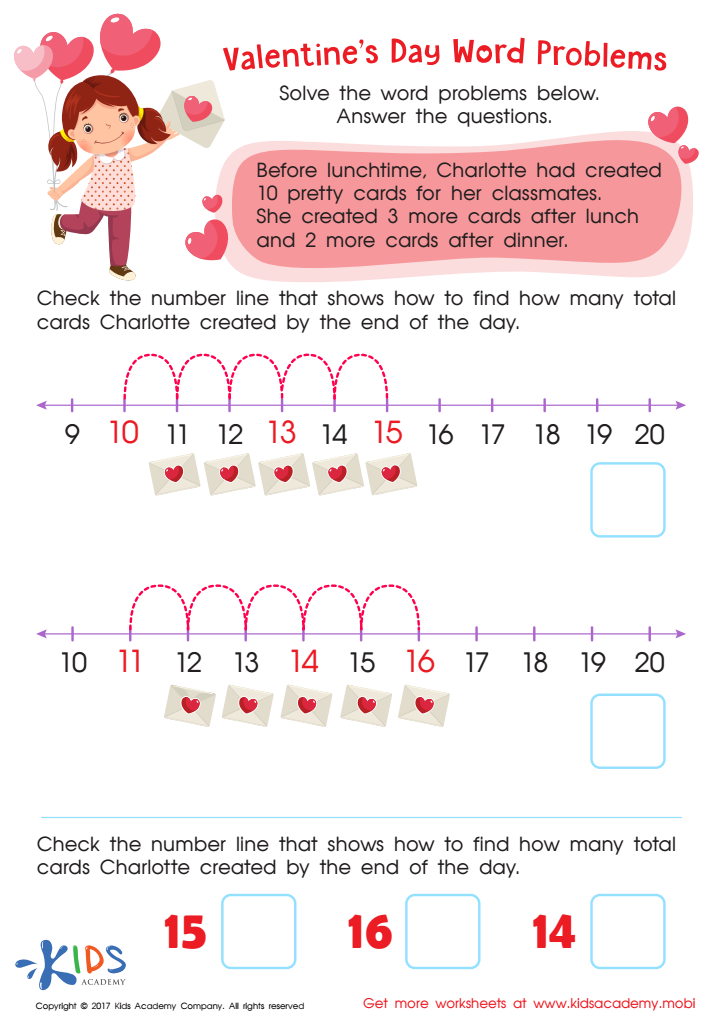
Valentines Day Word Problem Worksheet
 Assign to My Students
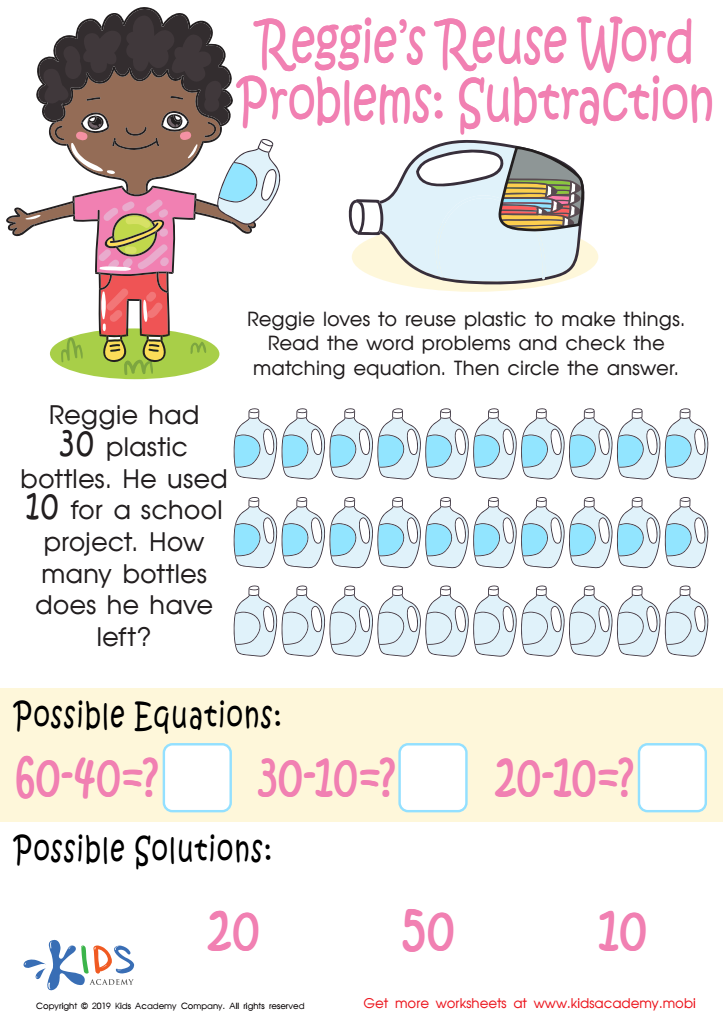
Reggie's Reuse Word Problems: Subtraction Worksheet
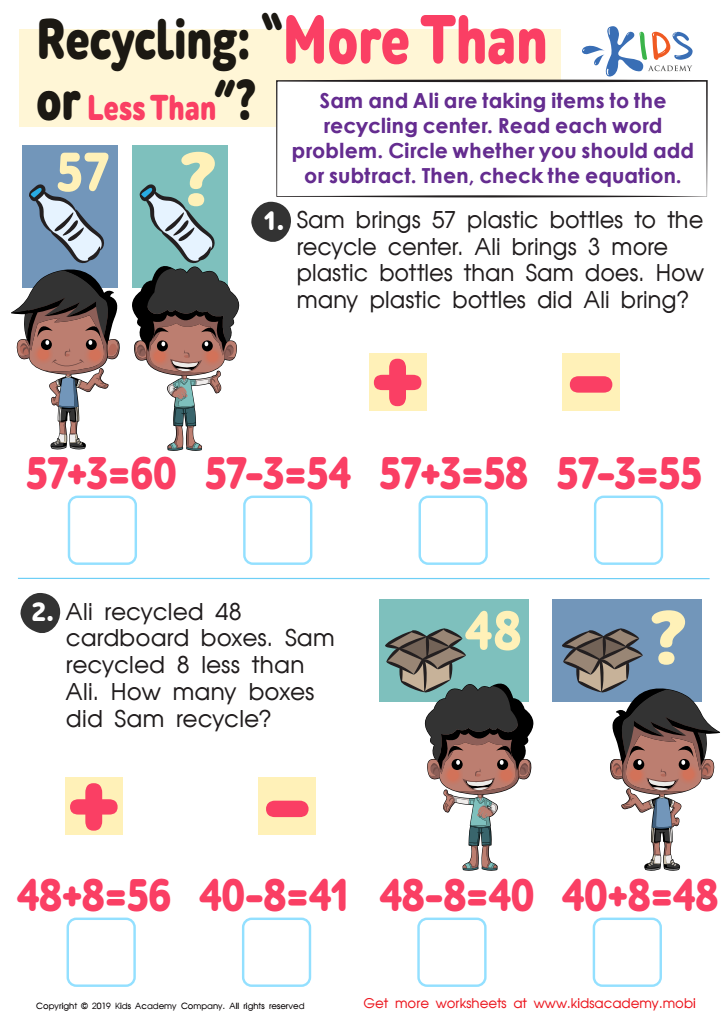
Recycling - More or Less Worksheet








Parents and teachers should prioritize basic math skills, specifically first-grade addition and subtraction word problems, as they lay the foundation for a child's future mathematical understanding. At this early stage, students learn not just to compute, but to comprehend the real-world context of math. Word problems encourage critical thinking, enabling children to translate scenarios into equations, fostering a deeper grasp of numerical concepts.
These skills are integral to developing problem-solving abilities and logical reasoning, which are vital across all subjects and in daily life. Proficiency in basic addition and subtraction builds confidence and prepares students for more complex math as they progress in their education. Additionally, word problems emphasize reading comprehension, as students must extract mathematical information from text. This dual skill set reinforces literacy while enhancing numeracy.
Encouraging a collaborative approach to these problems promotes a positive attitude toward math and reinforces the importance of persistence in problem-solving. Ultimately, supporting children in mastering these fundamental skills cultivates lifelong learners who feel capable and prepared to tackle future challenges, not just in mathematics, but in all areas of their education and daily interactions.