Understanding patterns Normal Grade 1 Addition & Subtraction Worksheets
3 filtered results
-
From - To
Explore our "Understanding Patterns" worksheets designed for Grade 1 students to master essential addition and subtraction skills! These engaging, printable resources encourage young learners to identify numerical patterns, enhance their problem-solving abilities, and build a strong foundation in mathematics. Featuring colorful visuals and fun exercises, our worksheets promote active participation and help children recognize patterns in numbers, enhancing their overall math fluency. Perfect for both classroom activities and home practice, these worksheets make learning math enjoyable and effective. Start your child’s math journey today by accessing our comprehensive collection tailored for first graders!
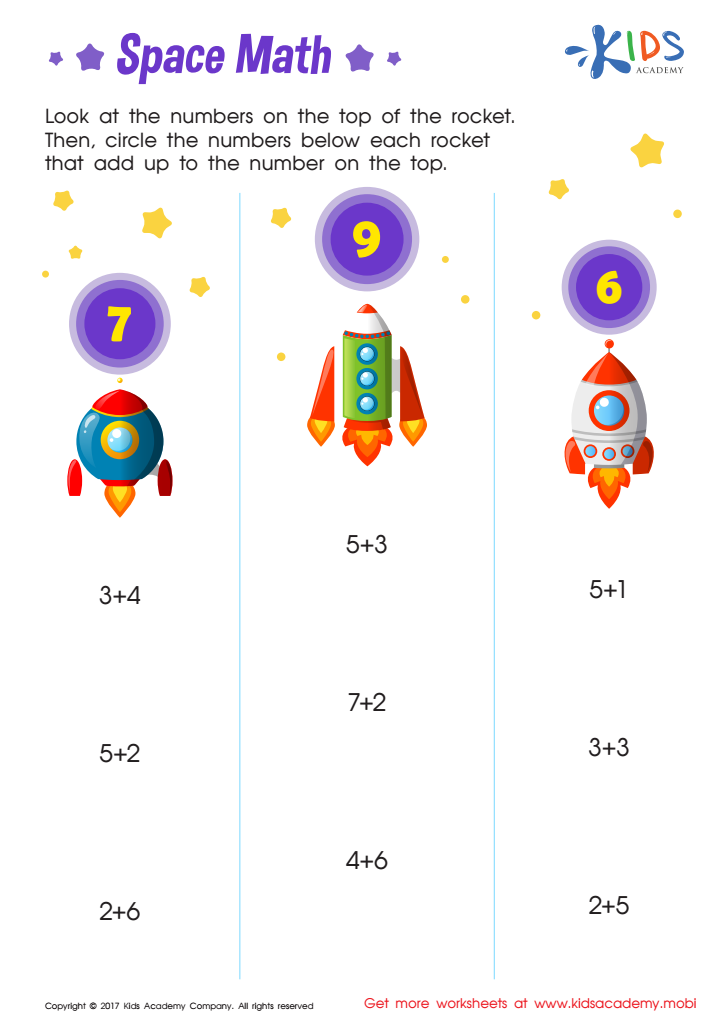
Addition: Space Math Worksheet
 Assign to My Students
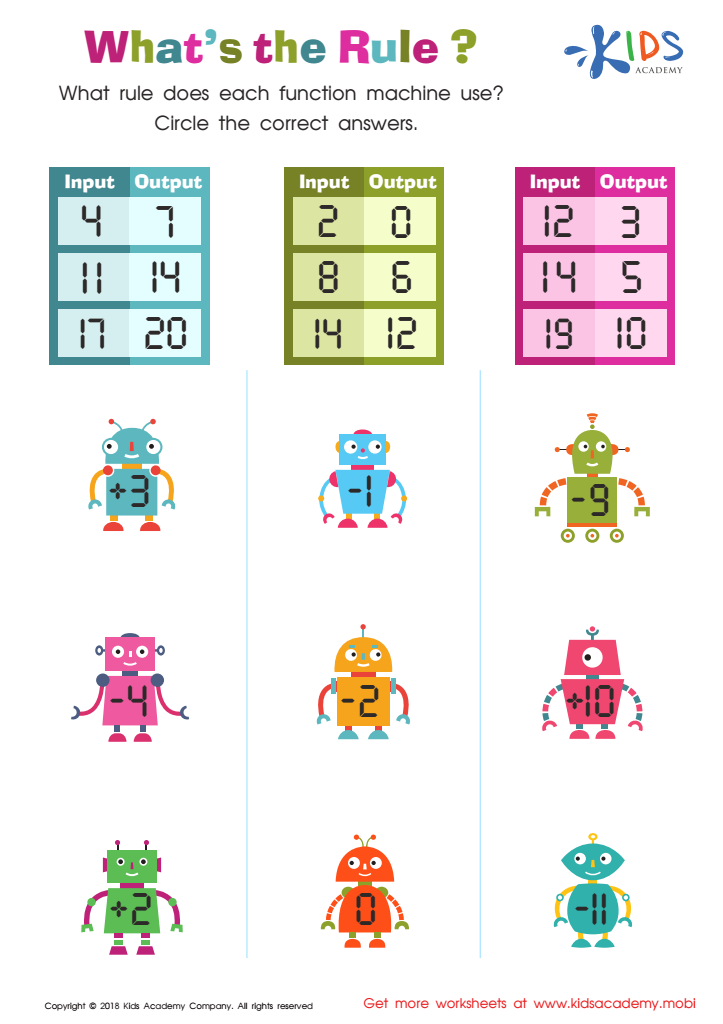
What's the Rule Worksheet
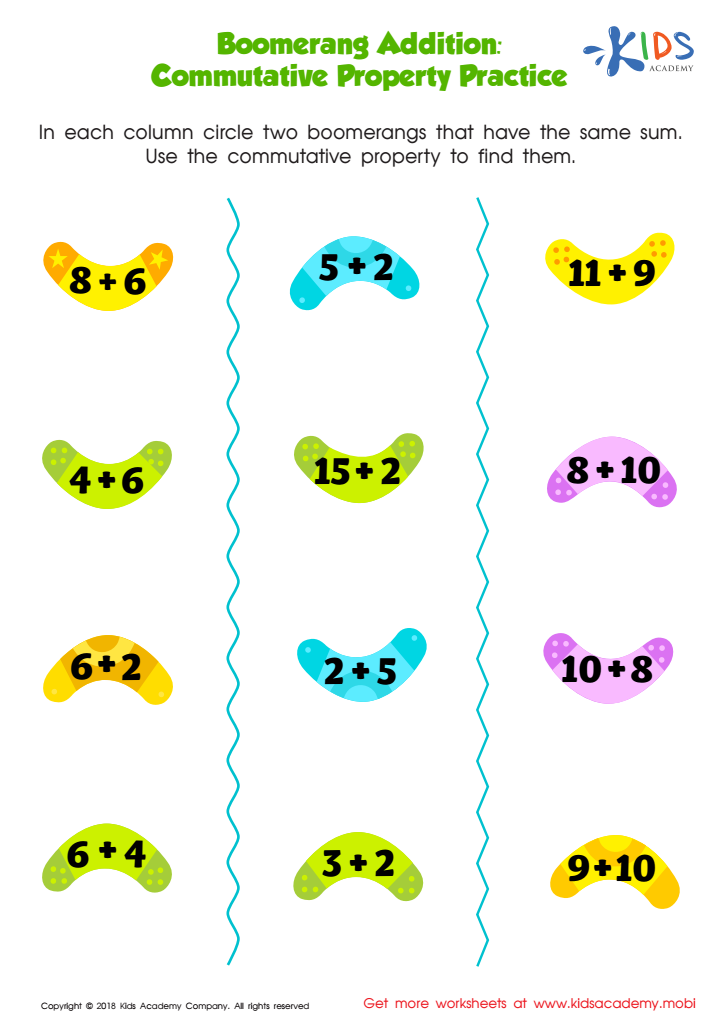
Boomerang Addition Worksheet








Understanding patterns in addition and subtraction is crucial for Grade 1 students because it lays the foundation for their mathematical comprehension. When parents and teachers emphasize the recognition of patterns, children develop critical thinking and problem-solving skills essential for future learning. Patterns help students grasp concepts such as number relationships, making it easier to understand more complex operations later on.
Moreover, when children notice numerical patterns—like recognizing that adding 2 can be seen as moving up two places on a number line—they build automaticity, reducing the cognitive load during problem-solving. This understanding fosters confidence and enthusiasm for math, enhancing their overall academic performance.
Additionally, teaching patterns encourages the development of reasoning skills as students begin to predict outcomes and formulate strategies based on what they observe. It further enables them to create connections between addition and subtraction, illustrating concepts like the inverse relationship. By fostering this early understanding, parents and teachers not only support academic success but also instill a lifelong appreciation for mathematics as a logical and structured discipline. Overall, caring about understanding patterns integrates essential skills into a young learner’s education, paving the way for future success in mathematics and beyond.