Color Identification Normal Grade 1 Math Worksheets
5 filtered results
Difficulty Level
Grade
Age
-
From - To
Subject
Activity
Standards
Our Color Identification Normal Grade 1 Math Worksheets are designed to make learning exciting for young students. These engaging worksheets help first graders enhance their color recognition skills while simultaneously building essential math abilities. Each activity offers a vibrant mix of visually appealing exercises that mix identifying and naming colors with fundamental math concepts. Kids will enjoy interactive tasks that foster cognitive development, pattern recognition, and logical thinking. Perfect for both classroom use and at-home practice, these worksheets provide a fun and interactive way to reinforce early learning skills. Empower your child’s educational journey with our expertly crafted resources.
Favorites
With answer key
Interactive
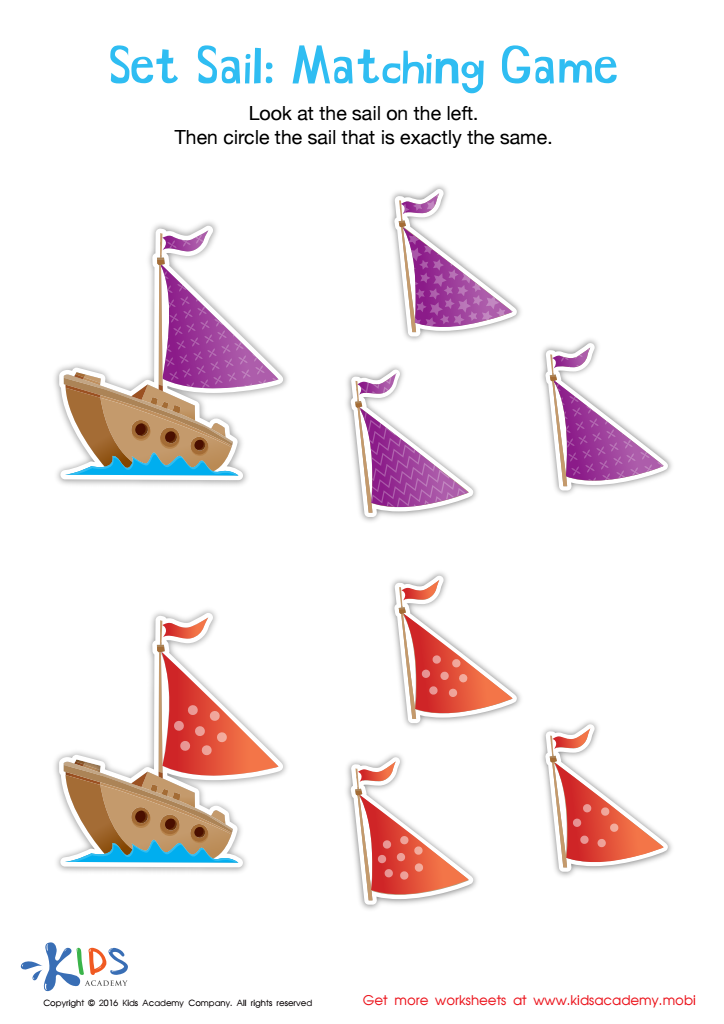
Set Sail Worksheet
Set sail with this fun matching game for toddlers! Kids will love finding the same pattern on the sails, improving their problem-solving and counting skills. Enjoy this bright and engaging worksheet!
 Assign to My Students
Set Sail Worksheet
Worksheet
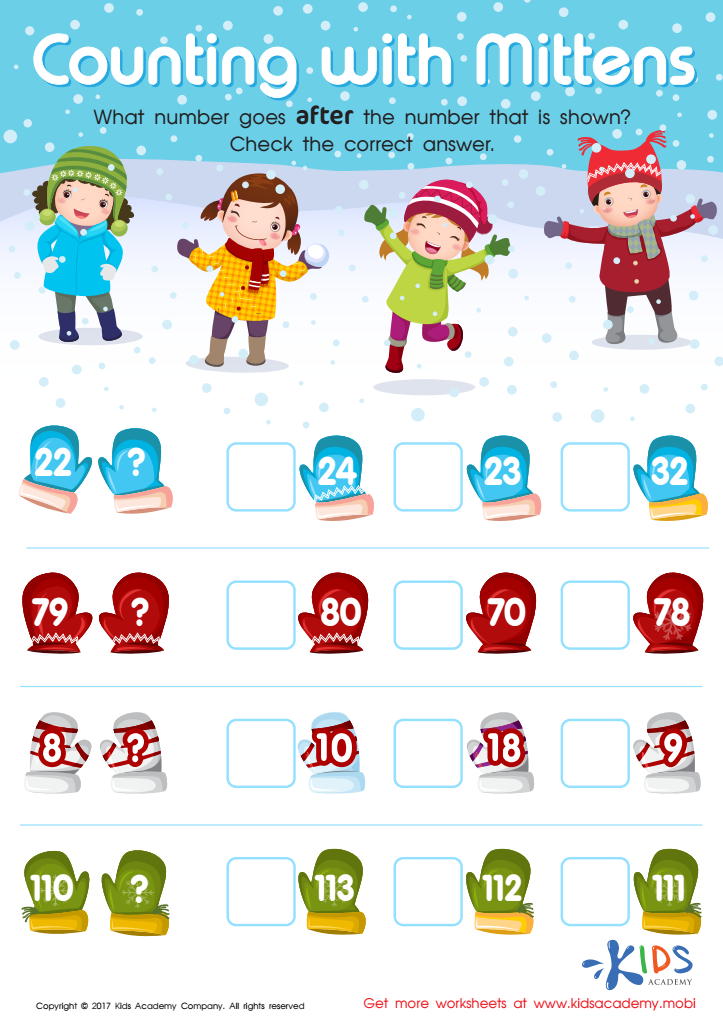
Counting with Mittens Worksheet
Let your kid have fun with this counting worksheet! It encourages them to count numbers and figure out which come next in the picture. Check the box with the correct answer - it's already provided. No more groaning and tears - this is a great way to learn!
Counting with Mittens Worksheet
Worksheet
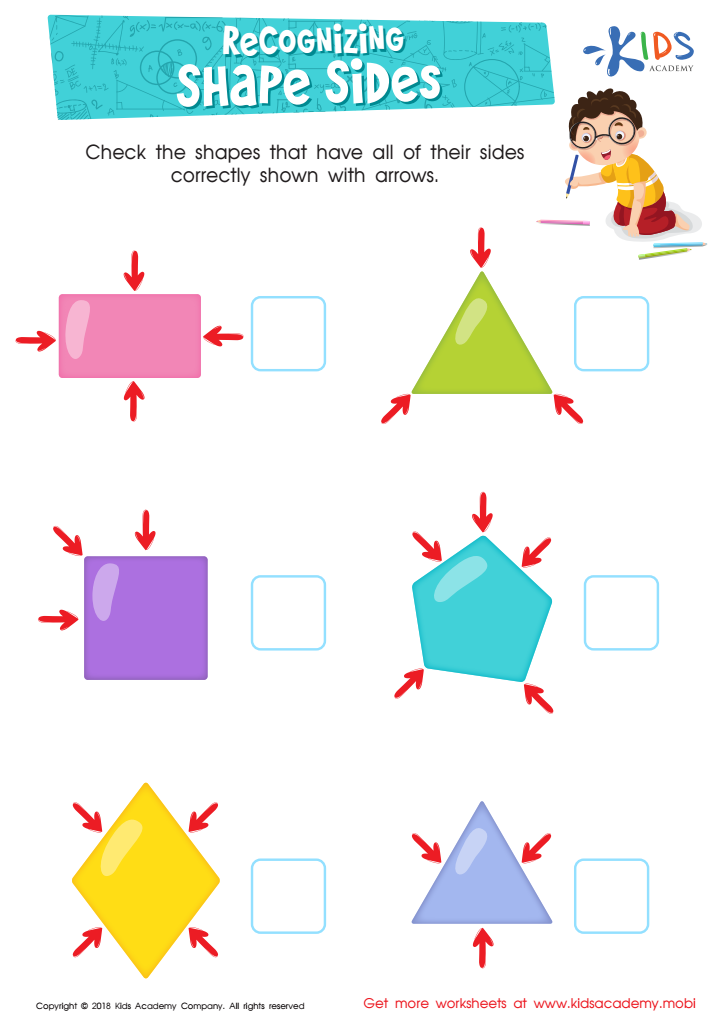
Recognizing Shape Sides Worksheet
This exercise will help your child recognize shape sides. Go over the difference between sides and angles first, then have them check the shapes with arrows to show the sides. They'll quickly get the hang of it and find it much easier after completing the colorful worksheet.
Recognizing Shape Sides Worksheet
Worksheet
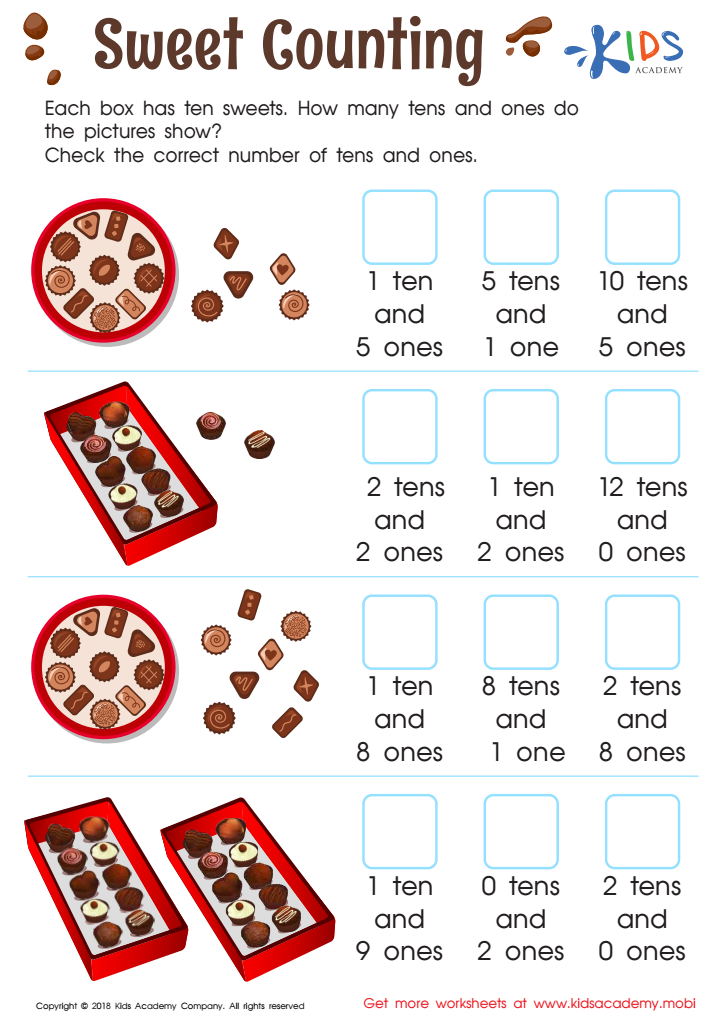
Sweet Counting - Part 2 Worksheet
Kids adore sweets! Make counting fun with this sweet-themed worksheet. Guide your child to count chocolates in boxes of 10, plus individual candies. Group them into tens and ones. Ask: "How many ones and tens are in each row?" Check the answer and complete the practice sheet.
Sweet Counting - Part 2 Worksheet
Worksheet
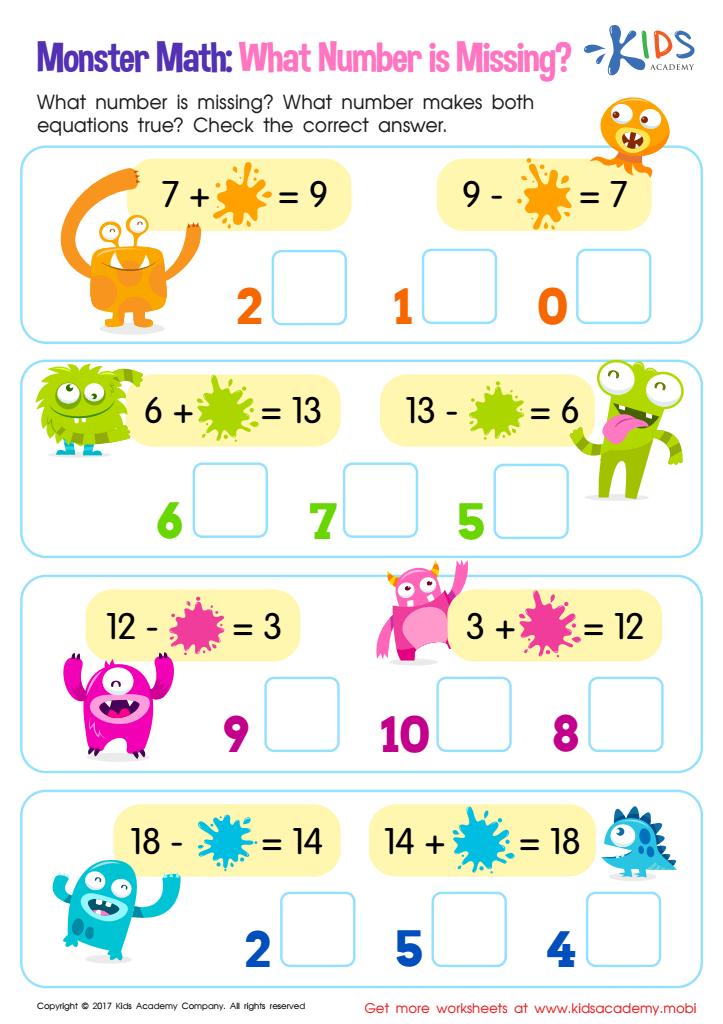
Missing Number: Monster Math Worksheet
Engage your child in monster math fun with a worksheet! They'll need to use their counting, addition and subtraction skills to solve equations on both sides. On the left side, they must complete an addition problem and on the right, the equation is in subtraction form. Assist them in selecting the right number out of the given options to make both equations true.
Missing Number: Monster Math Worksheet
Worksheet
Join Kids Academy for Free
Who is primarily going to use this learning content?







Color identification is an essential component of early childhood education and critical to a grade 1 math curriculum for several reasons. First, understanding and recognizing colors can significantly enhance a child's cognitive learning and developmental skills. When children identify different colors, they develop early skills in categorizing and differentiating, which serve as the foundational concepts of mathematical thinking and problem-solving.
Moreover, color identification aids in the development of language skills. When children learn the names of colors, they expand their vocabulary and improve their ability to describe and communicate effectively. This language acquisition is crucial for overall literacy development and comprehension, which are integral to their academic career.
In math instruction, being able to identify and differentiate colors enables young learners to sort, organize, and classify objects. These are pivotal skills for understanding patterns, sequencing, and other basic mathematical concepts. For example, sorting objects by color can introduce children to the ideas of sorting by size, shape, and type later on.
Finally, engaging with colors can make learning fun and interactive, thus fostering a positive attitude toward education. When teachers and parents emphasize color identification, they encourage creativity and curiosity, contributing to a child's enthusiasm for learning. This can create a robust foundation for their continuing education journey.