Logical Reasoning Normal Grade 1 Math Worksheets
5 filtered results
-
From - To
Discover a fantastic collection of Logical Reasoning Normal Grade 1 Math Worksheets designed to enhance critical thinking skills in young learners. These engaging, curriculum-aligned worksheets help first graders grasp essential logical reasoning concepts through fun puzzles and problems. They'll enjoy activities such as pattern recognition, sequencing, and matching exercises that foster strategic thinking and problem-solving skills. Perfect for classroom use or additional home practice, these worksheets provide a solid foundation for mathematical learning and cognitive development. Explore our comprehensive resource to help your child excel in math and beyond!
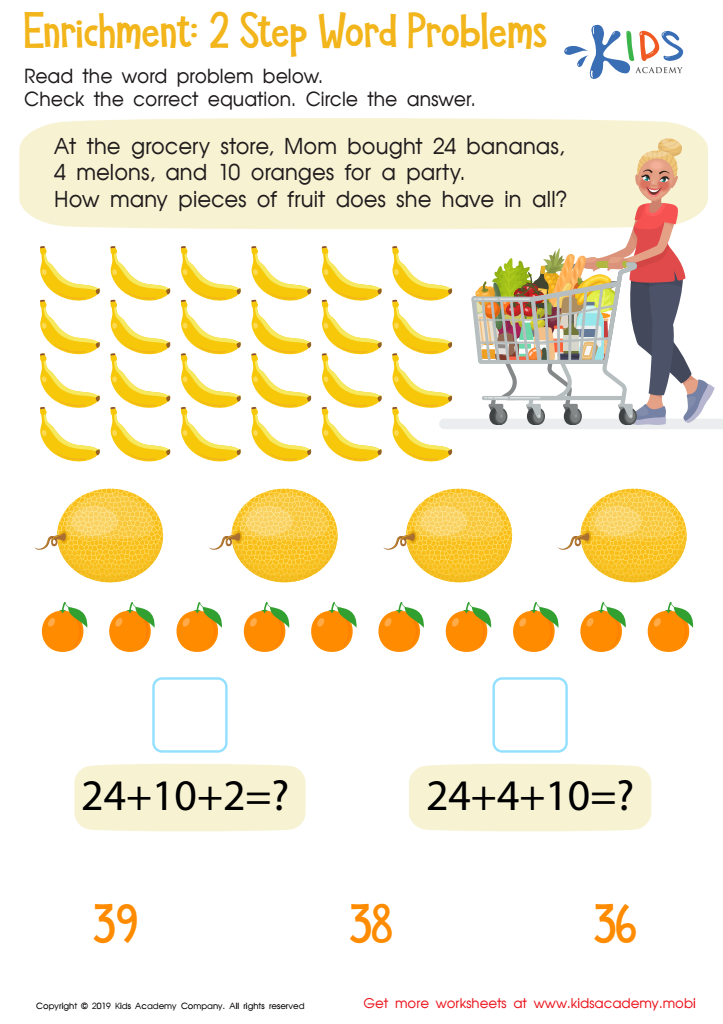
Enrichment -2 Step Word Problems Worksheet
 Assign to My Students
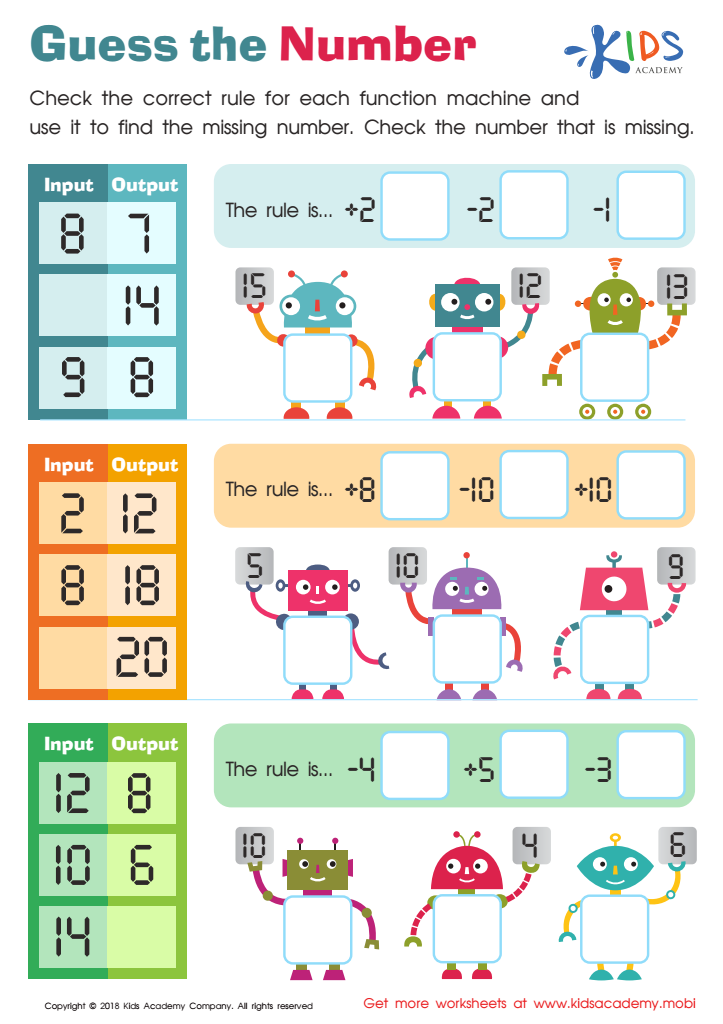
Guess the Number Worksheet
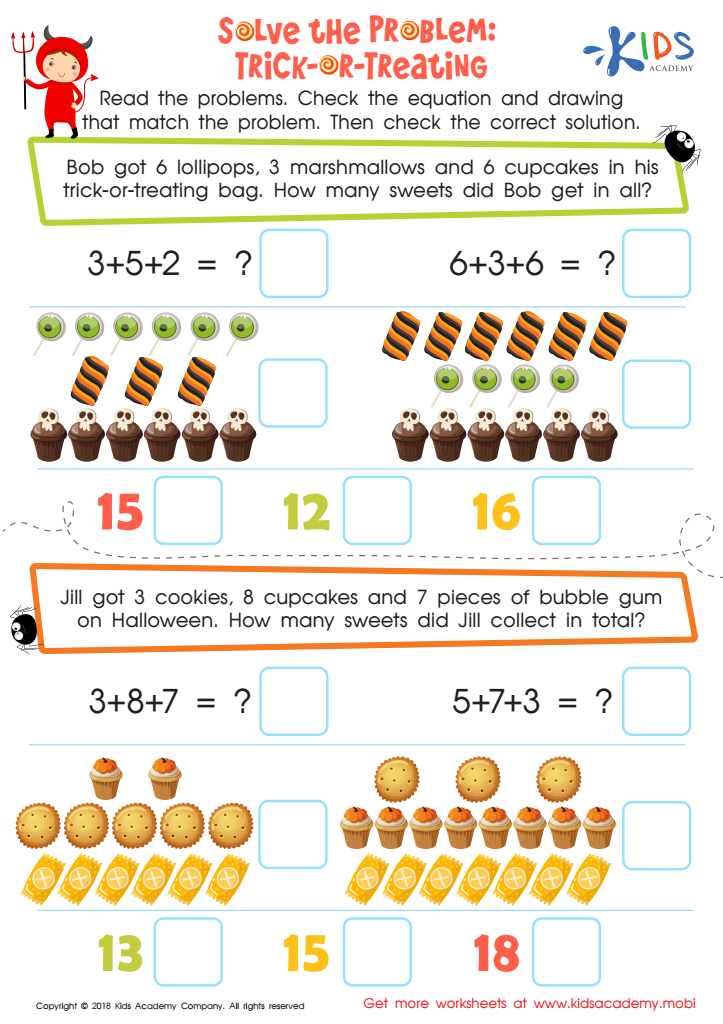
Solve the Problem: Trick–or–treating Worksheet
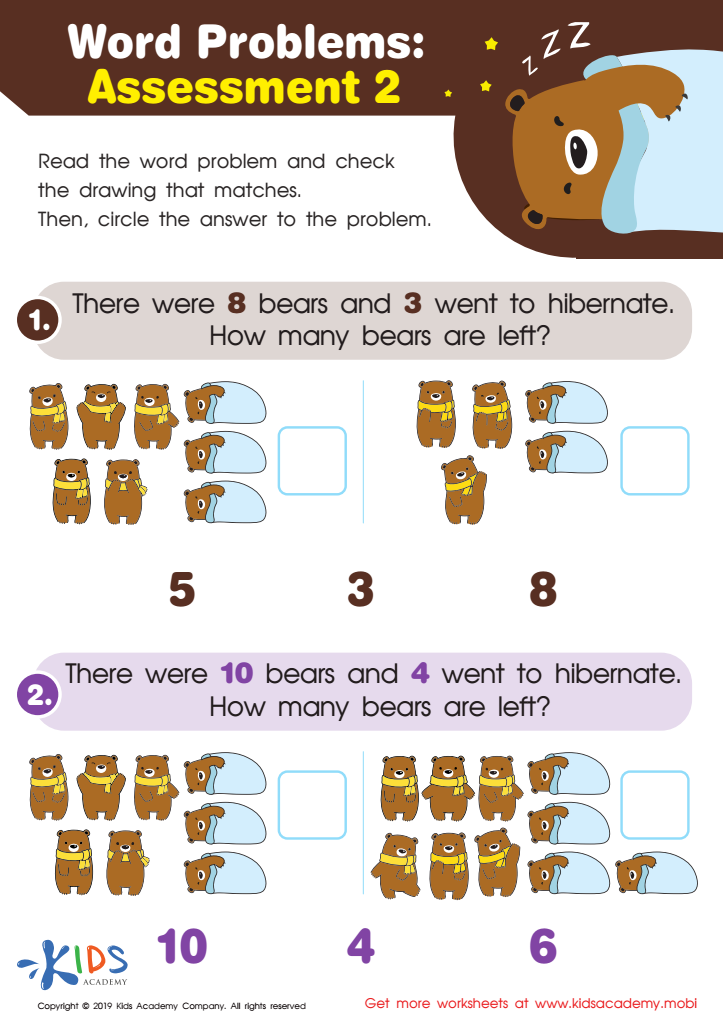
Word Problems: Assessment 2 Worksheet
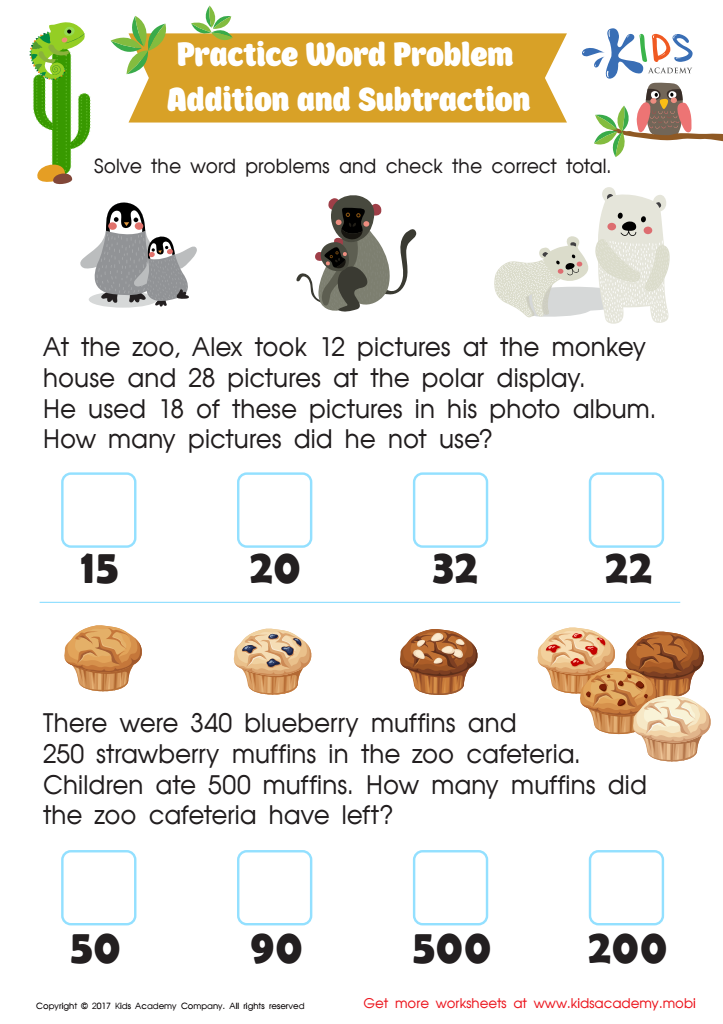
Addition and Subtraction: Word Problems Worksheet








Logical reasoning in early math education is crucial for young learners, and both parents and teachers should pay close attention to its development. At this critical stage, children begin to build foundational skills that are essential for their future academic success and everyday problem-solving abilities.
Logical reasoning helps Grade 1 students understand and analyze patterns, make connections, and develop critical thinking skills. When children engage in logical reasoning activities, they learn to approach problems methodically and persevere through challenging tasks. This fortifies their mathematical understanding, enabling them to tackle more complex concepts with confidence as they progress.
Moreover, reinforcing logical reasoning fosters a growth mindset. Children learn that problem-solving is an active process, cultivating curiosity and resilience. In turn, this mindset can be applied across all subjects, not just math, promoting a comprehensive educational experience.
For parents, supporting this at home through games and real-world problem-solving activities can enhance their child's learning. Teachers, meanwhile, can create engaging and diverse classroom activities, lending students opportunities to explore and apply logical frameworks in various scenarios.
In summary, nurturing logical reasoning in Grade 1 is like planting the seeds for cognitive development, critical thinking, and lifelong learning, making it an indispensable component of early education.