Critical Thinking Normal Grade 1 Reading Comprehension Worksheets
11 filtered results
Difficulty Level
Grade
Age
-
From - To
Subject
Activity
Standards
Our Critical Thinking Normal Grade 1 Reading Comprehension Worksheets are designed to engage young learners and enhance their reading skills. These worksheets encourage first graders to delve deeper into texts, fostering critical thinking through a variety of stimulating questions and activities. Each thoughtfully crafted exercise helps children develop essential comprehension strategies, such as identifying the main idea, making inferences, and understanding the sequence of events. Perfect for classroom use or home practice, our worksheets combine fun with educational value, promoting a love for reading and a strong foundation for future learning. Make reading an adventure with our expertly designed resources!
Favorites
With answer key
Interactive
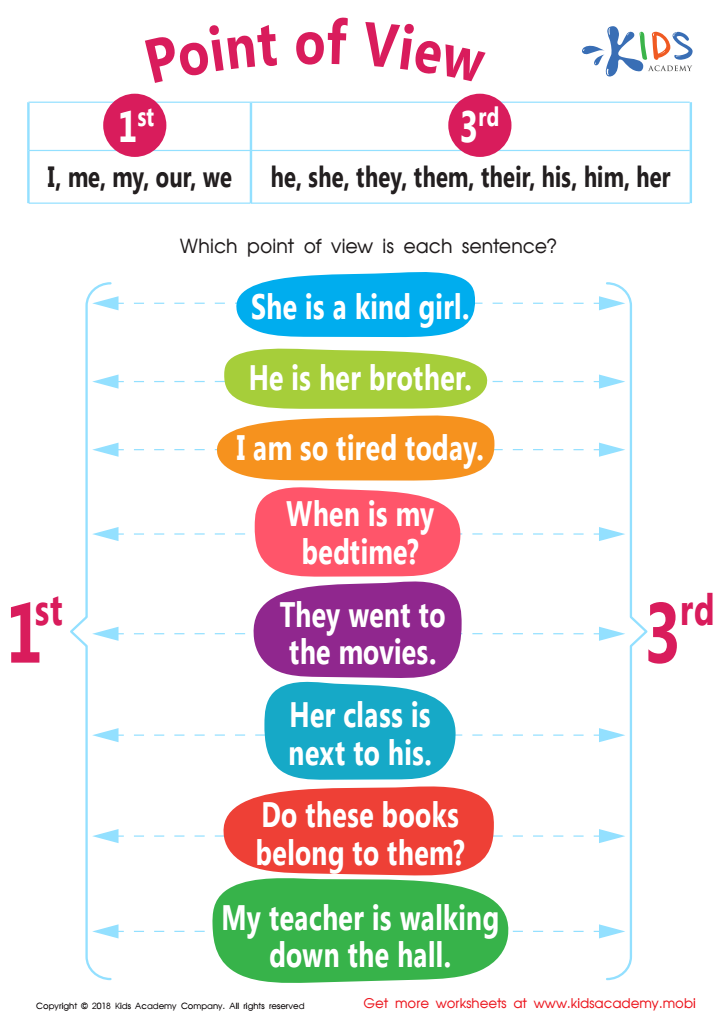
Point of View Worksheet
This printable worksheet helps kids understand Point of View by providing 1st and 3rd person choices. It's a fun way to practice differentiating between the two viewpoints and improve their reading comprehension. Match the sentences to 1st or 3rd person to strengthen understanding and enjoy the task!
 Assign to My Students
Point of View Worksheet
Worksheet
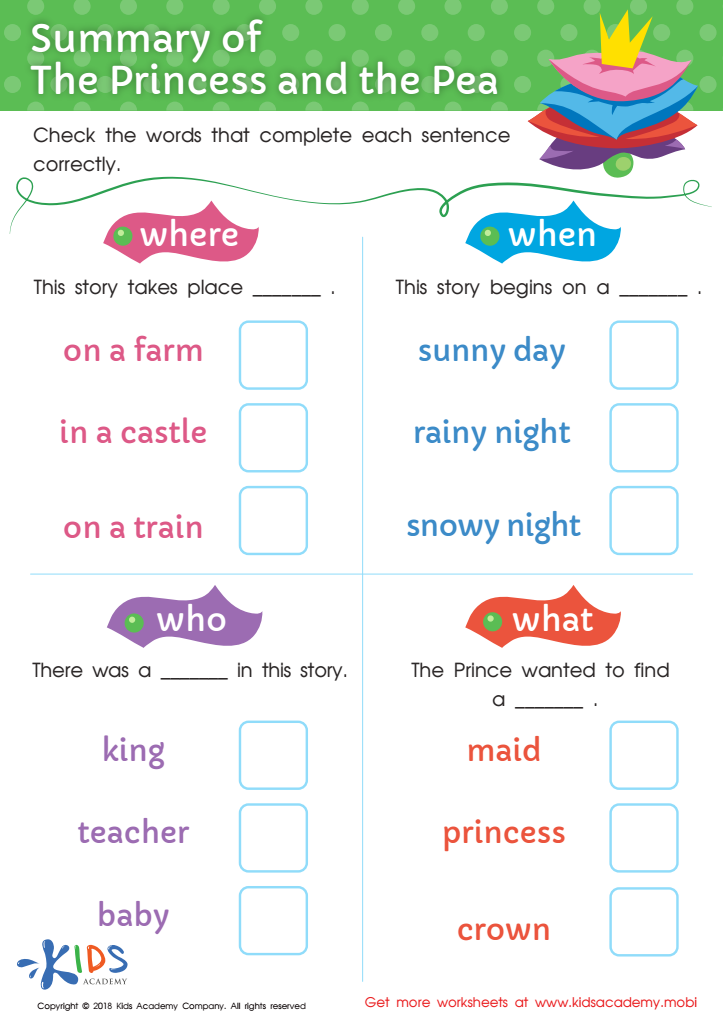
The Summary of the Princess and the Pea Worksheet
Test your student’s knowledge of the story The Princess and the Pea with this quick worksheet. With who, what, when and where questions, it's a great way to assess comprehension skills. It's a perfect resource for school or home classrooms. Download it now and start improving comprehension skills!
The Summary of the Princess and the Pea Worksheet
Worksheet
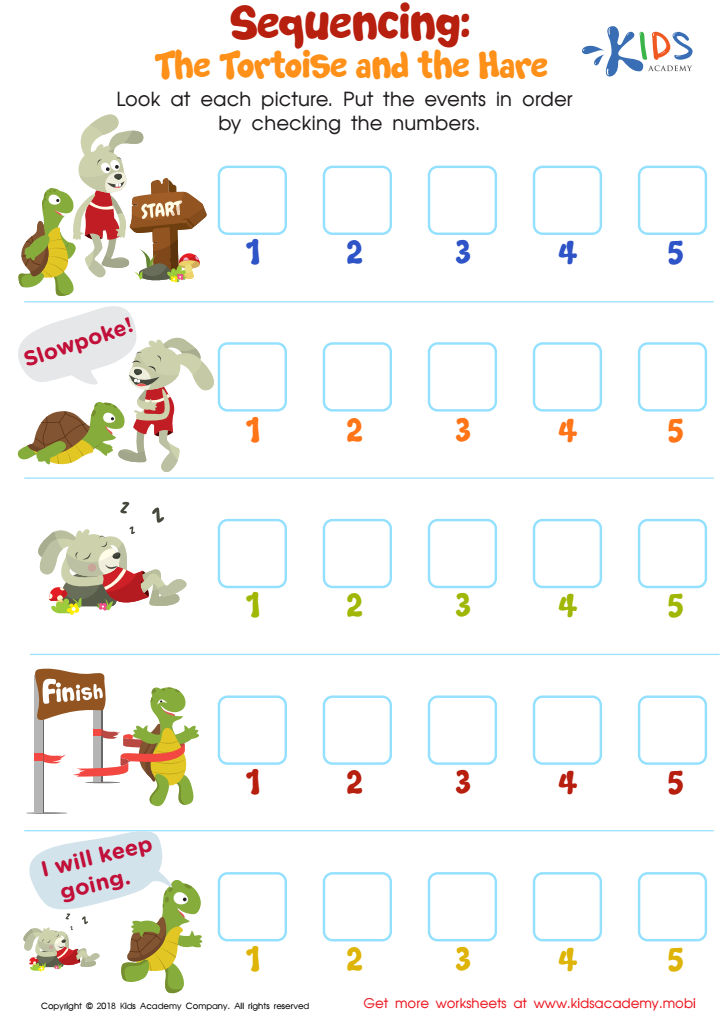
Sequencing: The Tortoise and the Hare Worksheet
Help your child become an independent reader and critical thinker with a sequencing worksheet from Kids Academy! Have them read the classic tale of the tortoise and the hare and use the accompanying worksheet to check their understanding of the story's sequence of events. Have kids identify the correct order of events by selecting the box next to the correct number for each image!
Sequencing: The Tortoise and the Hare Worksheet
Worksheet
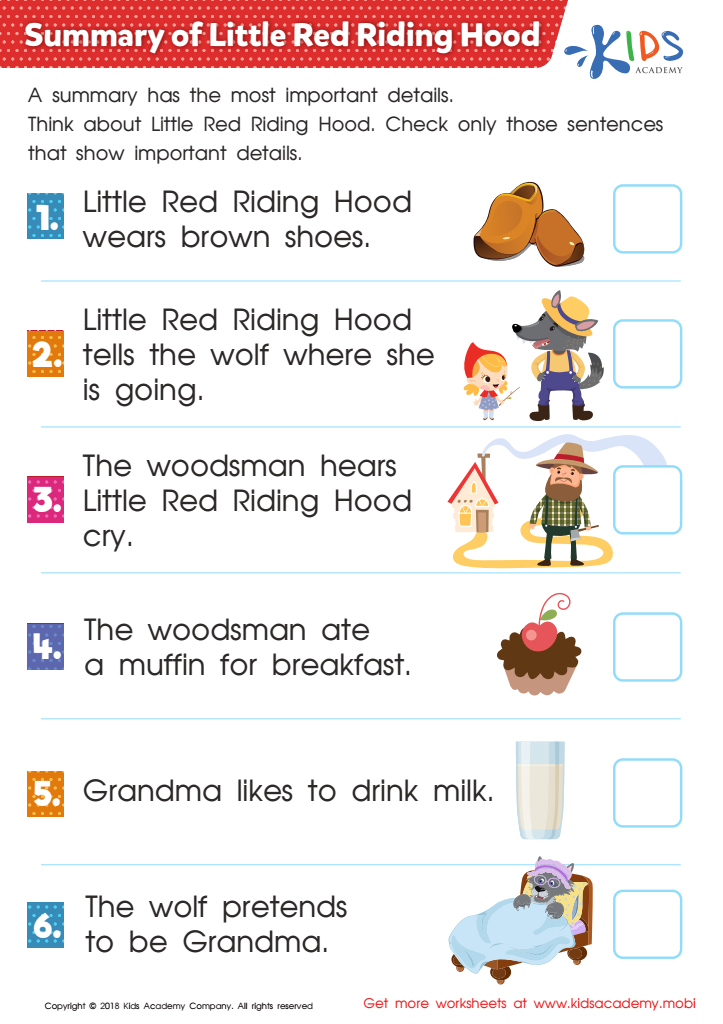
Summary of Little Red Riding Hood Worksheet
Young students may find it hard to summarize stories. This worksheet helps them learn to distinguish between important story details and unimportant ones. Practice reading Little Red Riding Hood and pick out only the important details with the help of this downloadable worksheet.
Summary of Little Red Riding Hood Worksheet
Worksheet
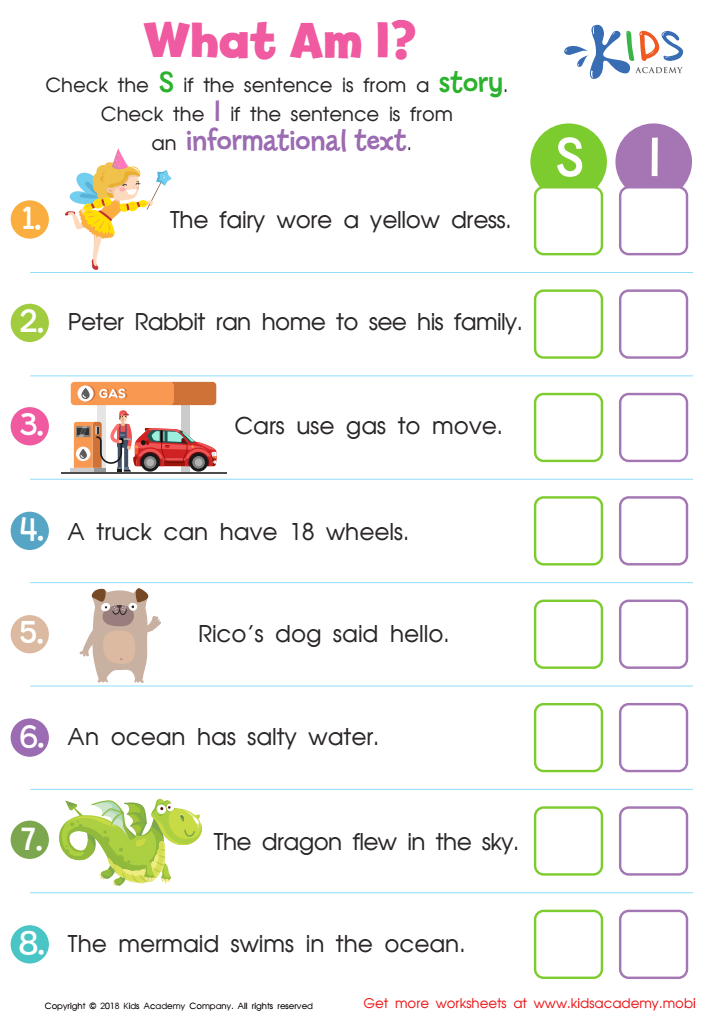
What Am I? Worksheet
This worksheet assesses students' ability to differentiate between stories and texts they read for facts. Students learn to distinguish between reading for pleasure and reading for information. It includes statements from both a story and an informational text, and students must decide what type of text it is.
What Am I? Worksheet
Worksheet
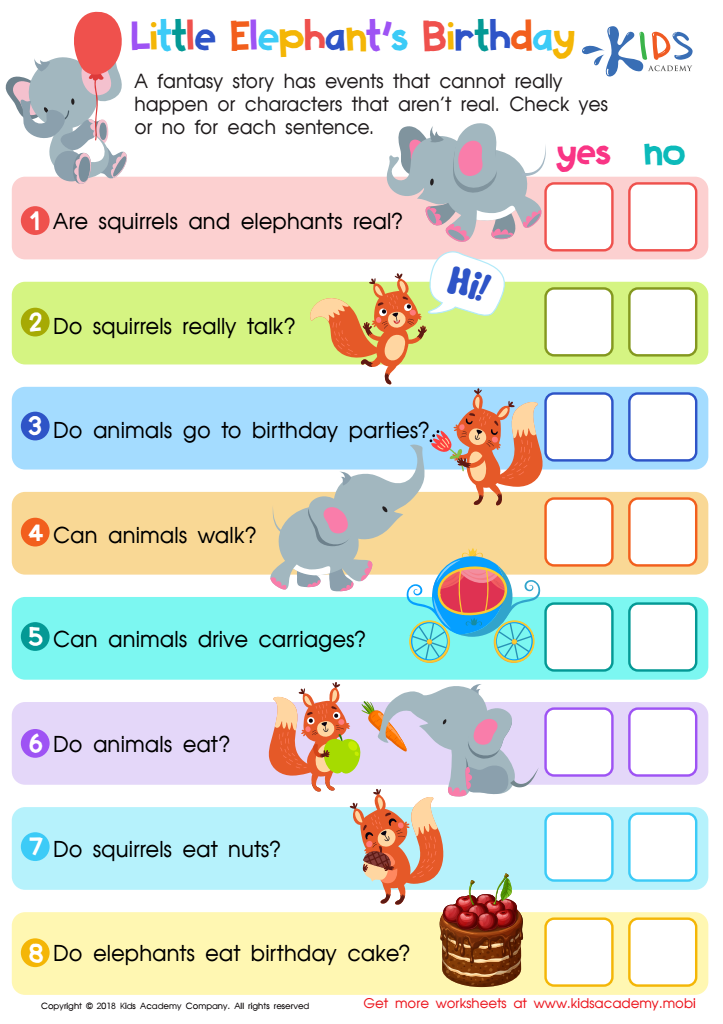
Little Elephant's Birthday Worksheet
It's Little Elephant's birthday! Help your students celebrate with this fun worksheet full of colors and pictures. Deciding which questions are facts and which are fiction will help them differentiate between fantasy stories and reality. Let them have fun learning why certain elements of fantasy can't be true!
Little Elephant's Birthday Worksheet
Worksheet
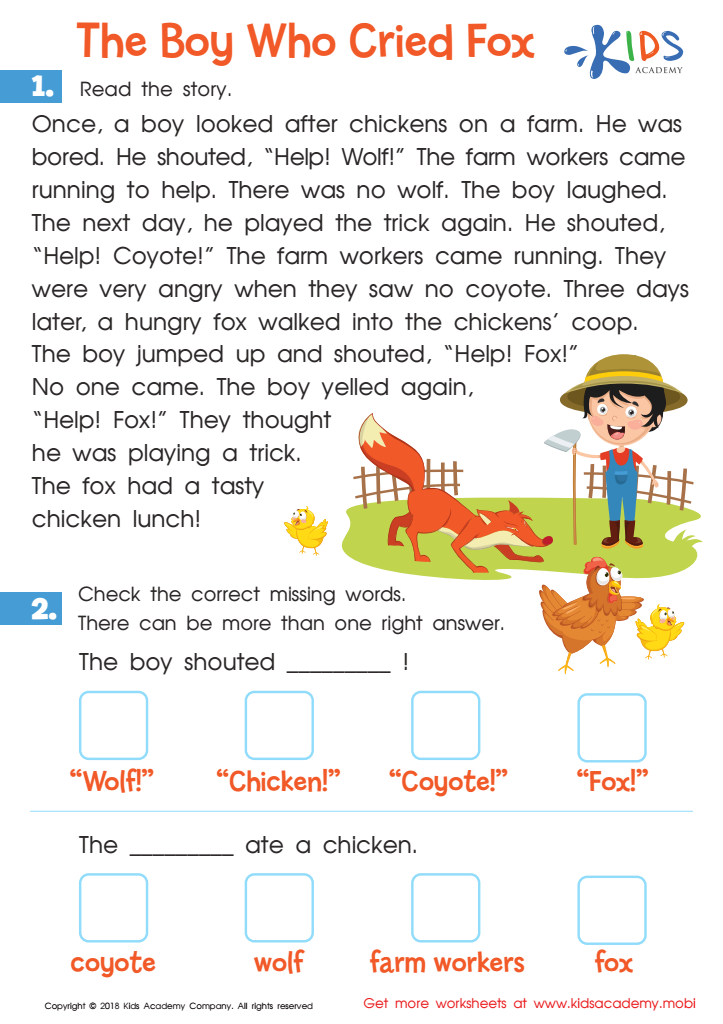
The Boy Who Cried Fox Worksheet
This worksheet encourages students to recall details from a story and answer questions to test their comprehension. Perfect for reading lessons, enrichment, or extra help.
The Boy Who Cried Fox Worksheet
Worksheet
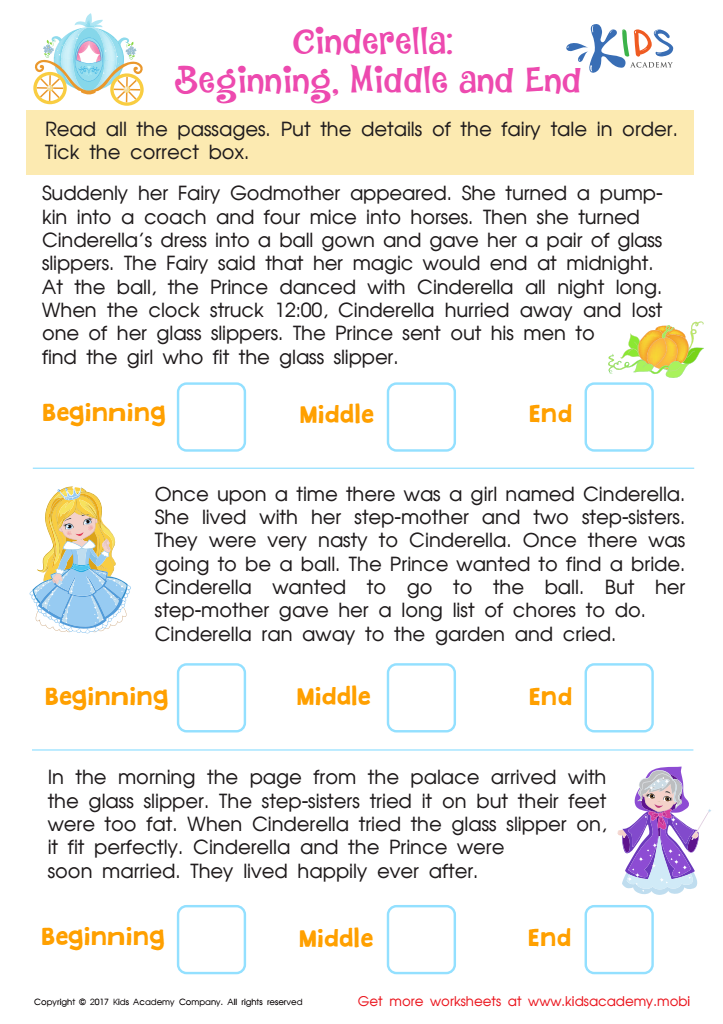
Cinderella: Beginning, Middle and End Worksheet
This Cinderella-themed worksheet provides an excellent opportunity for your child to practice reading comprehension and understanding the basics of story structure.
Help your child learn a key story concept with this Cinderella-themed reading comprehension worksheet. It's an excellent way for them to practice understanding the different parts of a story, from the beginning to the end. Kids will love getting to know the beloved fairy tale of Cinderella!
Cinderella: Beginning, Middle and End Worksheet
Worksheet
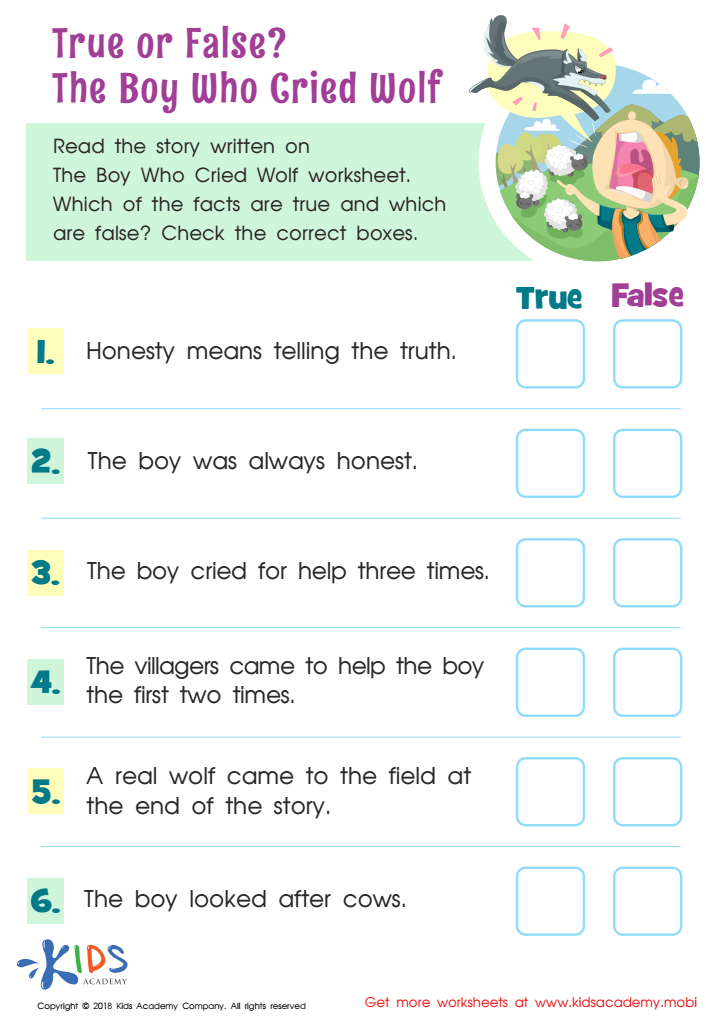
True or False? The Boy Who Cried Wolf Worksheet
Test students' understanding of The Boy Who Cried Wolf with this free downloadable worksheet. It contains true/false questions to assess comprehension of key events. Easy to complete, it checks students can recall facts from the story. Try it and see!
True or False? The Boy Who Cried Wolf Worksheet
Worksheet
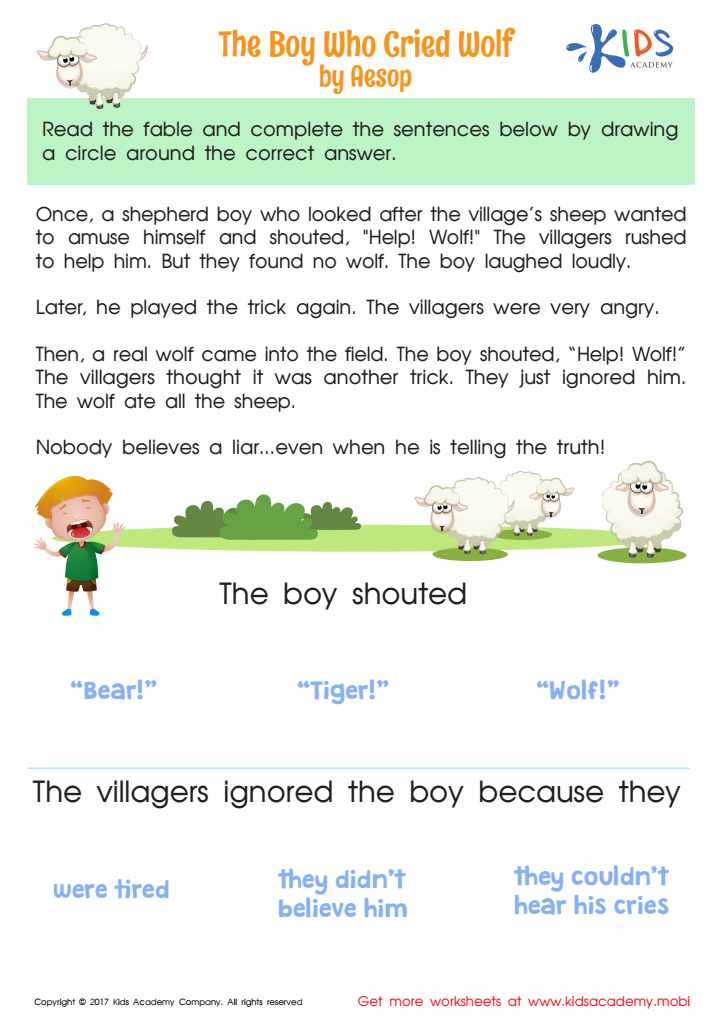
The Boy Who Cried Wolf Worksheet
Test your child's reading comprehension with The Boy Who Cried Wolf worksheet. Read the fable, then answer the questions. Use the text to help your child check their answers are correct. Boost reading skills in a fun, interactive way!
The Boy Who Cried Wolf Worksheet
Worksheet
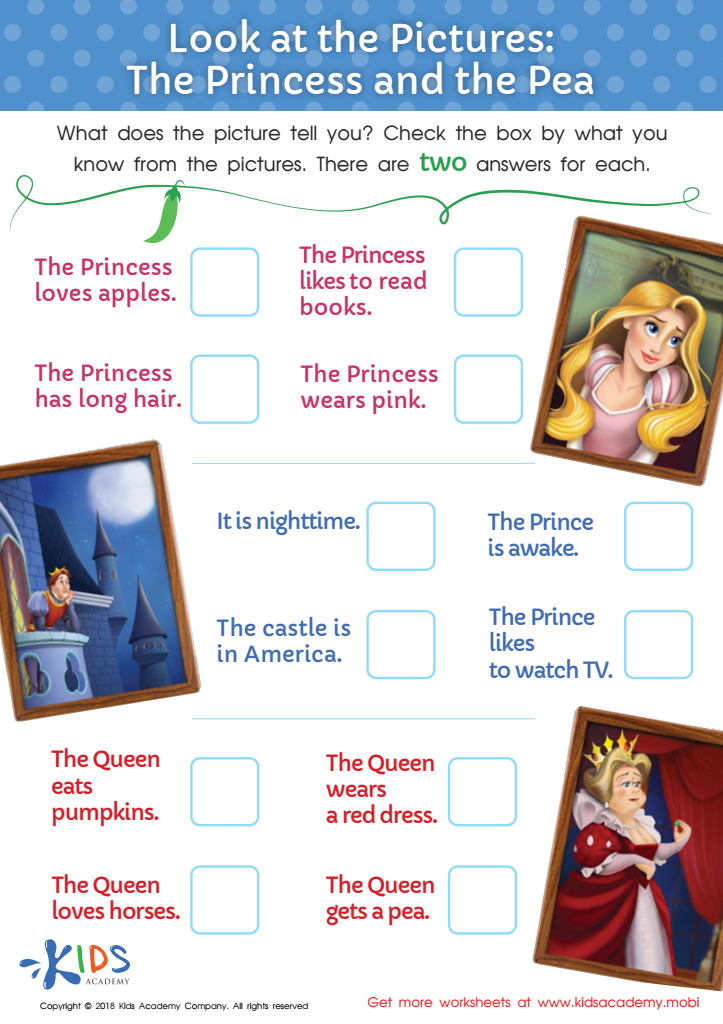
Look at the Pictures: The Princess and the Pea Worksheet
Early readers can benefit from picture clues to understand stories and text. Looking at images helps them learn the meaning of words and comprehend events. Use this worksheet on The Princess and the Pea to let students observe and learn from the pictures. It's a great way to help them comprehend early reading materials.
Look at the Pictures: The Princess and the Pea Worksheet
Worksheet
Join Kids Academy for Free
Who is primarily going to use this learning content?






Parents and teachers play a crucial role in a child's educational foundation, and focusing on critical thinking at the Grade 1 level is essential. Critical thinking involves analyzing information, making connections, and solving problems—skills that are fundamental across all areas of life. By integrating critical thinking into reading comprehension at an early age, children learn to not just read words but to understand and interact with the text.
For instance, when children critically engage with stories, they start asking questions about the characters' motivations and the plot, which enhances their cognitive development. They learn to make predictions, infer meanings, and draw conclusions, a practice that sharpens their analytical abilities. This depth of understanding promotes a strong foundation for future learning because reading comprehension is integral to all subjects, from math problems to history lessons.
Moreover, critical thinking in reading fosters a child’s ability to evaluate information critically, an invaluable skill in the age of information overload. For parents and teachers, encouraging these skills means supporting children to become thoughtful, independent readers and learners. This foundation equips them with the tools necessary for academic success and informed decision-making in all aspects of daily life.