Vocabulary Building Normal Grade 1 Reading Comprehension Worksheets
6 filtered results
-
From - To
Enhance your first grader's vocabulary and reading comprehension skills with our engaging Vocabulary Building worksheets! Designed for Grade 1, these colorful printables offer bite-sized exercises that promote active learning. Each worksheet focuses on key vocabulary terms, allowing young learners to practice understanding words in context through fun stories and questions. With clear instructions and age-appropriate content, these worksheets make learning enjoyable and accessible. Help your child build a strong language foundation while boosting their confidence in reading. Perfect for home or classroom use, our Vocabulary Building worksheets are ideal resources for enriching early literacy skills and motivating young readers!
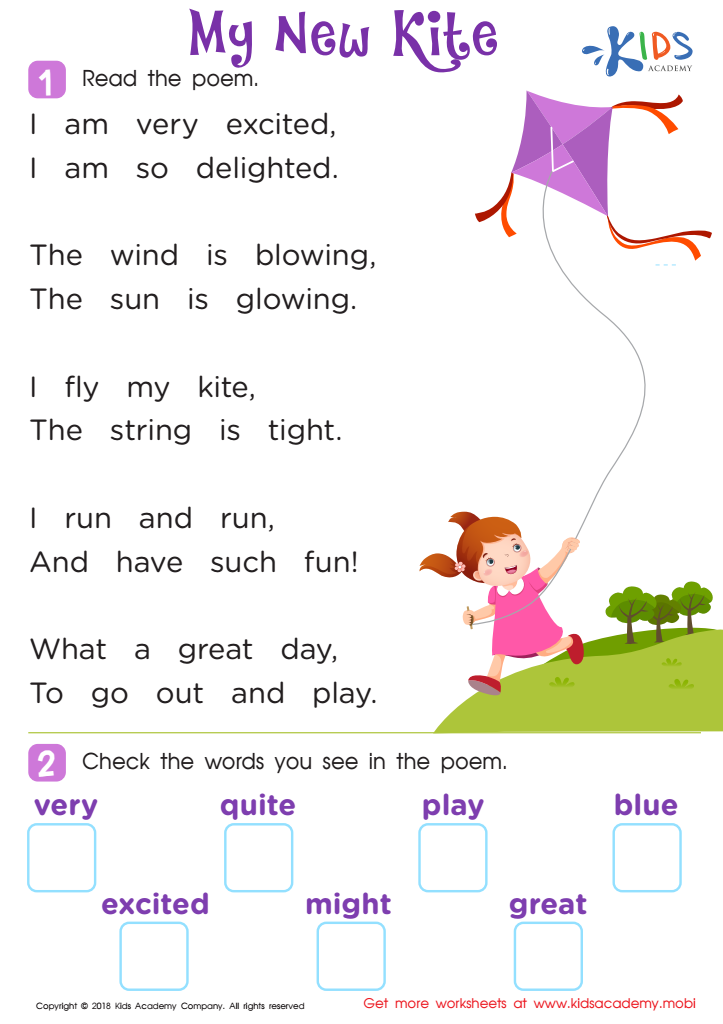
Poem: My New Kite Worksheet
 Assign to My Students
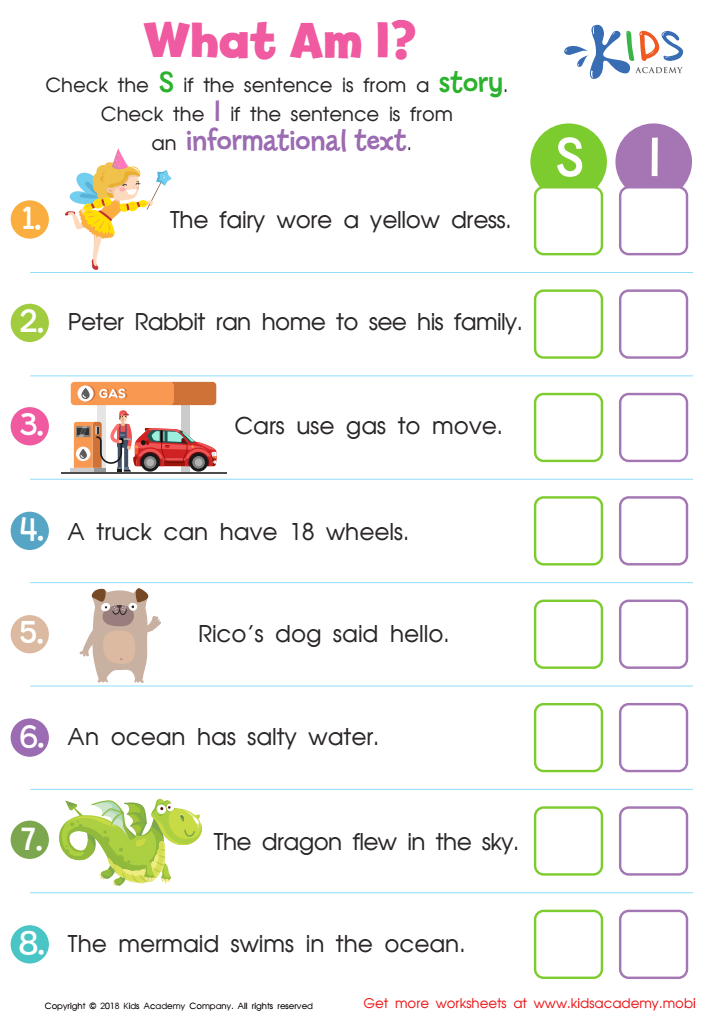
What Am I? Worksheet
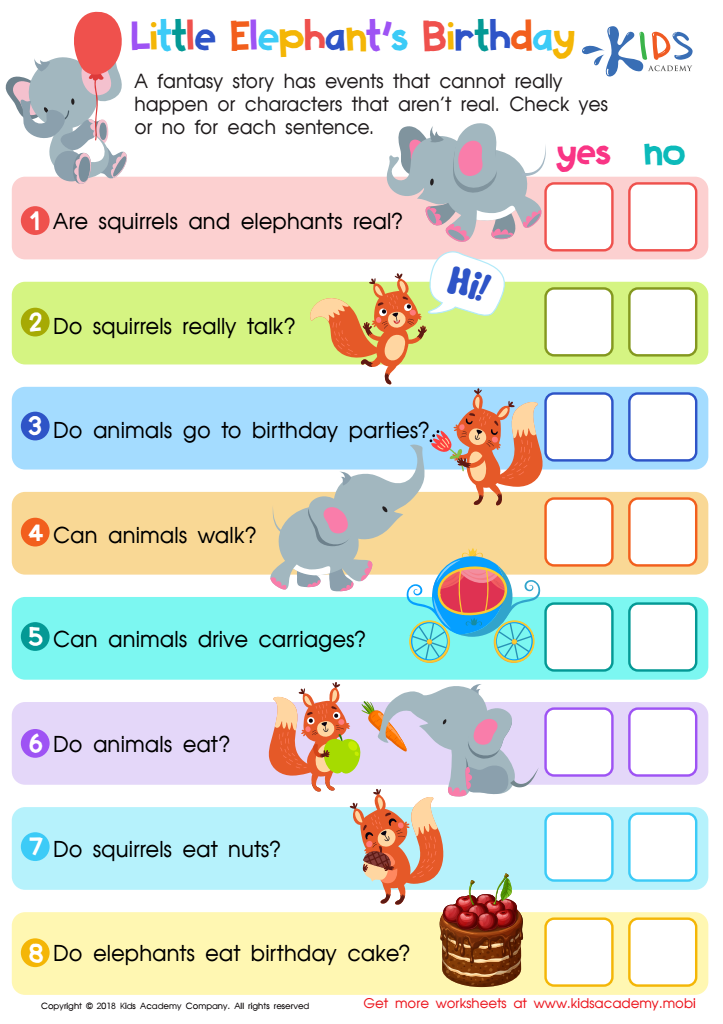
Little Elephant's Birthday Worksheet
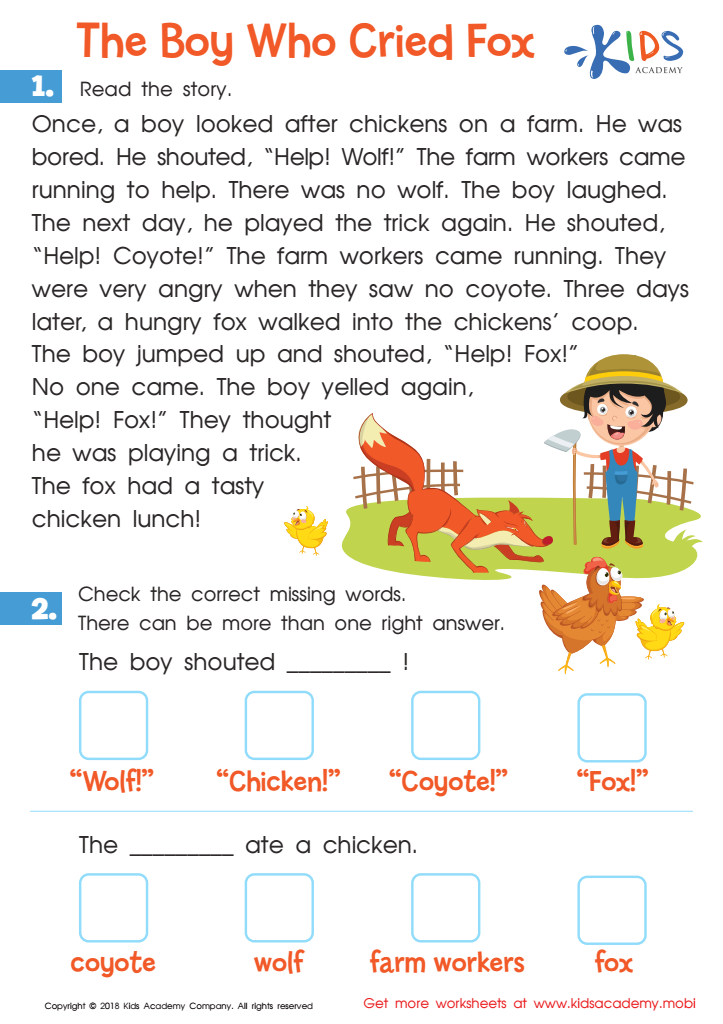
The Boy Who Cried Fox Worksheet
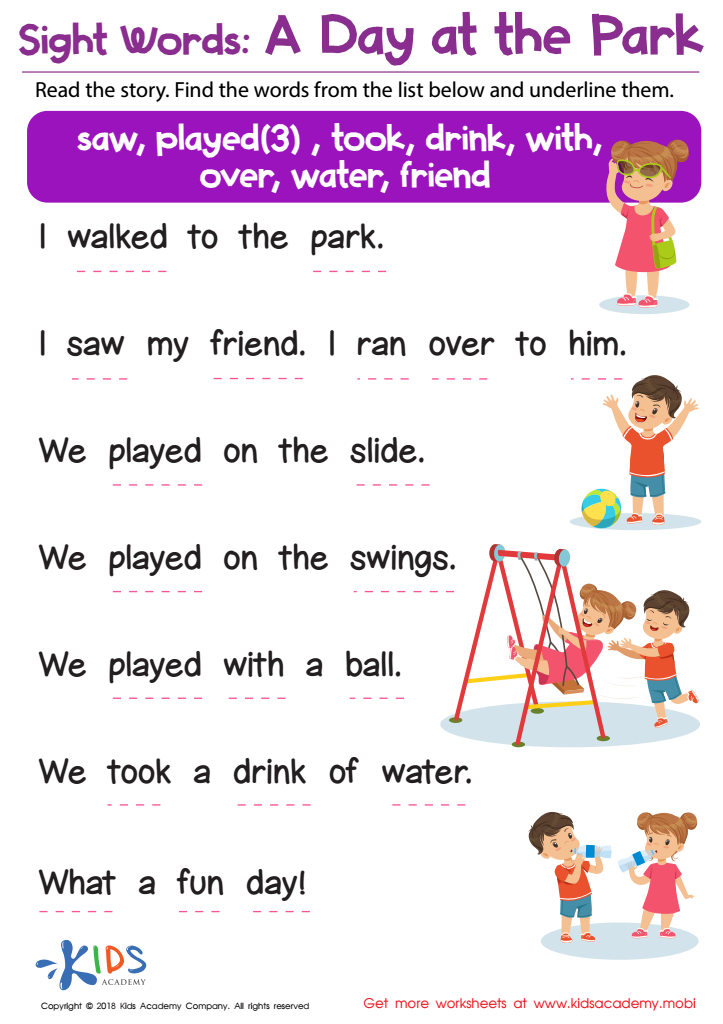
Sight Words: A Day at the Park Worksheet
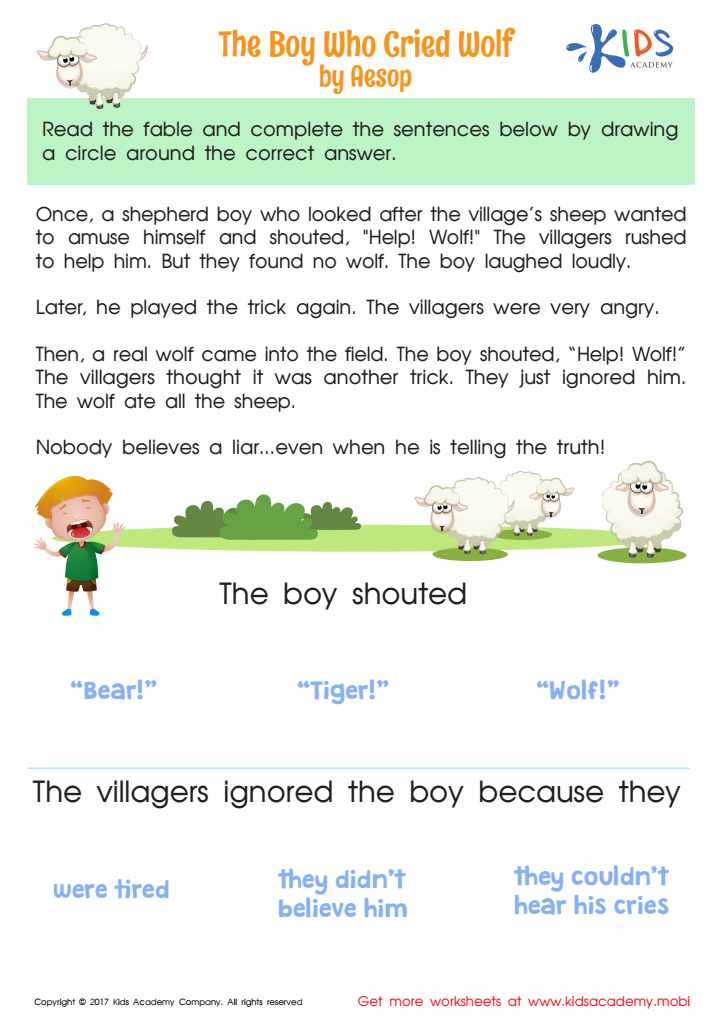
The Boy Who Cried Wolf Worksheet








Vocabulary building is crucial for Grade 1 reading comprehension as it lays the foundation for literacy and overall academic success. At this stage, children are learning to connect spoken language with written words, and a rich vocabulary enhances their ability to understand and engage with texts. When children know more words, they can better comprehend stories, participate in discussions, and express their thoughts clearly.
Parents and teachers play a significant role in fostering vocabulary growth by introducing new words in context, encouraging reading aloud, and engaging children in conversations that challenge them cognitively. When children encounter unfamiliar words, it provides invaluable opportunities for explanation and discussion, reinforcing their understanding.
Moreover, a strong vocabulary aids in higher-level literacy skills, such as inferencing and critical thinking. As students progress, gaps in vocabulary can lead to comprehension difficulties and hinder a child’s ability to keep up, ultimately affecting their performance in school.
Caring about vocabulary building also promotes a lifelong love of reading and learning. Through rich interactions filled with diverse words and concepts, caregivers can cultivate a child's curiosity, leading them to explore and enjoy books—an essential key to academic success.