Vocabulary enhancement Normal Grade 1 Rhyming Words Worksheets
4 filtered results
-
From - To
Discover our engaging Vocabulary Enhancement Rhyming Words Worksheets designed for normal grade 1 learners! At Kids Academy, we present a fun way to boost your child's vocabulary by introducing rhyming concepts. These worksheets help first graders recognize word patterns, improving their reading and writing skills. Each activity is crafted to make learning enjoyable and effective, fostering a deep understanding of language through rhyming games and exercises. Our printable resources are perfect for classroom use or homeschooling, offering parents and teachers the ideal tools to support young readers in their educational journey. Start enhancing your child's vocabulary today!
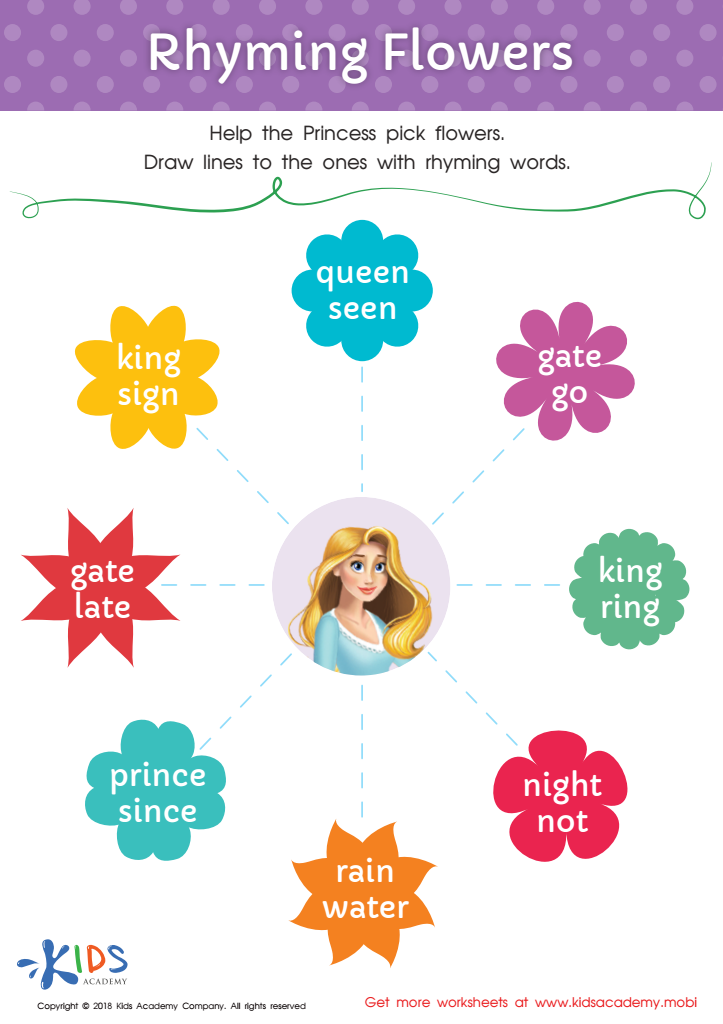
Rhyming Flowers Worksheet
 Assign to My Students
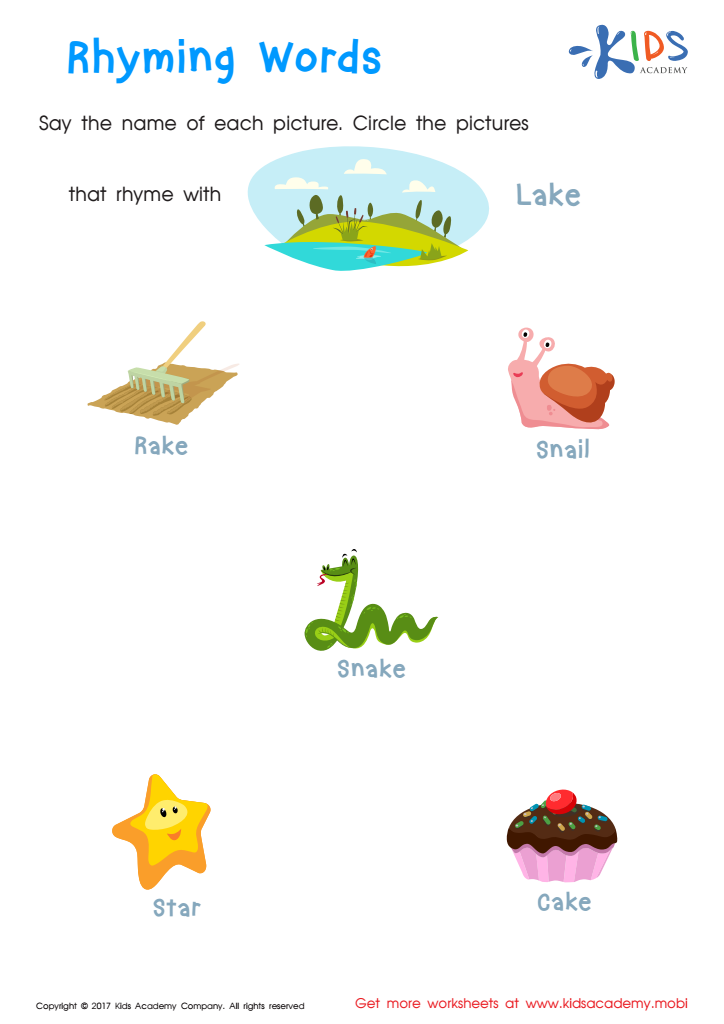
Rhyming Words Rhyming Worksheet
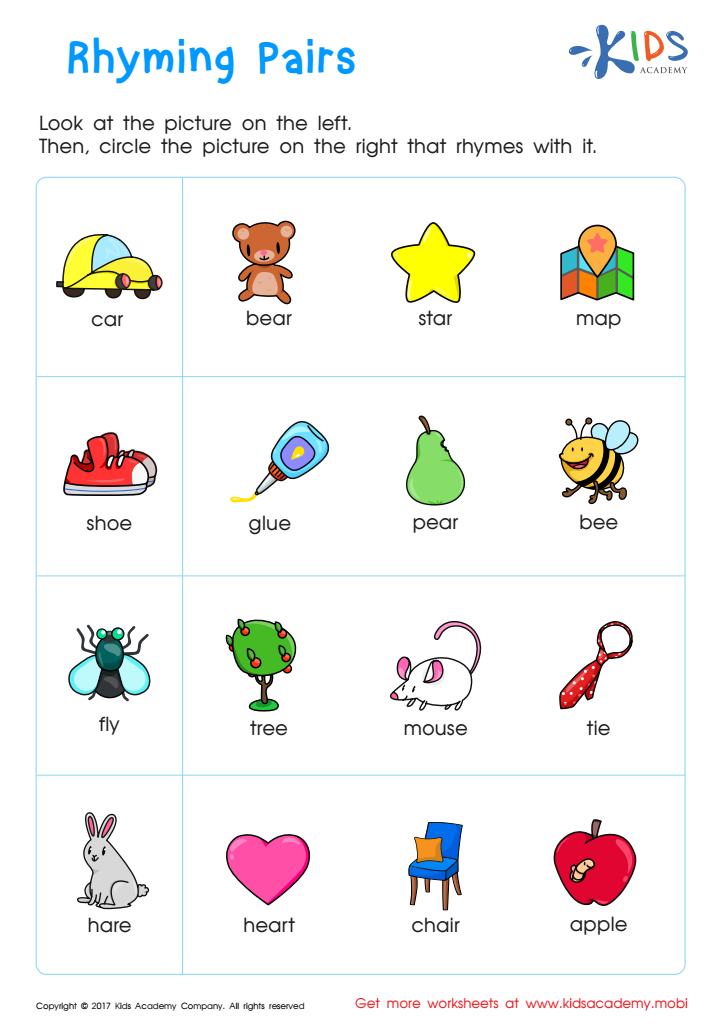
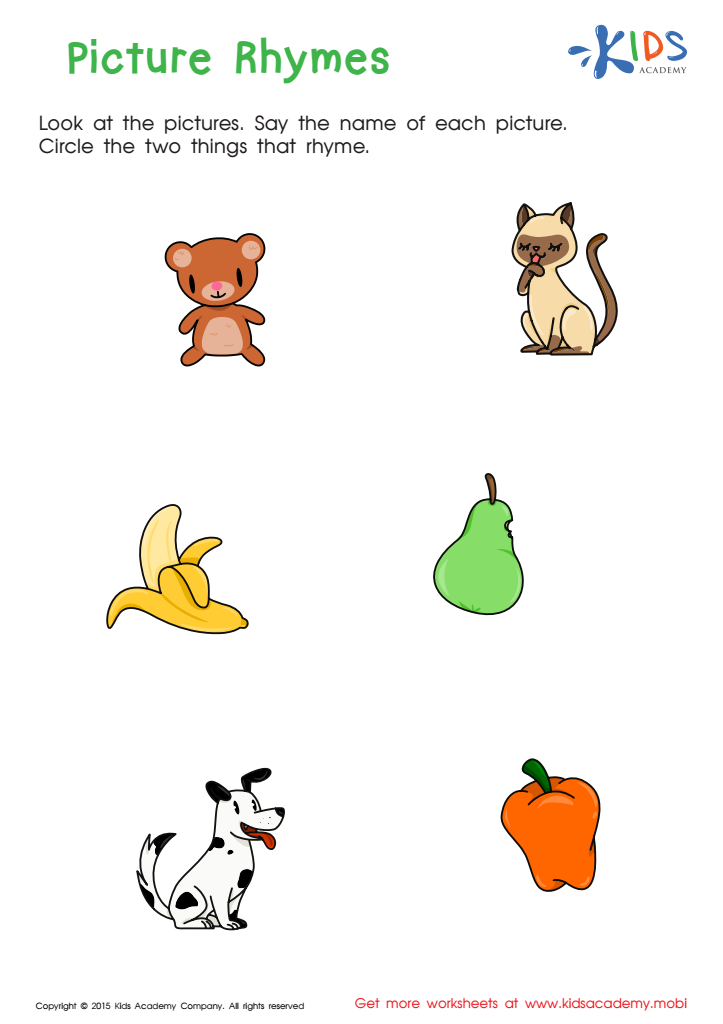
First Words: Picture Rhymes Worksheet






Enhancing vocabulary and introducing rhyming words in Grade 1 is crucial for a child's language development and overall academic success. For parents and teachers, prioritizing this aspect sets a strong foundation for various cognitive and literacy skills vital for lifelong learning.
First and foremost, understanding and using a rich vocabulary helps children express themselves more clearly and with greater confidence. When they diversify their vocabularies, they can better articulate thoughts, ask questions, and engage meaningfully in both academic and social settings. Furthermore, knowledge of rhyming words is a fundamental precursor to phonemic awareness, an essential skill in learning to read and write. Phonemic awareness involves recognizing and manipulating sounds in words, which greatly aids in decoding words and understanding spelling patterns.
Rhyming also makes learning more engaging and enjoyable for young children. Songs, poems, and rhymes are fun and memorable, creating positive associations with learning, which can foster a lifelong love of reading and writing. Additionally, participating in rhyming activities can boost a child's auditory discrimination abilities, listening skills, and memory retention.
In conclusion, strengthening vocabulary and understanding rhyming words can significantly enhance a child's academic future, social interactions, and overall confidence. It's a vital and enjoyable part of early childhood education that parents and teachers should prioritizem, as it lays the groundwork for all future learning experiences.