Knowledge application Normal Grade 1 Science Worksheets
3 filtered results
-
From - To
Discover engaging "Knowledge Application Normal Grade 1 Science Worksheets" designed to enhance learning for first graders. These carefully crafted worksheets focus on applying science concepts through fun, interactive activities that promote critical thinking. Ideal for young learners, these materials encourage curiosity and a love for science by presenting challenges that are both educational and enjoyable. The worksheets cover a broad range of topics, expertly guiding kids to grasp and utilize foundational science knowledge in real-world contexts. Elevate your child's learning experience with our captivating and effective Grade 1 science resources.
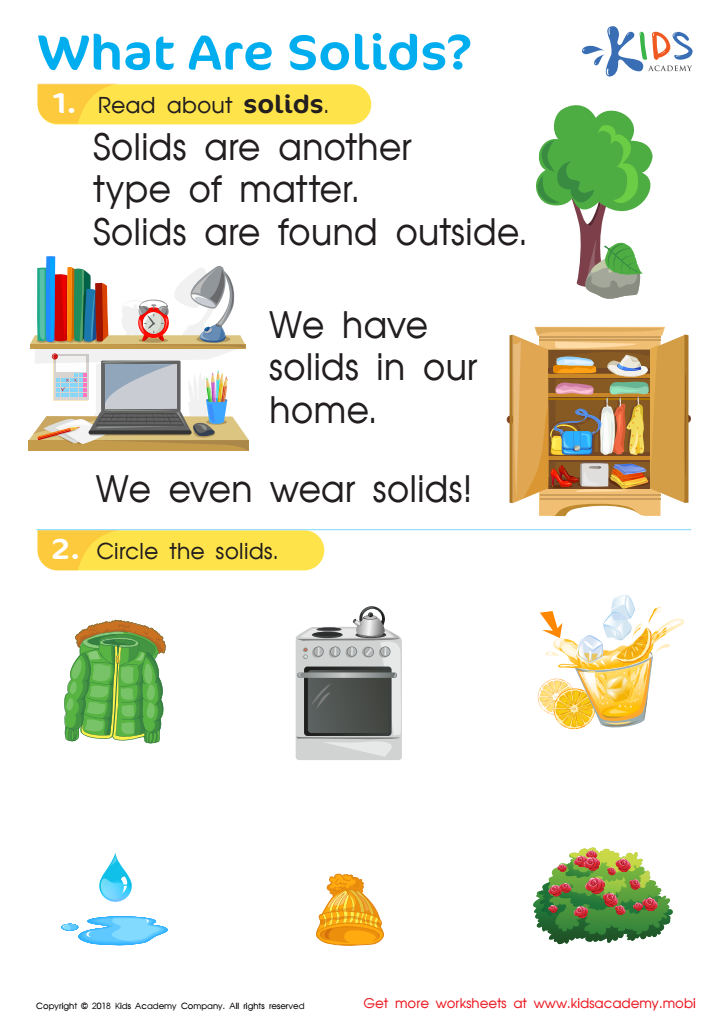
What Are Solids? Worksheet
 Assign to My Students
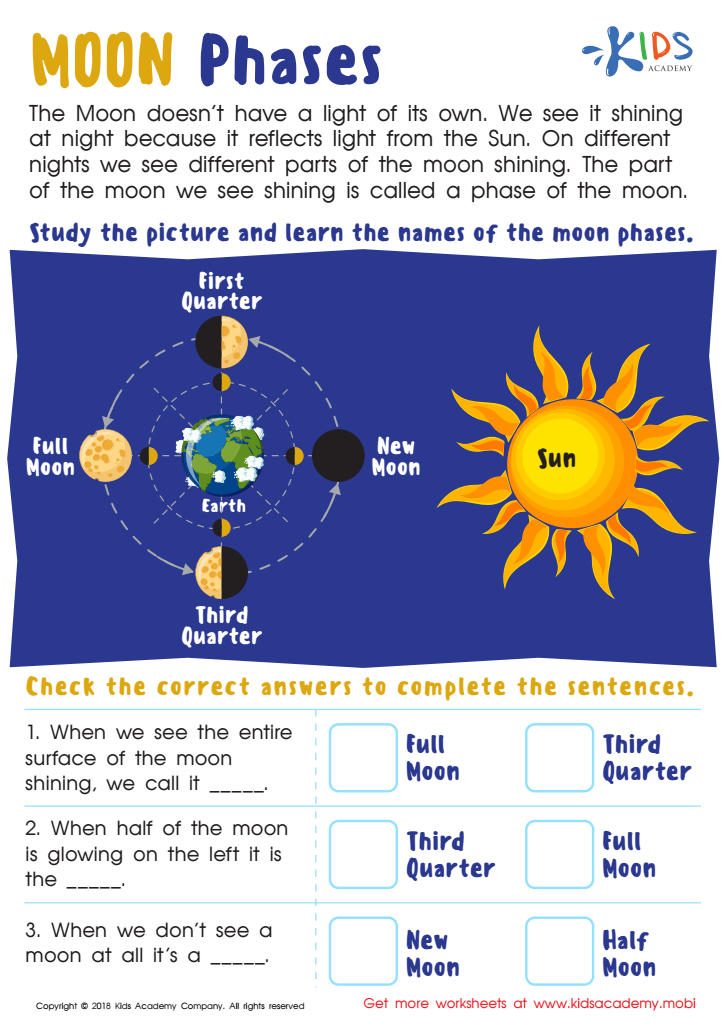
Moon Phases Worksheet
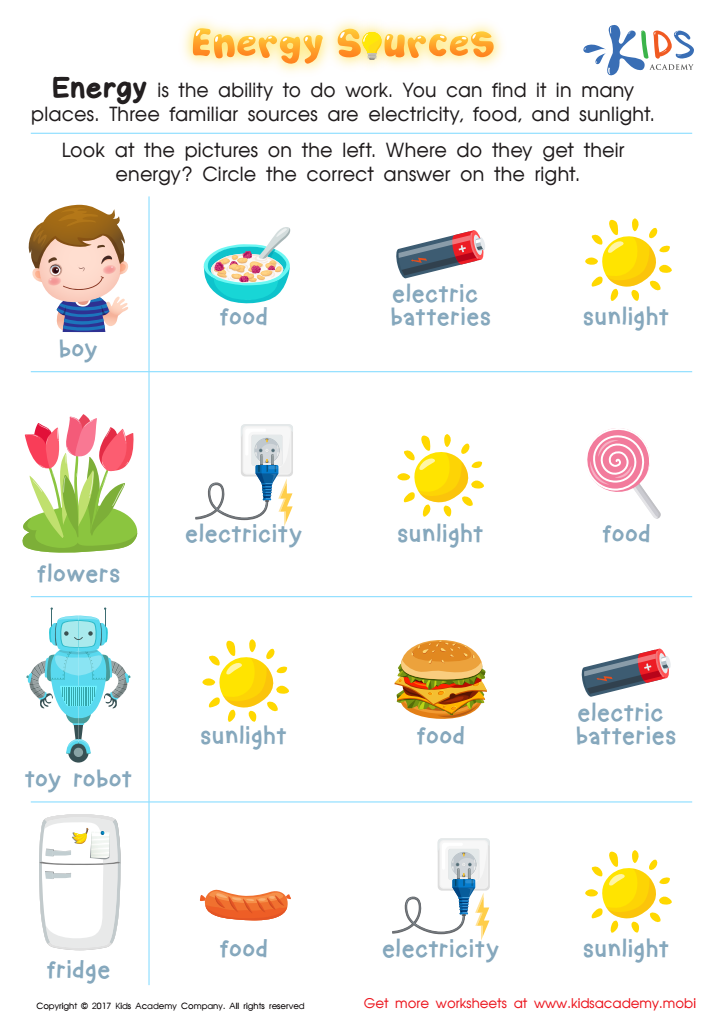
Energy Sources Printable








Parents and teachers play a foundational role in a child's education, and understanding the importance of knowledge application in Grade 1 Science is pivotal. At this age, children are naturally curious and eager to explore the world around them. Engaging them in practical, hands-on science activities not only fosters curiosity but also cultivates critical thinking and problem-solving skills early on.
Firstly, knowledge application helps solidify concepts. When children can link theoretical knowledge to real-life situations—like understanding why plants need sunlight through growing a classroom plant—it transcends rote memorization and deepens their comprehension. This experiential learning can lead to better retention rates and a more profound understanding of basic scientific principles.
Secondly, applying knowledge in tangible ways can boost a child's confidence. Understanding and manipulating the natural world through experiments, for example, allows them to see the immediate impact of scientific principles in action. This sense of achievement not only motivates further learning but also builds a positive attitude towards education in general.
Lastly, early engagement with practical science can inspire a lifelong interest in the subject, paving the way for future academic and career pursuits. As a cornerstone of STEM (science, technology, engineering, and mathematics) education, a strong foundation in science can open doors to innumerable opportunities later in life.
In summary, integrating knowledge application in Grade 1 Science enriches learning, boosts confidence, and supports long-term educational goals, making it crucial for both parents and teachers to prioritize this approach.







