Filters

7 filtered results

Clear all filters
Favorites
With answer key
Interactive

7 filtered results

Difficulty Level

Grade


Enhance your first grader's vocabulary with our engaging Vocabulary Expansion Worksheets, designed specifically for Grade 1 Science. These printables foster a deeper understanding of scientific concepts while improving language skills. Students will explore essential terms related to the natural world, encouraging both curiosity and comprehension. Our thoughtfully crafted exercises are visually appealing and provide opportunities for interactive learning, making science exciting for young learners. From vocabulary matching to illustrations, each worksheet aims to enrich students’ knowledge and confidence. Perfect for classroom use or at-home learning, these resources help build a strong foundation for future scientific endeavors. Start exploring today!

Check out this FREE Grade 1 Trial Lesson on Science!

Sound Is All Around Us

Favorites
With answer key
Interactive
  • Grade 1
  • Vocabulary expansion
  • Science
  • Normal
Astronomer Coloring Page Worksheet

Astronomer Coloring Page Worksheet

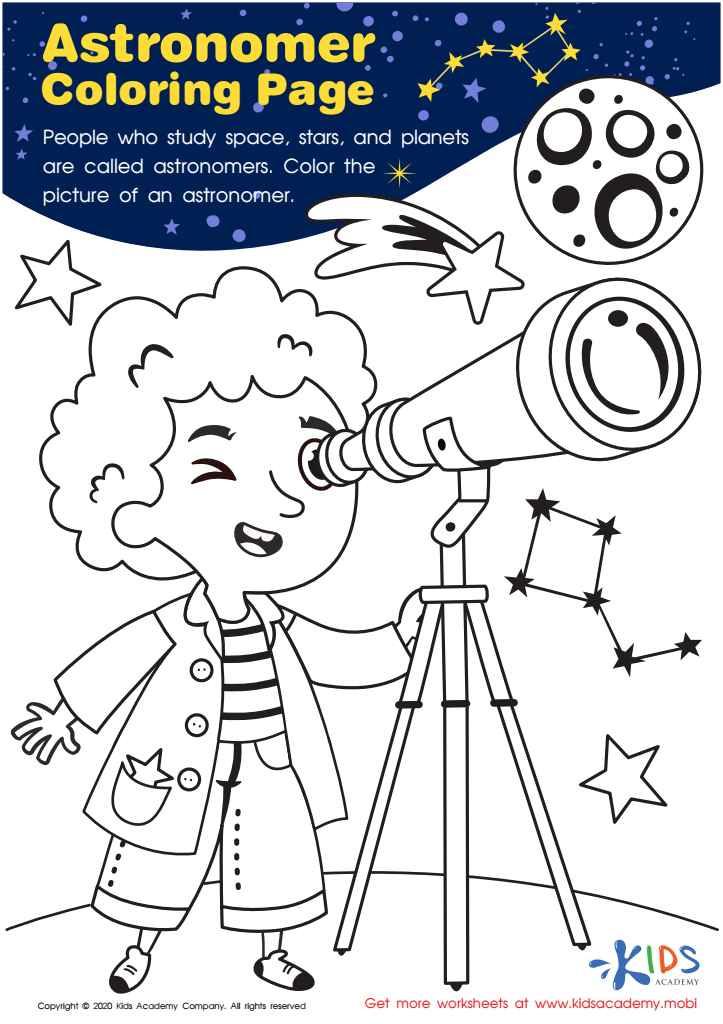
Encourage your child to explore the night sky with a fun coloring page! Discuss the possibility of a career in astronomy while they put their imagination to work creating the best colors to make this scene come to life. Astronomers use microscopes to study planets and stars, learning about space and teaching us more about the universe!
Download (PDF)
Assign to My Students
Astronomer Coloring Page Worksheet
Worksheet
Noisy Park Worksheet

Noisy Park Worksheet

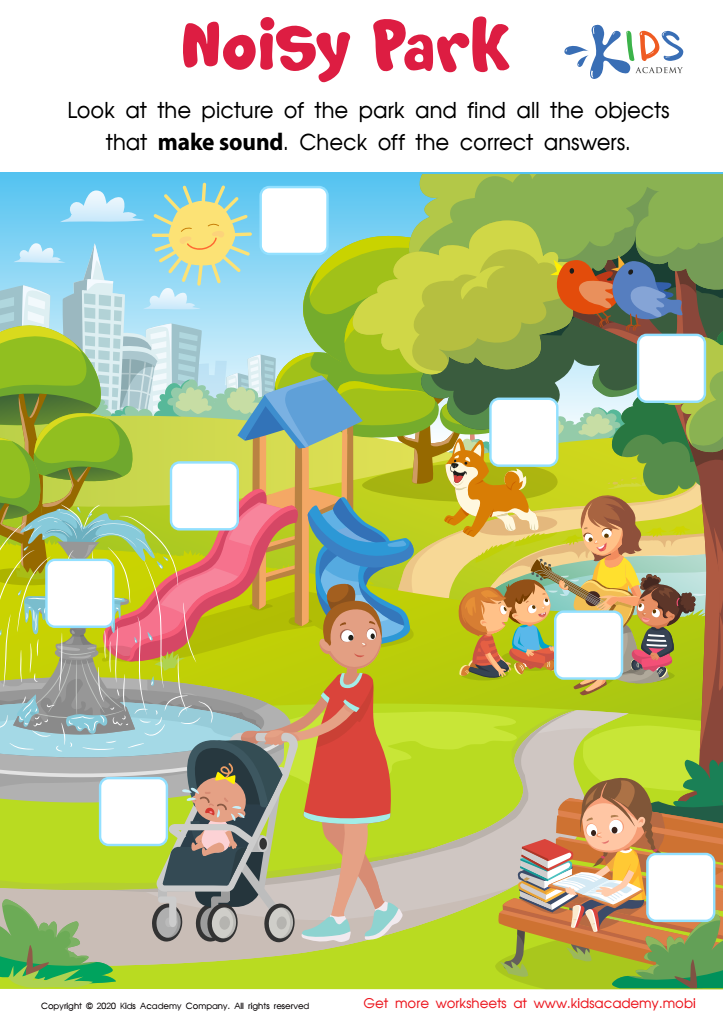
Get your students ready for the exercise by asking them to name things they see and do at the park. Then, have them identify the things in the picture, look for objects that make sounds, and verify the answers.
Noisy Park Worksheet
Worksheet
Fish Body Parts Worksheet

Fish Body Parts Worksheet

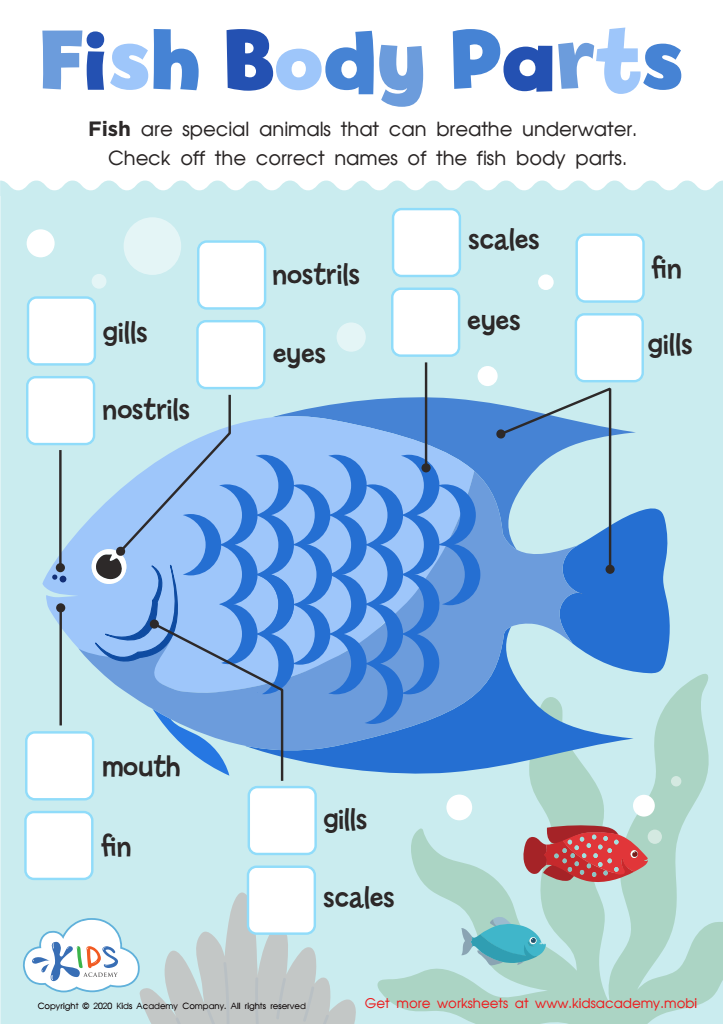
Fascinate kids with fish: teach them about these amazing creatures with this free Kids Academy printable worksheet. Let little learners study the vibrant blue fish, identify its different body parts, and discover why it can survive underwater. From gills to fins, your child will gain an early appreciation for life science!
Fish Body Parts Worksheet
Worksheet
Types of Weather Worksheet

Types of Weather Worksheet

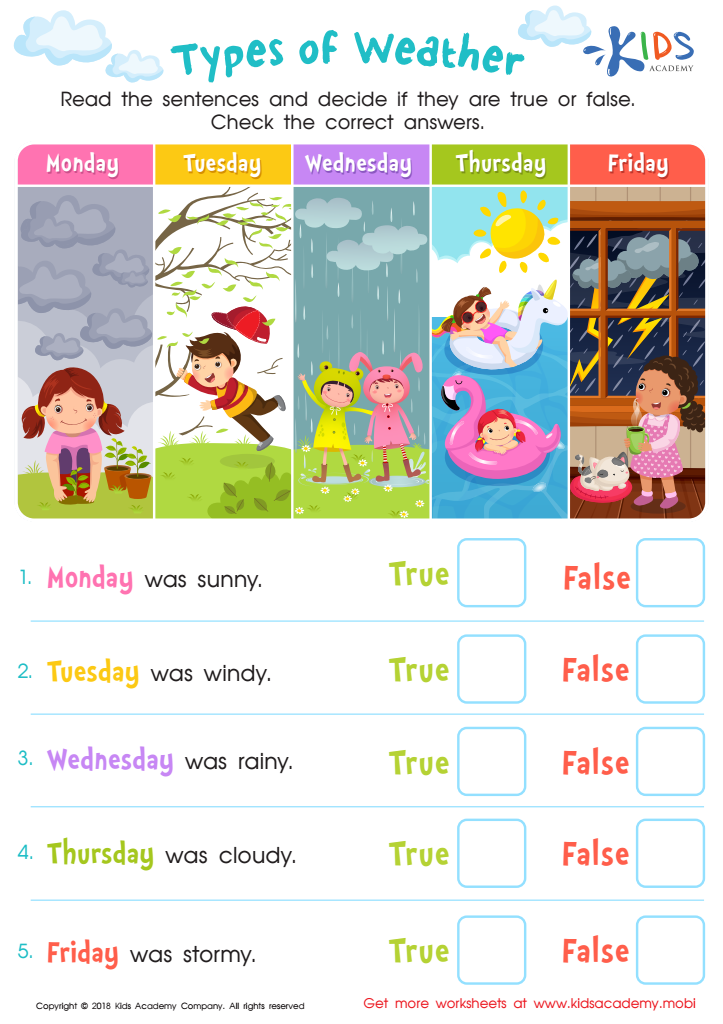
This worksheet will test your child's knowledge of the weather. Show them the pictures of five days of the week, each with a different weather and ask them to describe it. Then read the sentences and ask if they're true/false. Help them find the right answers.
Types of Weather Worksheet
Worksheet
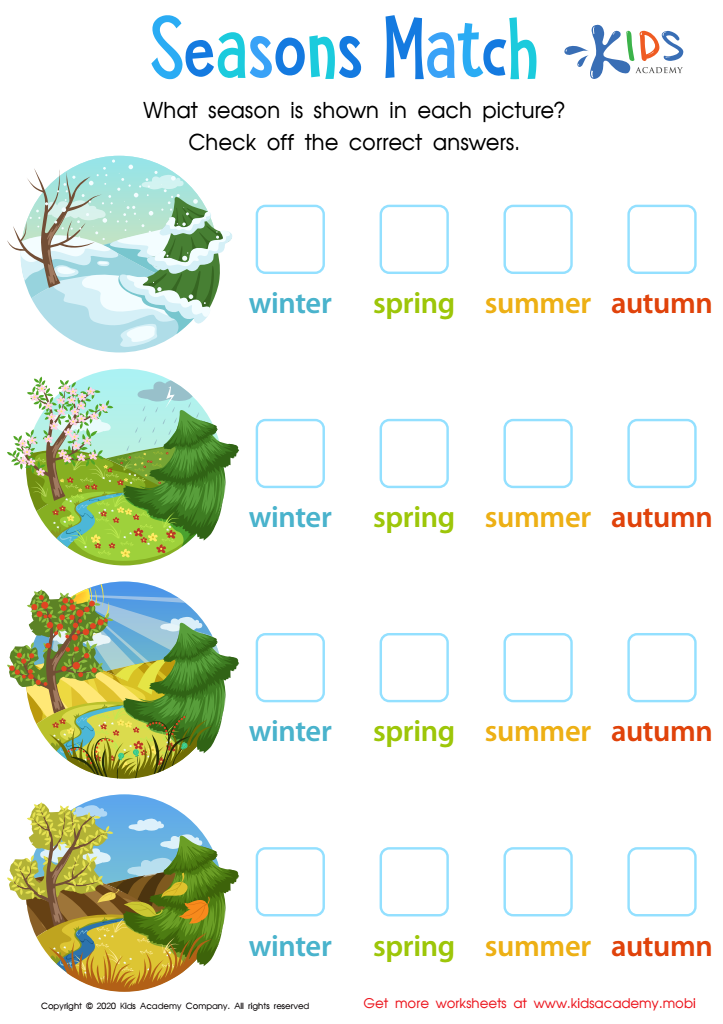
Seasons Match Worksheet

Seasons Match Worksheet

Preschoolers should begin learning about seasons and weather early. Most can tell what season it is by upcoming holidays or school activities. Test their knowledge with a printable PDF worksheet. It asks them to match each image with its corresponding season!
Seasons Match Worksheet
Worksheet
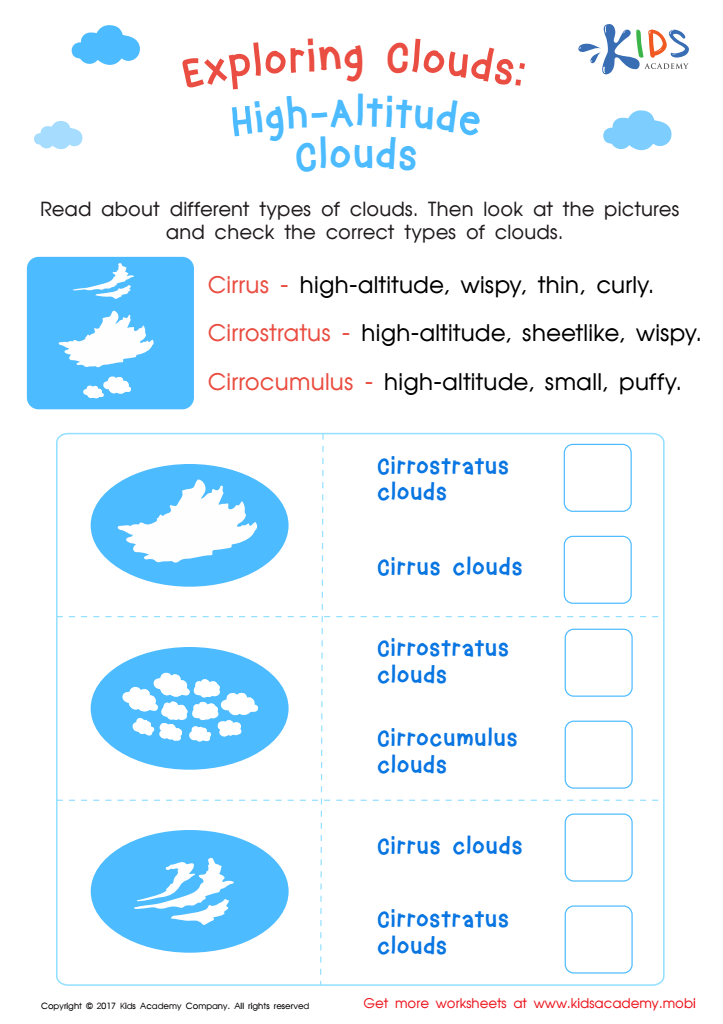
Worksheet: type of high altitude clouds

Exploring Clouds: High Altitude Clouds Worksheet
Explore the different types of high altitude clouds with this fun and informative worksheet. Then, head outside to see if your child can spot any of the clouds in the sky!
Exploring Clouds: High Altitude Clouds Worksheet
Worksheet
Siblings Quiz Worksheet

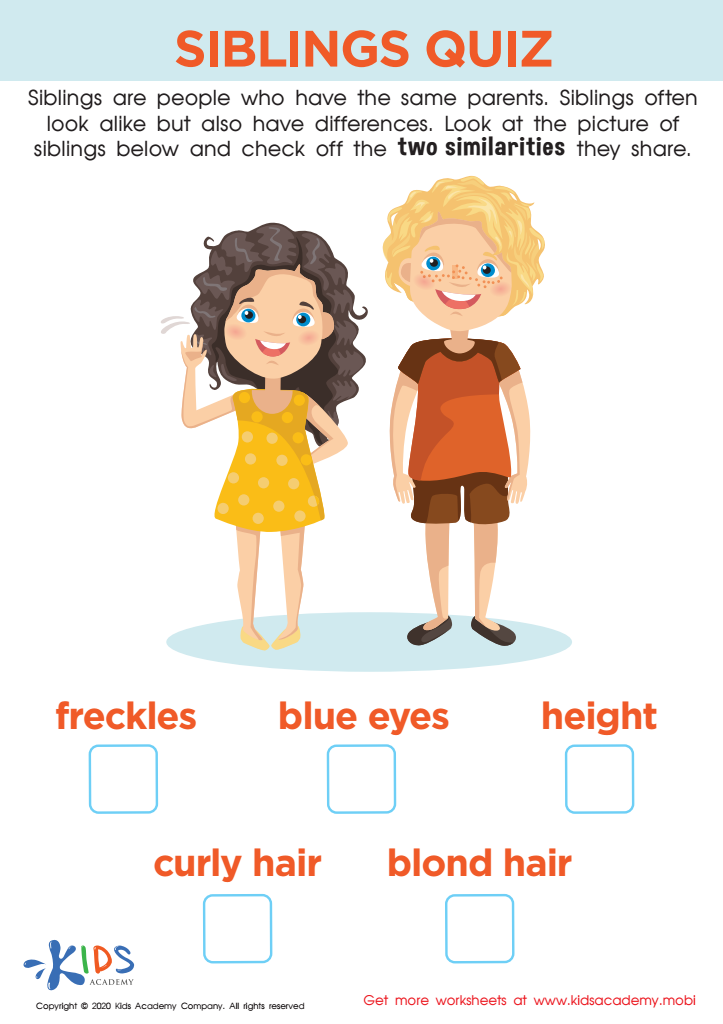
Siblings Quiz Worksheet

Your children may know a sibling is a sister or brother, but not realize what it means to be one. Siblings share the same parents, which means they share many genes. They are alike in many ways, but also have their own unique traits. Help your future scientist understand this early biology concept with this fun worksheet. They'll be tasked with finding similarities between two siblings on the page.
Siblings Quiz Worksheet
Worksheet


Vocabulary expansion is crucial for Grade 1 Science learning as it lays the foundation for students' understanding of scientific concepts and the world around them.

At this stage, children are naturally curious and eager to learn, making it the perfect time to introduce new words related to science topics. As they explore concepts like plants, animals, the weather, and the Earth, a rich vocabulary enhances their ability to articulate thoughts and ask questions. This encourages critical thinking and deepens their comprehension of lessons.

Moreover, a robust vocabulary helps students build connections between new ideas and prior knowledge, fostering greater engagement and retention of information. When parents and teachers prioritize vocabulary development, they empower children to express their observations and predictions with clarity.

Additionally, strong vocabulary skills contribute to literacy, which is paramount in early education. Children who expand their language become more confident in their reading and writing skills, which are essential for all subjects, including science.

In summary, vocabulary expansion in Grade 1 Science is vital for cognitive development, enhancing communication, and supporting literacy. By prioritizing this aspect, parents and teachers play a transformative role in shaping young learners' academic trajectories.