Lowercase identification Normal Kindergarten Lowercase/Small Letters Worksheets
4 filtered results
-
From - To
Introducing our engaging Lowercase Identification Worksheets designed specifically for Kindergarten students! These printable worksheets help young learners master lowercase letters with fun and interactive activities. Each worksheet encourages children to identify, trace, and practice writing small letters, reinforcing their understanding of the alphabet. Suitable for both home and classroom use, these resources promote essential literacy skills while making learning enjoyable. Whether used for independent practice or guided lessons, our Lowercase Identification Worksheets provide a solid foundation for early reading and writing. Empower your child to become confident in recognizing lowercase letters with these expertly crafted activities tailored for Kindergarten learners!
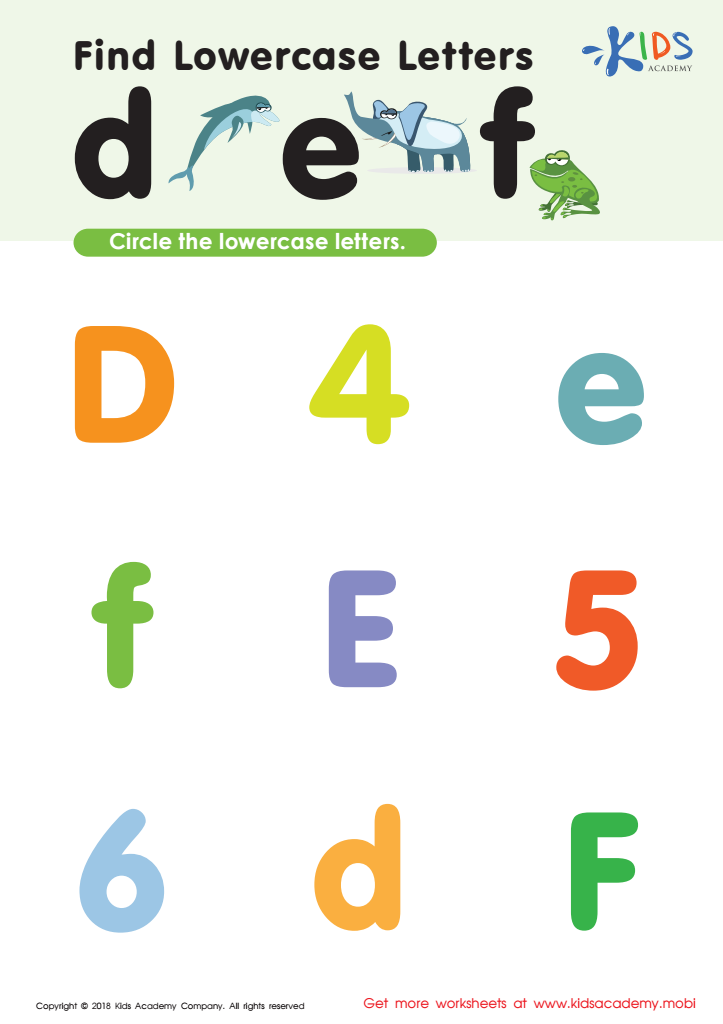
Find Lowercase Letters d e f Worksheet
 Assign to My Students
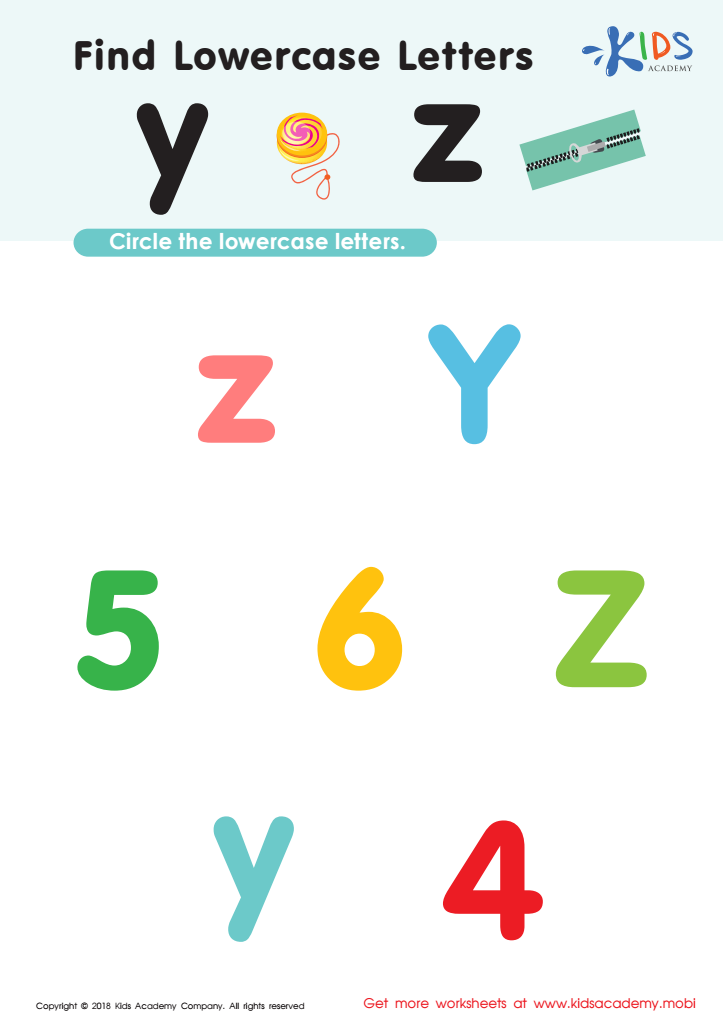
Find Lowercase Letters y z Worksheet
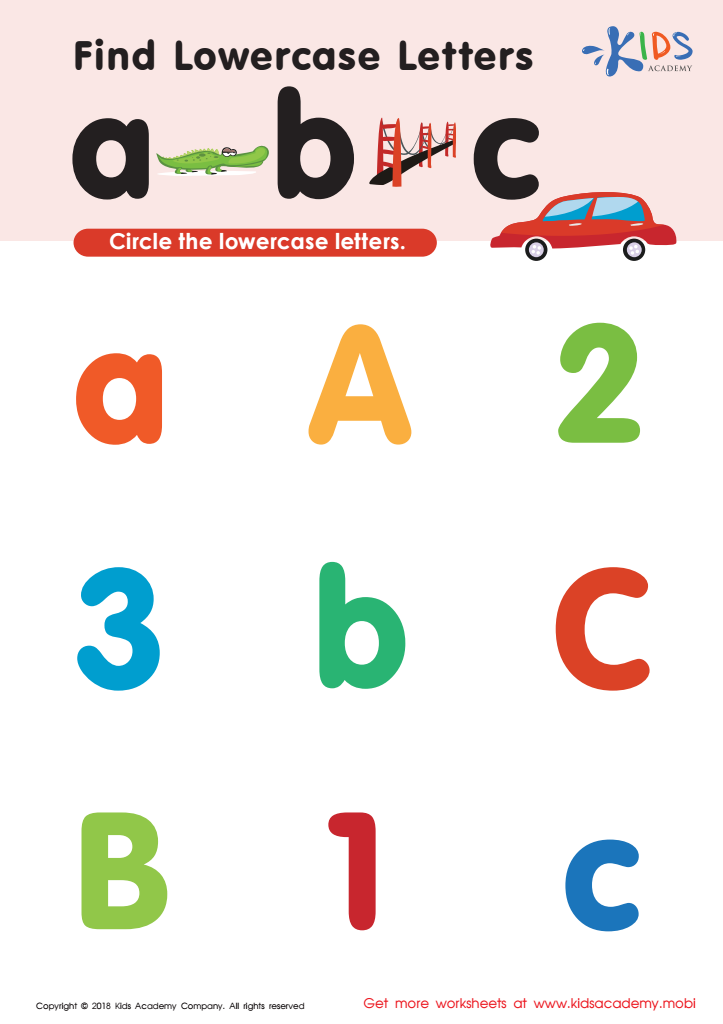
Find lowercase letters a b c Worksheet
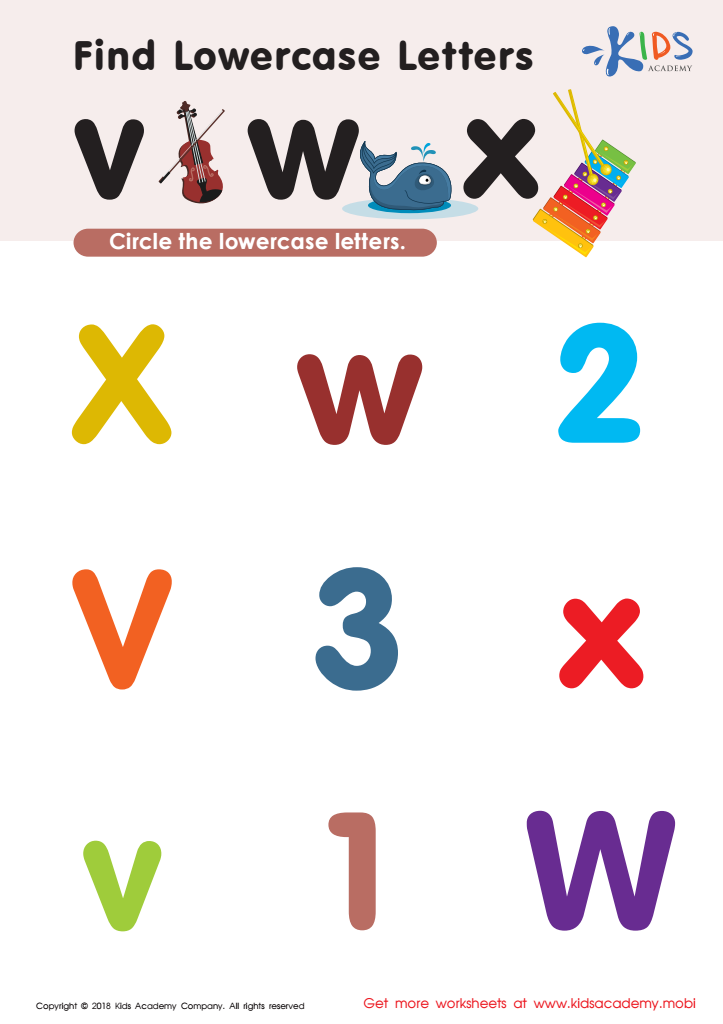
Find Lowercase Letters v w x Worksheet


Lowercase letter identification is an essential skill for young learners, particularly in kindergarten. Parents and teachers should care about this foundational aspect of literacy for several reasons. Firstly, lowercase letters constitute the majority of written language. Understanding them allows children to read and write effectively, fostering their overall communication skills. For instance, their exposure to print in books, signs, and digital media predominantly showcases lowercase letters.
Furthermore, lowercase identification supports phonemic awareness, wherein children learn to associate sounds with letters. This connection is vital for reading development, as children begin to blend sounds to form words. Recognizing lowercase letters also aids in writing, enabling students to express their thoughts more clearly.
Moreover, mastering lowercase letters can promote a sense of accomplishment and confidence in young learners. When children can confidently identify and write lowercase letters, it boosts their motivation to read and write more. Engaging with this skill provides opportunities for interactive learning, encouraging parents and teachers to facilitate activities around letters through games, songs, and storytelling.
In summary, lowercase letter identification not only builds literacy skills but also fosters a love for learning, setting the stage for academic success in the years to come.